Wednesday Weblog for January 7, 2026 | | 'If you don't know where you are going, you might wind up someplace else.' Yogi Berra | | Leading Off: Our Friend the GPS | | |
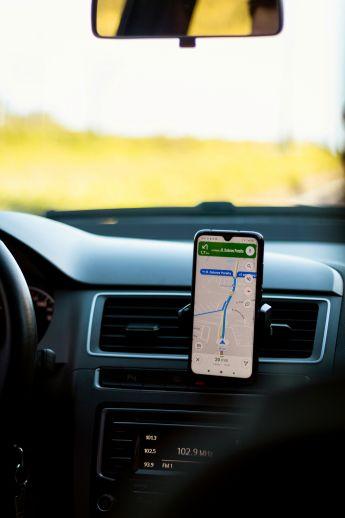
I use a GPS (Global Positioning Satellite) device 99.9% of the time when I am moving from point A to point B:
- I use it when I’m going someplace for the first time, with the voice turned on so it tells me to take a right at the next light… not this one.
- I use it when I’m headed to a doctor’s appointment because I want to honor that familiar instruction to “arrive 15 minutes early” so I don’t get punished later with poor advice.
- I use it when I’m going someplace I always go—just so I know how much longer until I get there. This becomes especially important if you have a passenger who keeps asking how much longer until you arrive. (Wink, wink.)
- I use it when I’m walking—usually in a city—trying to get from a parking garage to a street address while tall buildings play psychological games with satellite signals.
- I use it when I’m planning a trip and checking when I should leave.
- I use it while planning my week or even just tomorrow, plugging in destinations so I know precisely how much time to block on my calendar.
- I use it when I’m in an Uber so I can be sure the driver’s GPS is operating on the same wavelength as mine.
- Believe it or not, I even use it when I’m on a train—commuter rail or long-distance—because if you zoom in closely enough, you can see the tracks and the upcoming stations. There’s something oddly comforting about watching that little arrow move steadily forward.
- I use it when I’m looking for hotels in a new city because GPS shows me restaurants, attractions, and coffee shops that hotel websites mysteriously forget to mention.
|
-
And then there’s my most humbling confession. Sometimes, just because, I use it to drive 3.1 miles to Dunkin’. I already know the way. I’ve driven it countless times. And yet, in goes the address.
Why? Because I’ve always been a little addicted to next. The next turn. The next milestone. The next ETA.
I like knowing what’s coming.
It took me a long time to realize that I don’t rely on GPS because I’m lost. I rely on it because I want to constantly know where I am in relation to where I’m going. I want reassurance that I’m moving. That progress is happening. That I haven’t stalled. And that, if I’m honest, shows up in a lot more than just my driving.
| | |
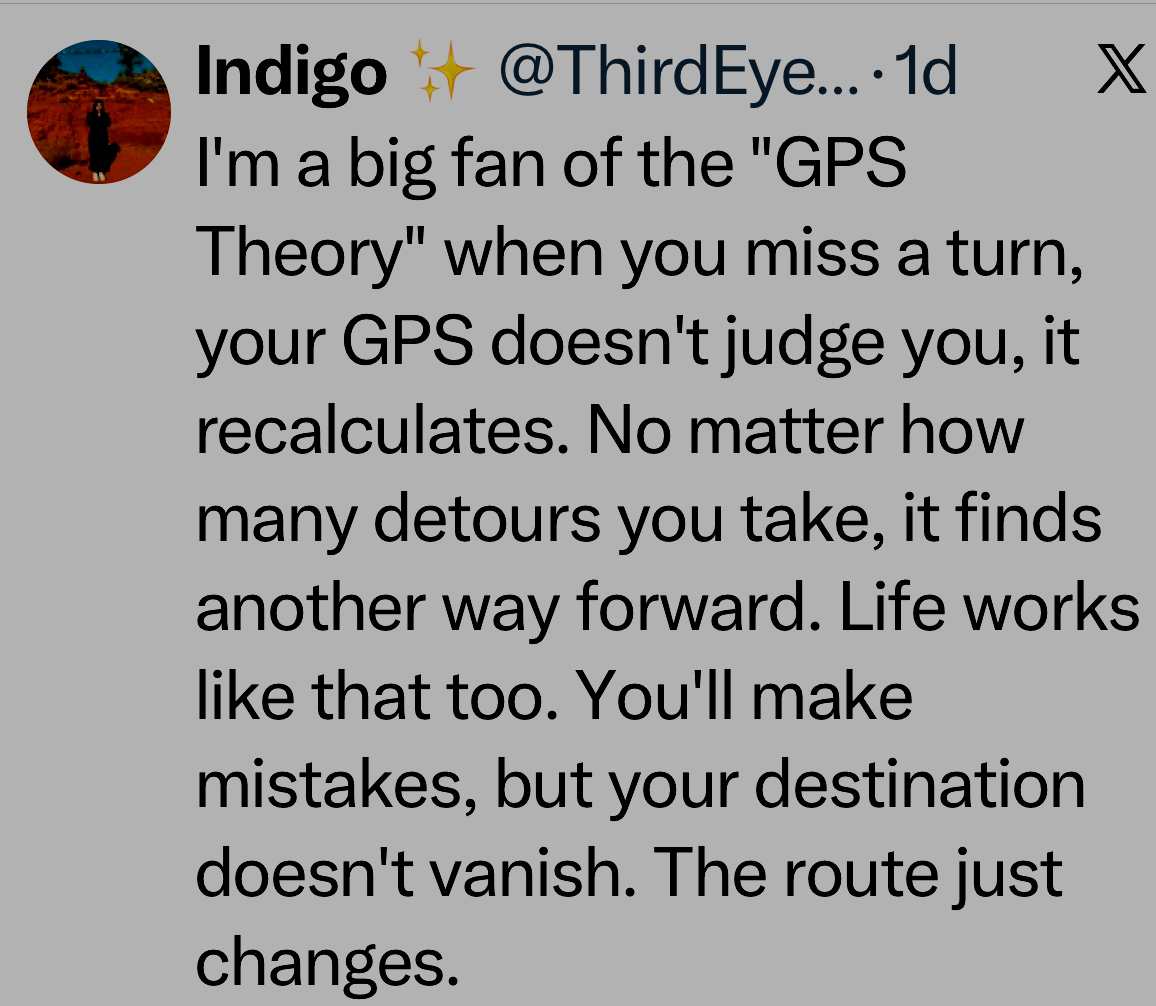
I saw a posting about the "GPS Theory" online and it inspired this Weblog because it is so true.
When you miss a turn, the GPS doesn’t judge you. It recalculates. No lectures. No shame. No emotional overreaction. Just a calm reassurance. “Here’s another way forward.”
Isn't that an element of success? Very few people hit a home run on their first at bat, their first job, their first boyfriend or girlfriend, their first final exam, their first...well you get the picture. We spend our whole lives 'recalculating' when faced with obstacles, failures, challenges and more.
We should be like the GPS: don't judge yourself too harshly, just recalculate. Don't get frustrated at the detour, just recalculate. Don't give up because you've made mistakes, your destination in many cases doesn't vanish, the route just changes.
Thinking back on my life, it has been true. I've missed turns, and overshot exits. I've been on plenty of roads that I never planned and hit plenty of dead ends. I've doubled back. And yet the destination doesn’t disappear. It waits quietly for the next recalculation.
Who knew that the little app on our phones could teach us such a valuable lesson?
| | |
Most of us assume GPS was invented so we wouldn’t miss exits. It wasn’t.
The system was originally developed by the U.S. Department of Defense in the early 1970s as a Cold War military technology. Its purpose wasn’t convenience—it was survival and superiority.
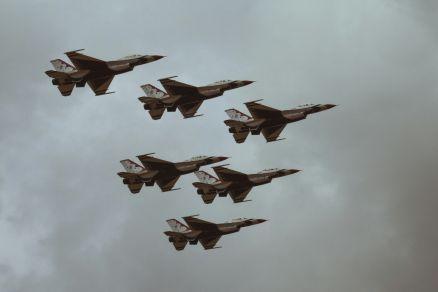
GPS was designed to track submarines in the depths of the ocean, guide aircraft through hostile skies, coordinate troop movement over vast terrain, and direct missiles with terrifying precision.
It wasn’t built to find restaurants. It was built to win wars, and for its first decade, GPS was completely restricted to military use. Civilians had no access. The technology lived behind classified walls and inside defense budgets.
It existed to answer three questions that mattered deeply in wartime: Where are we? Where are we going? When will we get there? All kinds of valuable bits of information.
Then in 1983, everything changed because of a tragedy.
A commercial Korean passenger jet accidentally drifted into restricted Soviet airspace and was shot down. All 269 people on board were killed. The shock reverberated across the world, and in response, President Ronald Reagan and the U.S. government announced that once GPS was fully operational, it would be made available to civilians worldwide, so navigation mistakes like that would never again end in catastrophe.
With that decision, GPS officially began its transition from a weapon of war to a tool of public safety. But even after civilians were granted access in the late 1980s and early 1990s, there was still a catch.
| | |
The military intentionally degraded the accuracy through something called "Selective Availability."
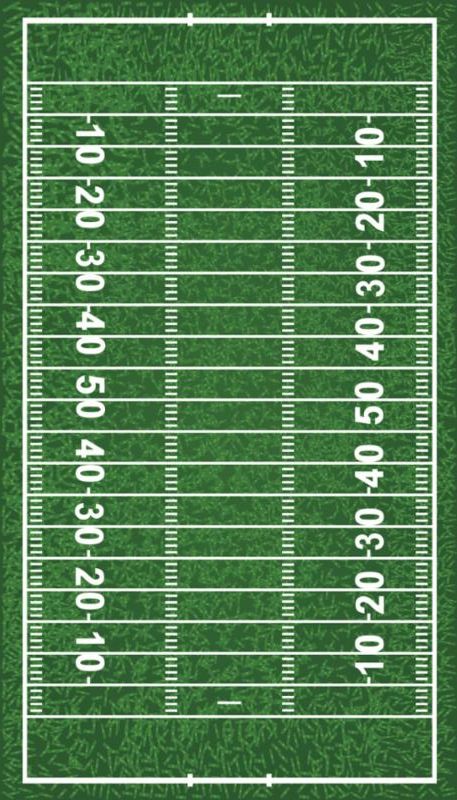
Civilian positioning could be off by as much as 300 feet, a full football field distance, on purpose. The logic was simple: enemies shouldn’t be able to use our own technology against us with perfect accuracy.
You could tell where you were. Just not exactly where you were. Boy, doesn't that happen in life as well? It has to me.
Then in May of 2000, a decision by President Bill Clinton changed the world: The military permanently turned off Selective Availability and overnight, civilian GPS accuracy leapt from “somewhere over there” to “you have arrived at your destination.”
That single switch was incredible in the sense that it unlocked turn-by-turn driving, ridesharing, emergency response mapping, precision agriculture, airline timing systems, logistics, smartphone navigation, and the little blue dot most of us now follow without thinking.
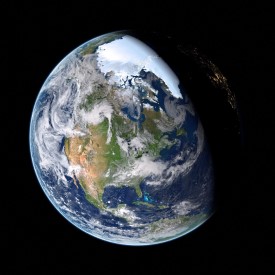
Today, more than 30 satellites orbit Earth nonstop, tracking location and time with astonishing precision. Even when you’re standing still, GPS is still working. It has become the nervous system of modern life.
Stop and think how incredible it is. You are two hundred miles away from your destination and it predicts when you will arrive TO THE MINUTE. TO THE MINUTE. It factors in your speed, the roads you will take, the traffic along the route. About all it doesn't factor in is how long the restroom stop will be.
| |
Before the GPS, most of us never used the word 'recalculation' very often.
But some of the most important journeys don’t give turn-by-turn instructions. They simply whisper: Keep going. Adjust as needed. You’ll still arrive.
| |
So yes, I will probably still use GPS to drive 3.1 miles to Dunkin’. Not because I’m lost, but because I like knowing the next turn. The next ETA. The next milestone.
And now I also realize a little better: Even when I a miss turn, the destination still exists. The route just changes.
| | Surprise Photo at the End: | | Joe's Positive Post of the Week | | Join the Smart Subscribers | | If you are reading this on a social media platform, click below and you'll automatically receive a 'different' story every week on Wednesday. | | |
The Roll Call of states and countries where readers reside: Arizona, California, Colorado, Connecticut, Delaware, Florida, Georgia, Hawaii, Illinois, Indiana, Iowa, Kansas, Kentucky, Louisiana, Maine, Massachusetts, Michigan, Mississippi, Missouri, Montana, New Hampshire, New Jersey, New Mexico, New York, North Carolina, North Dakota, Ohio, Pennsylvania, Puerto Rico, Rhode Island, South Carolina, South Dakota, Tennessee, Texas, Vermont, Virginia, Washington and Washington DC, Wisconsin plus Canada, Conch Republic, Australia and the United Kingdom.
| | Refer a friend to Sign Up for the Wednesday Weblog | | |
Ed Doherty
774-479-8831
www.ambroselanden.com
ed-doherty@outlook.com
Forgive any typos please.
| | | | | |