The Journey Newsletter

Part II

The Grieving Brain


An Extraordinary Interview

The New Science of Bereavement

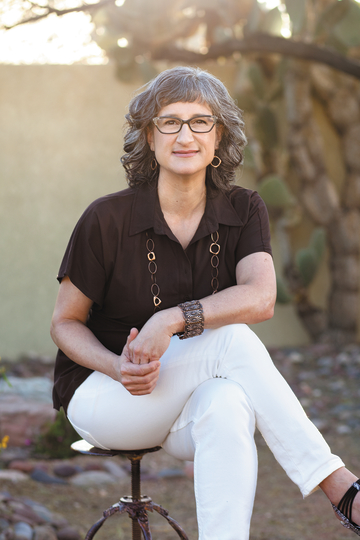
With Dr. Mary-Frances O'Connor

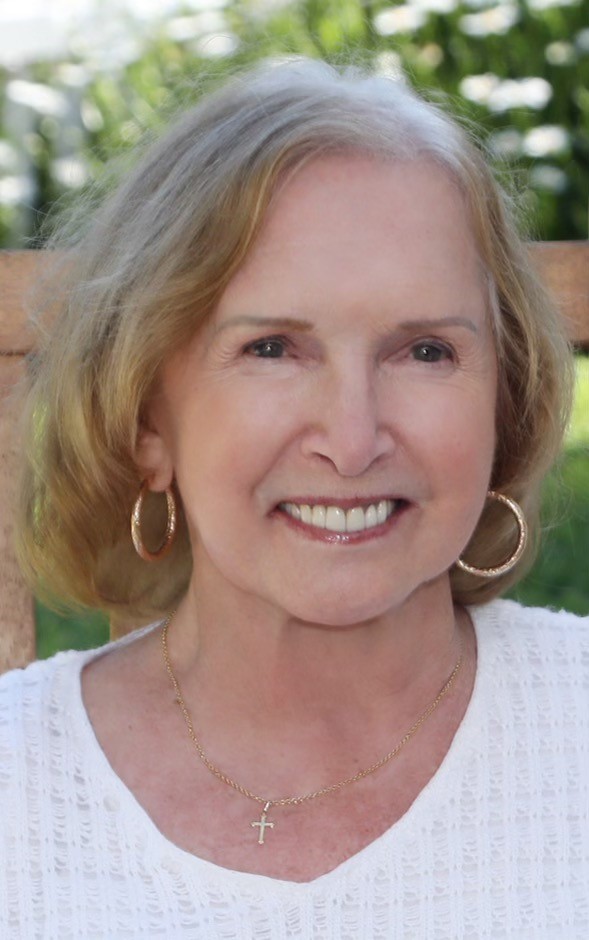
and Susan Whitmore, griefHaven Founder and CEO


"I think we sometimes forget that having

attachment bonds—those people we love

so much—is critical for our survival, like

food and water, and our brain knows that."


INTRODUCTION


Read Part II of interview below or

watch entire video here: Watch Video Interview


Last month we brought you Part I of my extraordinary interview with Dr. Mary-Frances O'Connor. This month we bring you Part II.


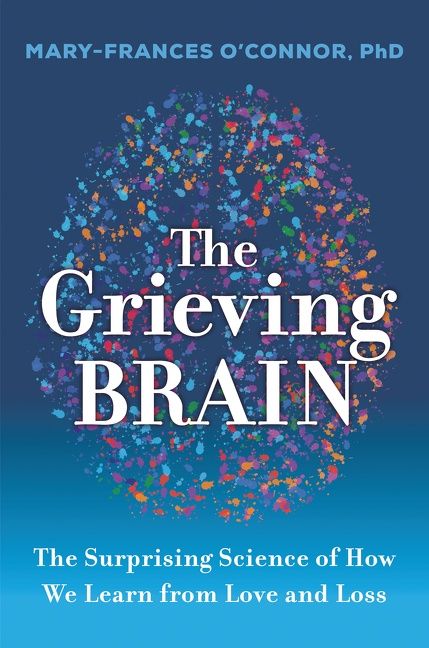
After years of research and studies, Dr. O'Connor has written and recently launched her groundbreaking book, The Grieving Brain. The Surprising Science of How We Learn from Love and Loss. I believe that what actually goes on in our brains after a loved one dies is such profound and essential information that I have dedicated the April and May newsletters to this two-part interview.


Dr. O’Connor, who has devoted decades to researching the effects of grief on the brain, reveals a fascinating new window into one of the hallmark experiences of being human. She makes cutting-edge neuroscience accessible and guides us through how we encode love and grief.


Significantly, O’Connor debunks Kubler-Ross’ enduring

idea of the “Five Stages of Grief” and sets a new paradigm

for understanding grief on a neurological level.


With beautiful graphics and easy-to-understand cogent language, I highly recommend everyone read this book. In fact, we have made it mandatory reading by all of our griefHaven support group staff.   


More about the book below.

Meet Mary-Frances O'Connor, Ph.D.

Mary-Frances O’Connor, Ph.D. is an associate professor of psychology at the University of Arizona, where she directs the Grief, Loss and Social Stress (GLASS) Lab, which investigates the effects of grief on the brain and the body. O’Connor earned a doctorate from the University of Arizona in 2004 and completed a fellowship at UCLA. Following a faculty appointment at UCLA Cousins Center for Psychoneuroimmunology, she returned to the University of Arizona in 2012. Her work has been published in the American Journal of Psychiatry, Biological Psychiatry, and Psychological Science, and featured in Newsweek, the New York Times, and The Washington Post. Having grown up in Montana, she now lives in Tucson, Arizona. For more information go to About Dr. O'Connor.

INTERVIEW


PART II

(To read Part I, use this link: Part I)


Watch entire interview here:

Watch Interview


(This interview edited for length and clarity.)


Neuroscience is part of the

conversation of our times. By

understanding the myriad aspects

of grief, by focusing in greater

detail on how brain circuits,

neurotransmitters, behaviors, and

emotions are engaged during

bereavement, we have an opportunity

to empathize in a new way with

those who are currently suffering.

We can allow ourselves to feel grief,

allow others to feel grief, and

understand the experience of grieving,

all with greater compassion and hope.


Where Is My Loved One?


SW: When a grieving person keeps asking, “Where is my loved one?” after the loved one has died, how do they create a new mind map so that all aspects of the brain know the person is not coming back?


MF: It is fascinating that almost every religion gives us an answer to "where" our loved one is and when we will see them again. I think it is because of the intensity of those questions when someone dies that it feels vital to answer that question. For many people it means there must be an answer, and it gives them a belief about what happens after death. It’s not my role to say what is the right answer to those questions, and many people find those religious answers comforting.


Also, that part of us is still trying to find

our loved one as though they are alive. 

You have a lot of chemicals and

neuro-connections that are trying

to motivate you to do that. 


Yet, at the same time, we know there is no map, right? They can’t be found. So I think ultimately it is for us to recognize that it is a feeling we are having, it’s natural, and it makes sense that we are having this feeling. This is one of the "after effects" of the depth of love you felt, and it’s okay to have that loving feeling, and it also isn’t going to enable you to find them on this physical plane.


So it helps if each person decides how to transform that question to perhaps think more in terms of, "How can I provide this love in other ways?" For instance, it can be giving to living loved ones or to animals, to nature, or in other ways that you can give out that same feeling of loving. For some people it may be talking with their loved ones in their minds because they know what advice their loved ones would give, how they would respond, and even what they would laugh about.


For some people it is developing a way to have conversations with them and bring them to mind in that way. And many people use particular locations for this, such as places where they think of their loved one being, such as the gravesite, because it means they can go there and remember them and talk to them and provide some connection as to where they might be in time and space.

Feeling Abandoned ... A Deeper Understanding


SW: A hurtful and aggravating issue that pops up for so many people with whom I work is why people are not there for those who are in deep grief after the service is over, the flowers have wilted, and everyone gets back to their lives. I initially

thought that perhaps much of it was simply that others did not understand the

abandoned.png

deep need for those who are grieving to continue having that loving support around them, and, most of all, just having someone who allows them to talk about their loved one and keep his or her memory alive. But after learning about "mirror neurons," I am wondering if that plays a role in why so many people seem to disappear soon after—that perhaps there is actually something going on in the brain that makes it too hard for some to handle the other person's pain.


MF: I think it happens for a number of different reasons.


I think one is that we have an empathic

response when we are around someone

who is having intense emotions.


For lots of people it brings up the fear they themselves have around experiencing grief or losing a loved one, and it is too difficult for them to bear. Perhaps they have not developed skills of how to manage that for themselves. And so it’s too painful to be present with that and feel empathy, which is what creates the feeling in yourself. I think that’s one of the reasons that it’s very difficult for people.


I think a second completely different reason is that, for people who haven’t experienced a particularly intense loss, they just can’t understand what it’s like. You know grief is actually so different than we expect it to be, and it's so much more intense than we expect.


Recently, I had an experience with a group of friends who had been golfing, and one of them just blew his stack. Everyone else was wondering what is happening? They all thought it was so bizarre for him to be acting that way. I said, "Guys, he just lost his mom four months ago." They said, "But he was so angry." I said, "Yes, that’s one of the many normal responses to loss." So I think you are not always anticipating what it’s going to feel like for that person who’s going through intense loss.


SW: Does that empathy or compassion where we might feel things so deeply have something to do with mirror neurons, because I am fascinated by mirror neurons. Could you speak to that?


MF: I think it’s easy to think of mirror neurons as being the source of all empathy and compassion, yet that’s not quite how they work.


What we do know is that, when we see other people who are communicating an emotion, we often figure out what that emotion is by actually recreating it—simulating it in ourselves. That doesn’t have to require mirror neurons, but it is a way that human beings understand what another person feels. And in order to do that you sort of have to feel a piece of it yourself.


That can be quite painful for people,

and, in that moment, they might not

know how to alleviate their own distress

or the distress of the other person.


I think the final reason is that in our society most people believe that the goal is to cheer up a grieving person. But really the goal is just to be with them and let them go through whatever it is they’re going through, so they don’t feel so alone. When we are trying to cheer someone up who is grieving, they often feel more alone because we’re saying don’t be who you are right now; be something else. For a person who is already feeling disconnected, by saying don’t be who you are right now feels even worse.


SW: That is so powerfully true. You know, this information can be helpful to everyone, including those who are grieving and hurt or angry about those who aren’t there for them. Maybe this knowledge will lead to a better understanding and hopefully open up the conversation between them. 


MF: Absolutely.


Adapting to Loss


SW: In your research did you find that a certain percentage of people simply adapted in a healthy way to their losses without ever doing any therapy, any grief support work, or accessing medication?


MF: That’s an excellent question.


There are no neuroimaging studies done on this, and I actually can’t think of a study where they looked at people who had not used any of those types of interventions compared to people who had. Occasionally, they try to control for it statistically in a study, but that’s not quite the same thing. So while we know that people are actually surprisingly resilient, we don’t necessarily know if it’s the people wo are reaching out for the most support who are the ones who are the most resilient.


I mean I do know there definitely are people who don’t do any of these types of interventions and do adapt. But I don’ think we have any sense of how many and what kind of people. Those are important questions.


SW: That would be an interesting study and seems like an important one.


MF: Absolutely. I learn a lot from people that aren’t in the weeds every day doing grief research—people who, like you, have a ton of experience meeting people who are grieving and having grieved yourself. As a researcher, there are questions I have forgotten about or haven’t thought of, and so I find it very useful to have conversations like this.

sized longing.jpg

Longing and Yearning


SW: Your study you did back in 2008 resulted in a stunning outcome—very exciting—and I’ve spoken about it all over the United States. That study involved using functional MRIs (fMRIs) to look into the brains of those who were grieving, and the result included seeing a part of the brain light up that involved a "yearning" and "longing" for the person who died. 

I personally experienced a depth of yearning for my daughter, Erika, that I could barely stand to live with. It took a long, long time for me to learn how to live with it. Can you talk about yearning more and how that ties in with loss?


MF: I think of yearning like I think of thirst and hunger.


Yearning to me is the heart of grief,

and it really is the motivation—the

desire—to see them again and for

things to be back the way they were.


The reason I make an analogy to hunger and thirst is because I think we sometimes forget that having attachment bonds—those people we love so much—is critical for our survival, like food and water, and our brain knows that.


So our brain generates this feeling of yearning in the same way that it generates a feeling of hunger and thirst in order to motivate us to go out and be with people. We can make the same analogy between trying to find our loved ones and that yearning and craving. That feeling of craving can also describe that intensity of desire for this person.


But the place where I think there’s a

difference is when we think of craving

as something such as that for a

drug ... such as in drug addiction.


With yearning, it is a motivation for something that is healthy—that is necessary for our survival. With drug addiction you have a substance that’s taken over a naturally occurring part of the brain, and it isn’t healthy for us to keep stimulating it in that way. So you wouldn’t say if someone was craving water because they were dehydrated that they were addicted to water. It just doesn’t make sense because it is a natural, normal function of being human that we need water.


It is similarly a natural human function

that we need the ones we love.


SW: That is such an important concept for people to understand.


You know there is a woman who is one of my favorite poets, Ellen Bass. She writes one of my favorite poems entitled The Thing Is. In her poem she says, "When grief weights you down like your own flesh, only more of it, an obesity of grief." She refers to the obesity of grief, which I think paints a powerful picture of it.


MF: That is powerful.


Expected and Unexpected Deaths


SW: What about unexpected death versus knowing the person is going to die? I have had people, even professors, ask me whether or not knowing Erika was going to die allowed me to start the grieving process before she actually died ... that thing referred to as anticipatory grief. I found that, once Erika actually died, it was as much of a shock as if I had no idea. At least it felt that way. Would you address that?


MF: When we do research and ask people whether the death was expected, or even sometimes we put a timeframe out, such as Did you know in the week before that they would die? Did you know a month before? people who say yes they knew and people who say no they didn’t know all say, regardless of the knowing or not knowing, that it was completely out of the blue.


With a sudden, natural event, we do see higher levels of grief, but that is just on average. Unexpected deaths are harder for a brain to wrap itself around because there was no chance to adjust the prediction of what's coming at all. But having said that, and as you said, many people whose loved ones are in hospice or they are expected to die still experience that death as if it were an unexpected event. So even if it was an expected death, the grief itself feels so different than we were expecting it to feel. So even if someone knows the death is coming, they can't know what the grief will feel like.


SW: I often wonder if that’s tied in with the thing we talked about earlier where our brain keeps thinking the person is coming back, where it takes time for us to stop thinking that. I wonder, with an "unexpected" death, if that process might take even longer.


MF: I mean when we’re caring for a loved one who is terminally ill, our routines have already been disrupted. For instance, they’re not coming home from school at 4:00 P.M. every day. Already there are those lifestyle changes and routines in which our habits have also changed. So even though the person has not yet changed in the way they will after their death, many changes have already started taking place in our lives. With unexpected death, you don't have that. So with the unexpected death there is that sense that things suddenly go from zero to 60 and there's nothing in-between.


SW: In general, what message do you want to send to everyone impacted by death, including the grievers, the supporters, the professionals, and others?


MF: When I talk to students or clinicians, or even people sitting next to me on a plane, I find they have burning questions about grief. They ask: Is grief the same as depression? When people do not show their grief, is it because they are in denial? Is losing a child worse than losing a spouse? Then, very often, they ask me this type of question: I know someone whose mom/brother/best friend/husband died, and after six weeks/four months/eighteen months/ten years, they still feel grief. Is this normal?


After many years, it dawned on me

that the assumptions behind people’s

questions demonstrate that grief researchers

have not been very successful at broadcasting

what they have learned. That is what

motivated me to write this book. I am

steeped in what psychologist and grief

researcher George Bonanno

termed the new science of bereavement.


The type of grief that I focus on in my book applies to those who have lost a spouse, a child, a best friend, or anyone with whom they are close. I also explore other losses, such as the loss of a job, or the pain we feel when a celebrity whom we admire greatly and have never met dies. I offer thoughts for those of us who are adjacent to someone who is grieving, to help us understand what is happening for them. This is not a book of practical advice, and yet many who have read it tell me they learned things they can apply to their own unique experience of loss.


The brain has always fascinated humanity, but new methods allow us to look inside that black box, and what we can see tantalizes us with possible answers to ancient questions. Having said that, I do not believe that a neuroscientific perspective on grief is any better than a sociological, a religious, or an anthropological one. I say that genuinely, despite devoting an entire career to the neurobiological lens.


I believe our understanding of grief

through a neurobiological lens can

enhance our understanding, create a

more holistic view of grief, and help us

engage in new ways with the anguish

and terror of what grief is like.


Neuroscience is part of the conversation of our times. By understanding the myriad aspects of grief, by focusing in greater detail on how brain circuits, neurotransmitters, behaviors, and emotions are engaged during bereavement, we have an opportunity to empathize in a new way with those who are currently suffering. We can allow ourselves to feel grief, allow others to feel grief, and understand the experience of grieving—all with greater compassion and hope.


SW: Well, we are right on time. Thank you for taking the time to share this latest information, which I know will "enhance our understanding" of grief, as you stated above.


MF: It's been a pleasure seeing you again and spending this time with you.


EXCITING NEWS!


Meet

Dr. Mary-Frances O'Connor

in Person


SAVE THE DATE


THURSDAY, FEBRUARY 9, 2023


UCLA LOS ANGELES

OPEN MIND EVENT by FRIENDS OF SEMEL INSTITUTE


Hope to see you there. We will definitely be there!

The Grieving Brain: The Surprising Science of How We Learn from Love and Loss

To order The Grieving Brain - Order


Loss of a loved one is something everyone experiences, and for as long as humans have existed, we have struggled when a loved one dies. Poets and playwrights have written about the dark cloak of grief, the deep yearning, and devastating heartache of loss. But until now, we have had little scientific perspective on this universal experience.  In THE GRIEVING BRAIN: The Surprising Science of How We Learn from Love and Loss (HarperOne; February 1, 2022; Hardcover) renowned grief expert, neuroscientist, and psychologist  Mary-Frances O’Connor, Ph.D., shares groundbreaking discoveries about what happens in our brain when we grieve, providing a new paradigm for understanding love, loss, and learning.

The Grieving Brain addresses:

·        Why it’s so hard to understand that a loved one has died and is gone forever

·        Why grief causes so many emotions—sadness, anger, blame, guilt, and yearning

·        Why grieving takes so long

·        What happens in the brain during grief

·        The distinction between grief and complicated grief

·        Why we ruminate so much after we lose a loved one

·        How we go about restoring a meaningful life while grieving


To order The Grieving Brain - Order

Genie.jpg

In Loving Memory

of Our Dear Friend


GENIE RIORDAN MULÉ


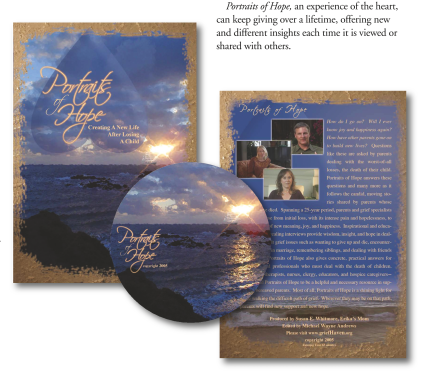
In 2003, before griefHaven even had a website, we put an article in our community newspaper, the Palisadian-Post, stating we were looking for parents who would be involved in our new documentary film about losing a child, Portraits of Hope. The idea behind that film was that parents with different losses would share how they managed to embrace life again, which would give hope and guidance to people around the world. 


A beautiful woman, Genie Riordan Mulé, reached out to us. She shared her story of losing two of her beloved adult children, Billy and Carol, just two years apart. Genie said she would be honored to share her story of how she managed to pick up the pieces of her life and embrace it once again.

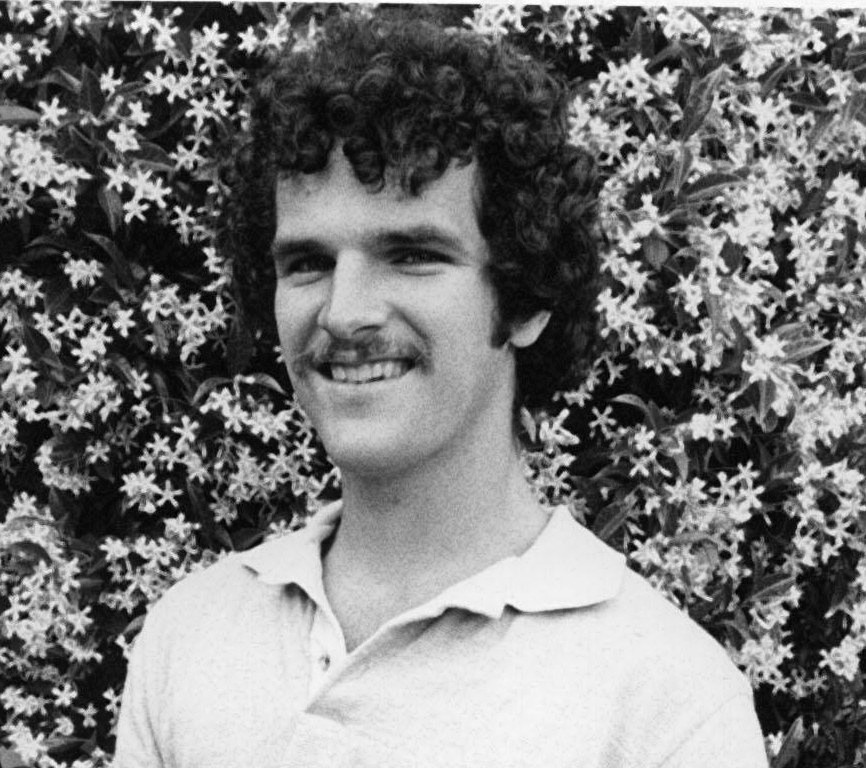
Billy Riordan

8 Carol Ann black and white.jpg

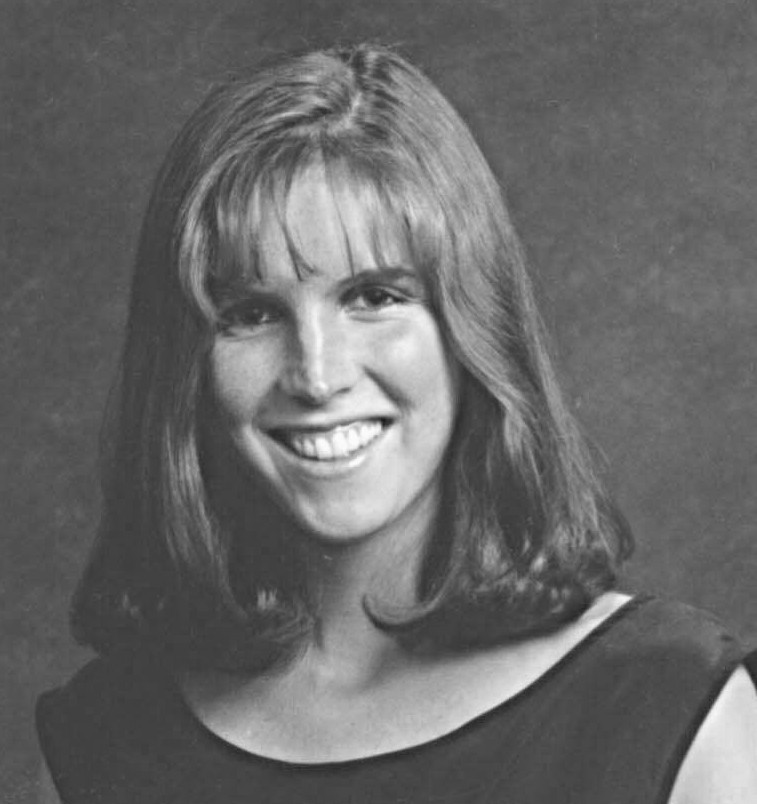
Carol Ann Riordan

Losing one child is unthinkable, but losing two is unfathomable! Nevertheless, Genie bravely hoped that her story might provide love, hope, and guidance to others. And it has done just that! By participating in Portraits of Hope, Genie's unwavering kindness and thoughtful wisdom has been experienced by hundreds of thousands all over the world. Genie had a broken heart, but she never closed her heart, instead inviting others in as she slowly and gently showed them that there is a happy and good life beyond loss.


Genie became not only my dear friend and mentor, but one of the greatest supporters griefHaven has had. There were so many times in that first and second year of my grief that I would reach out to her in tears, feeling like I could not bear another moment of the unrelenting pain of losing Erika, and Genie would lovingly listen with such gentle kindness and understanding. Her wisdom was a gift that would lift me ever so gently to face another day.


Genie's faith was one of the things that provided a solid foundation for her, and she lived a life that was filled with spiritual purpose. And that smile! She would light up any room when she was in it. Even while battling multiple sclerosis, she remained charming, graceful, and giving. 


Thank you, Genie, for your gracious, generous, and loving spirit and for contributing in every way to who griefHaven is today. Friend, philanthropist, grandmother, mother, wife, and soulful human, you are now surely with your beloved Billy and Carol.


The world is a better place because you were in it. You will always be remembered as the woman who walked into our hearts and gave us hope for a better tomorrow.


With love,

Susan Whitmore, Founder and CEO


To hear Genie's story and watch Portraits of Hope, Watch Here.

Thanks for Donating Here
For details, contact us at hope@griefHaven.org or (310) 459-1789
OUR SUPPORT GROUPS ARE SPECIAL, SAFE, AND HEALING PLACES TO BE

Private/closed groups
by losses include (by Zoom):

CHILD LOSS
BABY LOSS
SPOUSAL LOSS
SIBLING LOSS
PARENT LOSS

Join a current group or get
on our waitlist by calling
or emailing us.

hope@griefHaven.org * (310) 459-1789
griefHaven | 310-459-1789 | hope@griefHaven.org | www.griefHaven.org
Order a free Packet of
Hope for yourself or
someone you care
about. Order Packet

________________
Now Online - Portraits of
Hope: The Parent's
Journey Documentary
Film - Watch here
________________
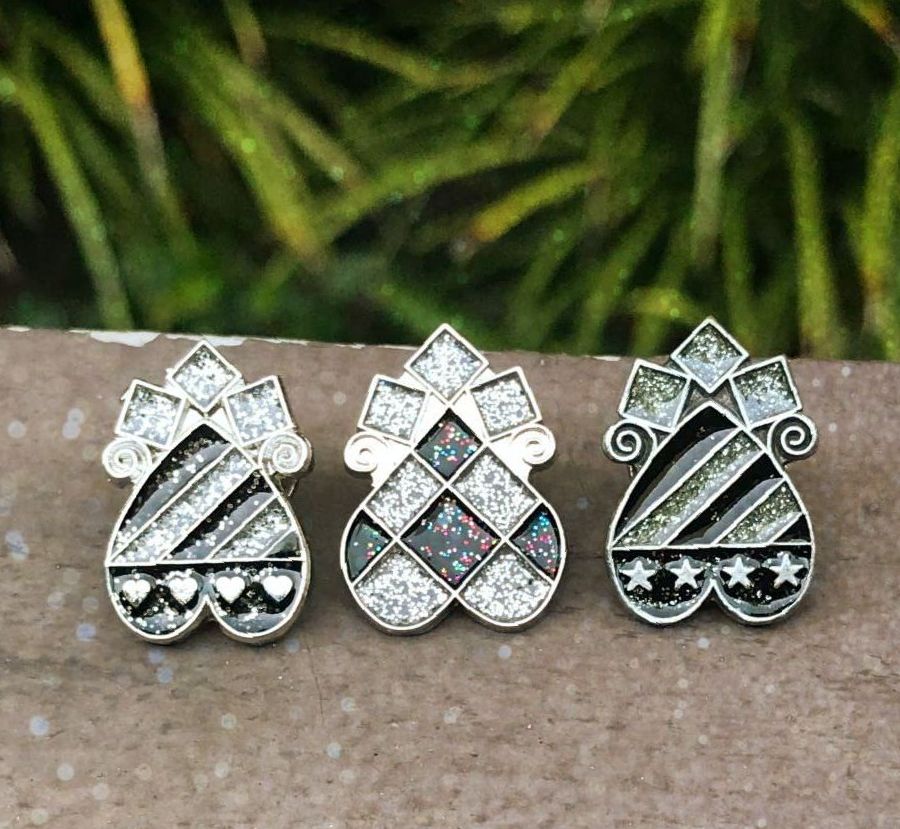
Grief Pins
For the person who is
grieving. Makes a
loving gift. Order Pins

________________
What to Say; What Not
to Say to Someone
Who Is Grieving
Not sure what to say to
someone who is grieving?
That's okay. We've got
you covered. Watch this
for some guidelines.
________________
Now You Know™
Videos
Short, informative videos
on various grief subjects.

________________
Memory & Honor Wall
Visit our "In Loving
Memory of" and "In Honor
of" wall. All donors
receive a tile.
________________

griefHaven | 310-459-1789 | hope@griefHaven.org | www.griefHaven.org - May2022