Elmo Peeler Note-for-Note Piano Transcriptions |
|
|
Greetings!
Today is the first day of July and time again for my monthly newsletter, to keep you informed of recent transcriptions and other news of the last month.
|
|
Leon Russell - "Shoot Out on the Plantation" |
|
This month I have three new transcriptions. One is of Leon Russell at his very best, one is of Rod Argent of The Zombies, and the third one is a Jimmy Buffett recording. Plus, in addition to sheet music, new MIDI files are available.
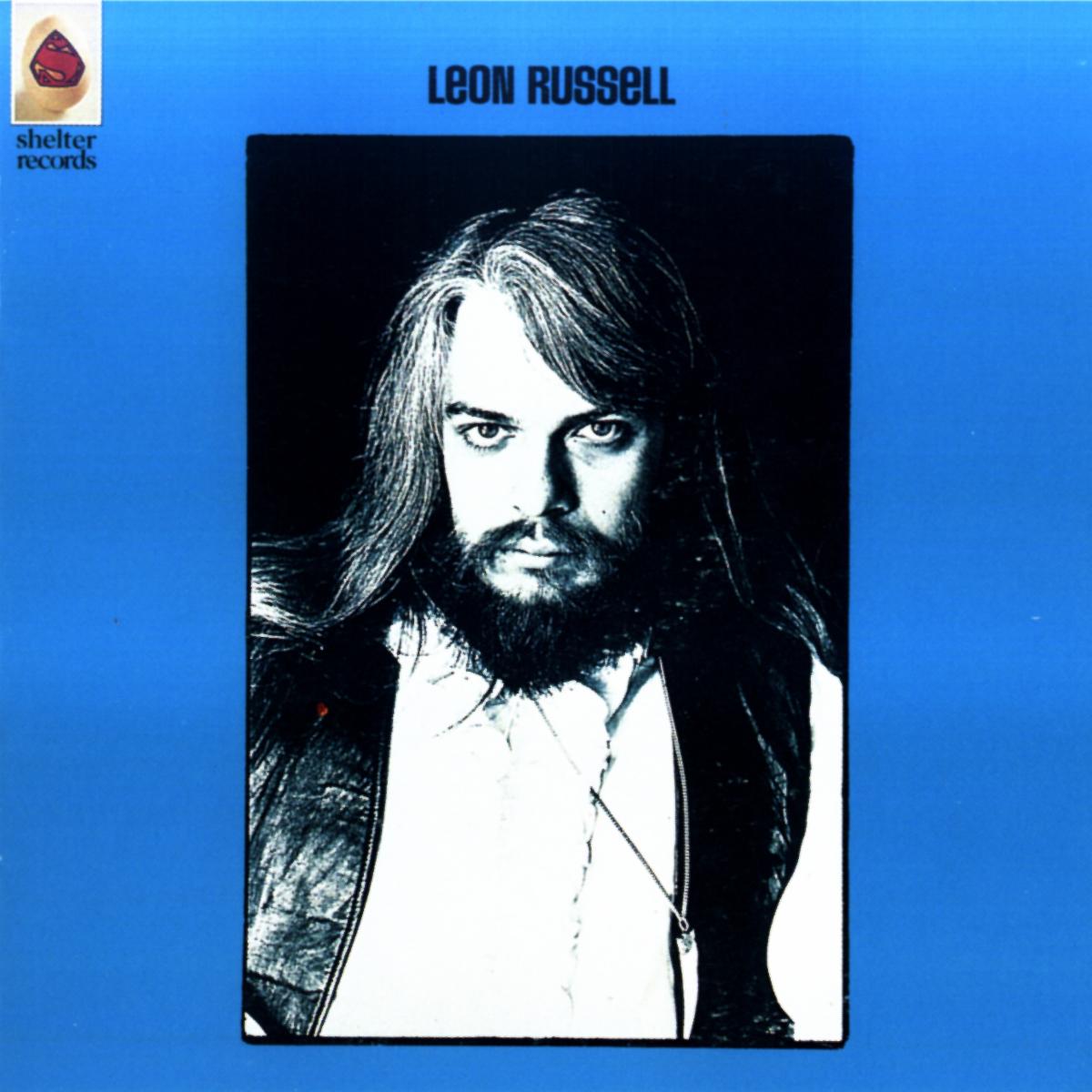
The main one is Leon Russell's "Shoot Out on the Plantation" but NOT the same one as featured last month. This 1970 album version has an entirely different piano part - a Great track - as recorded by Leon with his rhythm section (last month's was a rare piano/vocal version).
The Zombies transcription is of Rod Argent playing the piano solo in "This Will Be Our Year".
The Jimmy Buffett transcription is a section in his "Son of a Son of a Sailor".
Plus, a new exercise in the style of Leon Russell. This is my most in-depth exploration of Leon's amazing piano style.
Also new this month is the MIDI Corner section. Most of my transcriptions have not been available as MIDI files, but this month there are some new ones, and there will be more MIDIs every month.
|
|
BTW, to make sure that my email doesn't end up in your Spam folder, please add me to your Contact list and/or mark my email as "Not Spam".
Note that every Title Heading is clickable.
|
|
ALL of the Sheet Music listed on my website has been personally transcribed by me, and guaranteed to be note-for-note perfect.
Whether you:
- have a cover band and want to get your keyboard parts exactly correct,
- are a professional who wants to study the styles of rock's greatest keyboard players, or
- are a hobbyist that wants to learn how to play pop/rock and great piano music,
...these note-for-note transcriptions will prove extremely helpful.
|
|
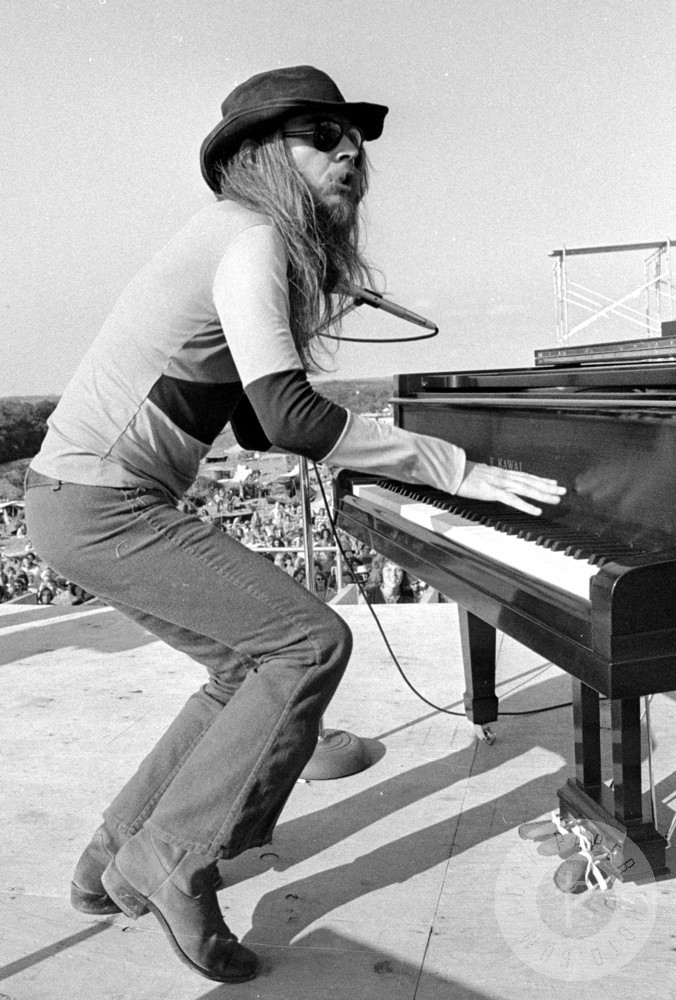
Born in Oklahoma as Russell Bridges, young Russell began playing piano at the age of four.
He attended Will Rogers High School in Tulsa, Oklahoma in the same 1959 class as David Gates ('Bread'). He and Gates played and recorded together as the Fencement.
At 14 Leon was already performing in Tulsa nightclubs. "Oklahoma was a dry state and consequently there was no liquor laws, and I was able to take advantage of that by playing in nightclubs at the age of 14. It was real handy."
At 17, in 1958, Russell moved from Tulsa to Los Angeles, where as a first-call studio musician he played on many of the most famous recordings of the 1960s.
|
|
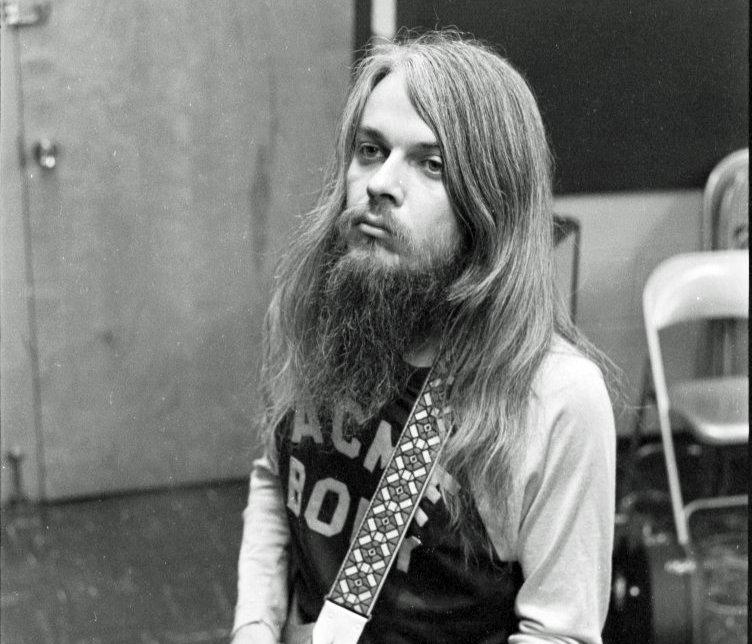
Leon Russell - pianist extraordinaire |
|
When Leon began working with Joe Cocker in 1969, he was already a veteran of the L.A. studio scene, a member of 'The Wrecking Crew', playing on many of Phil Spector's 'wall-of-sound' hits, plus hits by The Byrds, The Beach Boys, Jan & Dean, Gary Lewis & The Playboys, Bobby 'Boris' Picket, Herb Alpert, Frank Sinatra, Glen Campbell and many others.
In early 1970 Joe Cocker needed to put together a band quickly for a U.S. tour and hired Russell to recruit the musicians. Russell hired members of The Wrecking Crew, the Delaney & Bonnie band, and Cocker's Grease Band, and began rehearsals.
Those rehearsals led to the live Fillmore East concert that was recorded and released as the MadDogs & Englishmen album, along with the 1971 movie, Mad Dogs & Englishmen - a documentary of the Joe Cocker tour for which Leon served as Musical Director.
Shortly thereafter, jam sessions with Delaney & Bonnie led to Leon recording "Don't Deceive Me (Please Don't Go)" and "Faded Love" with them - late-night jam arrangements anchored by Leon's wonderful gospel-style piano accompanying Bonnie's plaintive voice. |
|
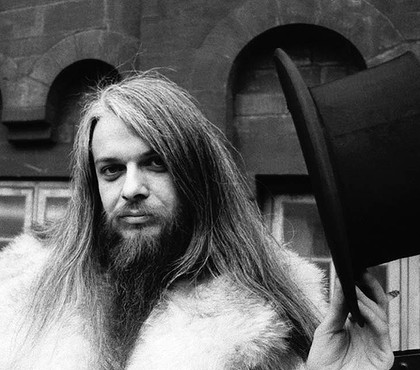
Leon Russell - The Master of Time & Space |
|
And it was in August 1970 when Elton John gave his very first Los Angeles performance, with Leon sitting in the first row of the relatively small club, The Troubadour.
Leon described it, "We'd been trying to get Elton for Shelter Records [the US record company started by Russell in 1969], but we were about a week late. I knew about him before he came to America; I had heard him with Long John Baldry. I sat down in the first row at the Troubadour, and he was brilliant.
"Sometime after the first Troubadour show, Elton and Bernie came over to my house. They were both very shy and very English, and Elton told me I looked like a proper rock star.
They liked a sign I had above the piano saying "Don't Shoot The Piano Player." I think maybe that was where they got the idea for that album title."
|
|
Of that meeting, Elton remembers, "It was the most magical of times because here was my idol accepting me. Actually, he could eat me for breakfast [playing piano]. I came from England and being a huge fan of someone like him and to have him accept me and kind of take me under his wing and be really fantastic to me the whole time. It meant the whole world to me that someone could show me that generosity that you admired so much. It helped validate me by saying, "Well if he thinks I'm alright then I must be alright because he's my hero."
"I saw him and my knees went zzzippp!. He invited me up to his house and I thought he's going to invite me up there and tie me to a chair and whip me and say, "This is how to play the piano!" I was really scared. I (had) heard the Delaney & Bonnie album (1969's Accept No Substitute, which featured Leon Russell on piano) and I just went through the roof. I nearly retired at that point. I figured there wasn't much point in playing anymore."
Few recordings have captured Leon as well as his studio version of "Shoot Out on the Plantation" from that same momentous year of 1970: the Joe Cocker "Mad Dogs" tour, meeting Elton, and Leon's eponymous first solo album (which contained "Shoot Out on the Plantation", "A Song for You", "I Put a Spell on You", and "Roll Away the Stone").
|
|
|
|
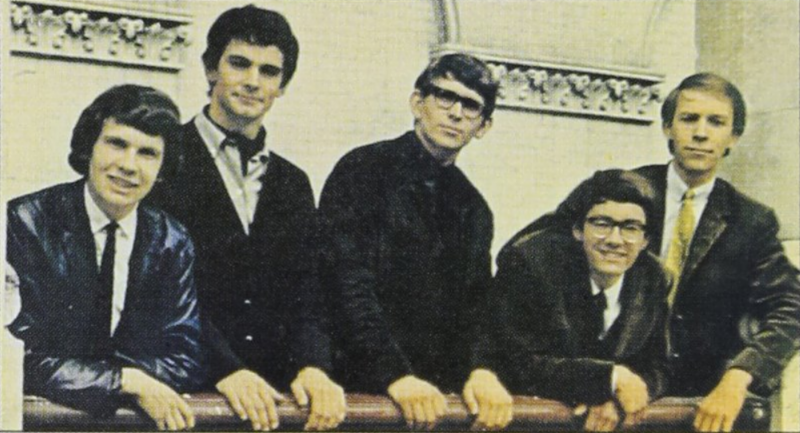
Rod Argent was born in 1945 in England in St. Albans, Hertfordshire, into a working-class family. His father, Les Argent, was an aeronautical engineer who machined parts at the De Havilland aircraft factory.
His father had also been the leader of two semi-professional dance bands, the Les Argent Quartet and Les Argent and his Rhythm Kings.
Although his father did not teach Argent music, Rod was raised hearing him playing the upright piano in the family home.
|
|
As a child, he sang as a chorister in the St Albans Cathedral Choir. While at St Albans School, he met Paul Atkinson and Hugh Grundy. Argent, Atkinson, and Grundy first played together at a jam on Easter 1961 in St Albans.
Argent wanted to form a band and initially asked his cousin Jim Rodford to join as a bass guitarist. Rodford was playing in local band called the Bluetones at the time, so he declined. Colin Blunstone and Paul Arnold joined the new band in early 1961, while all five members were still at school. Arnold left not long after and was replaced by Chris White.
After the band won a local contest, they recorded a demo as their prize. Argent's song "She's Not There" got them a recording contract with Decca.
In addition to playing the piano and keyboards in the Zombies, Argent was (with White) one of the group's two main songwriters, penning the hits "She's Not There", "Tell Her No", and "Time of the Season", among others.
Argent was initially the group's lead singer, with Blunstone on guitar. When Argent's keyboard talents became apparent, he became the group's full-time keyboard player, conceding the role of lead singer to Blunstone. The group continued to record through the 1960s, but disbanded in December 1967.
After the band broke up, Argent went on to form the band Argent, which had a hit album in 1972 with All Together Now, which contained the single "Hold Your Head Up". His Hammond B3 solo on that track is cited by Rick Wakeman as the greatest organ solo ever.
|
|
My Zombies transcriptions:
|
|
July's New Transcriptions - Leon's "Shoot Out on the Plantation" from his 1970 Leon Russell album, The Zombies' "This Will Be Our Year" & Jimmy Buffett's "Son of a Son of a Sailor"
Note-for-Note Accuracy
|
|
|
|
Please don't confuse this month's brand-new transcription with last month's. They both are of Leon Russell's "Shoot Out on the Plantation" but are two completely different piano tracks.
This month's "Shoot Out on the Plantation" is the classic track from his 1970 album, Leon Russell. It was recorded with his rhythm section and his piano part is quite different from last month's rare Vocal/Piano version.
It is Leon at his very best - terrific rhythms, great chord voicings, flying Right Hand octaves, and challenging Left Hand lines.
If you love Leon's iconic "swamp-rock" style - and who doesn't - "Shoot Out on the Plantation" contains some of the very best elements of his style.
If you want to really understand Leon's piano-playing, you should get both of these transcriptions - this one plus last month's piano/vocal version.
|
|
Also new this month is my transcription of Rod Argent's piano solo in The Zombies' "This Will Be Our Year".
Instead of the fast, single-note, minor-key type of solo in "She's Not There", this Zombies' solo is chordal, with Rod Argent using full, fat chords in both hands simultaneously to achieve a different sound than many of the other Zombie classics.
|
|
Also new this month is my transcription of two sections in Jimmy Buffett's "Son of a Son of a Sailor" - the organ part during the 2nd Chorus plus the immediately-following harmonica solo. The harmonica solo, primarily in thirds, can be played on either a piano or organ and still sound very good. |
|
Also available this month are MIDI files of the the new Leon Russell "Shoot Out on the Plantation" transcription and The Zombies' "This Will Be Our Year" piano solo. |
|
A Definitive Study of Leon Russell's Style
|
|
|
|
Having been immersed in Leon Russell transcriptions for the last couple of months, I want to help others to understand his unique, amazing style.
So this month's new exercise does just that - it's a three-part exercise demonstrating the main elements of Leon's "swamp-rock" style.
Each of the three sections is progressively more difficult.
The main elements of his playing that define his style are his rhythms, his chord-voicings, his use of octave runs, the slight dissonances in his octaves, his note choices (a combination of the Dorian & Mixolydian modes), the way he executes grace notes, and what he does with his Left Hand (and what a Great left hand he had!).
|
|
This new "Leon Russell Exercise" incorporates all of those elements.
This exercise is available as both a sheet-music PDF and as a MIDI file.
BTW, if you need other good, effective technical exercises, pleases check out the other 88 exercises available.) |
|
(to listen to it, click here) |
|
The Hangout Place for Gospel Classics
|
|
You don't have to be from the Deep South to love Gospel piano, nor do you need to belong to any particular religion. All you have to have is a love for wonderful old-time, swinging, uplifting piano-playing.
Leon Russell, Billy Preston, Richard Tee and Ray Charles, some of the greatest keyboard players ever, loved the style and infused their own performances with Gospel licks and rhythms.
Inspired by the wonderful playing of the portly Associate Pastor/Musical Director of my childhood's Baptist Church deep in the piney woods of Mississippi, in recent years I've transcribed and/or arranged a few Gospel classics.
This little corner of my newsletter is where I'll keep you informed of my latest efforts to share that old-time Gospel sound.
Here are my Gospel transcriptions and/or arrangements, plus some exercises:
Full-blown Gospel:
Heavily Gospel Influenced:
Moderately Gospel Influenced:
Gospel-related Exercises:
|
|
Helpful for Those that Don't Read Sheet Music Well
|
|
Most of my transcriptions have heretofore been available only as sheet music in PDF's. That is gradually changing - some are now also available as MIDI files, which can be especially helpful for those that would prefer to listen to them than to read the sheet-music notation.
This section of my newsletter is where I'll keep you informed of which transcriptions and exercises are available as MIDI files.
BTW, if you'd like my sheet music in a MIDI file, just let me know which one(s).
Here are the currently available MIDI files of my transcriptions, arrangements, and exercises:
MIDI Files of Rock & Pop Transcriptions:
MIDI Files of Exercises:
|
|
If you're using a vintage synthesizer, please check out our synth patches here.
These are the most highly-organized and best-sounding synth patches available anywhere, guaranteed. Get the most out of your vintage hardware with these large patch libraries:
Ensoniq
Kawai
Korg
Roland
Yamaha
Even if you don't use the actual hardware synthesizers, there are software emulations that will allow you to play these patches on your computer, as VSTI's in your sequencer. These include:
Korg Legacy Digital Edition (for M1 & T1 synths)
Native Instruments FM8 (for DX7 synths)
Aurora FM (for DX7 & TX81Z synths)
SQ8L (for ESQ-1 synths)
|
|
I've had the good fortune to have taught some of the biggest names in the entertainment industry, and if you're serious about learning, I'll be happy to help you, too.
By means of Skype lessons (or in-person if you're in L.A.), I can coach you and help you to improve your technique, your rhythm, your ability to improvise, your knowledge of music theory, your sight-reading, and to develop relative pitch.
|
|
- The Beach Boys
- Rod Stewart - All 'Unplugged' Concerts
- Ricky Nelson - Stone Canyon Band
And I've also won classical piano competitions performing Beethoven, Rubinstein and Saint-Saens' Piano Concerti. See me playing here. "Josie's Boogie" is quite the virtuoso dramatic minor-key showpiece; check out the ascending double-octave run at the ending... :)
Thanks to the internet, I can help you play piano better - rock or classical, by ear or by note.
Or if you live near the Hollywood Hills and are willing to wear a mask, I'll teach you in my home.
1) Your musical background
2) Where you are currently, musically-speaking
3) Your musical goals
|
|
|
My students include members of:
- Weezer (Rivers & Brian)
-
Vampire Weekend (Ezra & newest addition, Greta)
- Incubus (Mike)
- The Strokes (Nick)
- Rooney (Robert)
-
Jason Schwartzman (Mozart in the Jungle)
- Courteney Cox
- Pablo Dylan
|
|
|
|
|
"I have purchased some 25 Elmo Peeler transcriptions, and I enjoy learning and playing the piano from the excellent scores Mr. Peeler has reproduced."
Thank you."
- Taylor M..
|
|
|
Los Angeles, CA
323-650-6602
|
|
|
|
|
|
|
|