Weekly Digest Number 45 - November 10, 2020 |
|
Could autonomous trucks in dedicated lanes someday kill rail? |
|
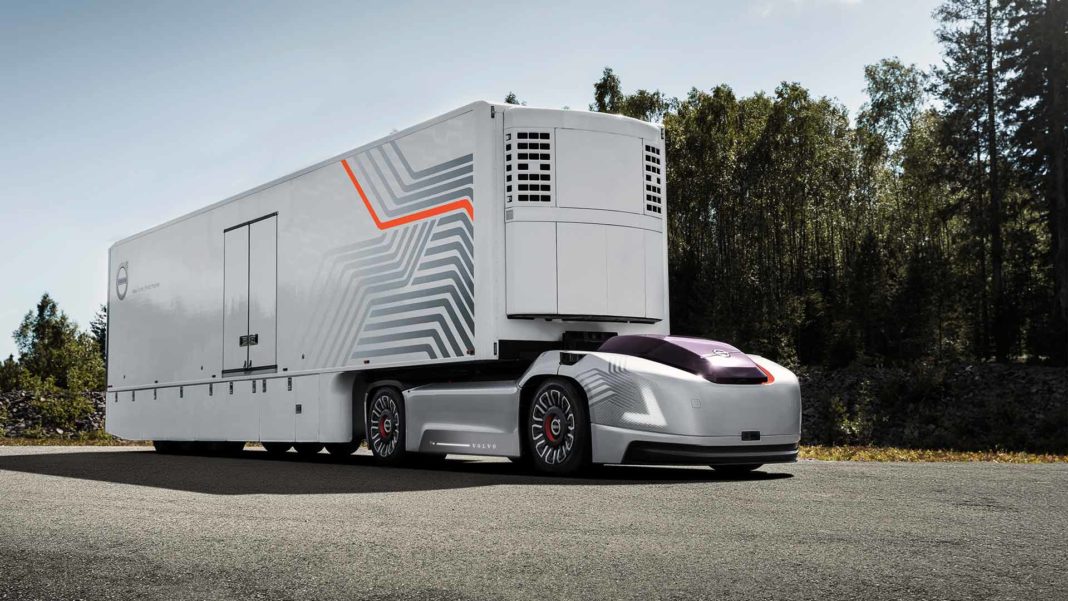
Although decades away, the deployment of autonomous trucks in truck-only lanes could potentially be the death knell for the freight railroads should the railroads do nothing to ensure their relevance, an economist said during a recent panel on legacy of the Staggers Rail Act and the Motor Carrier Act.
The Surface Transportation Board (STB) “is going to be regulating a graveyard. There’s a good chance that rail won’t survive once we start moving to autonomous vehicles,” said Clifford Winston, senior economic fellow at the Brookings Institution, at a question-and-answer event on the Staggers Act and the Motor Carrier Act sponsored by the George Washington University Regulatory Studies Center. Winston authored a book about the government’s role in encouraging autonomous vehicles.
|
|
Robotics and industrial AI to assist with the future of track maintenance |
|
The researcher points out that currently, the advancement in inspection and condition monitoring is at 60 or 70 per cent in the rail industry. He placed that as the first stage while explaining linear assets and how robotics and AI are expanding into the rail industry. He stated that as there is robotics and AI for inspection in condition monitoring, the next stage would be to integrate robotics and AI for track maintenance.
|
|
Canadian Pacific sets new record with October grain haul |
|
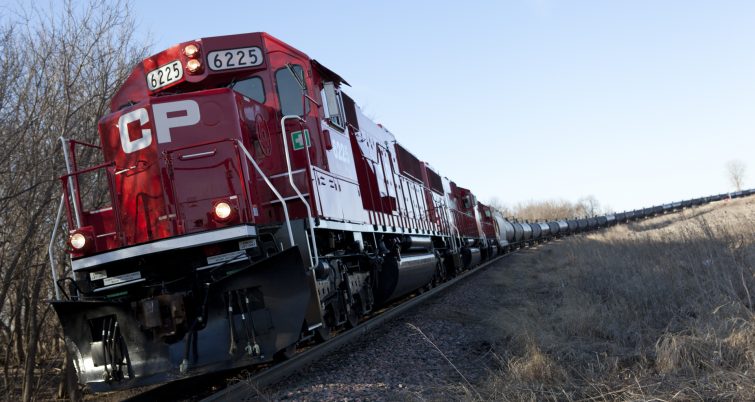
Canadian Pacific set a new record for shipping Canadian grain and grain products in October at 3.04 million metric tons (MMT) moved, the first time CP exceeded 3 MMT in a month.
The achievement exceeds the highest-ever record for a month, set in April 2020, by 6.9%. It also represents a 14.2% increase from the previous October record of 2.66 MMT set in in 2019, CP officials said in a press release.
|
|
US Class I railroads prioritize PSR, efficiency at the expense of service |
|
When intermodal volume came flooding back in Q3, railroads made trains longer. But results for the quarter show that's not necessarily a recipe for good service.
|
|
Legislation would end cut to railroad unemployment benefits |
|
Under the Budget Control Act of 2011, and a subsequent sequestration order to implement mandatory spending cuts, railroad unemployment benefits have been reduced by a set percentage that is subject to revision at the beginning of each fiscal year. The sequester, as it relates to the RRB, continues until fiscal-year 2030.
Without the legislation, it is expected that the sequestration will result in a 5.7% reduction in railroad unemployment benefits through FY2030, the senators said in a press release.
|
|
2020 election gives big push to growing momentum for U.S. high-speed rail |
|
President-elect Joe Biden has promised to “spark the second great railroad revolution” and is one of the nation’s strongest advocates for major investments in passenger rail and transit systems.
On high-speed rail specifically, Biden endorses a nationwide network approach in his plan for fighting climate change. “Across the Midwest and the Great West,” according to the plan, we “will begin the construction of an end-to-end high speed rail system that will connect the coasts, unlocking new, affordable access for every American.” This is the strategy the Alliance favors in in our Integrated Network Approach.
|
|
Union Pacific recalls 125 employees in De Soto
|
|
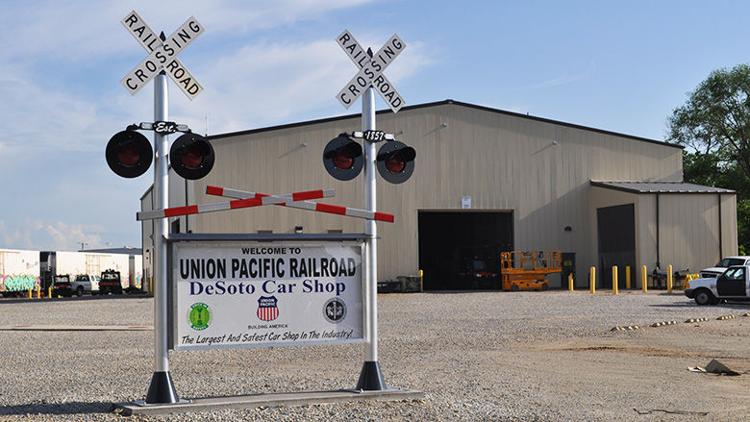
The Union Pacific railroad has recalled 125 employees to return to work at its car shops in De Soto.
The employees, who went back to work Monday, were among the estimated 200 to 300 who had been furloughed in De Soto since April 30 because of a decline in the company’s volume of business amid the coronavirus pandemic.
|
|
US election: could Joe Biden spark a Second Great Railroad Revolution? |
|
Looking ahead, research from Bloomberg Intelligence (BI) claims that a Democrat leadership could play a key role in helping the rail sector back on its feet after the pandemic. It also warns that Trump could end up relegating the railways to the sidelines in favour of road transport and fossil fuels.
|
|
TSB: Sudden track failure led to CN train derailment |
|
"Video and audio recordings from the lead locomotive suggests that a sudden track failure occurred," the report states. "Given the annual tonnage on the Bulkley Subdivision and the frequency of loaded unit train operations, it is likely that bulk unit train traffic accelerated the development and deterioration of priority wide-gauge conditions in the 6° LH curve where the derailment occurred."
|
|
Key House transportation figures win reelection |
|
Notable federal results with transportation significance from Tuesday's election:
|
|
Without provincial funding, Huron Central Railway on track for a Dec. 18 closure |
|
As the short-line freight service waits to find out if it has secured provincial funding, the railway’s Montreal-based parent company recently notified employees that their positions would be terminated when the railway ceases operations on Dec. 18.
|
|
Tracking the speed, dwell and cars of Class I railroads |
|
Understanding how a rail shipment moves through the tracks and hump yards across the country relies on a few key metrics. Three of the main key performance indicators that railroads use to communicate their performance are speed, dwell time and cars online, all of which can impact efficiency and service for a rail shipper.
Railroads report all of these numbers, along with a few others, to the Surface Transportation Board. The agency then releases the figures every week. But the public dataset is big and requires a bit of time to get to the numbers in which a shipper might be interested.
This dashboard is meant to simplify the process for a few of the key measures in that dataset.
|
|
BLET members ratify new contract with Indiana Southern |
|
The BLET first organized the ISRR in September of 2002. A Genesee & Wyoming property, the ISRR operates 196 miles of track between Indianapolis and Evansville, Ind. It handles primarily coal and agricultural commodities.
|
|
|
|
|
|
|