|
I started working on an EV Buyer’s guide early in 2021: www.soleilev.com. At that time, the first wave of EV product announcements had begun from Hyundai/Kia, Ford, VW, MB, BMW, Mercedes, Audi as well as announcements of the start of production from start-ups Rivian and Lucid. Deliveries of perhaps ten volume-produced EVs were to be in showrooms about this time.
Well, it hasn’t happened. This makes updating the magazine a little easier - apart from some new pricing information and revised production dates, the information is still current.
A search on Autotrader reveals only a handful of EVs on Calgary dealer lots; a few Mustang Mach Es, older generation Hyundai and Kias, and some Chevy Bolts that have presumably had their battery recalls completed and can now be parked indoors. Interestingly, there are now some speculatively priced Teslas on non-Tesla lots - ordering new Teslas and flipping them is now a thing.
People are buying EVs, but they are mostly all Teslas, at least in North America. Telsa will come close to delivering 1M new vehicles globally in 2021, up from 500k last year. While other manufacturers were halting production due to lack of semi-conductor chips, Tesla pivoted, found new suppliers, and re-wrote their firmware to accommodate the different architecture. They hardly slowed down at all. Those analysts who confidently predicted that the legacy manufacturers would make massive inroads into Tesla’s market share, didn’t consider Tesla’s in-house software capabilities, which are at least as important as manufacturing in todays cars.
The rest of the industry is trying to catch up. The VW group, who until recently outsourced 90% of their software, is spending 27B Euros hiring ten thousand software engineers in Germany and Seattle, as part of their Car.Software initiative. They have some work to do; the last Porsche Taycan I drove helpfully directed me to the nearest gas stations when I was getting low on charge. Over one half of the 1,735 current job openings on the Rivian website are software related. Only one is for sales!
Rivian launched their IPO on Nov 10th with a share price of $78, which would have given the company a valuation of $67B. This spiked to $140, and recently closed at $128.60, making the company worth nearly $110B - comfortably more than Ford or GM, despite not delivering any of their R1T Electric trucks to customers.
Pre-Covid, Porsche sold about 300,000 cars globally. About two thirds of these were Macan and Cayenne SUVs. Panamera sedans were the next most voluminous, followed by the sports cars. They forecasted twenty thousand annual sales for the Taycan, which would have slotted it in between the 911 and the mid engined cars. They sold their 20,000 Taycans in 2020, and look to double it this year, surpassing the iconic 911 and the Panamera - which is roughly the same size and shape, but combustion-engined. Now, one in eight Porsches are electric and in 2023 the Macan sales leader will be battery powered too.
Bloomberg released their report on EVs here, as part of the COP26 United Nations Climate Change Conference. They predict 5.6M electric vehicles will be delivered in 2021, against total worldwide production of about 100M vehicles - a jump of 80% compared to 2020.
The adoption of EVs is massively influenced by government programs and incentives. Norway threw everything they could at promoting EV driving and as a result they have a nearly 80% market penetration. Add hybrids and the figure jumps to 92%. China is currently over 10% BEV (Battery Electric Vehicle), and Europe is at about 15%. These numbers don’t include Hybrids.
In 2020, 1,545,561 new vehicles were sold in Canada according to Stats Canada, and 54,353 (3.5%) of them were classified as ZEVs (Zero Emission Vehicle). 71.8% of the ZEV’s, or 2.5% of the total vehicles sold, were pure electric vehicles - the balance mostly being plug-in Hybrids.
That means about 40,000 pure electric vehicles found homes in Canada in 2020, but not very many came to Alberta. Greater than 95% of them went to BC, Ontario and Quebec, with Quebec registering about half them. That’s 2,000 EVs for the rest of the seven provinces, and maybe 500 of those came to Alberta. We sell about 200,000 cars per year in this province, so that is basically a rounding error. No wonder VW can’t be bothered to do an ID.4 launch here.
The EV adoption rate comes down to incentives and infrastructure: Alberta has neither. We can take advantage of the federal $5,000 rebate on an electric car, but only if the out-the-door price is less than $55,000, which is quite limiting. And that is if you can find a car to buy, which you mostly can’t.
The infrastructure isn’t any better. On my last batch of EV reviews, I tried about 10 different charging stations, and most of them didn’t work. For the ones that did, the charge rate was significantly less than what the manufacturers would have you believe.
Tesla can thank their software engineers again, as they have the charging interface nailed - you just drive up and plug the car in. Tesla owners can expect a charge rate of about 100kW at their V2 and V3 Superchargers, which coupled with good efficiency below 20kWh/100km when driving, means that for a three hour leg of a journey on the highway they would need to charge for about 40 minutes. Acceptable, especially with the large tablet-style screen and connectivity - the time passes pretty quickly.
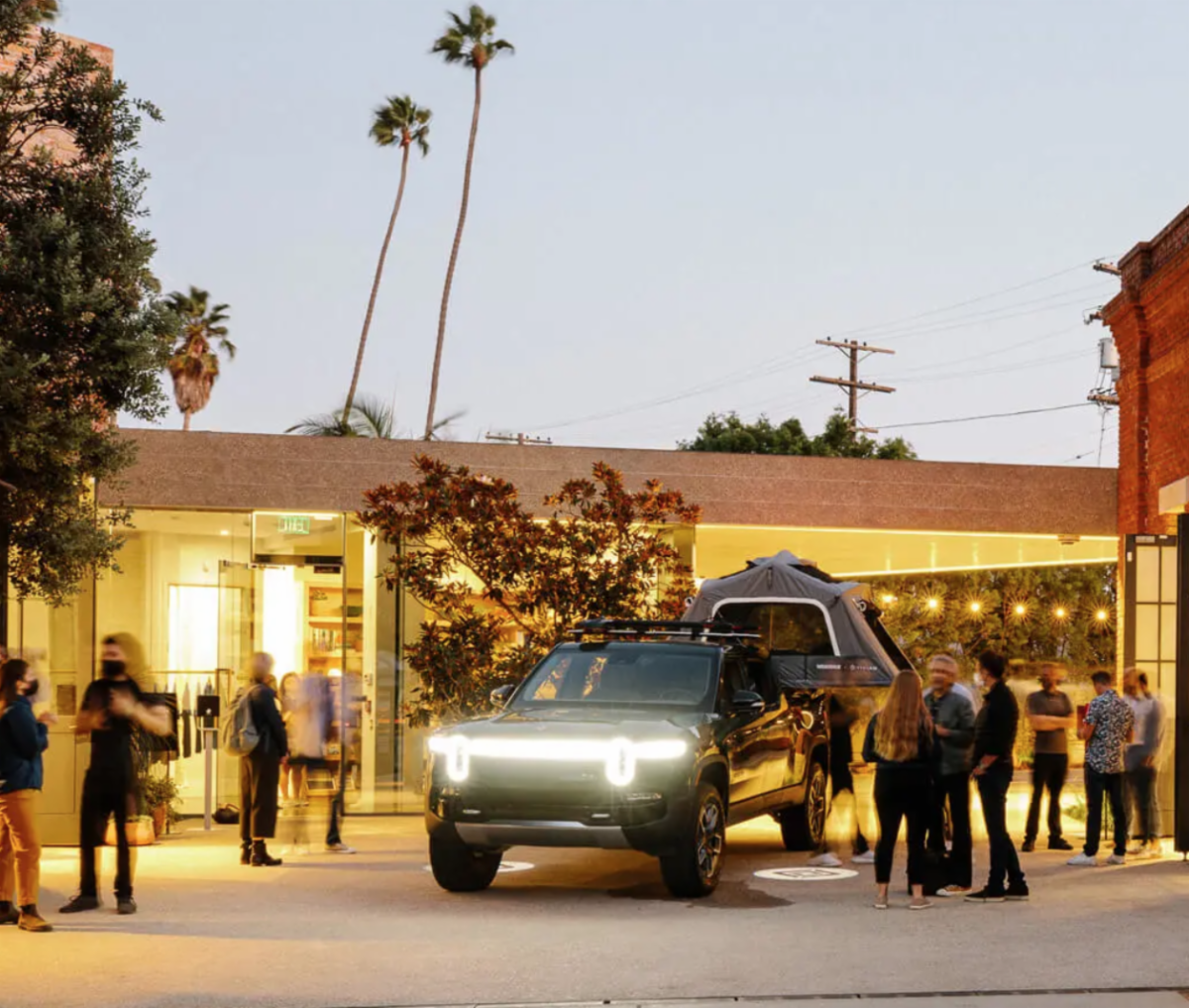
The new EV trucks from Ford, Rivian and GM are not going to fare as well. The Rivian is narrower and smaller than the full-sized trucks, but still comes in at over 7,000lbs - with the small battery. Edmunds did a range test on it, with the 135kW/hr battery pack (the optional one is 180kW/hr) and got a predictable 30kWh/100km. This is not surprising; being 50% worse than most EV sedans which weigh in the 4,500lb range and have a much smaller frontal area and less rolling resistance. The Ford and GM will likely use 35kWh/100km and the 9,000lb+ Hummer will probably have difficulty getting below 50kWh/100km. Speed will have a fairly dramatic impact on range, what with aerodynamic drag increasing exponentially with how fast you are driving. You might see a lot of these 1,000hp trucks in the slow lane on the highway!
At the non-Tesla charging stations I wasn’t averaging anything close to a 100kW charge rate - 60kW being more representative. If you are using 30kWh/100km to go somewhere, and you can only charge at 60kW, that is one hour charging for two hours driving. In good conditions. With all the charging stations working. With no line ups. Not many people are going to do that.
On the bright side, a Rivian with a 180kWh battery and 30kWhr/100km consumption will give you more than 500km of range, and that is enough to reach Fernie/Panorama/Invermere or most of the places affluent Calgarians have cabins. If you can charge overnight at your destination, then the infrastructure becomes less of an issue. Also, if you are camping in an electrified site, you can let the vehicle charge overnight. You might want to downsize your trailer though - pulling our 30 foot Silver Streak increases our fuel mileage 40%, and it won’t be much better with electricity.
Of course, most households have more than one car, and there is no reason why one of them can’t be all electric. The prices of some of the new BEV’s are less than I would have thought, and are very likely subsidized by the manufacturer in an effort to gain market share.
We ordered a Hyundai Ionic 5, which I consider to be the class of the medium-priced sedan field, even though I think it is a bit over-styled. With two motors, AWD and more performance than we’ll ever need, it is priced at $62,000 including Freight/PDI. For everything it offers, I think that is pretty good value. The VW ID.4’s start at $55,000 before options. Most of the new EVs will have a version that can be purchased for $55,000, as that is the threshold for the Federal $5k rebate. Not cheap, but considering the fuel saving (perhaps $2k per year), maintenance saving ($500 per year), and what looks to be excellent residual values, these cars can make sense to a large number of families.
Just about all manufacturers and governments are calling for the end of IC engines by 2035. This has understandably got a lot of people upset. I have family in Saskatchewan whose grocery run is 300km. There won’t be any fast charging stations anywhere near where they live. They are not going to buy an electric car. And because auto manufacturers care firstly about market share, they will be loath to give any up - they will still be selling IC cars long after 2035, even if they are hybrids.
The auto executives need to placate investors whose stock isn’t worth as much as Tesla, Rivian and Lucid - but they will have to walk back their claims of completely replacing liquid fuel. Their dealers will stage a revolt for one thing!
Realistically, it looks like the calendar year 2023 is when there will be a reasonable selection of EV’s that are on the ground at car dealerships, at least in Alberta. And, I think there will be a great selection of them too. In fact, consumers may have never had such a diverse group of interesting vehicles to choose from. I can’t see any reason to be unhappy about these changes. There are always going to be vintage cars for those that want to shift themselves and muck around with carburettors.
|