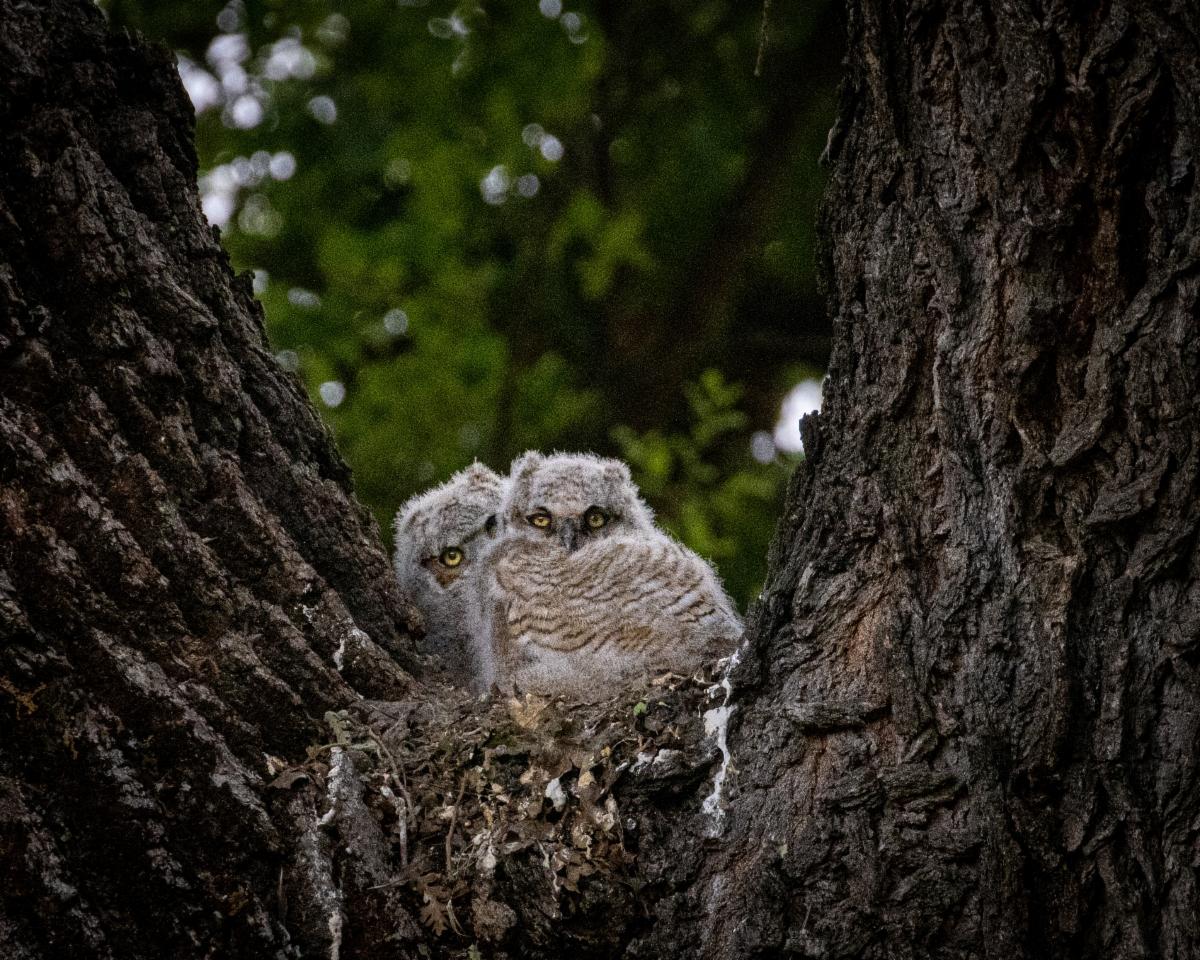
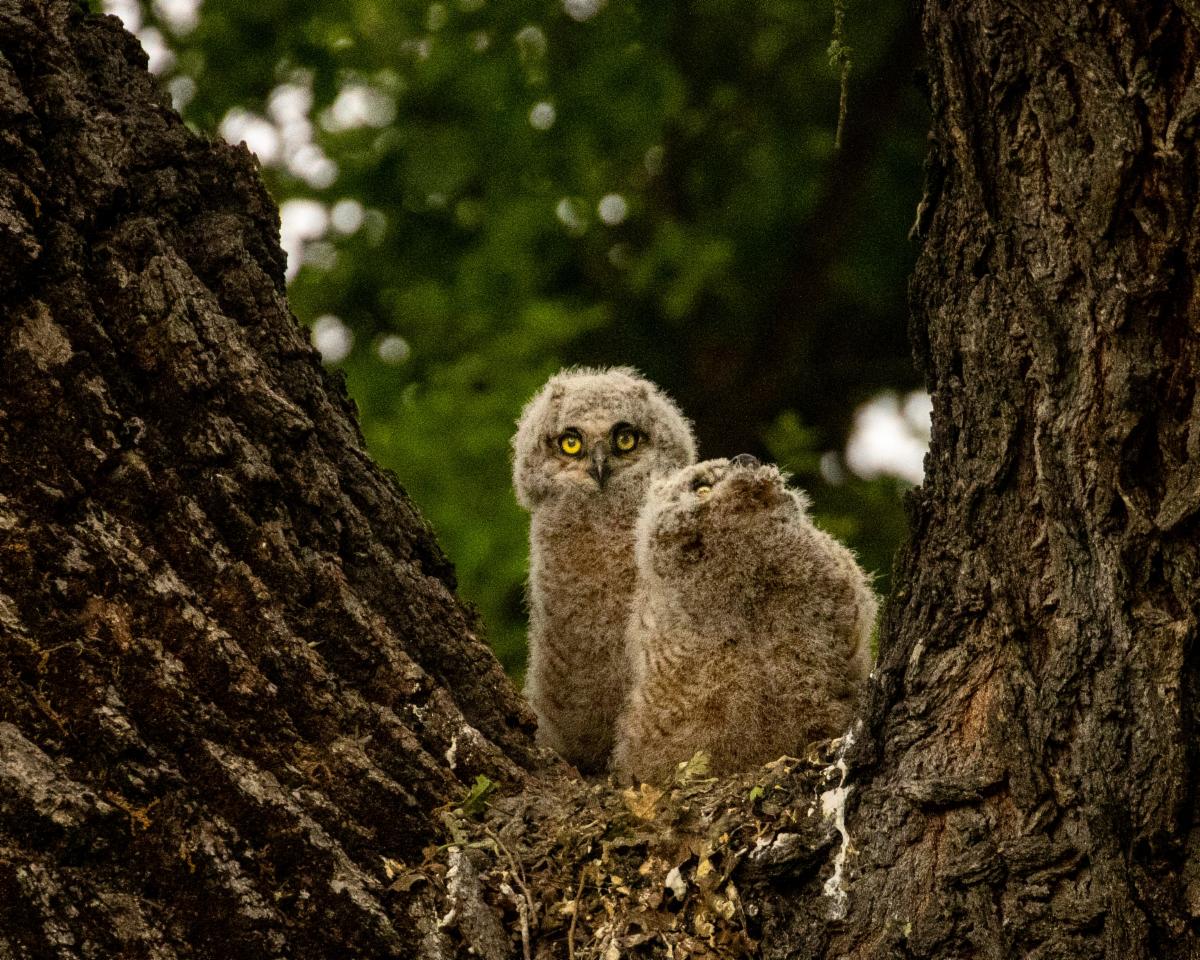
Image 1: Great Horned Owlets at Sedgwick Reserve. Photo credit: Nikki Evans. | | |
In this newsletter:
- Letter from the Director
-
La Kretz Research Center: From Coast to Crest Symposium: Ongoing scientific collaborations between Sedgwick and TNC's Dangermond Preserve
-
Research Feature: Dr. Lily Peck studies the impact of fire on our native oaks
-
Reserve Feature: California Ecology & Conservation Course visits Sedgwick Reserve
-
Photo Story: Whooo's watching Who?: Sedgwick Reserve treated to amazing lives of Great Horned Owls
| | |
Letter from the Director
Dear Sedgwick Community,
This spring, a Great Horned Owl nested in the crook of a gorgeous old oak right in the center of the Sedgwick field station. Over the past eight weeks, she watched us humans hurrying about busier than bees during a super bloom! Researchers met to exchange stories of adventure and discovery in the wilds of Santa Barbara County at the “Coast to Crest Symposium.” Students of the natural world met to share their discoveries, potential collaborations, and visions of the future. On second Saturdays, groups of hikers met, cheered their docent guides, and then fanned out across the hills looking for flowers. Students from the California Ecology and Conservation Class designed and carried out full experiments in a single week! Kids from Nature Track and Nature Rangers played under the oaks; imitating mountain lions and hawks. In the evening, an astronomer set up his telescope and whispered a thank you for clear dark skies. He went to bed just as bleary eyed field techs stumbled out of their tents for dawn rounds. Every week like clockwork the phenologists tracked the progress of spring by examining tree branches, buds, and leaves. The birders chatted excitedly about migrants and vagrants, and everyone came to admire the owlets.
Thank you for your continued support of Sedgwick Reserve.
Enjoy the spring friends!
Dr. Heather Constable
Reserve Director
“In the deep spring when the grass was green on fields and foothills, when the lupines and poppies made a splendid blue and gold earth, when the great trees awakened in yellow-green young leaves, then there was no more lovely place in the world.” - John Steinbeck
| | |
La Kretz Research Center Feature
From Coast to Crest Symposium: Ongoing collaborations between Sedgwick and TNC's Dangermond
By Kristen Zumdahl
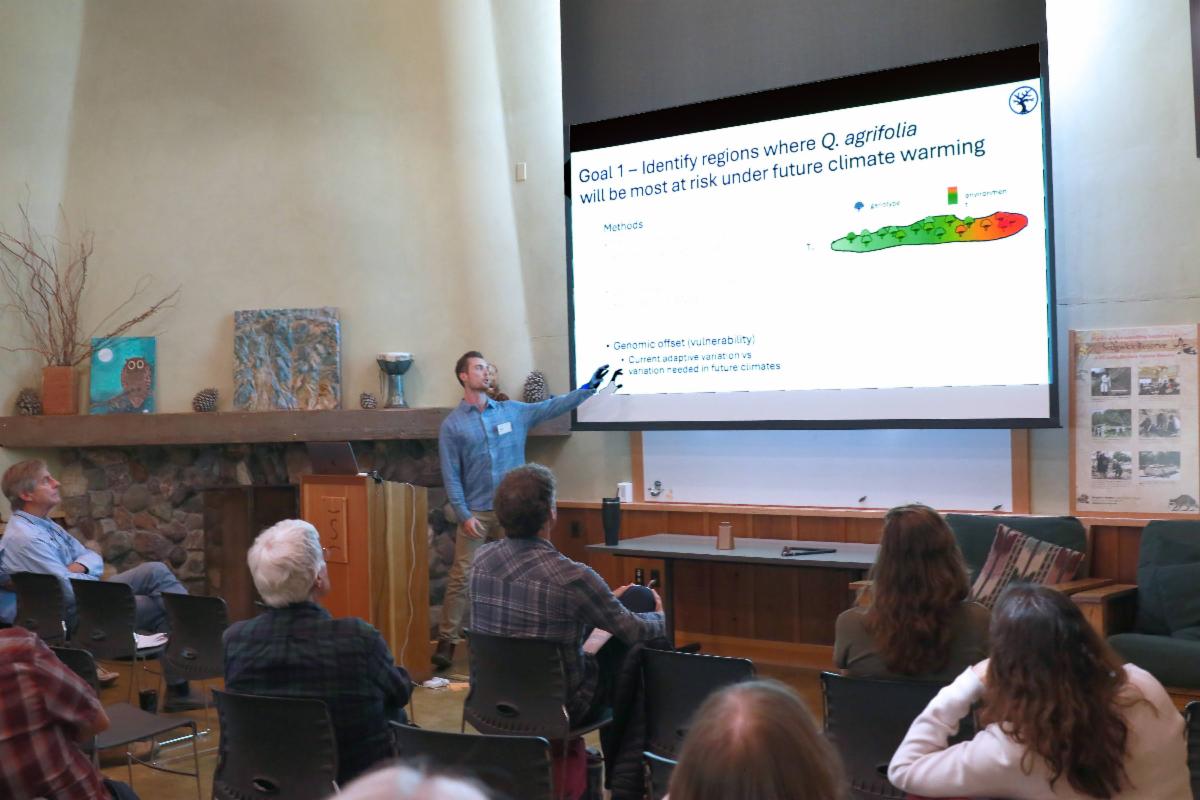
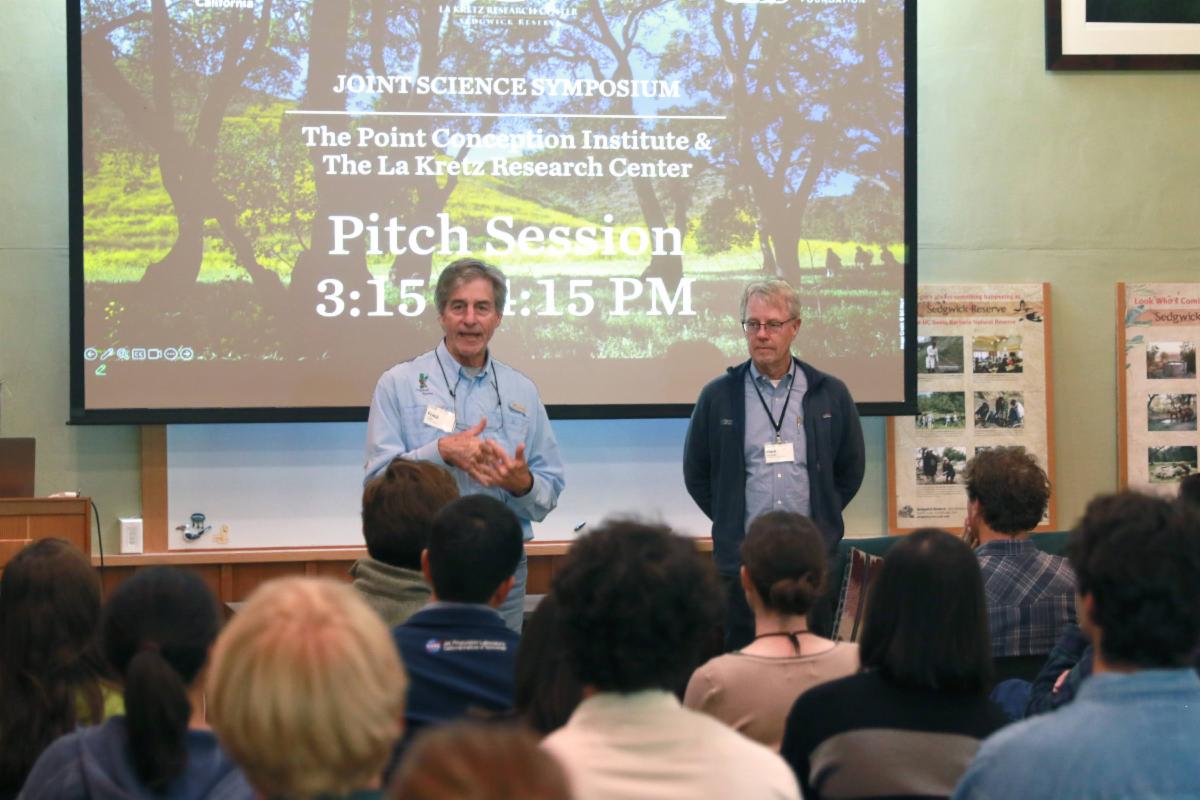
| | Image 2. Ryan Buck (UCLA) presenting on geographic variation in Coast live oak’s (Quercus agrifolia) genetic adaptations to climate. Photo Credit: Monie Photography | | The first-ever Coast to Crest Joint Symposium - sponsored by The Nature Conservancy, co-organized by TNC’s Point Conception Institute and Sedgwick’s La Kretz Research Center, and hosted at Sedgwick Reserve - brought together researchers, partners, and land stewards for a full day of shared science and collaboration. The symposium highlighted the growing partnership between the UC Natural Reserve System and The Nature Conservancy’s Jack and Laura Dangermond Preserve, providing an opportunity for knowledge-sharing along with envisioning future research initiatives across an inland-to-coastal transect. | | Image 3: Mark Reynolds and Frank Davis opening up the pitch session by engaging researchers in deep discussions. Photo Credit: Monie Photography | | |
Emerging Themes and Research Highlights
Throughout the day, 17 presentations and lightning talks - many by graduate students and early-career scientists - touched on themes such as:
- Vegetation science & oak woodland restoration
- Prescribed fire and landscape resilience
- Geospatial tools & environmental sensor technology
- Wildlife research and species distribution modeling
- The SHIFT initiative and remote sensing applications
- Coastal biodiversity, freshwater ecosystems, and climate change responses
Some studies spanned both coastal and inland areas, notably the NASA SHIFT project and fire research associated with recent Prescribed FIRE Training Exchanges (TREX). Other research focused on systems specific to one site or the other, such as coastal marine research at the Dangermond Preserve or studies of serpentine vegetation at Sedgwick Reserve. The integration of field research, sophisticated lab analyses, remote sensing, and computer modeling was impressive, and underscored the key role of biological field stations in supporting scientists investigating species and ecosystem dynamics in a rapidly changing environment.
Collaboration in Action: Pitch Session
The afternoon wrapped with a collaborative pitch session, inviting participants to float new ideas, propose joint initiatives, and explore cross-site synergies. It was a high-energy close to a day full of possibility—and a clear sign that this coast-to-crest partnership has fertile ground for future science.
| | |
Researcher Spotlight
Dr. Lily Peck studies the impact of fire on our native oaks
By Nikki Evans and Lily Peck
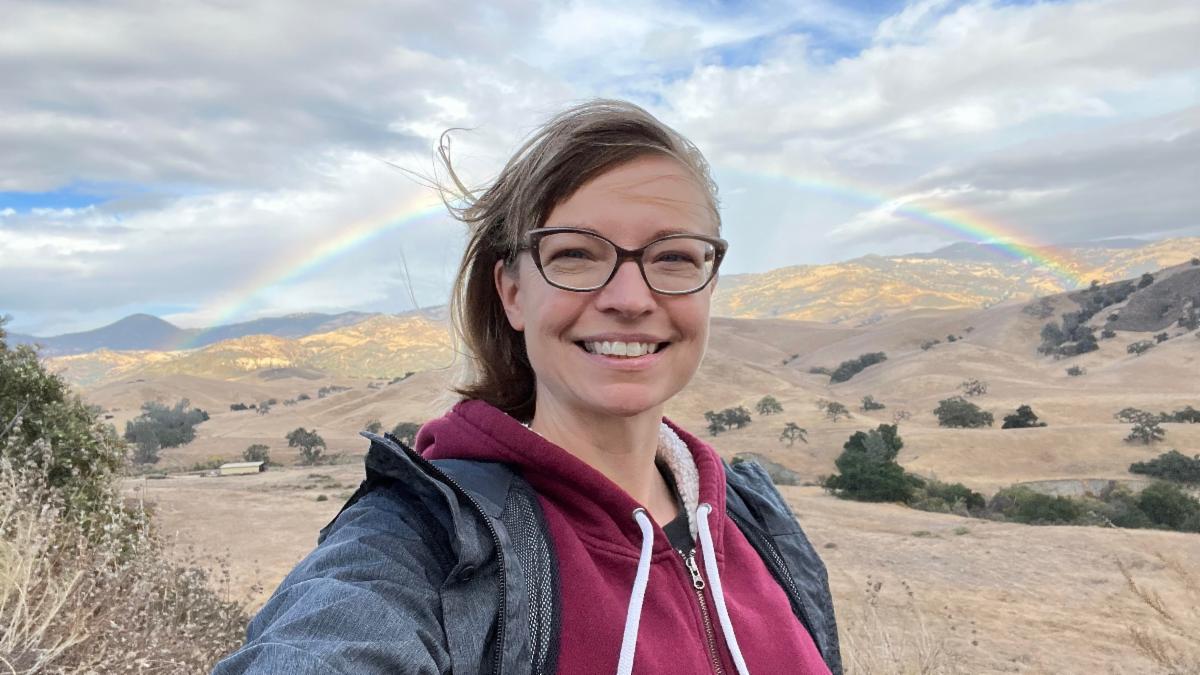
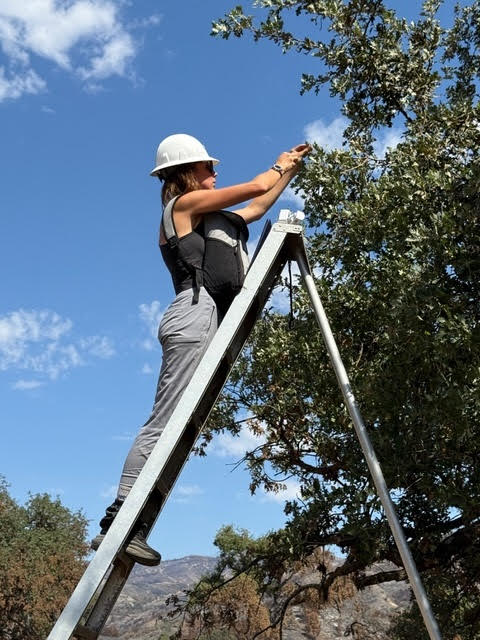
| Image 4: Dr. Lily Peck collecting samples at Sedgwick Reserve | | |
Dr. Lily Peck is a postdoctoral scholar at the University of California, Los Angeles working with Dr. Victoria Sork. Lily is conducting research at Sedgwick Reserve on valley oak (Quercus lobata) responses to wildfire. She is one of the emerging group of researchers who have been able to maximize on the unique opportunity of a wildfire happening at a biological field station. As an Evolutionary Biology researcher, Dr. Peck is interested in how a better understanding of evolutionary change can be applied for conservation to solve the problems of the future. Passionate about sharing her research and love of the natural world with others, Dr. Peck took the time to explain her current project for this newsletter. Read on to learn more about valley oak responses to wildfire, the multi-decadal oak research of the Sork Lab, and tips for aspiring field scientists!
1. Tell us a little about your research at Sedgwick.
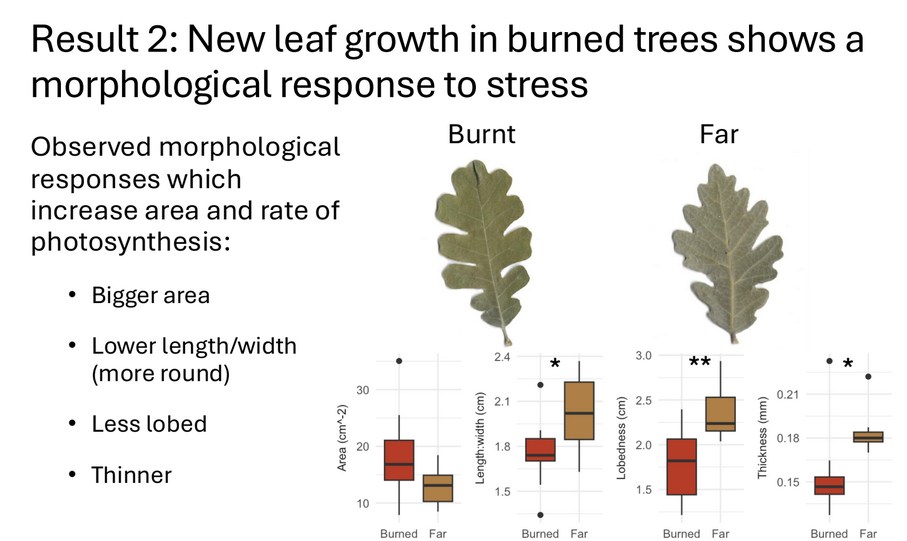
Wildfires across the western US are worsening each year. When a fire occurs, some trees die while others will experience severe stress but survive, yet how the survivors respond to the fire, heat, and smoke they endure is not well understood. My research at Sedgwick aims to understand this response to fire in valley oak, an ecologically important and fire-adapted California native tree. My work focuses on changes in fecundity (reproduction), and physiological (such as rate of photosynthesis) and morphological (such as leaf shape) leaf traits in response to fire. I am asking the following questions:
- How does fire affect the ability of surviving trees to produce offspring?
- How does fire affect the rate of photosynthesis and leaf shape in new growth?
My preliminary findings indicate that surviving valley oaks produce fewer acorns, yet more acorns germinate compared to unaffected trees. Post-fire, new leaves show increased photosynthesis rates and morphological changes that facilitate these higher rates. These findings provide a basic understanding of environmental stress in mature trees which, in the future, could be broadly applied to measure the health of forests following environmental stress.
| Image 5: Research slide showing differences in leaf morphology between valley oaks in and far away from the Lake Fire | |
2. How did the Lake Fire impact your research?
The Lake Fire, while devastating in its destruction, presented a unique opportunity in which we could for the first time study how mature trees respond to a temporary environmental stress. Typically, an experimental fire study with mature trees is challenging due to their size and the fact that they cannot be moved, and that wildfires are unpredictable and mostly occur in remote regions.
3. Tell us a little about the lab you work within, and how your research connects.
I work within the Sork lab at the University of California Los Angeles. The Sork lab has been studying oak trees at Sedgwick for 20 years, and therefore has a wealth of data which we can compare to. More broadly, researchers in the Sork lab conduct research throughout California and western north America which looks at the impact of a rapidly warming climate on trees. We want to better understand why some tree populations respond differently to the changing climate, and how we can best conserve those tree populations experiencing rapid climate change. To learn more, visit Dr. Sork's website.
4. What do you like about fieldwork? What do you find challenging?
I like fieldwork because it gives you the opportunity to see and experience the organism that you study in its natural environment. There is nothing quite like going from reading papers about an organism to getting your hands dirty (and if you work on trees, literally in the field!). It can be tiring, frustrating, and difficult, but as with most things which don’t come easy, it is also one of the most rewarding aspects of research because you create something tangible.
5. Do you have any advice for people hoping to launch a career in the field sciences?
If you think you want to work in the field sciences, my advice is to get experience volunteering in your local area. You will develop important skills, meet new people who share your interests and may work in a relevant area, and hopefully have fun!
Thank you Dr. Lily Peck for taking the time to share your knowledge with us!
| | |
Reserve Feature
California Ecology & Conservation course visits Sedgwick Reserve
By Nikki Evans
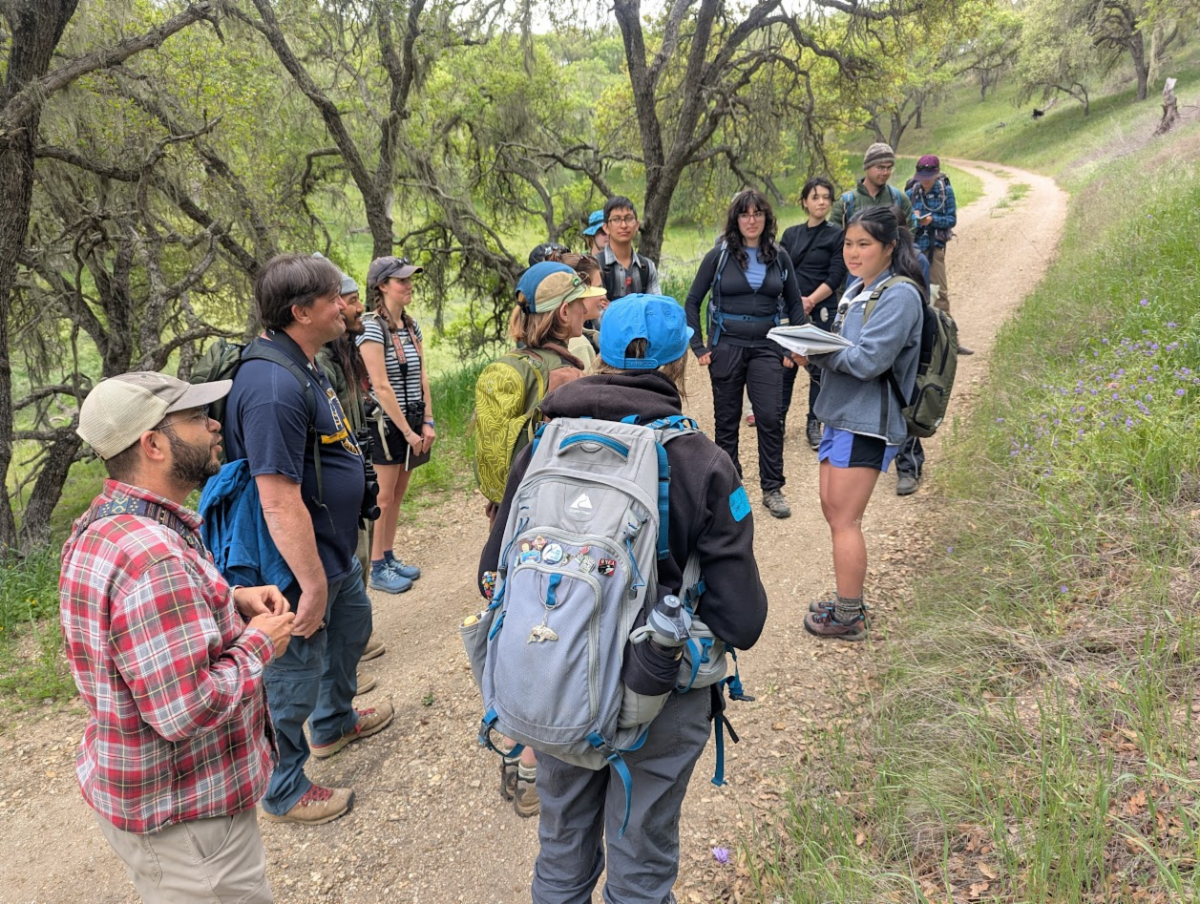
| | Image 7: Spring 2025 California Ecology and Conservation students at Sedgwick Reserve. Image courtesy of Renske Kirchholtes | | |
The California Ecology and Conservation (CEC) class returned to Sedgwick Reserve this April, marking their fifteenth visit since 2018. CEC is a seven-week field program that brings UC students together for intensive scientific training at NRS reserves. Students complete a series of research projects, learn field techniques, and present findings in oral, poster, and written formats. They hone research, public speaking, and scientific writing skills while gaining familiarity with California’s ecosystems.
As part of their eleven day campout at Sedgwick, the students had the opportunity to design a field research project, carry it out, analyze the results, and create a presentation. They were busy! The students presented their research in Sedgwick Reserve’s Tipton Meeting House to their peers and Reserve staff. The enthusiasm and energy the students brought to their presentations was palpable; from providing visual references of how many ticks we would share a football field with in a pre and post fire landscape (Spoiler: There are many more ticks in a pre-fire landscape!) to providing water trough recommendations for supporting goldfinches, the presentations were scientifically rigorous, while also being practical and engaging, a tough balance for even established scientists to find. We wish them all the best in their future endeavors! Presentations included:
Ash, salt, and survival: Invertebrates in burned serpentine soil
S. Meng, Y. Mai, O.Amar, G. Fraga
A TICKet to the Hot Seat: How wildfires affect tick populations
N. schribre, m. blackburn, a. Echols
Bad-ash Plants: Who can take the heat?
M. Crannell, C.Johnson, C. Keyworth
Getting a birds eye view: Goldfinch water trough preferences
D. Baize, M. Chin, S. Mow, A. Wellman
| | |
Photo Story
Whoo's waching who?: Sedgwick Reserve treated to amazing lives of Great Horned Owlets
By Nikki Evans
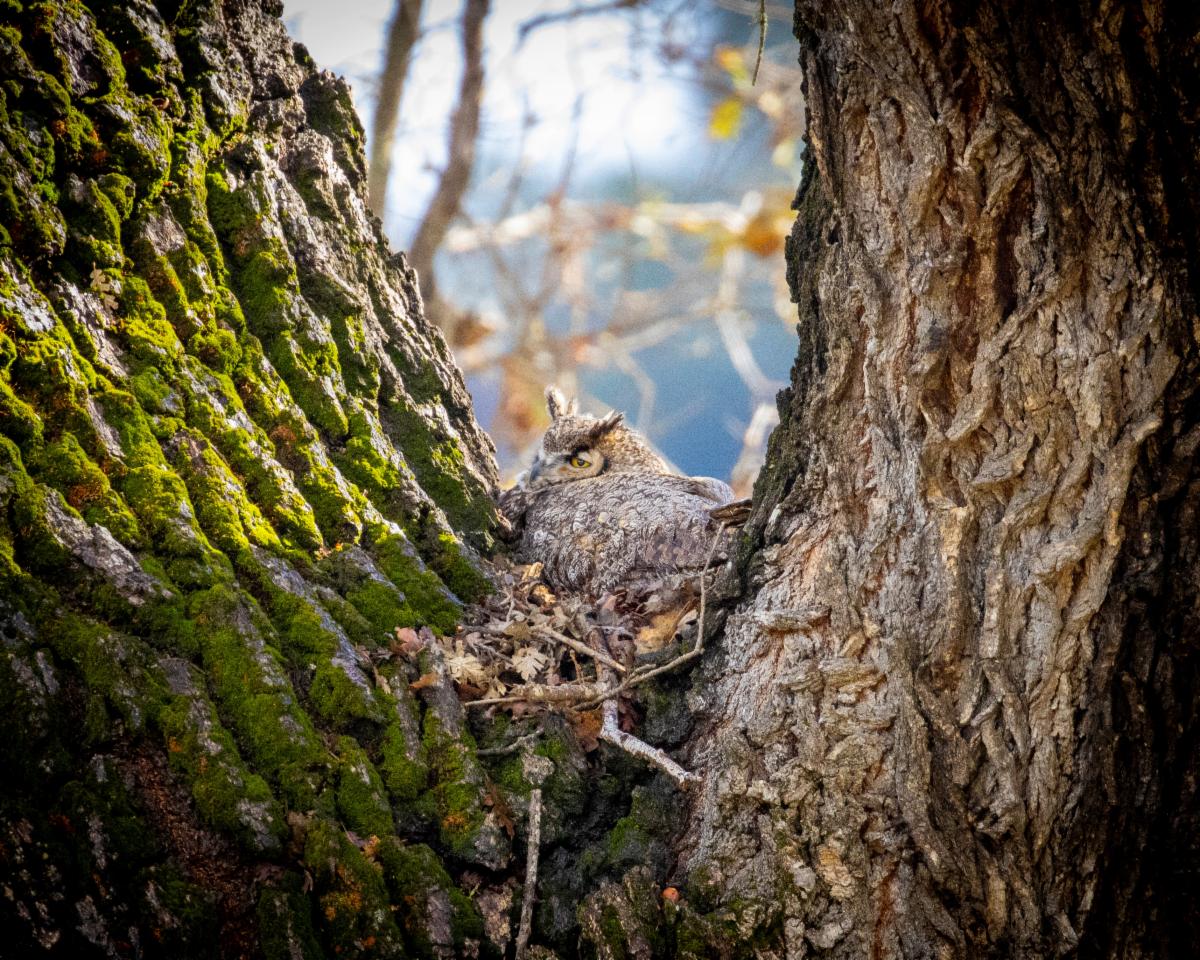
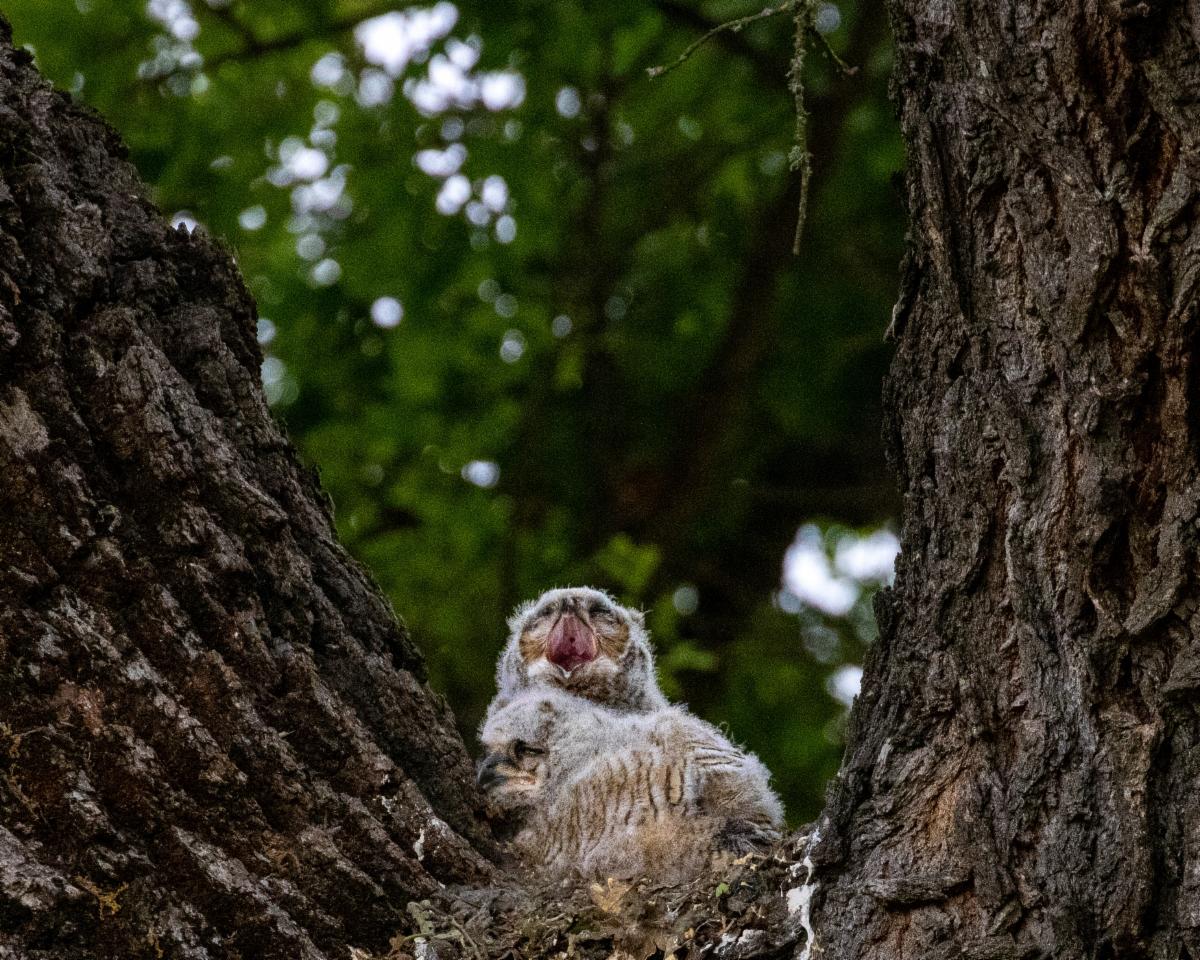
| | Image 9: Owlets examining their world. Photo credit: Nikki Evans | | There Virginia the Great Horned Owl sat, in the exposed crook of a valley oak tree near Sedgwick’s Tipton Meeting House. A species typically seen perched upright, Virginia sat forward, belly to bark. It was a shape more reminiscent of a duck than an owl. ‘Is she nesting right there?’ we wondered as we marveled at the location. In addition to being out in the open, it was also right in the center of the field station, arguably the busiest area of the Reserve. The prior year, she had nested in a considerably more concealed cavity in the same tree. | Image 10: Virginia in her nest. Photo credit: Nikki Evans | |
But there she sat. And sat. And sat. Some days, the sun shone and Virginia slept peacefully, the sun highlighting the soft textured feathers that give owls their ability for silent flight. Other days, the rain pelted her until she looked like a wet terrier, her plumicorns like little ears blowing in the wind. She was dedicated to her eggs. No one saw her leave the nest at this time. In a typical pair, the female remains on the nest and the male does the hunting. After a month, we began to hope and worry. Are her eggs still there? When will they hatch? Great Horned Owls have a 28-35 day incubation period. We expected owlets at any time.
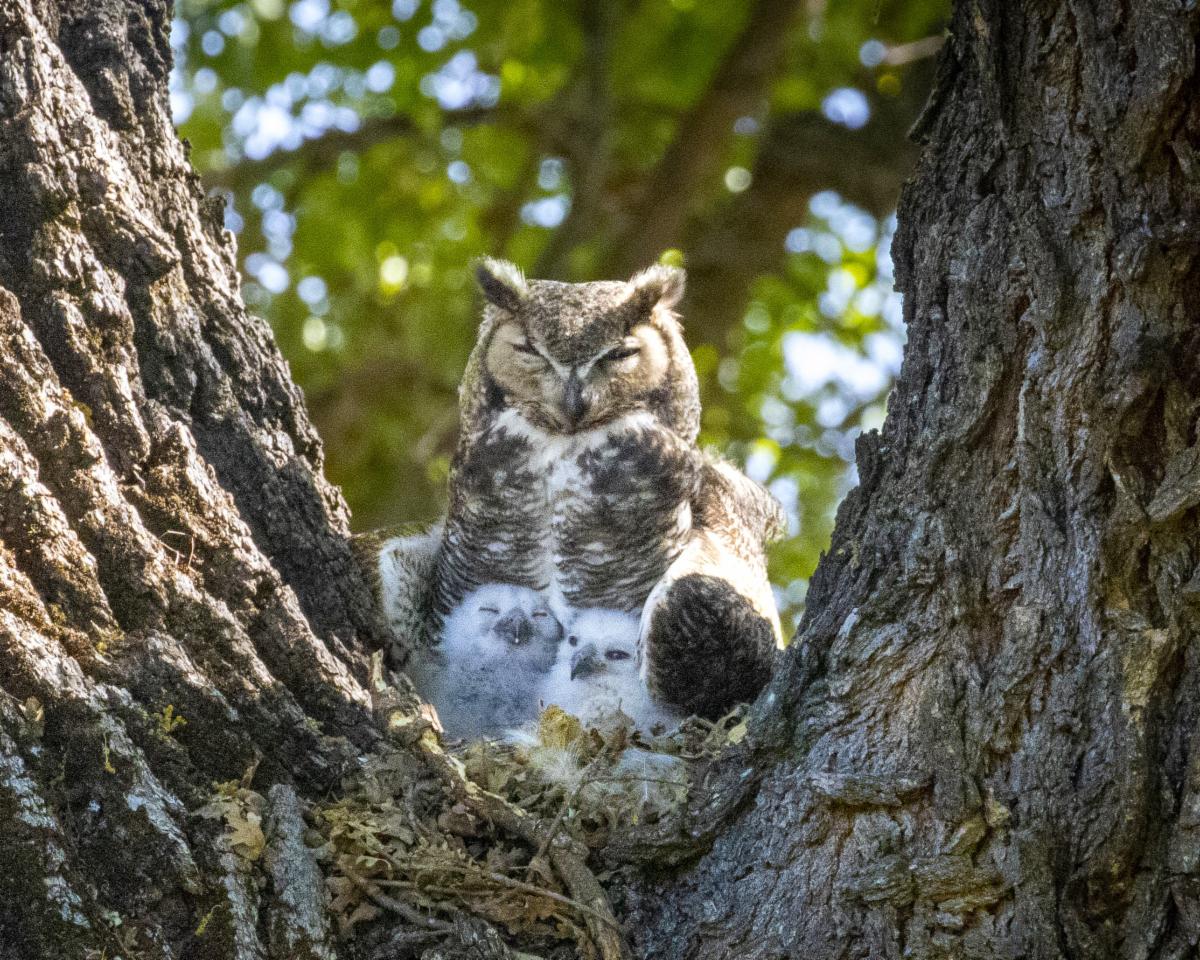
Then, it happened. Staring at white fluff near Virginia’s feet, it took some moments for us to recognize it as a newly hatched owlet. Virginia carefully concealed the owlet during those first few days. She did such a good job, in fact, that it took us three days to realize there was a second owlet! At times, Virginia would keep them warm and hidden near her brood patch. At other times, she would shield them in her wings.
| Image 11: Proud momma with wings extended around her owlets. Photo credit: Nikki Evans | |
In some ways, she was a typical new mother, sleeping only lightly, always alert for potential trouble. As Scrub Jays flew by calling, ‘Shlenk!’, she would turn her head to look at them, opening her beak in quiet protest. 'Stay away,' she seemed to warn. And she listened to the ground squirrels for signs of possible danger lurking, throwing open her eyes at the sound of their alarm chirps. (Many animals understand basic alarm calls of other animals and use that knowledge to help protect themselves and their young.)
Spring is busy at Sedgwick, and everyone who learned about the nest was drawn to it, the allure of wildness and babies drawing them slowly closer to the tree. We began to wonder about the impact of so many onlookers. It was a small nest and the owlets would not yet be able to crawl up the tree if they fell. The staff rallied together to create alternative outdoor meeting spaces, mowing picnic areas, moving tables, and communicating new arrangements to visiting groups. We made the difficult decision to close the oak grove off to visitors in the height of the busy season. A spotting scope was erected so that visitors could engage with the owls from a safe distance, and classes, groups, and researchers had the opportunity to marvel and to talk with Sedgwick staff and docents about owls, their behaviors, and their conservation. It was the perfect marriage of conservation action and education!
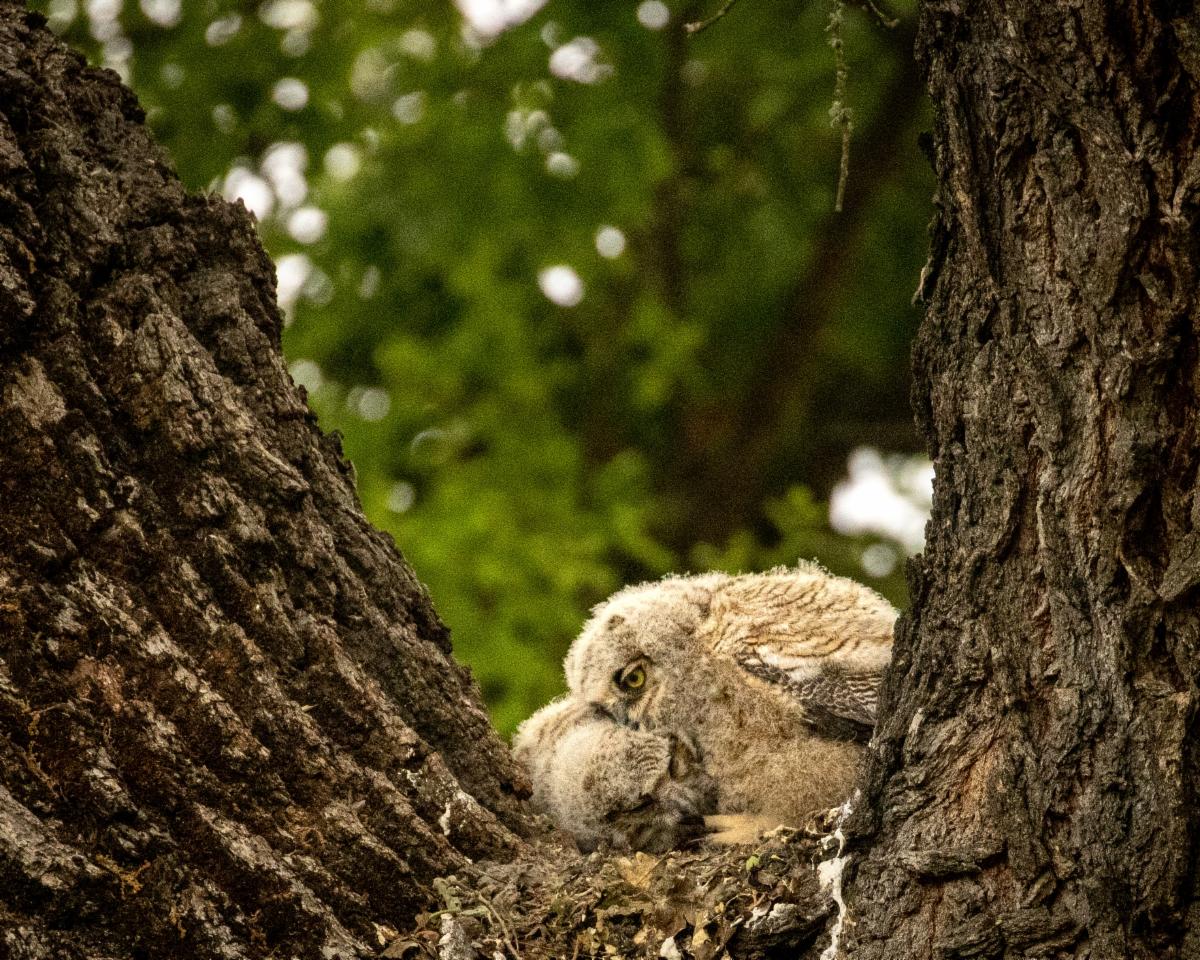
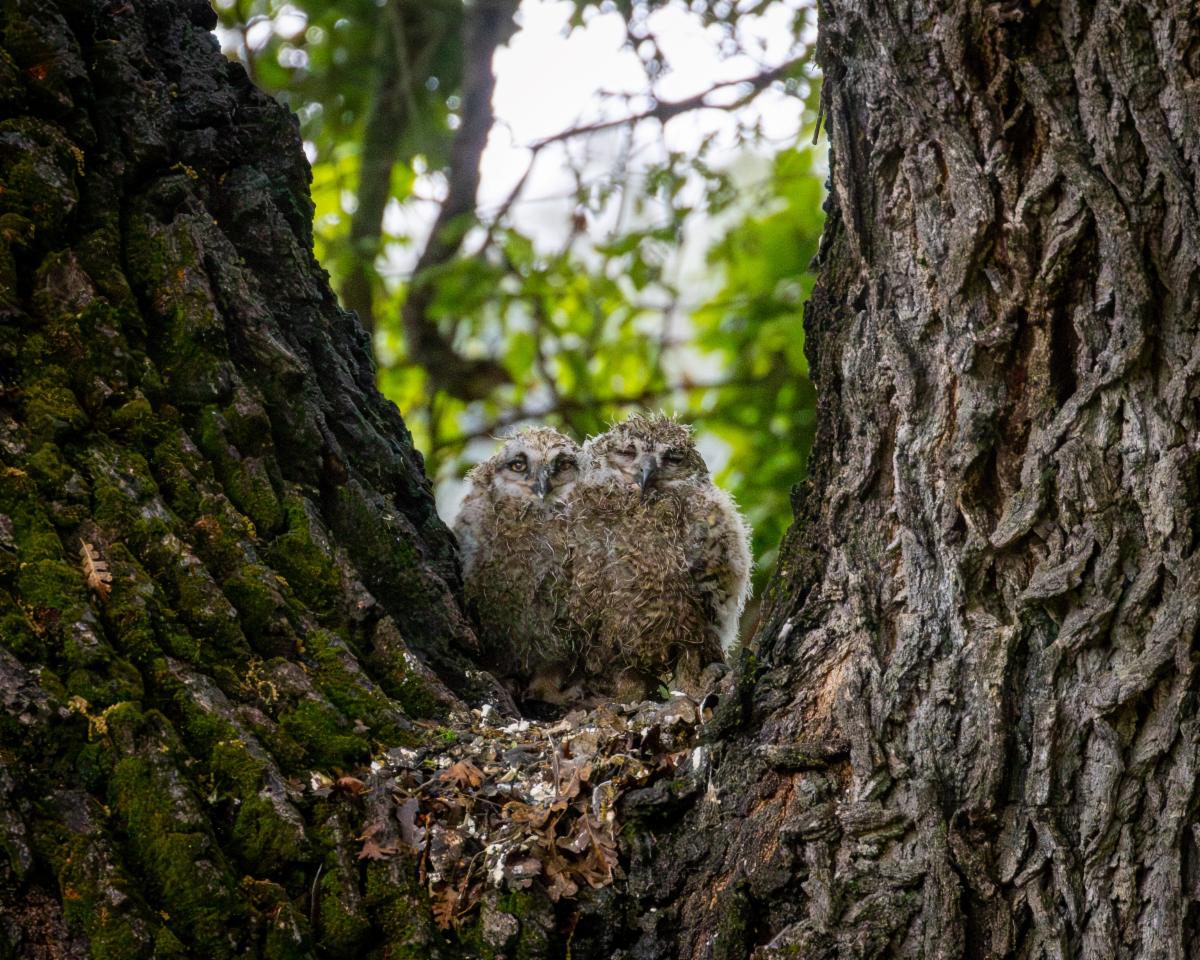
| Image 12: Owlets play fighting. Photo credit: Nikki Evans | Direct exposure to nature is important. For one reason, when we are directly exposed, we feel increased moral responsibility for its continued existence. We develop feelings of affinity that tie us to the outcomes of nature. This certainly played out in the saga of Virginia and her family. Many visitors and staff over the weeks have pondered about the owls' well-being. 'Where is the dad?' 'Are the babies safe there?' 'When will they learn to fly?' Our concerns about these owlets are warranted with estimates that less than 50% of Great Horned Owls survive their first year. They say it takes a village, and in some small way, we have become part of Virginia’s village through sheer proximity and watching. | | Image 13: Owlets wet after a rain and hail storm. Photo credit: Nikki Evans | | |
For conservation action to be most effective however, affinity for nature must be paired with education on the needs of nature. One day, when the owlets were around three weeks old, we noticed that mom had left the nest. After many hours, we worried that the owlets had been abandoned. Considering next steps, we reached out to Ryanne Bee, Animal Care Technician II for the Santa Barbara Wildlife Care Network (SBWCN). Ryanne is also a Sedgwick Docent and a member of the Docent birders who have been logging birds at Sedgwick for over 15 years. She had useful information for Sedgwick and for the public.
Ryanne shared that owlets without a visible adult around are not necessarily in distress. The adults are often around but just out of sight. Once they are three weeks of age, the female begins leaving the nest for longer and longer periods. Month old owlets can climb back up the tree if they fall out. It is not a good idea to move an owlet who is out of the nest unless absolutely necessary. The best thing to do if you see owlets around without an adult is to take a photo without disturbing the birds and send it to the SBWCN helpline at (805) 681-1080. Staff there can help determine if the owlet is in need of human help.
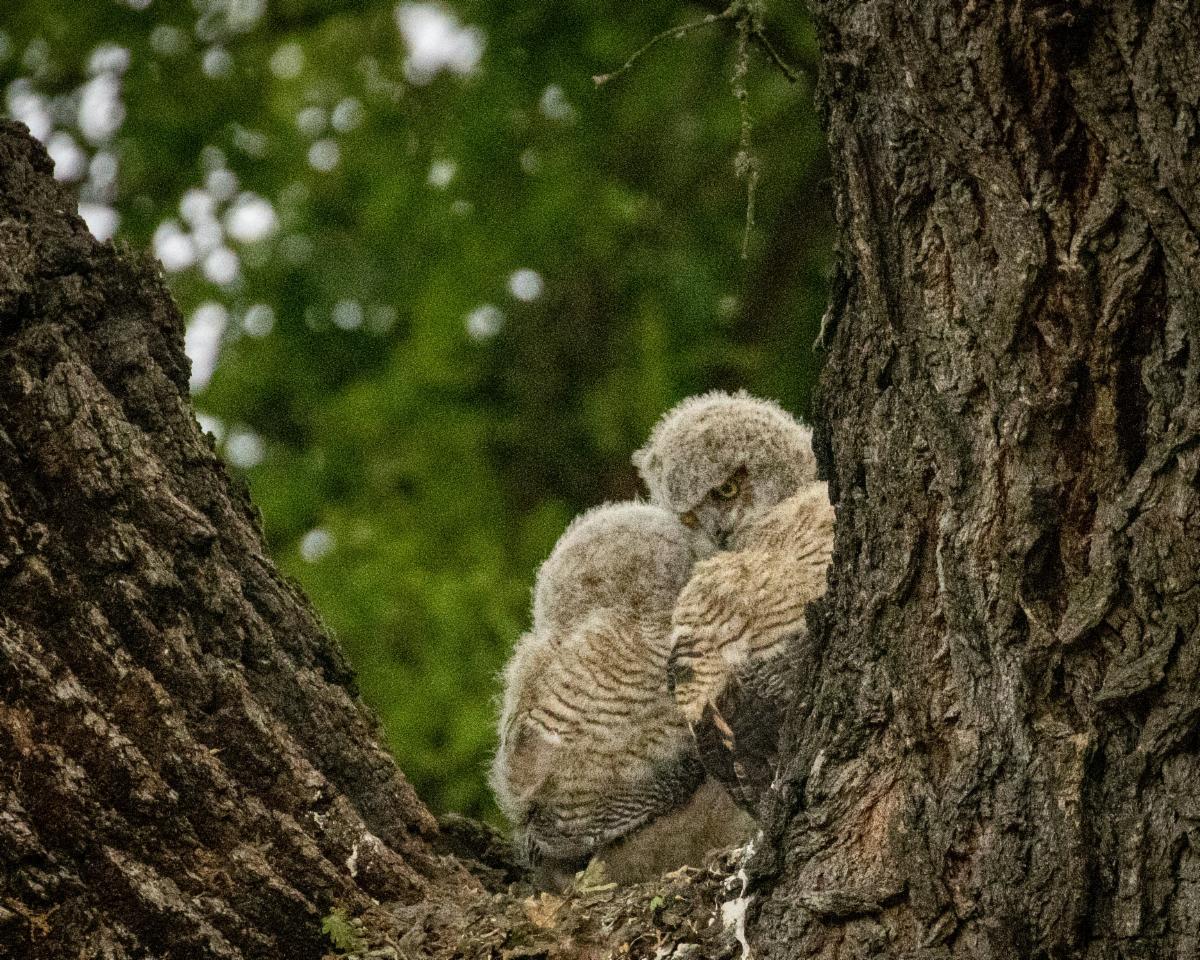
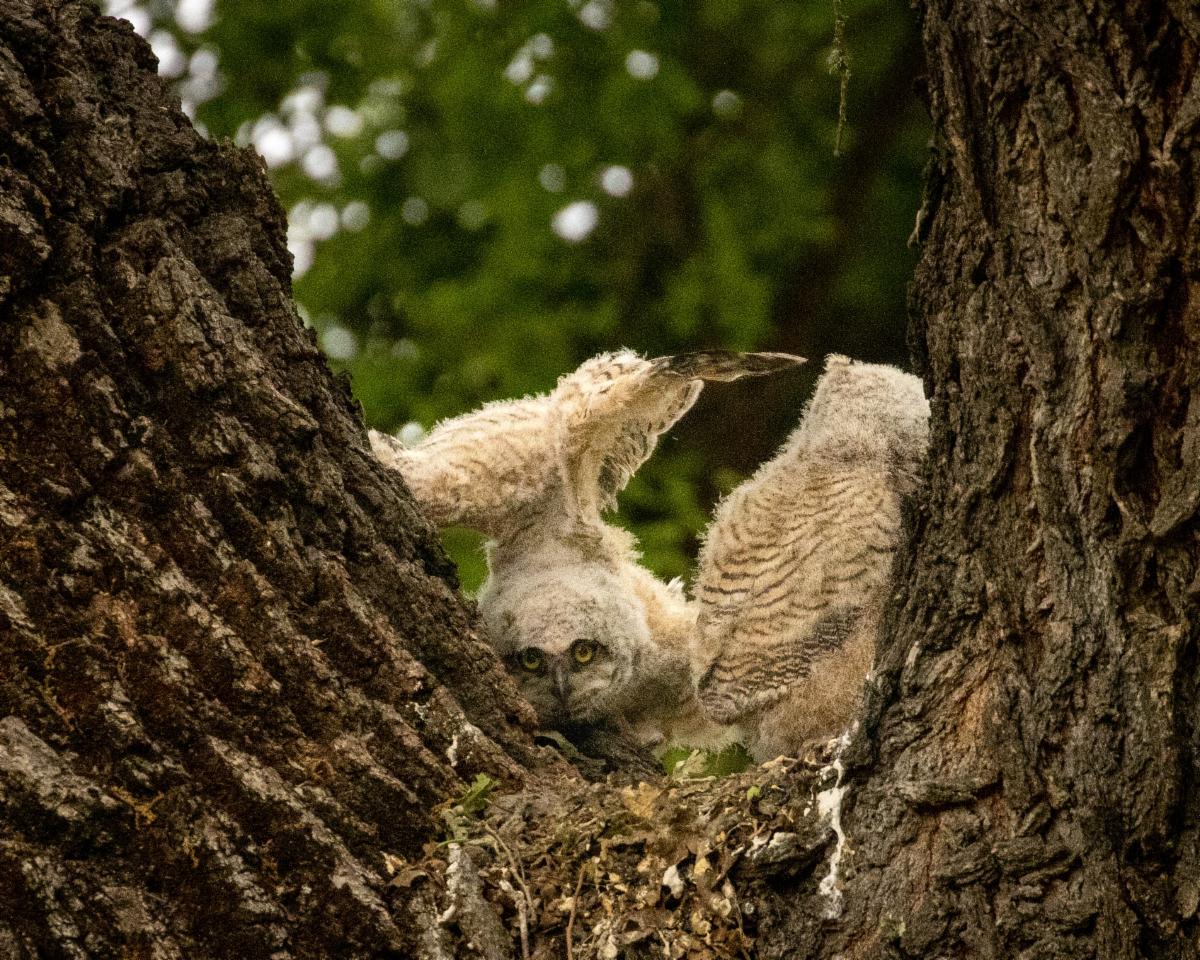
| Image 14: Great Horned Owlet begging for food, though a parent did not show up at that time. Photo credit: Nikki Evans | We asked Ryanne about owl conservation in general. She shared that the number one thing you can do to support owl conservation is avoid the use of rodenticide. When owls eat mice, rats, and other animals that have been poisoned with rodenticide it moves into their bloodstream. Anticoagulant rodenticides prevent clotting, causing the bird to die from internal bleeding. Ryanne estimates an alarming number of owls, some 30-40% that come through the center, test positive for the poison. The Santa Barbara Wildlife Care Network relies on donations and volunteers to support its operations. They are always in need of help. For more information visit their website. | | Image 15. Sibling bond: Owlets in an embrace. Photo credit: Nikki Evans | | What is next for these owlets? They have just begun ‘branching out,’ moving around outside of the nest, exploring their world like wide-eyed toddlers. They have begun to exhibit excessive motion parallax (head bobbing and swaying) to gauge distances and understand their surroundings. These owlets will fledge somewhere around six weeks, but will likely remain with the adult beyond fledging, possibly as long as nine months. Eventually they will fly off to establish their own territories. They have many good options at Sedgwick, and we hope they will live a long, wild life! | Image 16: Testing her wings, getting ready to branch out. Photo credit: Nikki Evans | | | | |