Weekly Digest Number 27 - July 5th, 2022 |
|
Welcome to the RWU Rail & Labor News! This news bulletin is produced and emailed out each Tuesday morning. We hope you find each week's news and information useful. If so, please share with co-workers, friends, and colleagues. If you like, you can sign them up to get all the news from RWU HERE. Or forward them the link. Note: If you read over this news bulletin each week, you will be sure to never miss the important news of what is going on in the railroad world from a worker's perspective!
|
|
(Editor's Note: Routine maintenance - had it been performed - might have easily prevented this horrible accident from happening. As with so many tragic train/vehicle collisions, had the dangerous crossing simply been maintained - let alone modernized with gates and lights, let alone eliminated altogether - the accident would not have happened. This is why RWU calls on the Class One railroads to "Fix the Hazards, Don't Blame the Victims!" See the Campaign Against “Blame-the-Worker” Safety Programs.)
|
|
Farmers Asked Railroad to Take Care of Brush and Other Items Before Fatal Amtrak Accident |
|
Taking care of overgrown vegetation might have helped the driver of a dump truck safely cross railroad tracks in Chariton County, Mo.
However, the visual obstacle appears to be just one of several issues at the crossing, which was the site of a deadly accident on June 27.
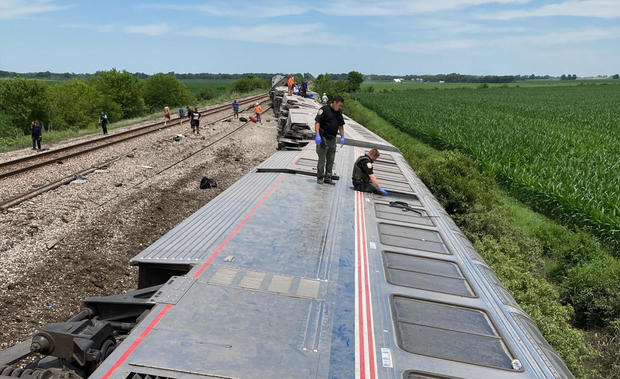
The pickup truck never made it across, as it was hit by an Amtrak train and demolished. The impact caused the train, which was traveling from Los Angeles to Chicago, to derail. The driver of the truck and two train passengers were killed, and several others were injured.
Local farmers who have had to deal with the hazardous crossing daily predicted something bad would happen. In fact, just two weeks ago Mike Spencer posted a video of a train moving down the tracks on Porche Prairie Avenue. Spencer is heard on the video saying that he and other farmers have notified the railroad to fix the problems at the crossing. A steep approach leading up to the tracks, brush that has not been cut back in months, and the lack of signals and signal lights are all hazards at the crossing. Spencer said the railroad never even offered to cut brush back to help farmers moving equipment over the tracks.
The Missouri Department of Transportation has been working to improve dangerous rail crossings for the past five years. About 20 have been taken care of, and the crossing in Chariton County was on the list of crossings that would receive attention.
Spencer said the approach leading up to the railroad tracks is about 9 ft, and another farmer said the dump truck stalled when it reached the top of it.
|
|
(Editor's Note: This funding to modernize the nation's RR crossings is a start. One might ask why tax dollars are paying for all of these improvements when BNSF cannot even bear the cost of trimming some brush along the right-of-way to make an existing crossing safer - see Article above. Perhaps a more equitable solution going forward might be to require the railroads to match the amount spent by the feds....) |
|
USDOT: $573MM Railroad Crossing Elimination Program |
|
The U.S. Department of Transportation (USDOT) on June 30 released a Notice of Funding Opportunity (NOFO) for the new Railroad Crossing Elimination Program. More than $573 million in grant funds will be available in Fiscal Year 2022.
The NOFO will be placed on public inspection at the Federal Register on July 5 and published on July 6. Once published, it will be open for 90 days.
FRA will evaluate project proposals “based on their potential to improve safety by eliminating crossings or improving existing highway-rail grade crossings; to increase access to emergency services; to reduce emissions; to provide economic benefit; and to hire locally, among other possible community enhancements,” according to USDOT.
“Incidents this week in Missouri and California have underscored the tragic consequences of collisions between trains and vehicles that occur throughout the country,” USDOT said. “In 2021, there were approximately 2,148 grade crossing incidents, resulting in 236 deaths and 662 injuries.”
|
|
Nine Years After the Lac-Mégantic Rail Disaster, Canadian Pacific Railway Still Refuses to Accept Any Responsibility |
|
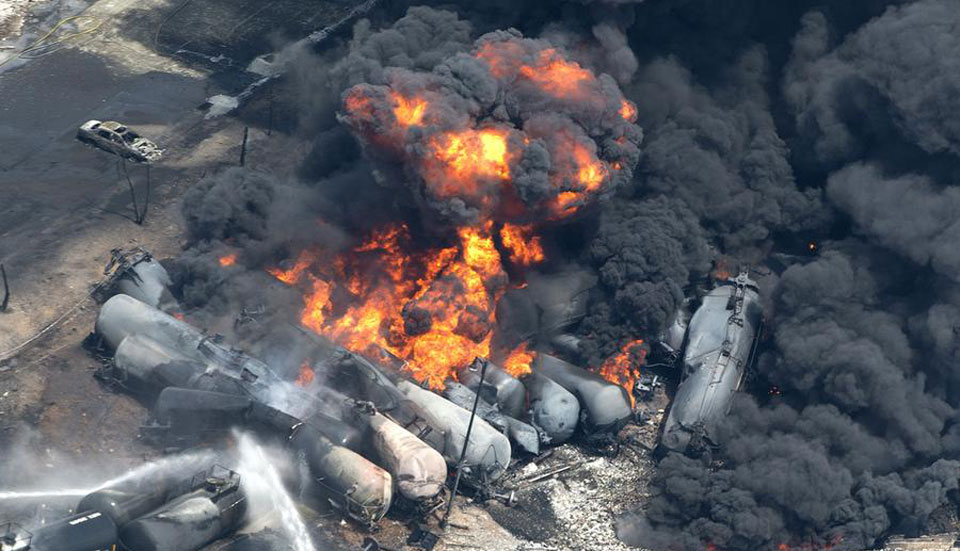
On July 6, 2013, a runaway train carrying 72 tank cars laden with Bakken shale oil destined for the Irving Oil refinery in Saint John, N.B., derailed and exploded in Lac-Mégantic, a small town in Quebec near the Maine border. The disaster killed 47 people, orphaned 26 children, spilled a record six million litres of oil, and incinerated the town centre.
Canadian Pacific Railway (CP) was contracted by Irving to transport the cargo. Since it no longer had a line that went all the way to the Atlantic coast, it arranged for Montreal, Maine & Atlantic Railway (MMA) to transport the oil from Montreal through Lac-Mégantic toward Saint John. It was more profitable for CP to engage MMA, rather than use CN Rail’s much safer route.
Despite the exponential increase in the volume of oil moved by rail since 2010, CP pressured government not to impose additional safety regulations, both directly and through the Railway Association of Canada. Concurrently, new rules were put in place allowing freight trains carrying dangerous goods to operate with a single crew member — the locomotive engineer — with virtually no compensatory safety measures. MMA, a company with a poor safety record, was first granted permission. These factors placed the engineer inside a perfect storm of corporate negligence and regulatory failure.
The civil lawsuit
A class-action lawsuit was filed on behalf of the victims’ families shortly after the disaster. The Quebec government and several insurance companies also filed lawsuits. They reached a combined settlement with 25 defendants contributing to a $460-million compensation fund. CP was the lone holdout.
|
|
(Editor's Note: By any measure, the Class One rail carriers are not living up to their legal mandate of providing "reasonable service at reasonable rates." Rates have climbed exponentially, while service has deteriorated dramatically, combining to drive shippers off the rail and onto trucks. No wonder the nation's railroads are moving less freight than we did 16 years ago. It is time for STB to act!) |
|
Union Leader Asks Senators to Give STB More Power to Deal with Rail Service Issues
Letter calls for better definition of common-carrier obligation, additional enforcement process
|
|
WASHINGTON — The leader of a federation of rail and other unions has written a group of U.S. senators asking that Congress give the Surface Transportation Board more power to enforce railroads’ common-carrier obligations as a way to address ongoing service issues.
Tuesday’s letter from Greg Regan, president of the Transportation Trades Division, AFL-CIO — comprised of 37 unions, including some in the rail industry — urged a group of 21 senators to support legislation that would more clearly define the common-carrior obligation, which currently requires “reasonable service” at “reasonable rates.”
“The non-specific language used, and lack of details, in the current statute has resulted in uncertainty for both shippers and carriers and made enforcement of the obligation extremely challenging,” Regan wrote. He included a joint statement by unions and rail shipper groups of common-carrier principles and urging legislative action to better define “reasonable service,” and to give the STB “an effective and expedited enforcement process.”
Regan’s letter cites the reduction of the Class I workforce by 45,000 workers, along with reduced motive-power fleets, as the source of the ongoing service issues. “The railroads shaped a freight rail network that cannot reasonably respond to the country’s supply change challenges,” he wrote, “and in some cases they even created new challenges in the supply chain. … The dramatic reduction in headcount and the stark decline in rail service for shippers are inextricably linked.”
|
|
(Editor's Note: A handful of states are making a major commitment to passenger rail, Virginia being one. Hopefully others will follow suit in the coming years.) |
|
VRE Commits $195MM to ‘Transforming Rail in Virginia’ |
|
The “Transforming Rail in Virginia” initiative, which former Gov. Ralph Northam unveiled in December 2019, will “expand Amtrak and VRE rail services, create a pathway for the separation of freight and passenger rail in Virginia, and preserve future rail corridors.” Amtrak, CSX, Norfolk Southern (NS) and VRE are working with the commonwealth to implement it.
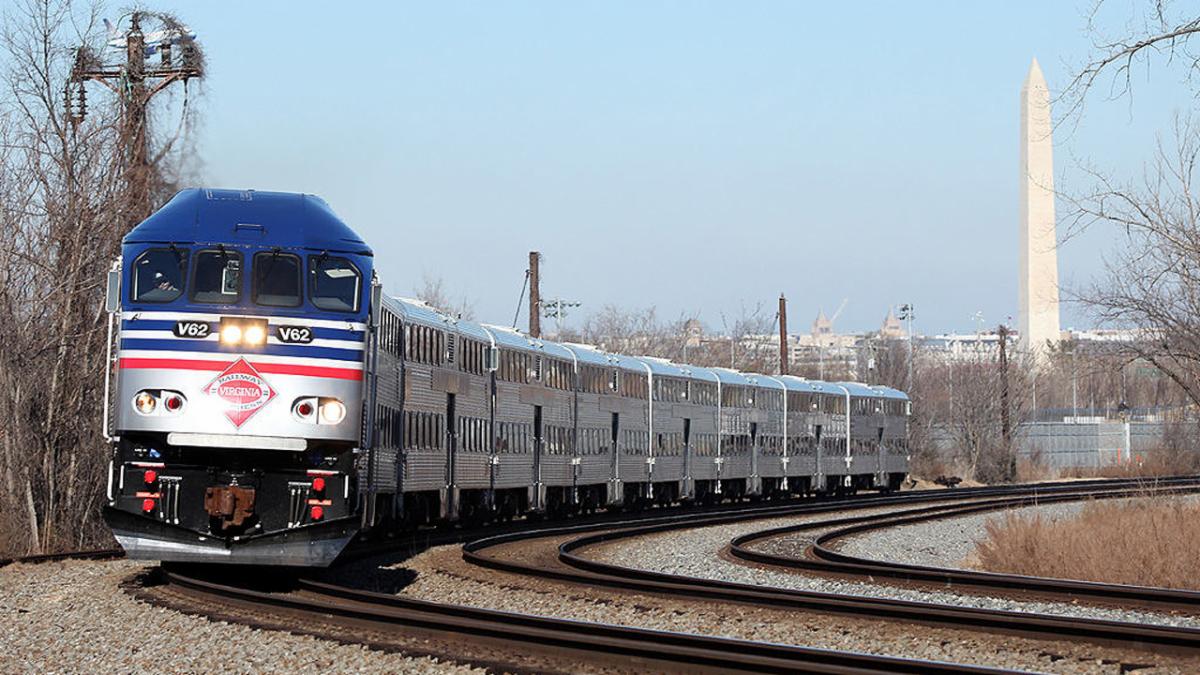
In partnership with CSX, Virginia is slated to build 37 miles of track and implement a series of infrastructure improvements in the Richmond to Washington, D.C., corridor—including a new, two-track Long Bridge for passenger trains—to improve the reliability and frequency of passenger rail in the corridor. One new Amtrak round-trip between Washington, D.C., and Norfolk, Va., and one new round-trip on VRE’s Fredericksburg Line are expected to start within the next year. Additional service is anticipated to come on line incrementally over the next decade as capacity improvements are completed. By the end of 2030, Amtrak state-supported service and VRE Fredericksburg Line service are expected to nearly double (including new late-night and weekend service).
|
|
(Editor's Note: In Canada, as in the U.S., the rail carriers are not implementing the safety recommendations of the respective Transportation Safety Boards.) |
|
Transportation Safety Board of Canada Finds Action Remains Necessary on Rail Safety Issues |
|
GATINEAU, Quebec — A Transportation Safety Board of Canada review of outstanding safety recommendations found that none of the nine recommendations regarding rail transportation could be considered have been addressed in Fully Satisfactory fashion, the highest rating available. A Fully Satisfactory rating means a course of action has seen the issue eliminated or substantially reduced.
The rail assessments were part of a total of 53 recommendations also addressing air and marine issues. Only two, one in air transportation and the other in marine transportation, were judged to have been handled in Fully Satifactory fashion.
The annual reassessments “show some progress across Canada’s transportation system,” the TSB said in a press release, but the agency says “there has been minimal movement on some key safety issues across all three sectors, which continues to raise concerns from the board.”
For rail issues, action on four recommendations was judged to have obtained Satisfactory Intent, meaning the planned action will substantially reduce or eliminate the issue, but the progress made to date has not been enough to sufficiently reduce the risk. Five others were judged Satisfactory in Part, meaning the recommended action will reduce the problem but additional action may be necessary.
Among the recommendations assessed as showing Satisfactory Intent was the TSB’s work to update regulations regarding employee qualifications and training, as well as auditing of railroad safety management systems. Judged Satisfactory in part was a recommendation regarding fail-safe train controls; the TSB encourages both the Railway Association of Canada and Transport Canada to accelerate efforts to implement enhanced train control.
|
|
Letters Citing Rail Service Crisis Continue to Circulate at STB |
|
Surface Transportation Board members and other federal officials continue to hear from rail shippers and other rail industry stakeholders about ongoing freight-rail service issues and the supply-chain crisis.
This week, more than 50 Democratic and Republican members of Congress asked the STB to address the problems, particularly those disrupting U.S. food production.
In a June 29 joint letter, the lawmakers asked the STB to continue working with stakeholders to address short-term challenges in rail shipments of fertilizer and other essential agricultural inputs and commodities, including grain and feed.
"At a time when global fertilizer supplies and global crop production are highly disrupted, imposing shipping curtailments on fertilizer inputs and grain, as recently proposed by Union Pacific, will cause major supply-chain disruptions, hurt American farmers and exacerbate the food crisis considerably," the lawmakers wrote. "We must ensure critical commodities reach essential industries and workers, such as America’s farmers, who are essential to feeding our nation and the world. Food is a national security issue, and we must treat it as such."
|
|
California Budget Ends High-Speed Rail Standoff, Sends Billions to Other Projects |
|
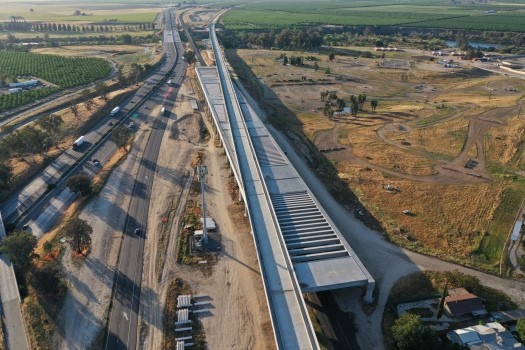
After wrangling over the future of California’s high-speed rail, state lawmakers plan to release a critical batch of money to finish a bullet train in the Central Valley, while also establishing an inspector general to audit the beleaguered project and authorizing billions of dollars in new money for rail plans across the state.
The agreement, included in a budget trailer bill that passed the Assembly Thursday night, ends a year-plus deadlock in Sacramento on how to spend the last chunk of $4.2 billion in bond funds for high-speed rail, which voters approved in 2008. Gov. Gavin Newsom wanted to march forward with laying track in Central Valley farmland and eventually connecting Bakersfield to Merced, but leading Democratic lawmakers blasted the Central Valley link and sought to reroute transit funds closer to their constituents in urban centers.
California’s unprecedented $97.5 billion budget surplus allowed the state to do both. The budget nearly solidifies the 171-mile Central Valley link – now projected to see a bullet train around 2030. It also increases state funding for rail plans to $3.65 billion this year, which could potentially send money to financially strapped Bay Area projects like Caltrain electrification and BART to downtown San Jose. Another $4 billion is planned for transit infrastructure through 2025, although that money has yet to be allocated.
“We released the $4.2 billion, but we also got $3.65 billion in this year’s budget as a result of the compromise,” Assembly Speaker Anthony Rendon, a leading critic of the Central Valley segment, said in an interview.
|
|
(Editor's Note: At least in the case of the BLET agreement with DM&E, the contract provides a general wage increases of 24.75% (27% compounded) for the life of the contract (1/1/2020 to 1/1/2024) and contains no major work rule changes and no health care concessions. These subsidiaries of CP are not party to the national agreement, but these agreements might contribute to setting somewhat of a pattern that a PEB might look to).
|
|
Three Rail Unions Ratify Labor Pact with Canadian Pacific |
|
Canadian Pacific yesterday announced three unions, representing employees at certain CP subsidiaries in the United States and Canada, have ratified collective bargaining agreements with the Class I.
The agreements involve CP's Dakota, Minnesota & Eastern (DM&E) South; Central Maine & Quebec (CMQ) U.S. and Central Maine & Quebec Canada subsidiaries.
Reached on CP properties in Maine, the U.S. Midwest (Iowa, Missouri and Illinois) and parts of Quebec, the agreements provide higher hourly wages for all affected employees. They impact a total of 430 employees represented by United Steel Workers Local 1976 on the CMQ Canada, SMART Transportation Division representing all employees on the CMQ U.S. and the Brotherhood of Locomotive Engineers and Trainmen representing all train and engine employees on the DM&E South.
"We continue to work productively with all of our union partners to achieve long-term agreements that meet the needs of CP's growing business and our industry-leading railroaders," said CP Executive Vice President of Operations Mark Redd in a press release.
Major CP crew bases that fall under the agreements include Ottumwa, Davenport, Marquette and Mason City, Iowa; Kansas City, Missouri; Savanna, Illinois; Brownville Junction, Maine; and Farnham, Quebec. CP is hiring for various positions at all of these locations this year, with immediate openings.
|
|
(Editor's Note: While the numbers are down from last year, those are down from previous years, and in fact, the U.S. rail network is moving LESS freight than 16 years ago!! The economy has grown enormously during this time, and the trucking industry has mushroomed. Even to the casual observer, something is radically wrong with the U.S. freight rail system.) |
|
Week 25: U.S. Carloads, Intermodal Down (Again) |
|
For the week ending June 25, 2022 (Week 25), U.S. rail traffic was 493,374 carloads and intermodal units, down 4.4% from the prior-year period, the Association of American Railroads (AAR) reported June 29. Class I railroads hauled 229,857 carloads, down 3.1%, and 263,517 containers and trailers, down 5.5%. Year-to-date, carloads were virtually flat (down 0.1%) and intermodal volume fell 3.5% compared with the same point last year.
According to AAR, for the week ending June 25, 2022, four of the 10 carload commodity groups posted an increase, compared with the same week last year. They included chemicals, up 1,103 carloads, to 32,742; farm products excluding grain, and food, up 655 carloads, to 16,396; and nonmetallic minerals, up 500 carloads, to 33,631. Commodity groups that posted declines included coal, down 4,554 carloads, to 62,041; metallic ores and metals, down 1,999 carloads, to 21,907; and miscellaneous carloads, down 1,885 carloads, to 8,928.
|
|
(Editor's Note: RWU encourages all young active rail workers to attend whether you are currently a member of RWU or not. Financial support is available form LNS!) |
|
Young Worker Convergence on Climate Sept
15 - 18 in Los Angeles, CA
|
|
The Labor Network for Sustainability is sponsoring a Young Worker Climate Convergence this September 15 - 18. This is a gathering for young workers (ages 18-35) who believe Labor has a critical role to play in the climate movement, and where we can strategize, learn, connect, collaborate, and build power.
LNS should be able to cover major costs (travel, lodging, meals) for railroad workers who might find attendance to be cost prohibitive.
|
|
(Editor's Note: While it is always good to see the expansion of passenger operations, the cost of adding a single round trip from Harrisburg to Pittsburg is being billed at $200 million in infrastructure expense by "host" railroad NS. Half a century ago, this line hosted 2 or 3 passenger train round trips daily, along with many more freight trains.) |
|
PennDOT, Norfolk Southern Agree to Expand Passenger-Rail Access |
|
Currently, the Pennsylvanian Amtrak travels roundtrip between New York City and Pittsburgh via Harrisburg once daily. Under the new agreement between PennDOT and NS, passenger service will increase to twice a day.
The agreement follows a February announcement that the parties would jointly examine opportunities to eliminate chokepoints and improve Pennsylvania's rail system.
"Rail is critical in Pennsylvania and I'm pleased that we're moving quickly to deliver these long-needed improvements," Wolf said in a press release.
To support the expanded passenger operations, Pennsylvania will invest more than $200 million in infrastructure and safety improvements that NS will construct and maintain. The future improvements and construction will stem from a previously released NS operational feasibility study and include upgraded rail lines, passenger platforms, sidings and communications and signals infrastructure.
PennDOT will redirect state Multimodal Transportation Fund dollars to help fund the project. Additionally, PennDOT anticipates applying for additional funds under the federal Infrastructure Investment and Jobs Act to support station and platform improvements along the route.
Over the past four months, PennDOT and NS have developed the operating agreement framework and finalized the improvements necessary to increase passenger-rail service on the NS-owned corridor between Harrisburg and Pittsburgh. The parties anticipate a final definitive agreement to be developed by year’s end.
Construction can begin after the definitive agreement is executed, with the new service anticipated to start within three years of the pact's execution, PennDOT officials said.
|
|
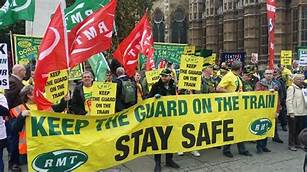
(Editor's Note: There is mass support for the rail strikers in the UK. The rail unions in the US need to bring our case to the people and stop hiding. We have a golden opportunity to win the hearts and minds of the public and to win back some of what we have lost on recent decades. We need to get our side of the story out there just like the RMT is doing in the UK.) |
|
UK Rail Strike: End of the Beginning |
|
Saturday, June 25 was the third and last of the one-day strikes called by the trades union RMT. After a huge ballot mandate, the union called out members from most passenger train operating companies in England, and from Network Rail staff across Great Britain. Readers in Northern Ireland may wonder what the fuss was about, but for the rest of the UK, it has been a week of disruption.
The industrial action has brought the grievances of the rail unions into sharp focus. Most people in the UK are now well briefed on the demands of the unions and on the response of the railway management. What has yet to converge is any semblance of agreement. The two sides seem at least as far apart as they were this time last week. The series of strikes are over … for now. It seems inevitable though that the strife is just beginning.
The rail strikes that have dominated the headlines for the past week have fallen of the front pages. The media agenda moves on relentlessly. Be assured though that news planners are already working on their coverage for the coming weeks.
Nothing has been resolved in the disputes that brought about the biggest stoppages on the railways of Britain for a generation. What has been brewing up into a summer of discontent seems inevitably about to boil over.
|
|
|
|
|
|
|