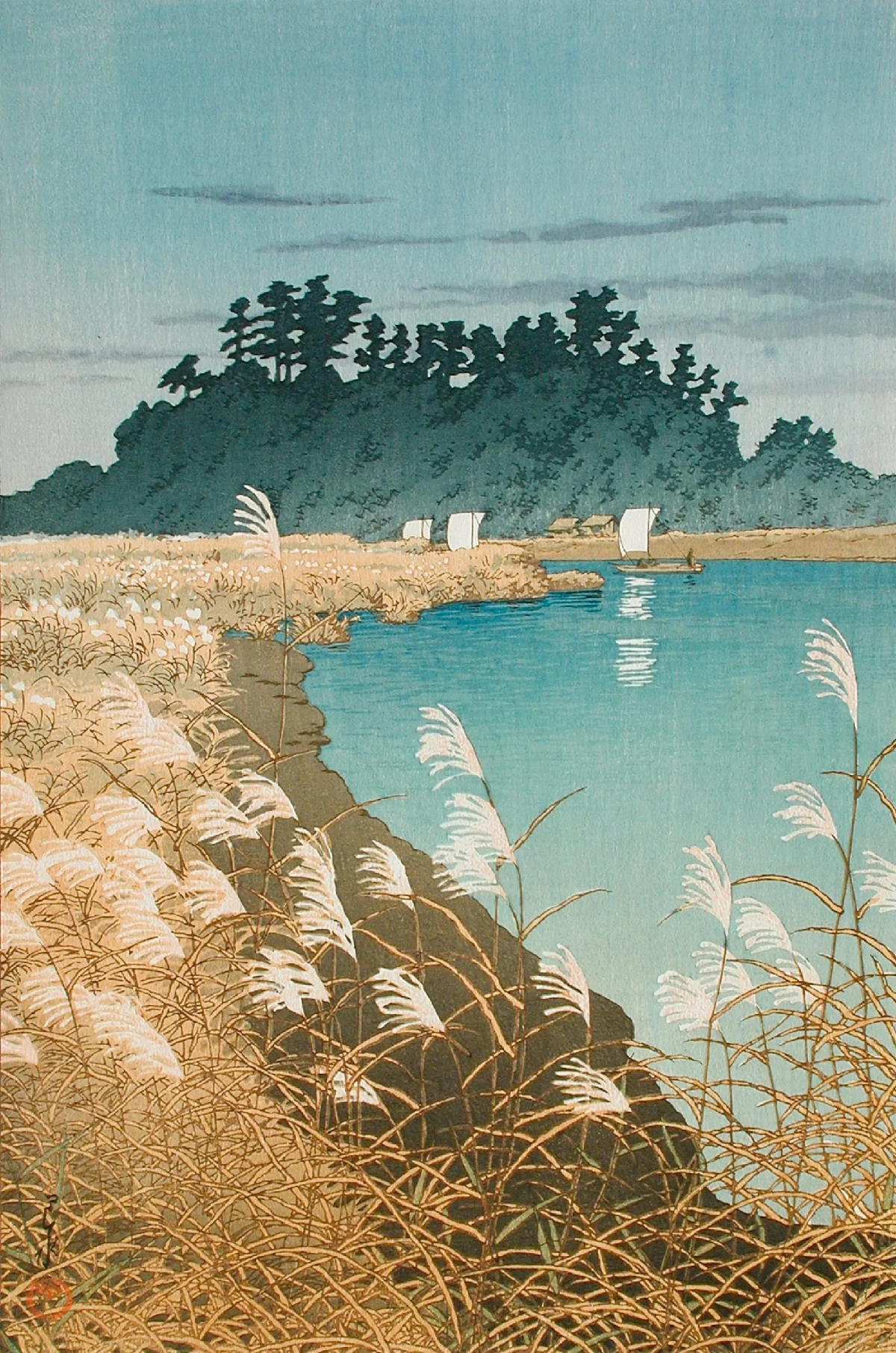
Kawase Hasui, Ichikawa in Late Autumn, 1930. Color woodblock print.

LEAVE THE LEAVES (MOST OF THEM)


Most of the leaves are down now. It isn’t really fall anymore, and it isn’t winter yet. Andy calls it the shoulder season. English doesn’t have a good word for it, but there’s an old calendar that does.


It started in China, where the year was split into 72 microseasons of about five days each, each named for something happening outdoors. Japan took up China’s calendar centuries ago, when it was modeling much of its government on China’s, and the microseasons came with it. By the 1680s, the calendar Japan was using was more than 800 years old. It had drifted out of step with the sky, and many of the season names didn’t fit Japan’s weather. So in 1685, an astronomer named Shibukawa Shunkai made the first Japanese-made calendar, and rewrote the microseasons for Japan’s own weather, plants, and animals.


The print above comes out of the same habit. The title isn’t Autumn. It’s Ichikawa in Late Autumn: one town, one stretch of the season. On Japan’s calendar, the microseason that starts November 12 is land starts to freeze.


Shibukawa was the shogun’s astronomer in Edo, the city now called Tokyo. Even there, the name has stopped fitting. Tokyo’s first frost now usually comes around Christmas. In the 1880s, its thermometer dropped below freezing on about 75 days a year. Lately it’s closer to 10.


In 2011, a private Japanese weather service proposed updating the old seasonal calendar to match the country’s actual weather. Haiku poets objected. Their seasonal words are sorted by that calendar, and centuries of poems depend on it. The old names stayed.


If we named this week here, we’d call it oaks hold their leaves. The maples and birches are bare, but many oaks and beeches hang on to theirs, especially young trees and lower branches, brown or pale and rattling in the wind, some until spring.

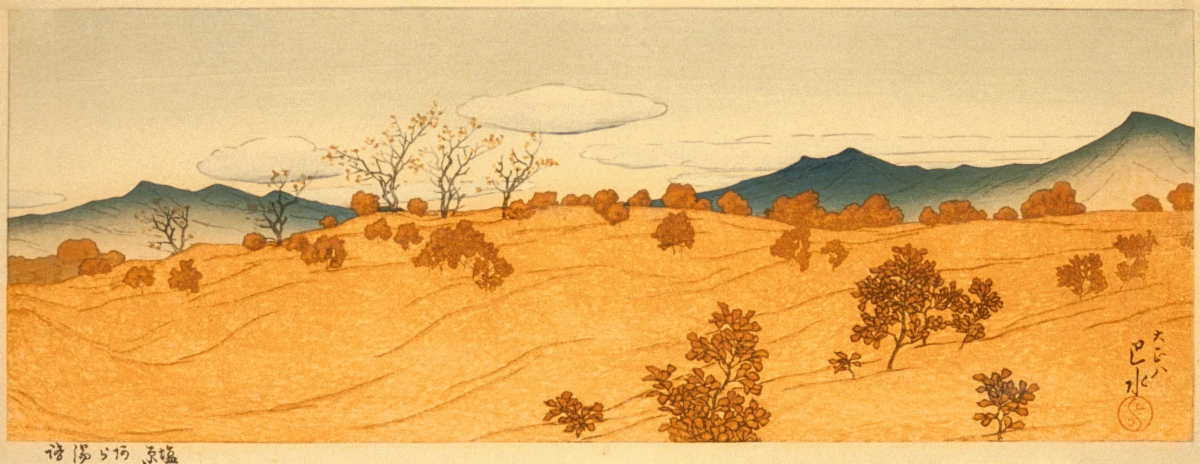
Kawase Hasui, Arayu Road, Shiobara, autumn 1919. Color woodblock print.

Which brings us to the leaves on your lawn. You may have heard “leave the leaves” from us, or from our friends at the Woodstock Pollinator Pathway, who made the case in their newsletter last week. It doesn’t mean leaving every one where it lands. Clear the driveway, the paths, the area around the house. Everywhere else, in the woods, the fields, under the shrubs, they’re already where they belong. Most butterflies and moths don’t migrate. They spend the winter right here, as eggs, caterpillars, chrysalises, or adults, under the leaves. Luna moths and swallowtails disguise their cocoons and chrysalises as dead leaves. It keeps them hidden all winter, and it’s also how they end up in a lawn bag.


Put the leaves back in their place. On November 8, Miranda was at Mohonk for Walking Together, a Mohonk Consultations conference on the Haudenosaunee Great Law of Peace and American democracy. The day marked the release of a new book, American Indigenous Democracy: A Call for Interdependence. There she heard Oren Lyons speak. He’s a Faith Keeper of the Turtle Clan of the Onondaga Nation, in his nineties, and has spent decades advocating for Indigenous peoples at the United Nations. He came back to one line several times, about how to travel through the world: when you move through a place, put the leaves back in their place. The book’s editor, the writer José Barreiro, took it as something like an older Leave No Trace. It works for a yard, too.


Xerces’ leaf guide →

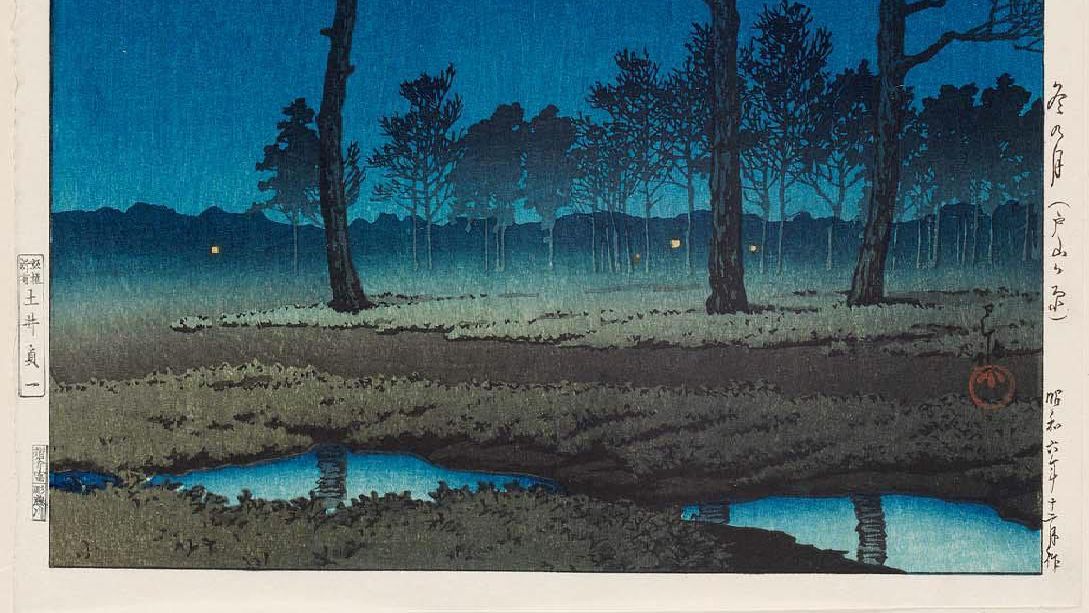
Kawase Hasui, Tega Marsh (detail), 1930. Color woodblock print. 

THE WETLAND: $3,000 TO GO


We’re almost there. The campaign to protect the wetland next to Israel Wittman Sanctuary is about $3,000 from its $100,000 goal. If everyone who gets this email gave $2, we’d be done. Anything past the goal goes toward protecting the next piece of land. We’re closing the campaign on November 20. Thank you to everyone who has given so far.


The wetland is home to river otters, wood ducks, and two salamanders New York lists as Species of Greatest Conservation Need. One of them, the marbled salamander, uses the same leaf litter. In the fall, it lays its eggs in the dry bed of a seasonal pool, a low spot in the woods that fills with water part of the year, often tucked under the fallen leaves. The female stays with them until the fall rains flood the pool, and then the eggs hatch into the water.


Adding the wetland makes the sanctuary about 11 percent bigger and connects almost 280 acres of protected land. We expect to close on the land in the coming weeks, and then it becomes part of the sanctuary for good.


Help finish it →

If someone sent you this, you can get your own! If you got it from us, forward it to a friend who’s out raking right now.

Your donations help us continue our work to protect and preserve open lands, forests, water resources, scenic areas and historic sites in Woodstock and the eastern Catskills.


With environmental groups large and small facing unique challenges, we need your support now more than ever. Every dollar makes a difference.


Support WLC today with a financial gift and consider adding us to your estate plan.

Our EIN number is 22-2950482.

2025 Environmental Organization - 1st Place

2026 Environmental Organization - 1st Place

2026 Environmental Advocate/Activist - Andy Mossey, 1st Place

Facebook  Instagram  Youtube