|
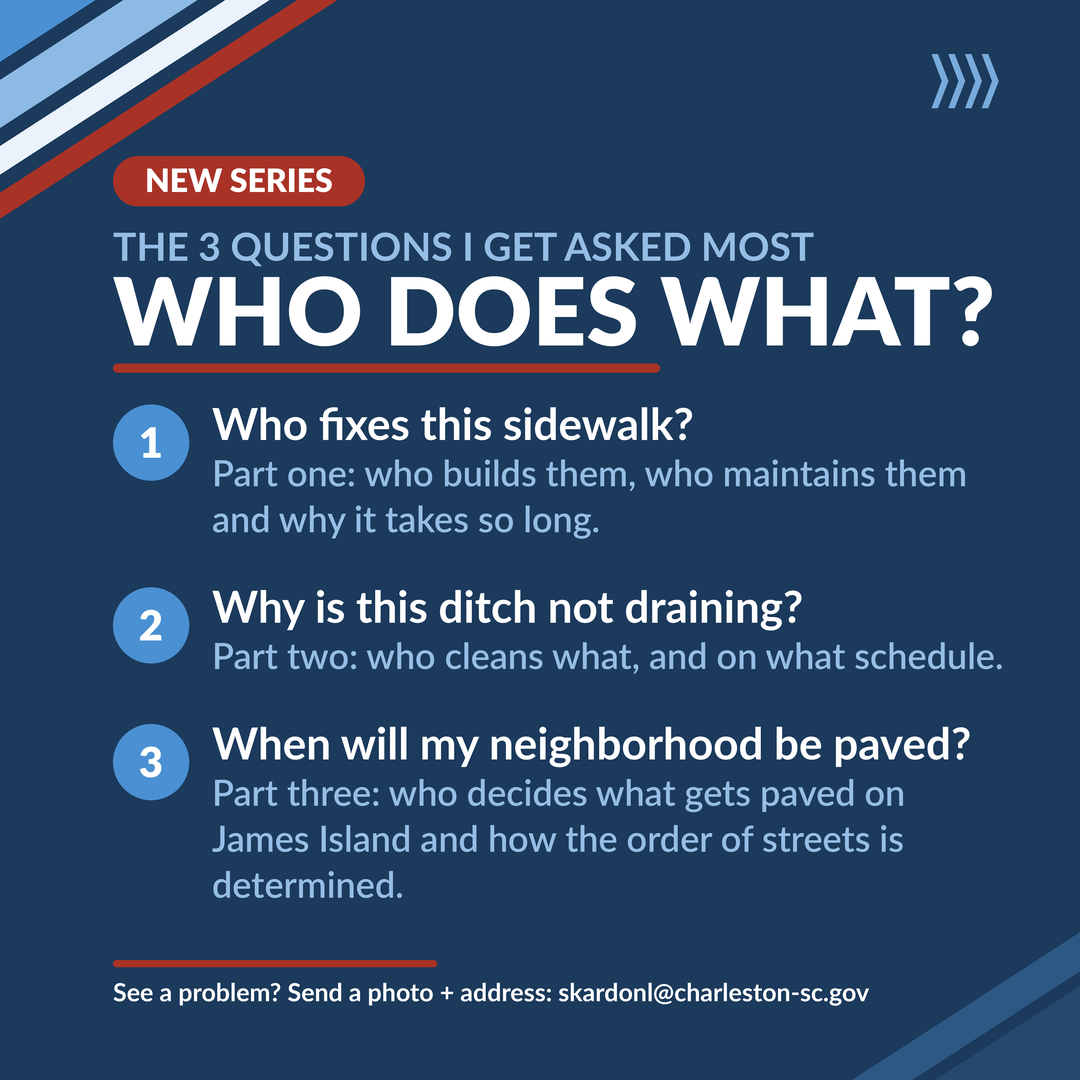
This month's feature is something I have been working on since the spring: an easy to understand guide about how sidewalk maintenance, ditch clearing and paving happens across the City. Over and over again, I hear the same questions: Who fixes this sidewalk? Why is this ditch not draining? When will my neighborhood be paved?
Unfortunately, the answer to all three depends on which agency owns the road you are standing on. So, I spent months asking staff at the City, the County and SCDOT the same questions until I had clear answers. None of this should require a cheat sheet, but until we have a better system, the following should deliver the answers we need to be effective.
Part One: Sidewalks 101 - Building and Maintenance
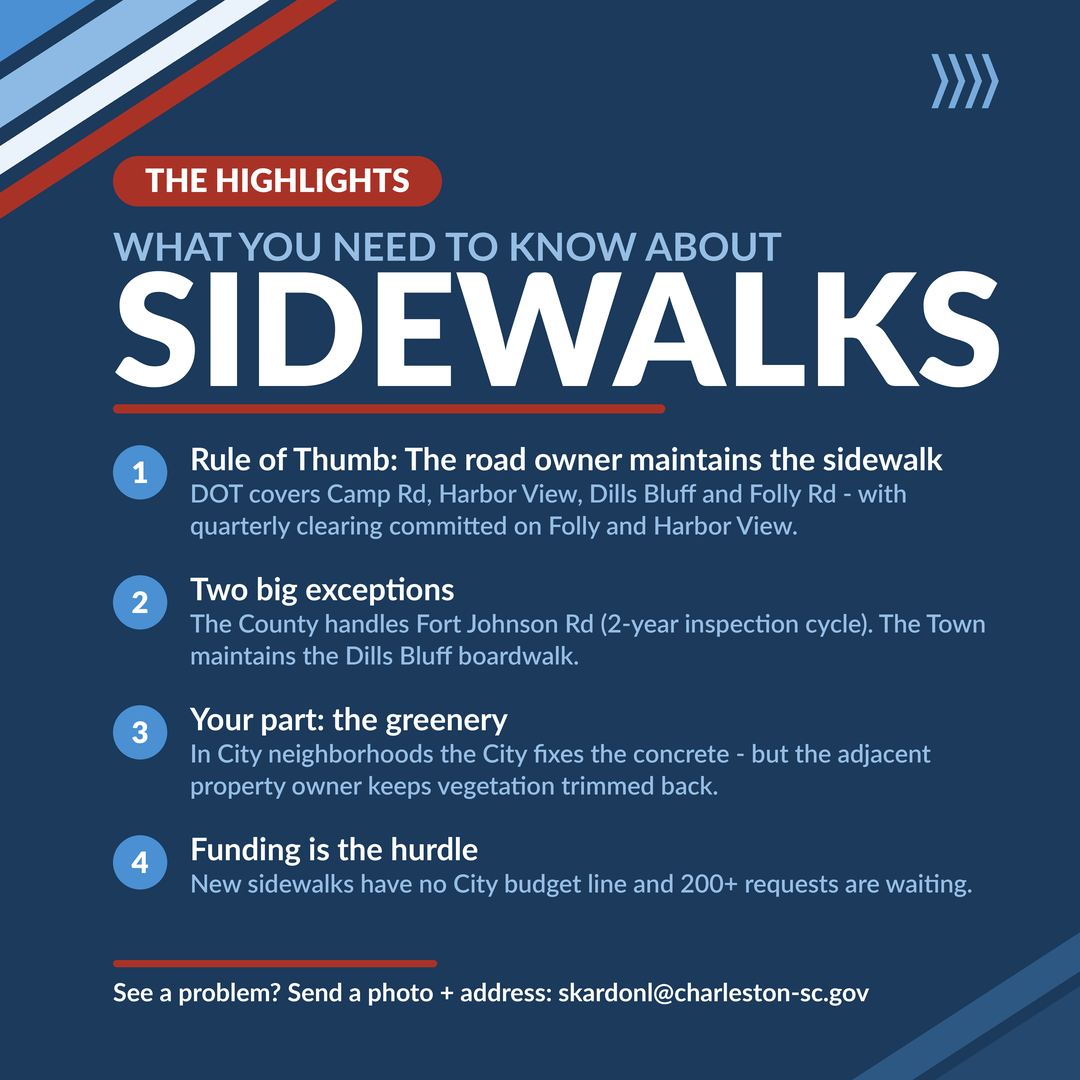
The rule of thumb that usually works is that whoever owns the road maintains the sidewalk. On James Island that means Camp Road, Harbor View, Dills Bluff and Folly Road are SCDOT, and SCDOT has committed to clearing Folly and Harbor View quarterly. There are two local exceptions worth knowing: the County handles most of Fort Johnson Road on a two-year inspection cycle, and the Town of James Island maintains the Dills Bluff boardwalk. In City neighborhoods, the City repairs the concrete, but the property owner is responsible for keeping the vegetation trimmed back. That means if you have a sidewalk by your yard, it is part of your yard work.
Read it here: www.leslieforcharleston.com/news/sidewalks-101-building-and-maintenance
Part Two: Ditch Maintenance 101
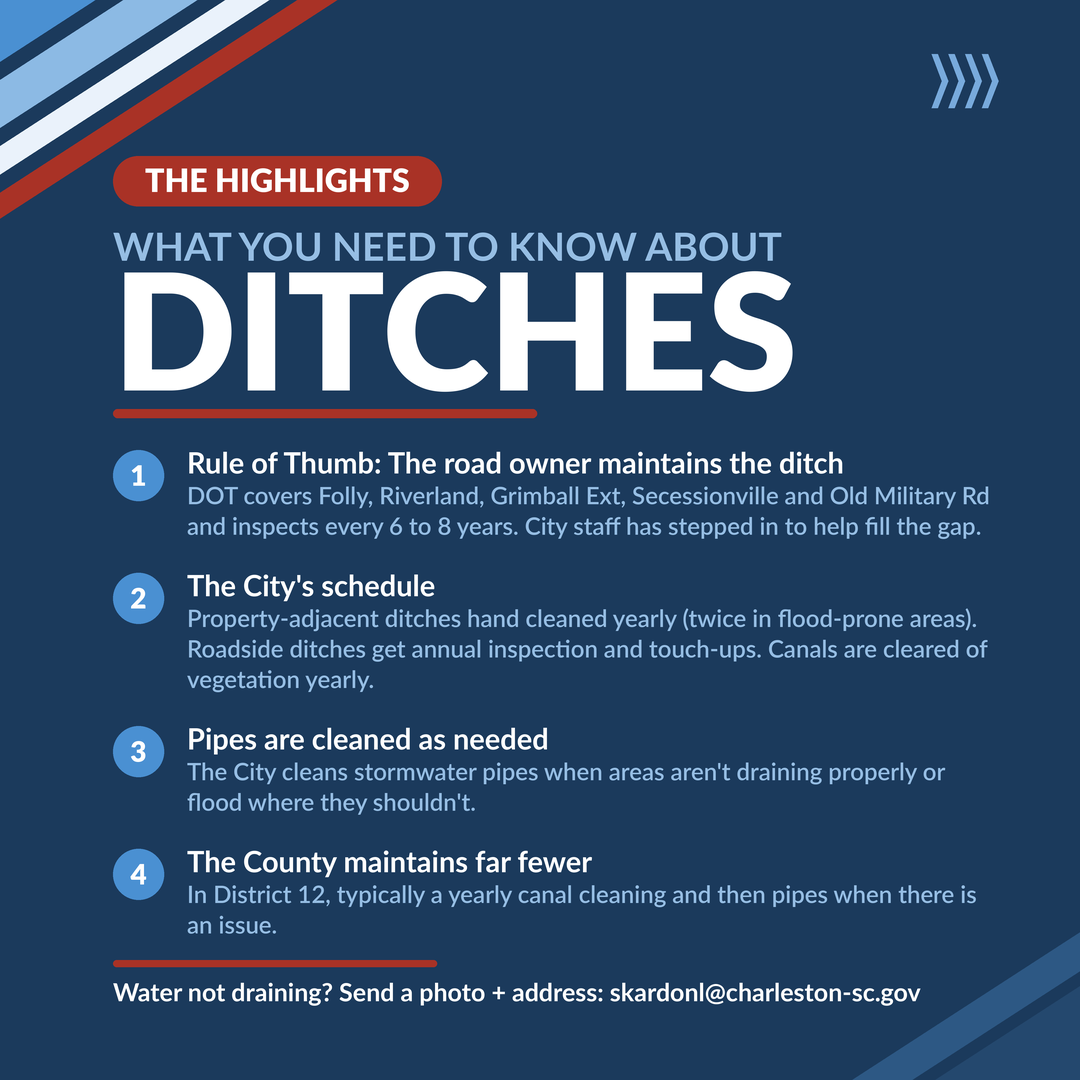
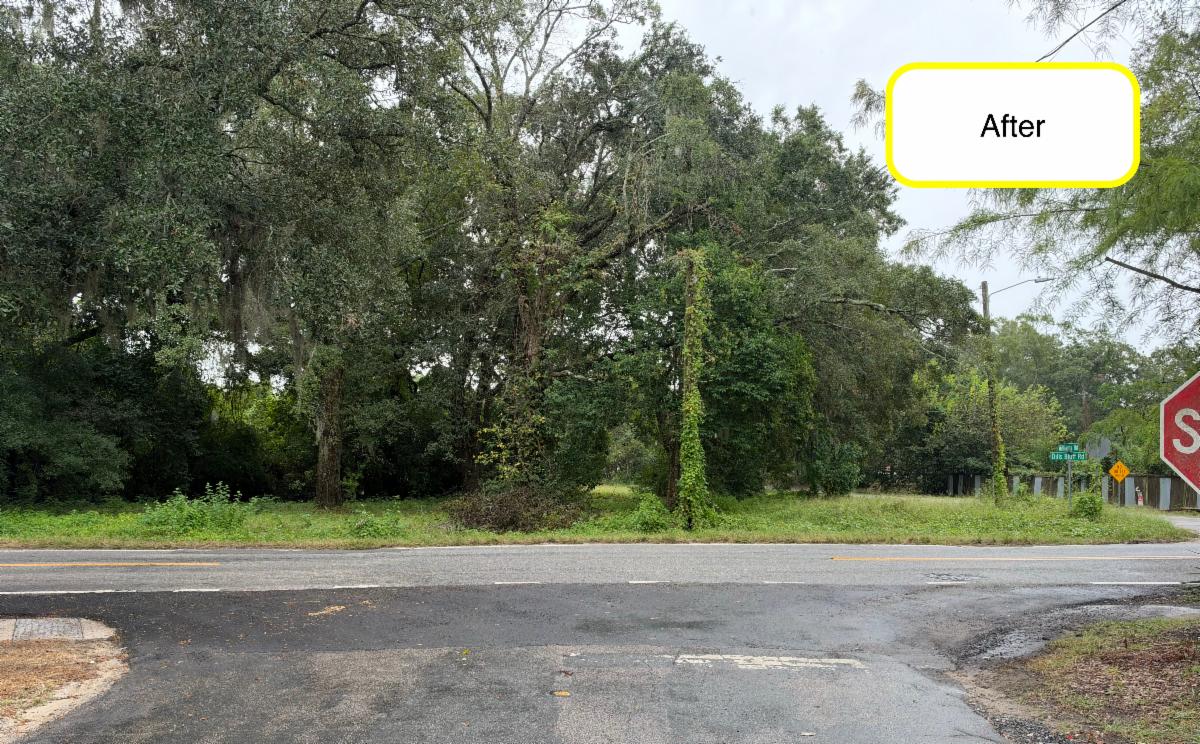
The same ownership rule applies to ditches. SCDOT covers the ditches along Folly, Riverland, Grimball Extension, Secessionville and Old Military, aims to inspect them roughly every six to eight years, and works mostly reactively. Obviously, that has not been enough on James Island, so City Stormwater crews have stepped in on several of those state roads, including Folly, Grimball Extension and Old Military. That is not their job and they have done it, and they deserve the credit for it.
On City ditches there is a schedule: ditches next to property are hand cleaned once a year and twice in flood-prone areas, roadside ditches get an annual inspection and touch-ups, canals are cleared of vegetation yearly, and pipes are cleaned when something is not draining. Ditch maintenance is not a comprehensive flooding fix, but it is the most basic tool we have, and a critical part to address flooding.
Read it here: www.leslieforcharleston.com/news/ditch-maintenance-101
Part Three: Paving 101
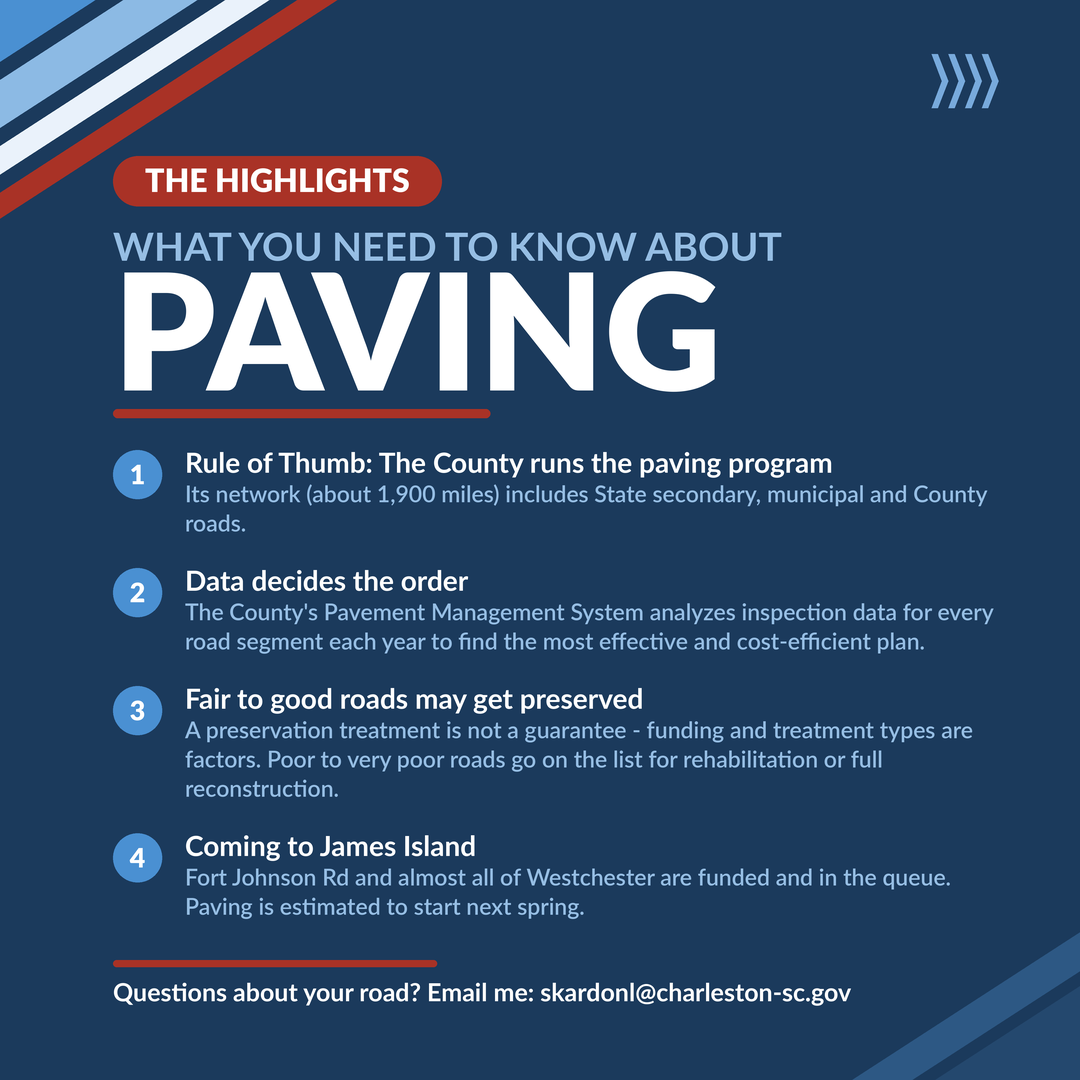
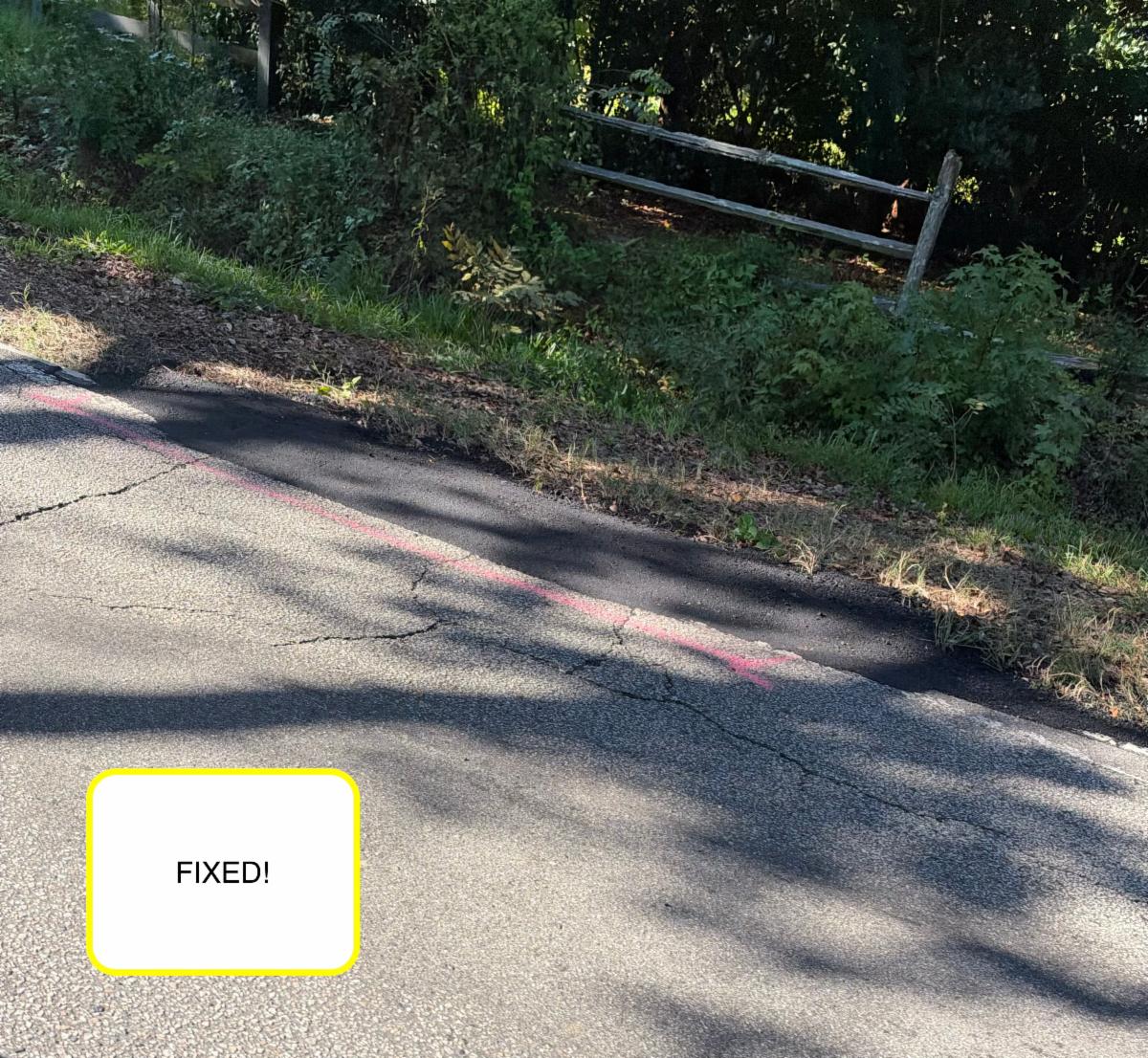
This is the one that surprises almost everyone: Charleston County paves practically every road on James Island - City streets, Town streets, state roads and your neighborhood cul-de-sac. The order is set by data rather than by who asks the loudest. A collection vehicle drives the roads and measures roughness, cracking and potholes to produce a condition score. Roads in good to fair condition can receive preservation treatments, and roads in poor to very poor condition go on the list for repaving. That means I cannot move your street up the list, and while that is frustrating to hear, I think it is the right answer, because it puts data and fairness ahead of political pressure. You can look up any road's condition score yourself on the County's pavement map. The good news for us is that Fort Johnson Road and almost all of Westchester are funded and in the queue, with paving estimated to start next spring.
Read it here: www.leslieforcharleston.com/news/paving-101
|