Sign Hill Stewards
May Newsletter
|
|
Greetings Sign Hill Stewards,
It has been a wonderful month on Sign Hill observing the ever-changing color pallet of purples, yellows, oranges, whites and pinks. It is also an exciting time to be on Sign Hill in the midst of the federally endangered mission blue butterfly’s (Icaricia icarioides ssp. missionensis) flight period.
|
As we have continued our annual monitoring of the butterfly’s population, early findings have been promising. We have spotted mission blues in each developmental phase from eggs, to larva, to adults in flight. On warm days, we have observed up to 6 mission blues at one time flying around their preferred host plant, silver lupine (Lupinus albifrons.)
We also continue in our early detection and rapid response (EDRR) efforts to protect this special grassland from invasive, non-natives including ice plant (Carpobrotus edulis) and french broom (Genista monspessulana.) Both of these species are rated as highly invasive by the California Invasive Plant Council, and we are happy that what stands remain are near the edges of the park. This gives us hope that control of these species on Sign Hill is within our grasp. I hope you will enjoy the video clip of our Natural Resource Aide, Daniel Simoni, unloading a truck-bed full of french broom at the corporation yard.
Of course, these efforts are not ours alone. We would like to express our gratitude to those of you who have come out on our volunteer days to help! I look forward to continuing our work together to protect this beautiful open space that we share.
Candace LaCroix
Natural Resource Specialist
Leading the Sign Hill Habitat Restoration Project
|
|
Invasive Plant Control in Action |
|
South San Francisco Shines a Beacon of Solidarity with Ukraine atop Sign Hill |
|
Photo source: Cain, Roger 2022, Everything South City. South San Francisco, CA. https://everythingsouthcity.com/2022/03/south-san-francisco-stands-in-support-of-ukraine-visible-by-sign-hill-tree-lit-in-blue-and-yellow/. Accessed 4/18/2022. |
|
Did you know? Mission blue butterflies have a special relationship with native ants. Mission blue caterpillars secrete a sugary substance known as honeydew, which the ants feed on. In return, the ants protect the caterpillars from predators. This is important to the mission blues, as the larval stage is when they are the most vulnerable to predation. This important symbiotic relationship is beneficial to both the butterflies and the ants. In this video, you can see native ants tending a mission blue butterfly larva on Sign Hill!
|
|
Daniel Simoni, Natural Resource Aide |
|
As spring continues on Sign Hill, the wildflowers continue to progress and change. Early spring wildflowers have gone to seed, while late bloomers continue to open. Here are some of the flowers that are blooming now. Remember not to pick wildflowers and take pictures instead in order to protect sensitive habitat and ensure that everyone can enjoy the beautiful wildflowers of Sign Hill.
|
|
Ruby Chalice Clarkia (Clarkia rubicunda)
|
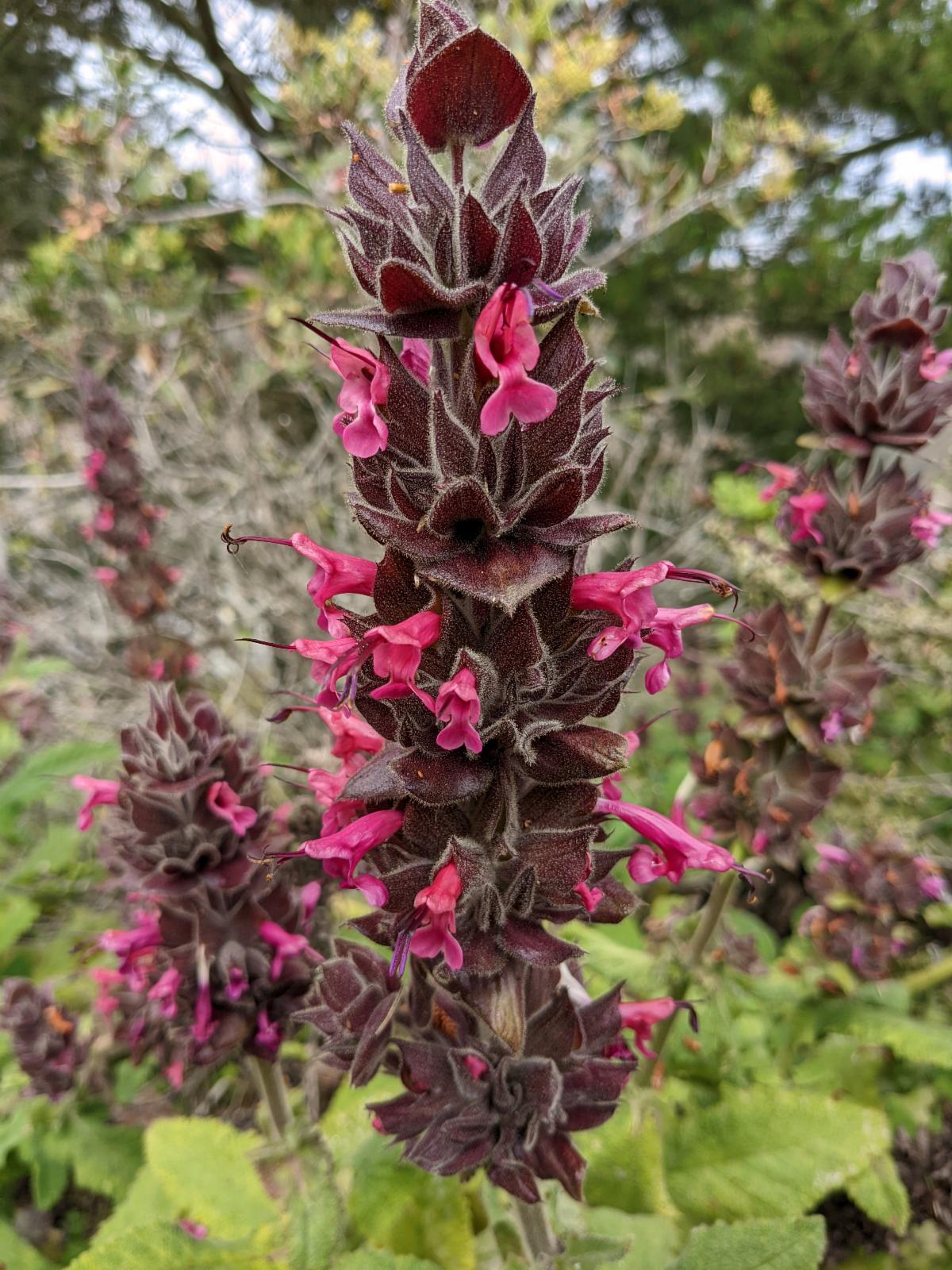
Hummingbird Sage (Salvia spatheca)
|
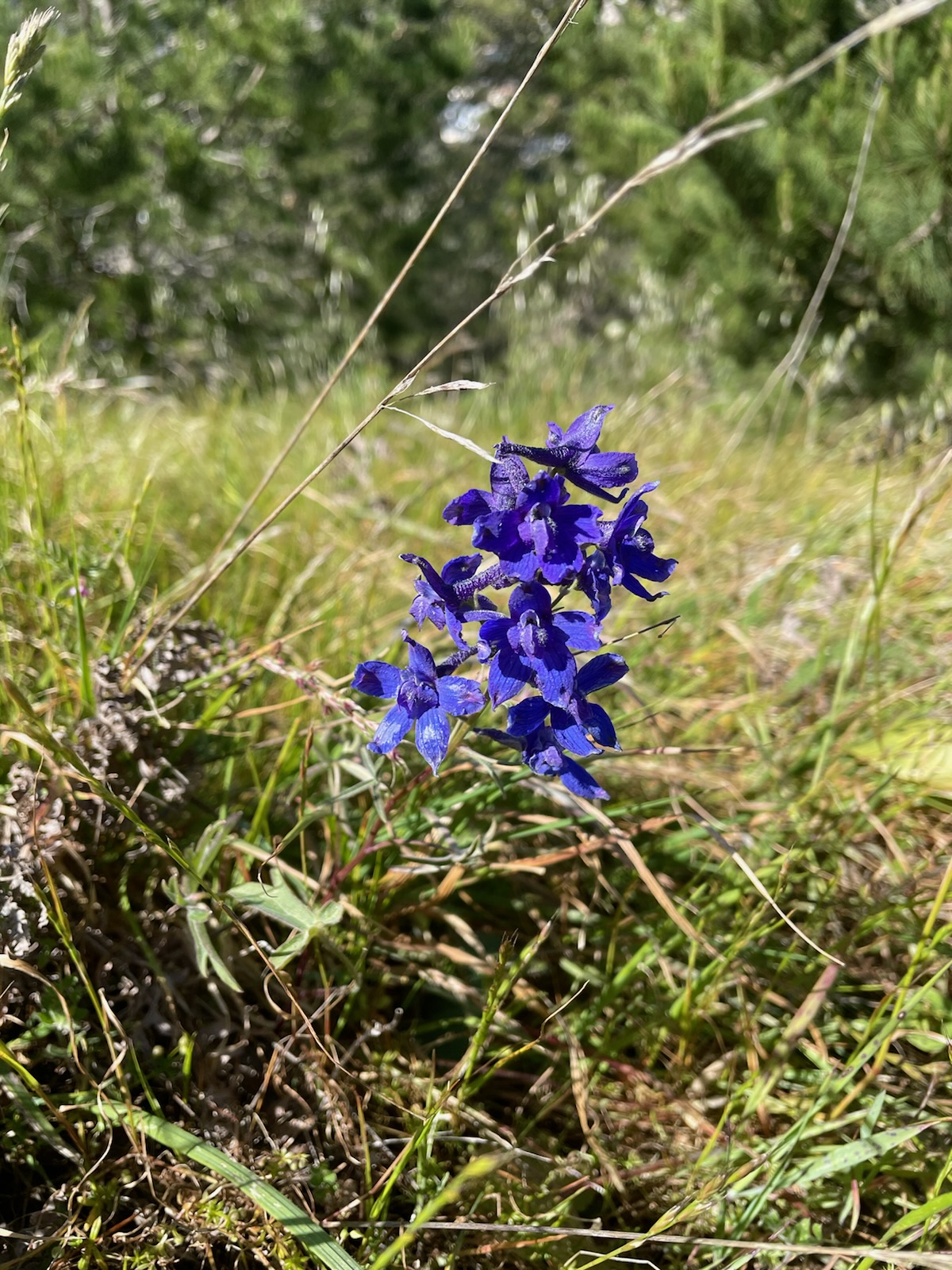
Coast Larkspur (Delphinium decorum ssp. decorum)
|
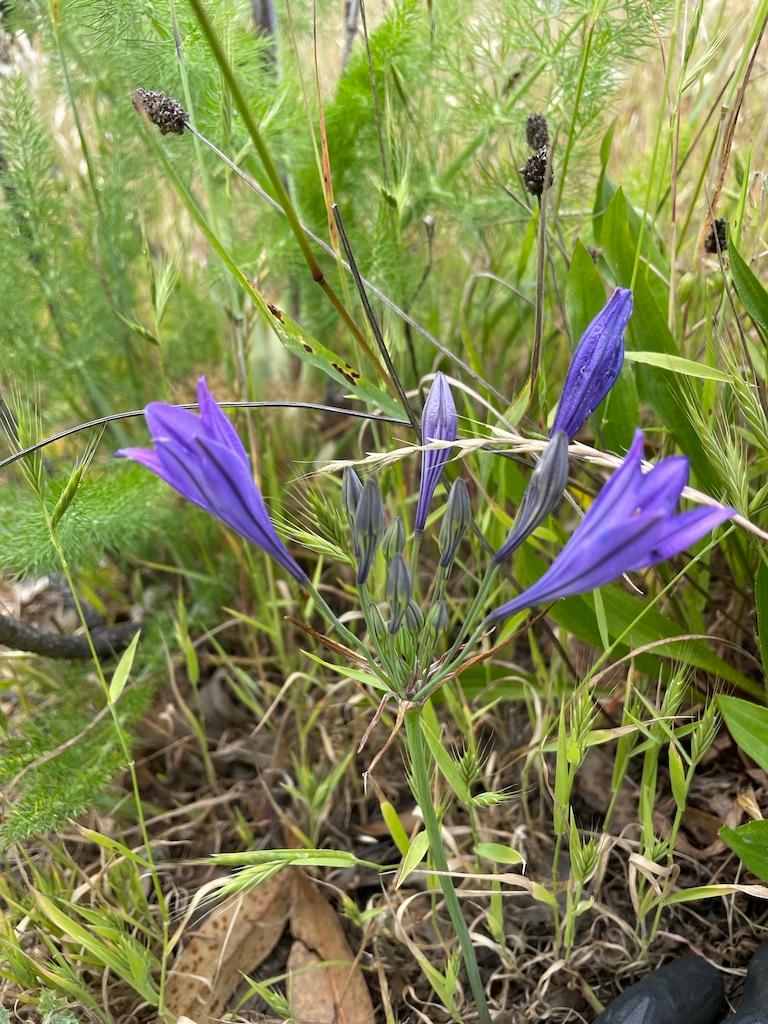
Ithuriel's Spear (Triteleia laxa)
|
|
California Soaproot (Chlorogalum pomeridianum)
|
Sticky Monkeyflower (Diplacus aurantiacus)
|
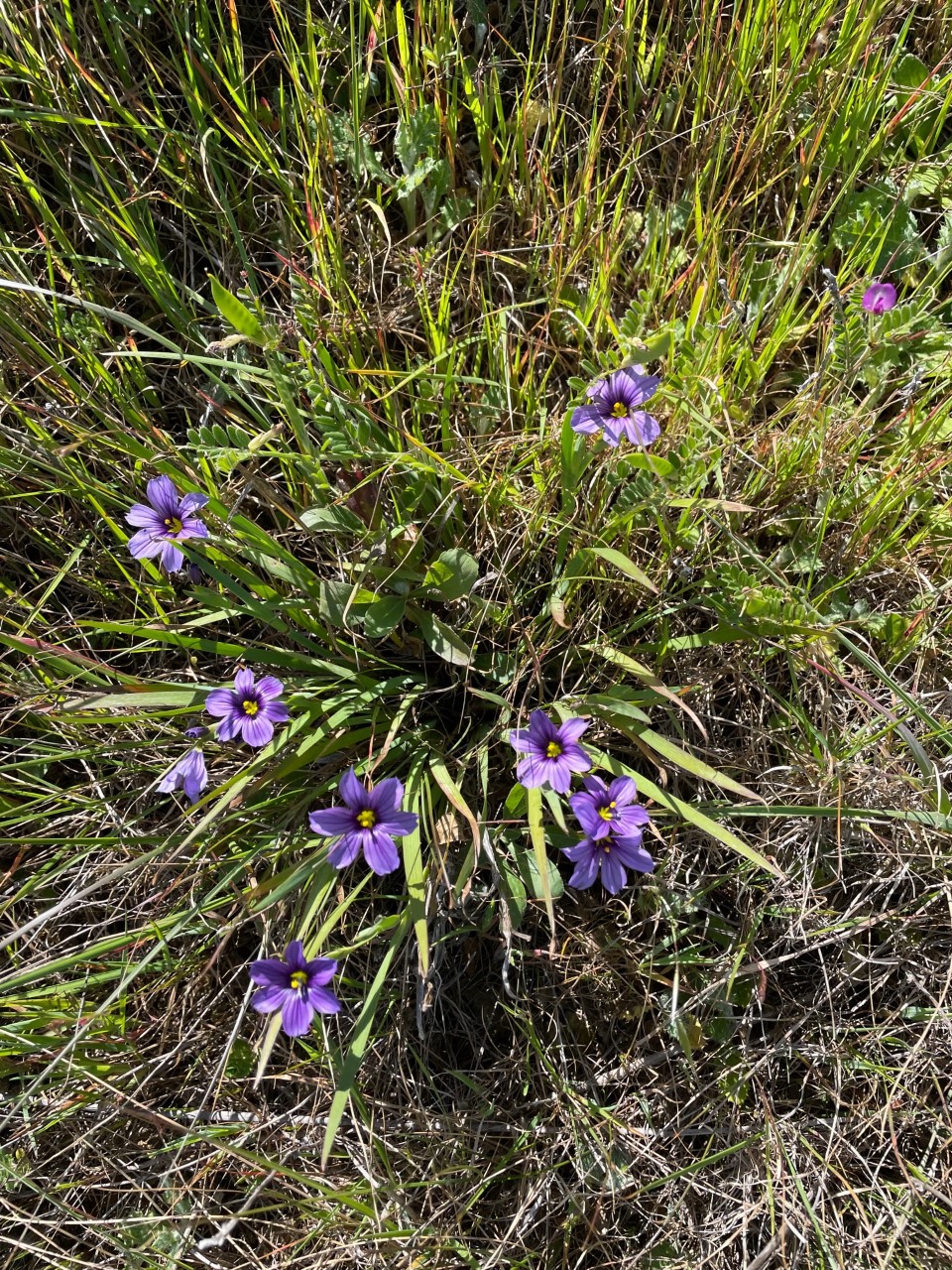
Western Blue Eyed Grass (Sisyrinchium bellum)
|
|
Daniel Simoni, Natural Resource Aide |
|
|
|
Snakes are known for shedding their skin as they grow. You may have even found a snakeskin while hiking at a local park or nature preserve. Alligator lizards actually shed their skin as well. Check out this alligator lizard skin found on Sign Hill! Many other lizards shed their skin in small pieces, but alligator lizards will shed their skin in a single piece, just like a snake. Alligator lizards can be found enjoying Sign Hill's grasslands, where they hunt for insects, spiders, snails, and even smaller lizards.
|
|
Daniel Simoni, Natural Resource Aide |
|
Sign Hill Resident Spotlight: Euphydryas chalcedona
|
|
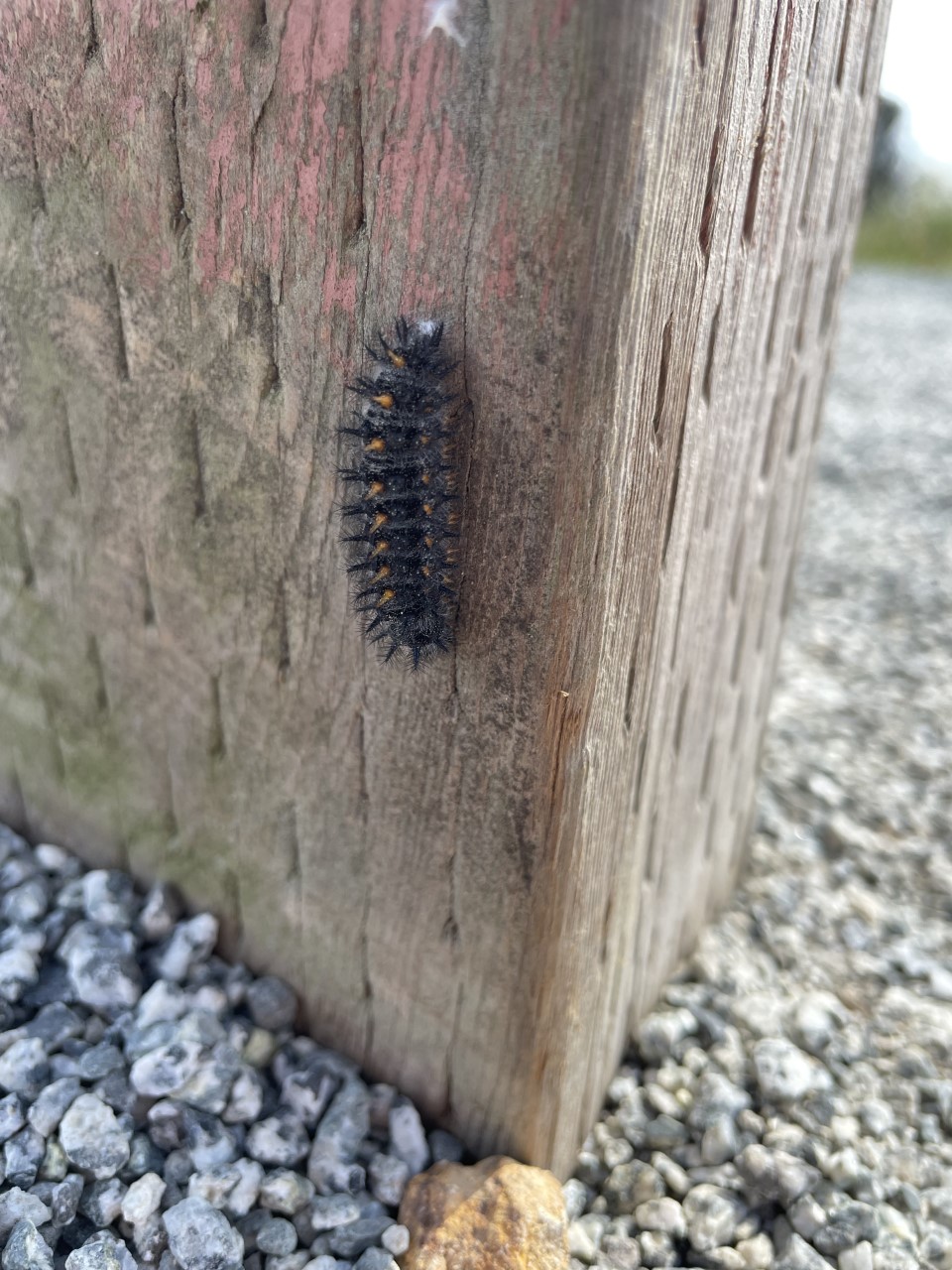
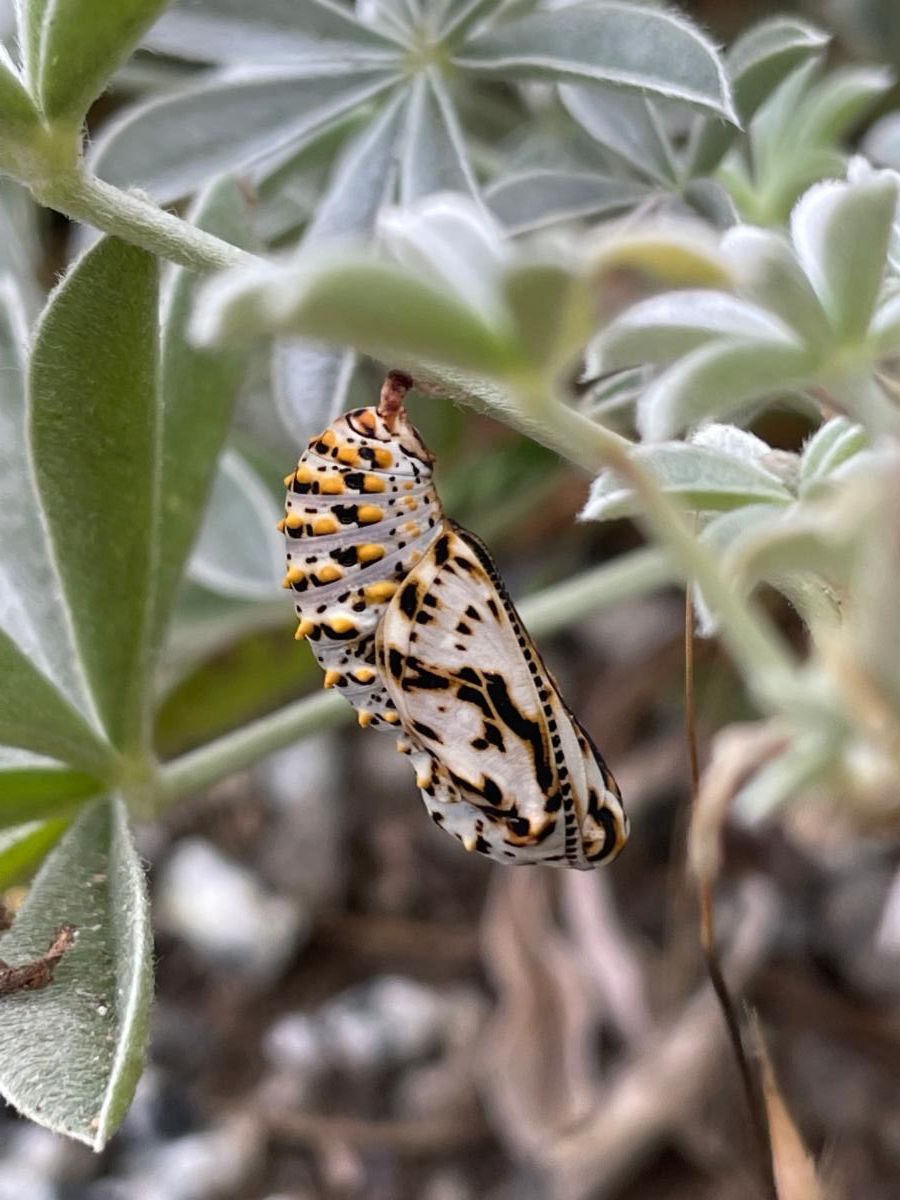
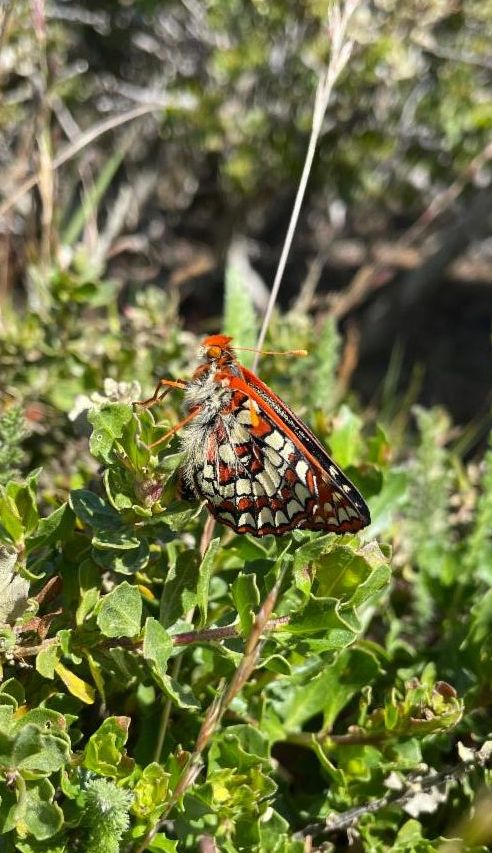
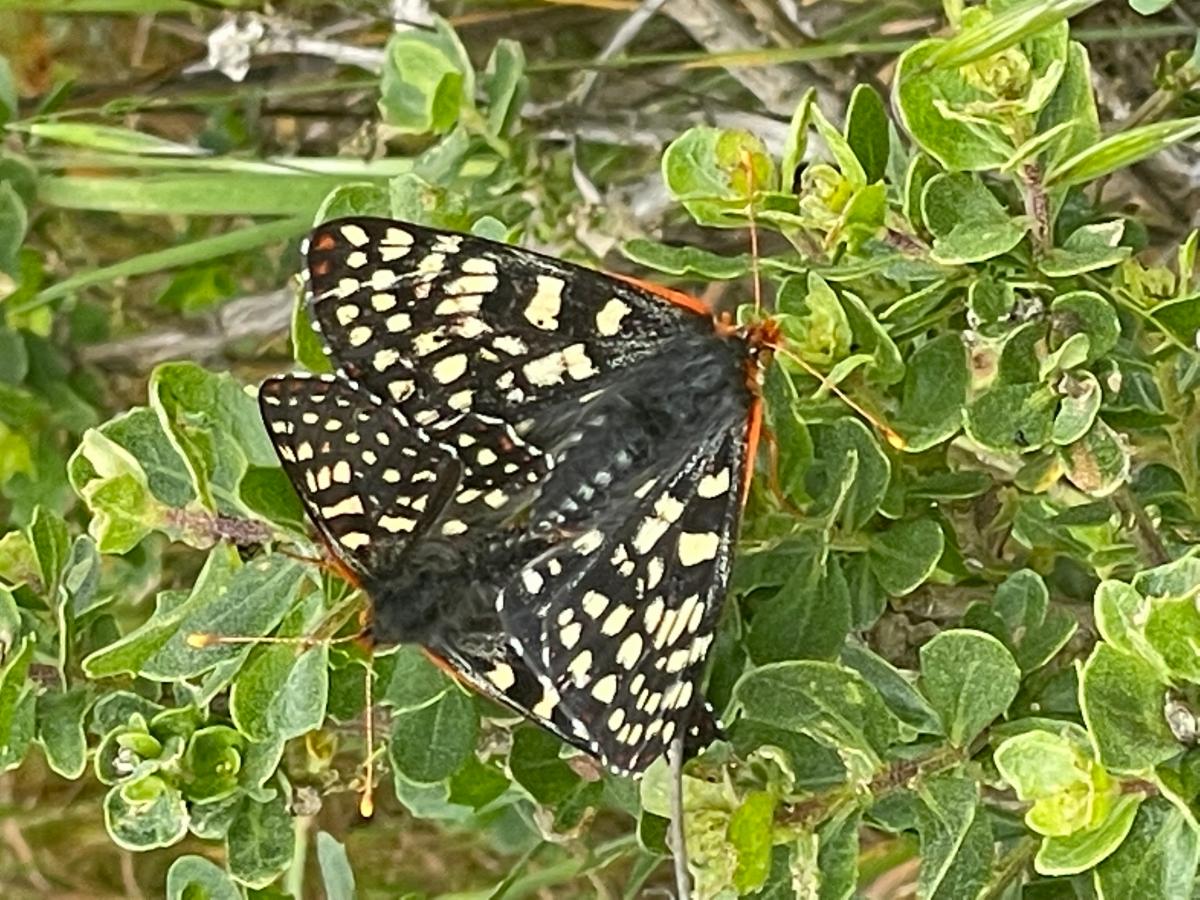
Variable checkerspot butterflies (Euphydryas chalcedona), also known as chalcedona checkerspots, are abundant and easy to spot on Sign Hill during their flight period from April to June. Larvae feed on their host plants, California bee plant (Scrophularia californica) and sticky monkey flower (Diplacus aurantiacus), while males congregate nearby hoping to encounter a female.
|
|
If you look carefully, you might even notice a variable checkerspot in its larva or pupa stage, each pictured above.
|
|
Design Tech High School Interns |
|
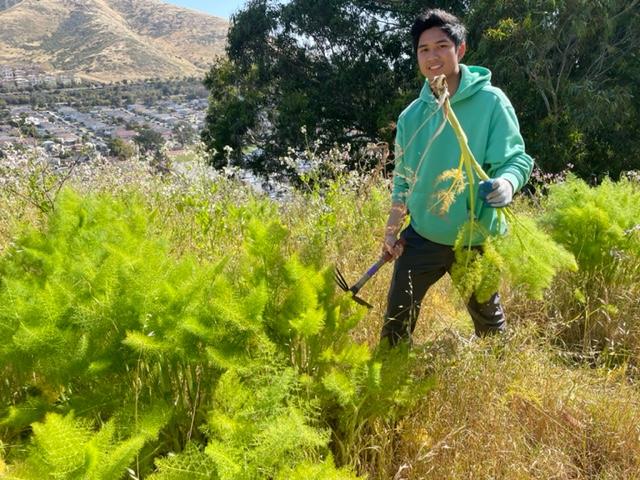
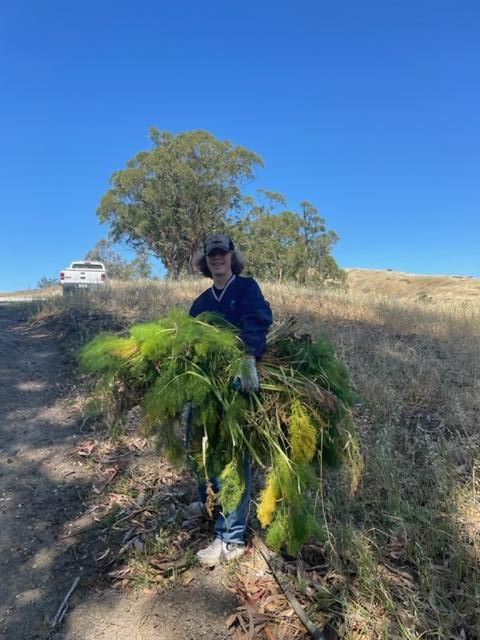
This month we had a wonderful time working with 3 interns from Design Tech High School, Adam, Mason and Nick. They spent two weeks learning about grassland ecology and gaining hands-on experience in habitat restoration.
We are grateful for this community partnership that will help build awareness about the endangered wildlife and delicate ecosystems that this next generation will be responsible to protect. The hard work that these young men have put into invasive plant removal on Sign Hill has made a big impact.
|
|
|
|
Take a look at these before and after pictures from the west end of Sign Hill that has been invaded by a dense patch of sweet fennel (Foeniculum vulgare)!
|
|
Volunteer with Sign Hill Stewards! |
|
When: Every other Friday and the 2nd Saturday of each month from 9am-12pm. Only cancelled for heavy rains.
Registration: Registration is required. Volunteers under the age of 18 must have a youth waiver signed by a parent/guardian. Youth under the age of 15 are welcome and must be accompanied by an adult. Click the link below to RSVP.
What to bring: To prepare for working outdoors, please bring work gloves, plenty of water, sturdy shoes, long pants and long sleeves, a hat/sunscreen, and a completed waiver for each volunteer. Volunteers should expect some hiking on steep terrain.
|
|
|
|
|
|
|