|
|
Defending wildlife and habitat through:
Advocacy
Conservation
Education
|
|
|
News & Updates: April 2023 |
|
In this issue:
- Tips for getting the most out of Spring Migration
- Get bird migration forecasts
- Tracking migrants with Hutton's motus tower
- Feeding hummingbirds
-
Philanthropy Central: Donate once, have 2X the impact!
- Record number of participants flock to Kansas Lek Treks
- AOK Executive Director expresses concerns about prairie-chicken hunting boundaries
-
Latest Prairie Wings available online
- Save the date!
- May 7: Achterberg Work Day
- May 18: Black-footed Ferret Discussion: An Endangered Species back from the brink
- May 22-26: Hutton Work Week
-
Chapter Spotlight: New chapter forming in Ellis, Graham, Norton, Osborne, Phillips, Rooks, Russell, Smith, and Trego Counties
-
AOK Nature Walk Recommendations: Look for Prairie Dogs and Burrowing Owls at Kirwin National Wildlife Refuge
|
|
|
 |
Bird Migration Forecasts
Expert birdwatchers have long known that changing weather can cause a 'fallout' - an unusually large number of birds to appear during spring (or fall) migration. Fallouts generally occur when birds migrating under favorable conditions encounter a weather change creating unfavorable conditions for migration (such as a switch from a tailwind to a headwind). The birds generally descend rapidly and seek shelter in whatever habitat is available. Luckily, we no longer have to be experts to predict when and where fallouts might occur.
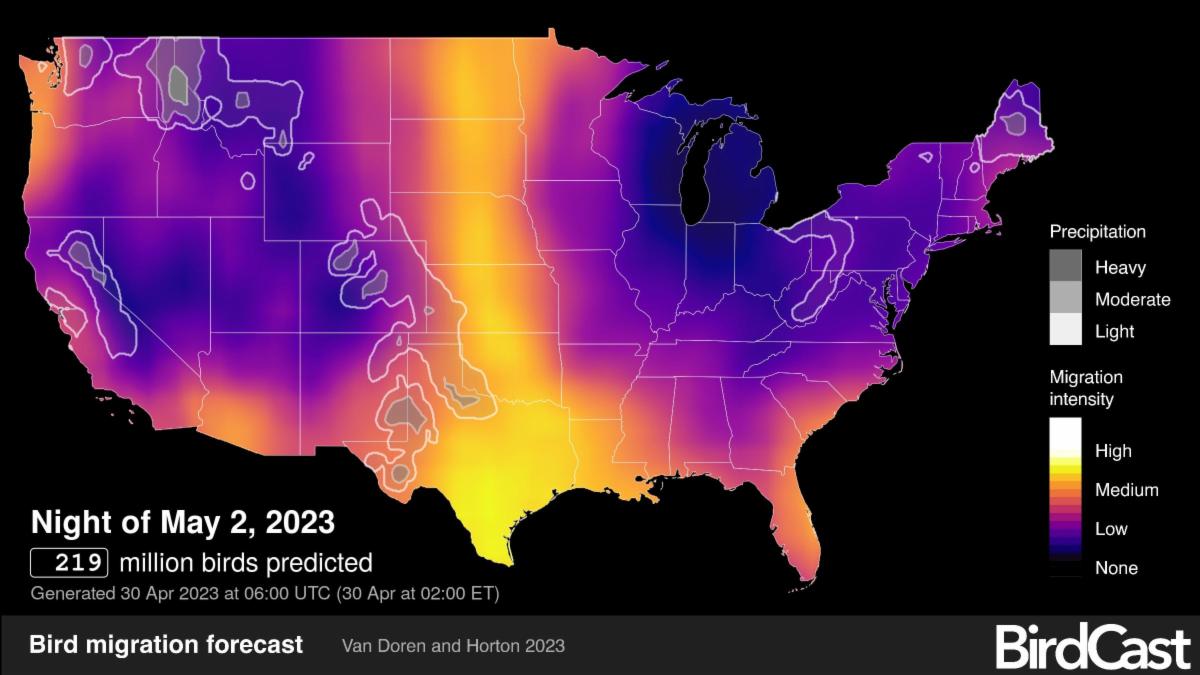
Birdwatchers must only visit https://birdcast.info/ to see when migration might peak in their area. Because most songbirds migrate at night, the forecasts are for the night, so you should plan on going birdwatching the next day.
The forecast for the night of May 2 shows a large number of birds migrating over Kansas (photo above).
Plan on going birding the morning of May 3!
|
|
|
|
Tracking migrants with Hutton's motus tower
In our September newsletter, we described in detail the construction of the motus tower at AOK's Hutton Niobrara Ranch Wildlife Sanctuary in Nebraska, why it provides powerful insight in to the migration of small birds, and our early findings. In brief, this tower allows scientists to track the movement of small birds over large distances, a critical piece of information if we are to understand how various factors affect migration, habitat use, population size, and conservation. Hutton's motus tower fills a gap in northern Nebraska and southern South Dakota - the next closest tower is 150 miles away.
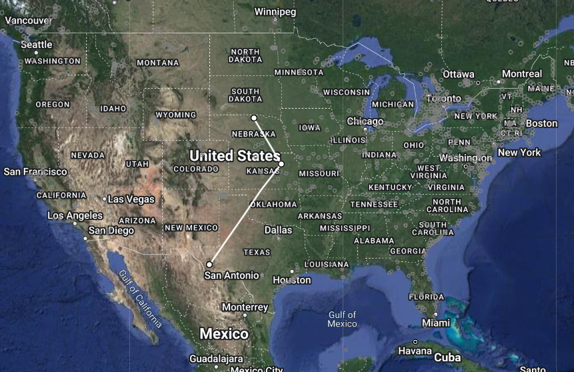
This month, both Chestnut-collared Longspurs and Sprague's Pipits were detected from Hutton's motus tower. These two species are described as experiencing "rapid population decline" and listed as 'vulnerable' by the IUCN. One of the Chestnut-collared Longspurs was banded in west Texas, and visited Konza Prairie near Manhattan Kansas, before checking in at Hutton (map above).
Birds connect us!
|
|
|
|
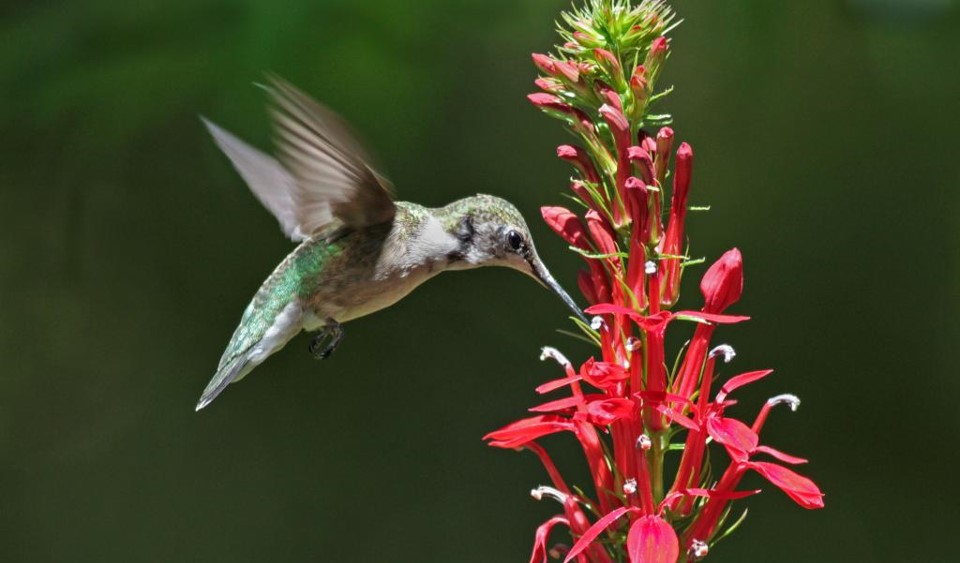
Many bird watchers eagerly await the return of hummingbirds in spring. These amazing birds are the only ones capable of true backwards flight, and are only found in North and South America. Kansas primarily has Ruby-throated Hummingbirds, but 10 other species have been spotted at least once in Kansas.
Hummingbirds can be observed near our homes by providing feeders. As hummingbirds are often attracted to the color red, the feeders often have red embellishments. You can find them in many stores, but we offer these suggestions for safely providing nourishment:
1. Make your own nectar and never use red food coloring.
Hummingbird nectar is easy to make - just take 1 part sugar to 4 parts water (such as 1/2 cup sugar to 2 cups water). I heat the mixture in a microwave just until the sugar dissolves (it is barely warm to the touch).
Although the evidence that red food color causes health issues in hummingbirds is inconclusive, it is not necessary, so why take the chance? The red on the bird feeder is enough to attract the hummingbird, so there is no need to add additional color.
2. Pick a bird feeder that is easy to clean and clean it every week.
If nectar is left out too long, it will go bad, especially in hot weather. You will notice a cloudiness to the liquid. Even if the liquid looks good, it is still a good idea to clean the feeder once a week. Some feeders have narrow openings making them hard to clean. Look for one with a large opening.
3. Keep bees and wasps away.
Bees and wasps will also eat sugar water and will be a nuisance to the hummingbirds. Keep wasps away with wasp guards or saucer-type feeders. Both of these methods extends the distance between the opening and the sugar water. Hummingbirds with their long beaks and tongues can still access the water, but wasps with their short mouthparts cannot.
Because worker ants cannot fly (or swim), a simple water moat can be used to keep them away. Some feeders have the moats built in or you can buy them separately. Just be sure to refill them as they evaporate!
Photo by Will Stuart
|
|
|
Philanthropy Central:
Donate once, have 2X the impact!
|
|
One of our long-time, generous donors has created an opportunity for your donation to go twice as far when you give now
(until May 15).
Every dollar you give will be matched dollar-for-dollar.
This Earth Day campaign means that we can:
- Advocate for Prairie Chickens and other native animals and plants in the Great Plains
- Connect people with more information about and chances to see threatened and endangered wildlife in the Great Plains
- Protect more habitat in the Great Plains
Please take action now. Double your gift’s impact – give now. There are two ways to give:
-
Donate online by clicking HERE
- Mail a check today to:
AOK – Earth Day x 2
PO Box 1106
Manhattan, KS 66505
|
|
|
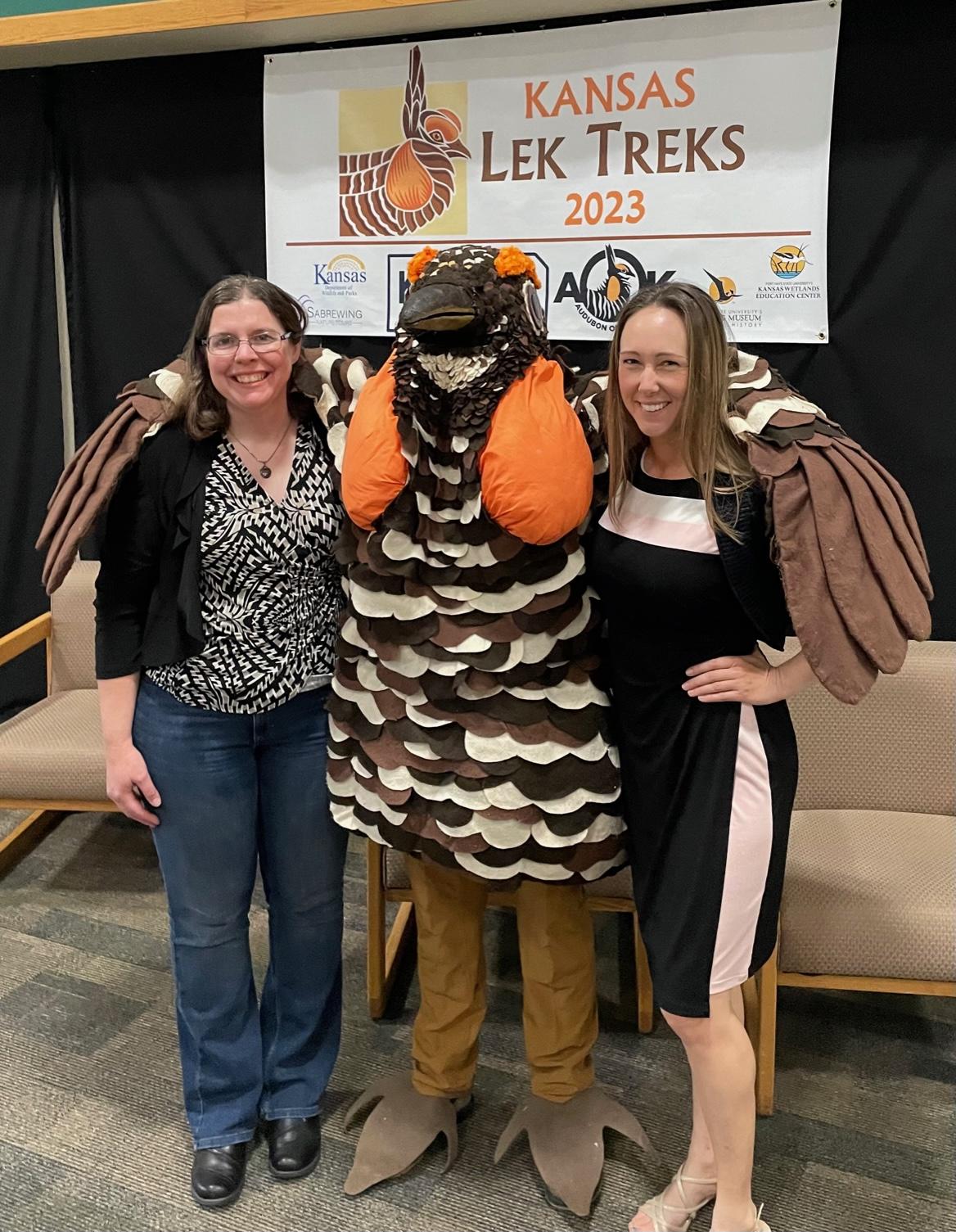
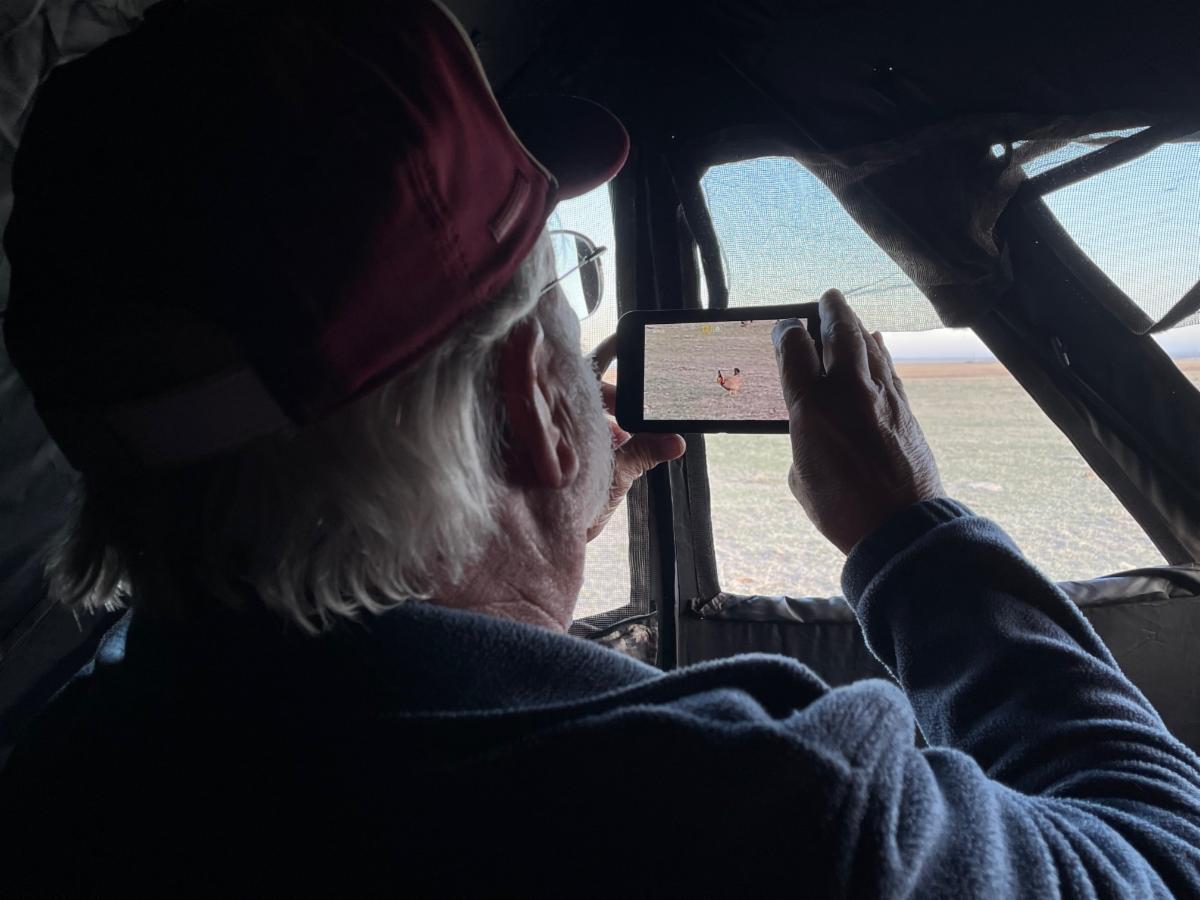
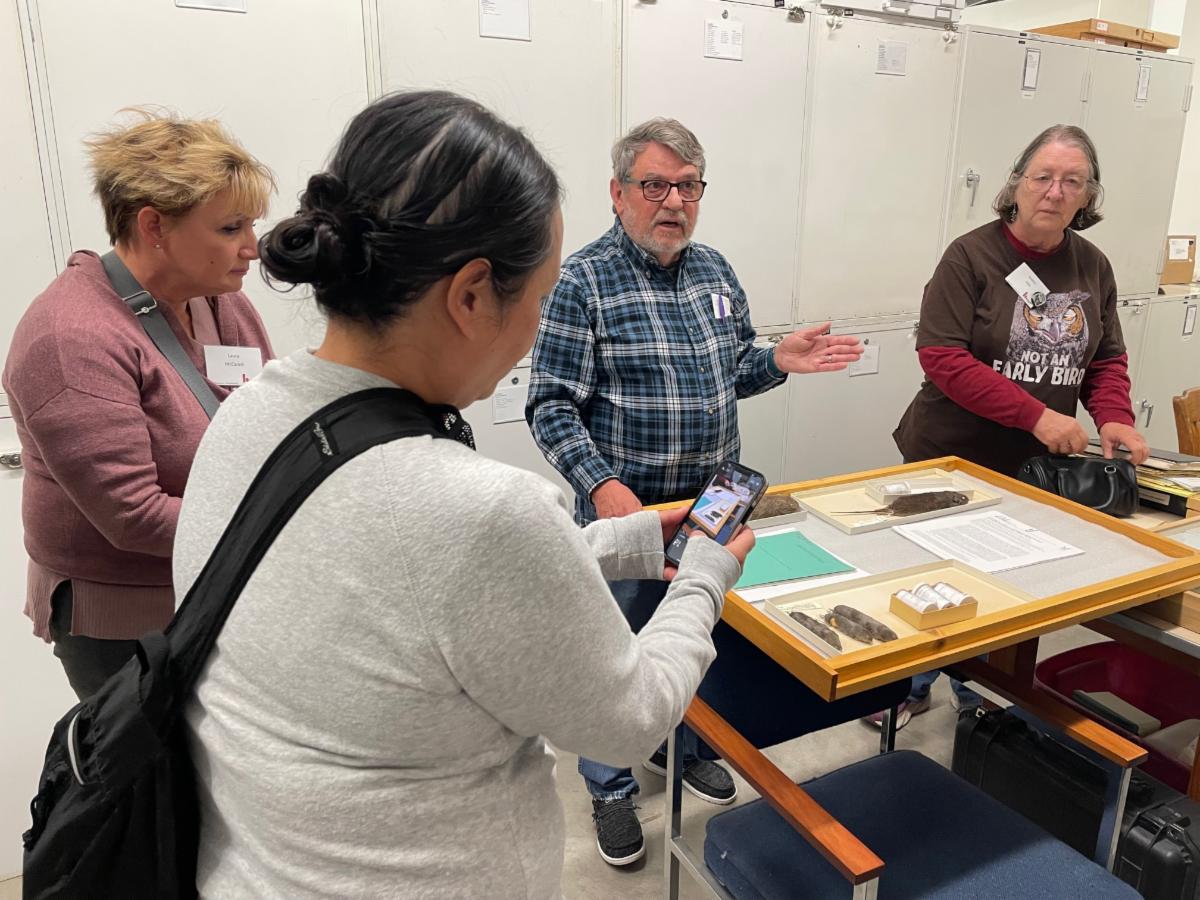
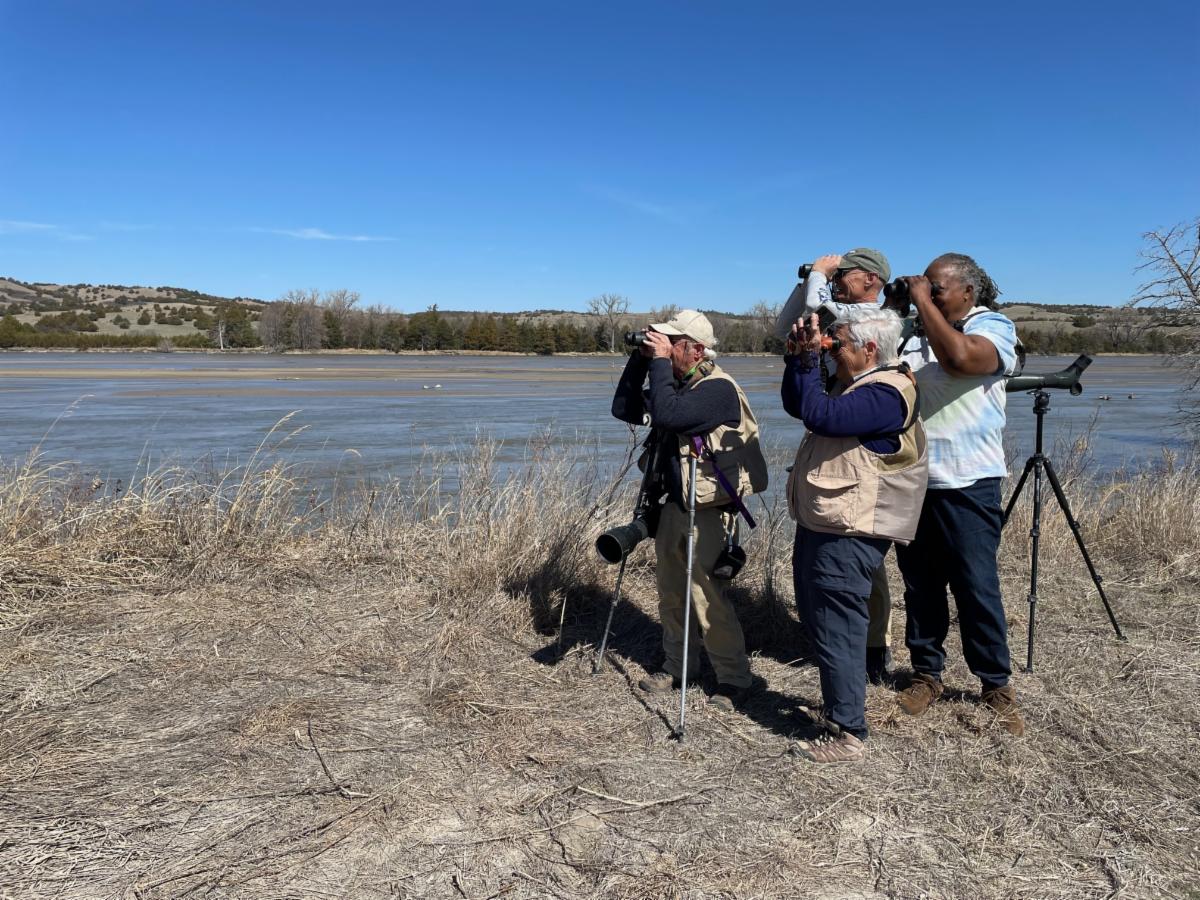
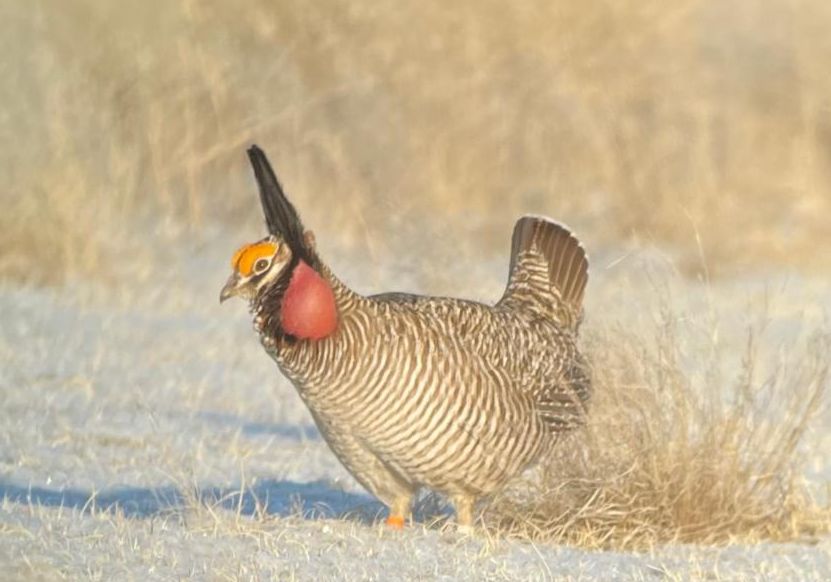
Last year was the first year we held the Kansas Lek Treks Lesser Prairie-Chicken Festival. We were just coming out of the pandemic and we were happy that 90 people registered. This year, over 130 people attended! We had to close registration early because we wanted to ensure a wonderful experience for attendees. About 75% of attendees were not from Kansas. Here are some photos of the festival:
Bottom left: A participant takes a photo from a blind using their cell phone during a Lesser Prairie-Chicken tour.
Bottom center: Elmer Finck gives a behind-the-scenes tour of Sternberg Museum of Natural History
Bottom right: Birders along the Niobrara River during a post-festival trip to see Sharp-tailed Grouse.
|
|
|
AOK Executive Director expresses concerns about prairie-chicken hunting boundaries |
|
One of the things AOK's Executive Director, Jackie Augustine, does to advance AOK's advocacy mission is to attend the Kansas Department of Wildlife and Park's Commission meetings. This is a great forum to voice concerns about conservation in the state. The commissioners often ask for feedback on agenda items. There is also time for comments on non-agenda items.
During the forum on April 27, 2023, in Bonner Springs, Jackie asked KDWP to expand the prairie-chicken hunting exclusion zone to encompass areas where Lesser Prairie-Chickens have been harvested in the past. The zone was originally set up to protect Lesser Prairie-Chickens when they were federally listed as a threatened species in 2014. The listing was vacated a year later, but the exclusion zone remained. Although hunting is not causing the decline in Lesser Prairie-Chicken numbers, the prairie-chicken hunting exclusion zone should be expanded to prevent hunters from breaking federal law. Now that Lesser Prairie-Chickens are listed again as a threatened species, it is illegal to kill or harass the birds. Given that Lesser Prairie-Chickens cannot be distinguished from Greater Prairie-Chickens in flight, there is no way to allow prairie-chicken hunting in the area without a chance of harvesting a Lesser Prairie-Chicken.
The next commission meeting is June 22, 2023, at the Acorn Resort, 3710 Farnum Creek Rd, Milford KS 66514.
|
|
|
Latest Prairie Wings available online |
|
|
|
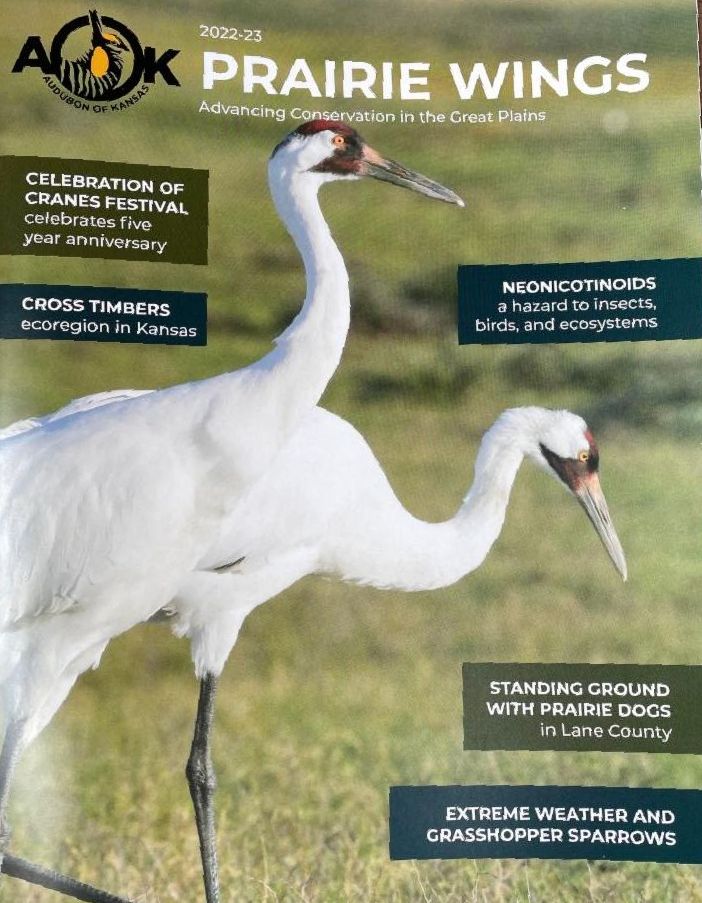
If you haven't read this year's issue of Prairie Wings, you are missing out on some great articles! Click the link below to read articles about advocacy, natural history, AOK history, and more!
|
|
|
Audubon of Kansas is planning events for the coming year. Mark these events on your calendar!
May 7: Achterberg Work Day 10am-1pm
May 18: Black-footed Ferret Discussion: An Endangered Species back from the brink
May 22-26: Hutton Work Week
June 3: Birding by Ear walk (in conjunction with Smoky Hill Audubon native plant sale 9am-noon; at Smoky Hill Audubon Sanctuary, 2500 W Stimmel Rd, Salina, KS)
June 4: National Prairie Day, location and time TBD
July 24-28: Hutton Work Week
September 10: Achterberg Work Day
September 25-29: Hutton Work Week
Oct 1: Open House at Hutton
November 3-5: Celebration of Cranes at Quivira National Wildlife Refuge
February 25-March 10, 2024: AOK-sponsored trip to Guatemala
Hutton is AOK's sanctuary near Bassett, Nebraska
Achterberg is AOK's sanctuary near Lincoln, Kansas
|
|
|
May 7: Achterberg Work Day |
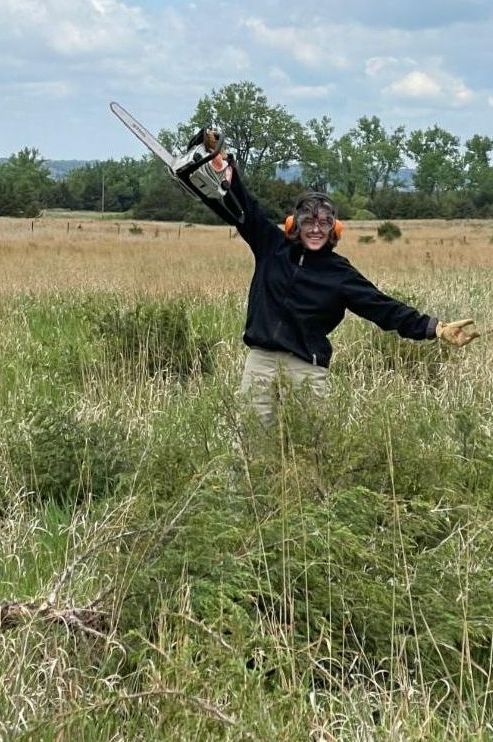
We are having a work day at AOK's sanctuary, the Achterberg Wildlife-Friendly Demonstration Farm, on Sunday, May 7 from 10am-3pm. With the help of volunteers, we will be doing maintenance on 1 mile of trail, clearing a new 0.2 mile section of trail, and removing invasive elm that is taking over our prairie habitat buffers. If you want something that's a little easier, you could pull garlic mustard (an invasive herb) or use iNaturalist to document the plants and animals using the area. We should have enough equipment for everyone, but workers may want to bring work gloves, pruners, loppers, chainsaws and string trimmers if they have them. Lunch will be provided.
Meet at the trailhead 0.5 miles north of the intersection of 170th Rd and Iron Dr., just south of the bridge. Contact Jackie via email or phone 785-537-4385 with questions.
This is a great opportunity to help wildlife and see the wonderful riparian woods and prairie buffer strips which support Connie Achterberg's favorite bird, Northern Bobwhite quail.
|
|
May 18: Black-footed Ferrets: Back from the Brink |
Smoky Hills Audubon is hosting a public presentation by Jackie Augustine about Black-footed Ferrets.
When: May 18 - 7pm meet the speaker, 7:30 presentation
Black-footed ferrets were thought to be extinct until a small population was discovered in Wyoming. From this population, 18 ferrets were brought into a captive breeding program to re-establish wild populations. Now, there are nearly 400 individuals in the wild with one population in Kansas. Their continued existence is threatened by Kansas’ war on prairie dogs, the primary prey of black-footed ferrets. Jackie Augustine, the Executive Director for Audubon of Kansas, will discuss the unique biology of black-footed ferrets and prairie dogs as well as how Audubon of Kansas fought and continues to fight for the success of both species.
|
|
May 22-26: Hutton Work Week |
With 5000 acres, there is always a lot to do at Hutton to maintain the best habitat for wildlife and enhance our offerings for human visitors. We hope to have enough people to divide into two crews: one crew will work on removing cedars from a section of pasture and the other will perform clean up around the house (clean flower bed, repaint posts on the porch, archiving materials).
Volunteers can stay at the Hutton
homestead for free during the work week. Dinners will be provided, but please bring your own breakfast and lunch. You will have access to a full kitchen in the house. Of course, there will also be plenty of time to explore the property or assist Jackie with surveys for Virginia Rail and Sora.
Hutton is near Bassett, NE.
Opportunities to carpool may be
available. Directions provided when RSVP received.
RSVP required. Email Jackie to let her know that you will be attending.
|
|
Chapter Spotlight: New chapter forming in Ellis, Graham, Norton, Osborne, Phillips, Rooks, Russell, Smith, and Trego Counties |
|
Audubon chapters unite people for the enjoyment of nature. They provide educational opportunities through in-person presentations, bird and nature hikes, and public outreach. They are also the voice for wildlife in their local area.
However, there are no Audubon chapters west of Wichita and Salina in Kansas. We are hoping to form the first chapter in western Kansas to include Ellis, Graham, Norton, Osborne, Phillips, Rooks, Russell, Smith, and Trego Counties.
On April 20, a dozen people met to hear about the possibility of forming a chapter in the Hays area. Another meeting is being planned to continue the conversation. If you would like to be involved now or once the chapter is formed, please let us know!
|
|
|
Look for Prairie Dogs and Burrowing Owls at Kirwin National Wildlife Refuge
Kirwin National Wildlife Refuge was a stop en route to Hutton during Kansas Lek Treks Prairie-Chicken Festival's pre- and post-festival tours. We visited this area to enjoy a healthy prairie dog town, a rare sight in Kansas given current law which allows counties to poison prairie dogs on private land. These charismatic mammals form dense colonies of burrows. The burrows contain rooms like your house - there are areas for escaping predators, sleeping, raising young, and even a bathroom! The prairie dogs themselves and their tunnels provide food and shelter for many other species including snakes, turtles, badgers, foxes, and more. Burrowing owls do not actually burrow themselves, but live in abandoned prairie dog burrows. Two pairs of owls were spotted during the Lek Treks tours.
From the parking area, you can walk a short trail through the prairie dog colony. While you are at Kirwin, also check out the ducks and pelicans on the reservoir and sparrows in the grass.
GPS Location of prairie dog town parking: 39.640547, -99.178596
|
|
|
Lana Arrowsmith - Hutton Niobrara Coordinator - Hutton Sanctuary Management & Reservations lanamicheel@gmail.com
Audubon of Kansas
PO Box 1106 - Manhattan, KS 66505
785-537-4385
|
|
|
|
|
|
|