Which matters more, gauging the health of an institution or the success of its students?
Indicators of success for a higher ed institution—measures like retention and graduate rates of the so-called "federal cohort" of first-time, full-time degree-seeking undergraduate students—don't always match what's best for the students. Sociologist Daniel Regan, the retired dean of academic affairs at Johnson State College, now Northern Vermont University-Johnson, tells the story of completing an annual performance report for a U.S. Department of Education Title III grant. "Although the project we were funded to carry out has explicitly to do with student success, the required indicators have much more to do with the success of institutions. They are not the same. Student success nearly always conveys evidence of institutional success, but the reverse is not necessarily true." Regan points to the area of credit transfer as one place where a shift in perspective is needed. "Helping a student prepare for and negotiate a transfer, which leads to eventual graduation, could be a real part of the institution’s story, instead of a footnote or addendum or, worse, an unmentionable," he writes. "It could also be regarded on the plus side of the ledger for the sending college or university, instead of a failure, even though it doesn’t add to its bottom line. It could be considered part of the institution’s success, as long as the student, rather than the institution, is the first concern."
|
|
Join NEBHE and the Western Interstate Commission on Higher Education (WICHE) for a webinar on Tuesday, June 1 from 12 p.m. to 1:30 p.m. EST about mental health on college campuses and the impact of COVID-19. Learn from experts and students about needed support as we adjust into the next school year and this "new normal."
|
|
|
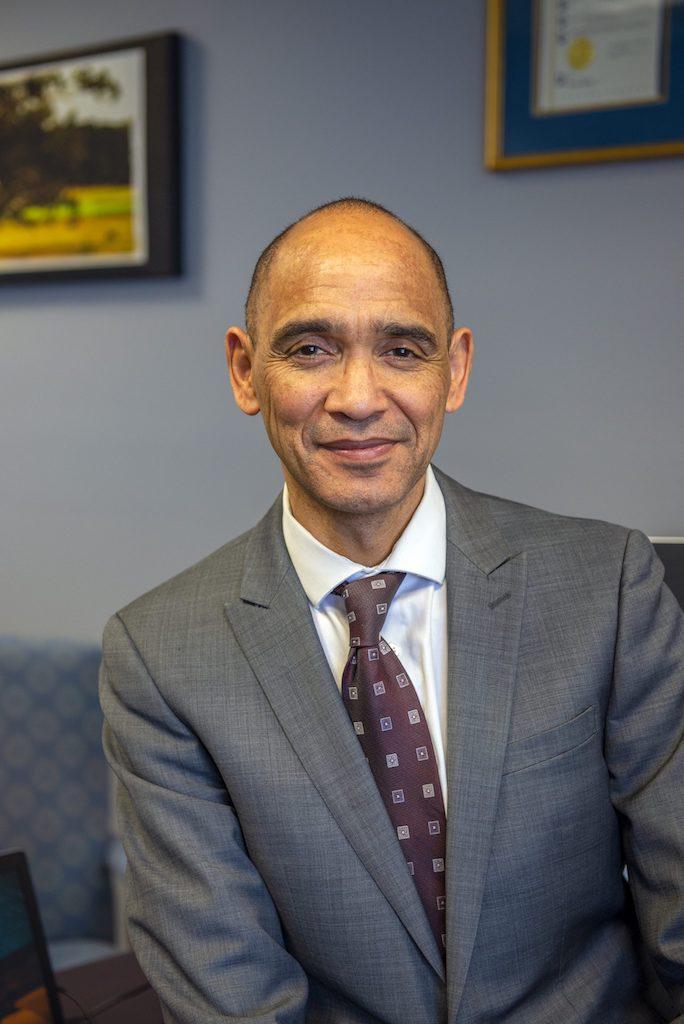
The University of Connecticut Board of Trustees appointed UConn Health CEO Dr. Andrew Agwunobi as interim president, the first person of color to hold the position in the history of the university. Agwunobi’s appointment follows the resignation of current University of Connecticut President Thomas C. Katsouleas, who will step down June 30 but plans to stay on as a professor at the university ... The Nellie Mae Education Foundation elevated its vice president for strategy and programs, Gislaine N. Ngounou, to serve as interim president and CEO, effective June 1. She succeeds Nicholas C. Donohue ... See more on these and other big changes in NEJHE's "Comings and Goings" tally of new appointments in New England higher ed and beyond.
Pictured: Dr. Andrew Agwunobi
|
|
|
Proposed legislation would require higher education institutions to disclose any foreign donation or contract of $50,000 or more in a year, down from an earlier threshold of $250,000, Higher Ed Dive reports. College lobbyists are concerned the bill’s goal to reduce foreign influence will hurt their ability to attract international students. ... Read the latest from NEJHE's DC Shuttle, featuring national news drawn from our friends at the New England Council.
|
|
|
More from The New England Journal of Higher Education
|
|
|
Insofar as postindustrial economies depend on a highly educated workforce to fuel innovation, supporting access to postsecondary education has become an article of faith. But access to what exactly? "The current shakeout in higher education won’t necessarily leave a gap in terms of accessibility, since workforce demands will ensure some form of credentialing replaces it. But the value of what fills the gap is an open question," writes Todd J. Leach, the chancellor emeritus of the University System of New Hampshire and former chair of NEBHE. Colleges have used higher sticker prices for students who have the ability to pay more to subsidize "discounts" for students who don’t have that ability to pay, thus maintaining access and a critical mass of enrollment. "But at some point, the business model breaks down; the higher paying students who subsidize the discounts are either no longer willing or able to pay the higher tuition levels, or those students decide they have better options for the same amount of money."
|
|
|
We seek an Associate Director for the New England State Authorization Reciprocity Agreement (SARA) to lead implementation, management and oversight of this reciprocal program in the NEBHE region. SARA provides a platform for states within the NEBHE Compact to—upon application and demonstration of certain criteria—enter into reciprocity for authorizing individual colleges and universities to provide postsecondary education courses and programs through the internet or via other distance modalities to students living in other states. Please see the job description here and send your application to careers@nebhe.org.
|
|
|
To subscribe to The Monthly Policy Dispatch, click here or contact NEBHE Associate Director of Policy Research and Analysis Stephanie Murphy at smurphy@nebhe.org.
|
|
|
Tracking Coronavirus: A Deep Dive |
|
|
NEBHE has been deep-diving on topics related to New England institutions' response to COVID-19 (see our updated COVID-19 response page here). We will publish periodic briefs on topics including: plans for spring 2021, federal actions that affect higher education, vaccination distribution, mental health and planning for fall 2021. Interested in a topic we haven't covered? Reach out to Charlotte Peyser at cpeyser@nebhe.org.
|
|
|
NEJHE NewsBlast is a summary of NEJHE content and other news around NEBHE prepared weekly by NEJHE Executive Editor John O. Harney and emailed every Wednesday to opinion leaders and practitioners. When responding to NEJHE content, please make sure that your remarks are relevant, courteous and engaging. Individuals are responsible for their comments, which do not represent the opinions of the New England Board of Higher Education. We urge commenters to briefly note their occupational or other interest in the topic at hand. Please refrain from offensive language, personal attacks and distasteful comments or they may be deleted. Comments may not appear immediately. Thank you for staying engaged.
|
|
Fusion Course
Enhancing Education Through Community-Based Learning
|
|
With the COVID-19 outlook brightening, now is the time for faculty to get critical training and support as you continue to adapt to evolving online, hybrid or in-person teaching and learning this fall. Regardless of the setting, the Fusion Course offers instruction for how to integrate community engagement methodologies into existing curricula to improve the quality of course delivery and foster student engagement.
Two sessions are offered this Summer!
June 7 - June 11
June 21 - June 25
Free for members from New England!
(Space Permitting)
|
|
The Fusion Project is made possible by a grant from the Davis Educational Foundation to Maine Campus Compact.
|
|
NEJHE NewsBlast is sponsored by
|
|
For more information about partnering with NEBHE, click here
or send an email message to our events coordinator Marla Phippen.
|
|
© 2020 New England Board of Higher Education |
|
|
|
|
|
|
|