Volume 6 Issue 6 | June 2025 | | June blooms can take your breath away! Do watch for the Japanese beetles that favor them as well... | | The Root of It newsletter ends with our monthly quotation. If you find your newsletter has been clipped by your email provider please click HERE for a webpage version of the newsletter. | | |
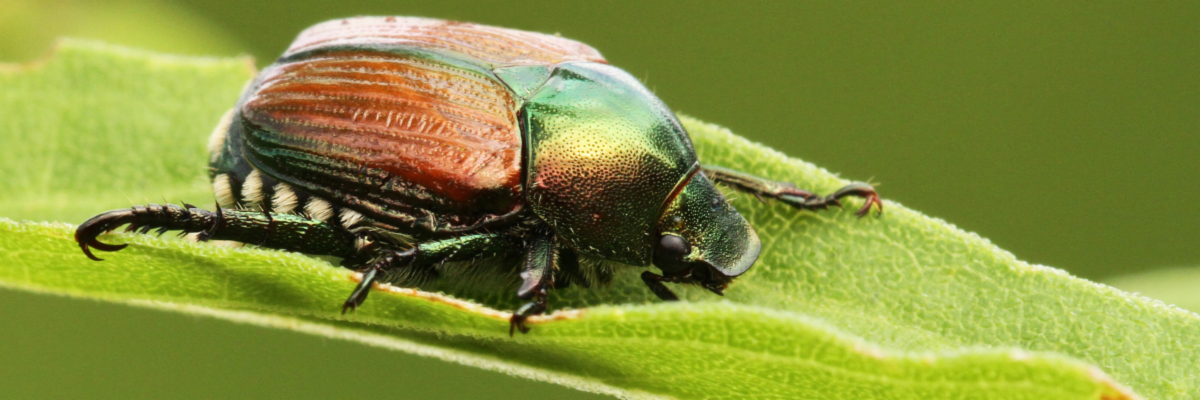
Looks can be deceiving. Take Japanese beetles (Popillia japonica). A member of the scarab family (Scarabaeidae), Japanese beetles have metallic-green bodies adorned with coppery-brown wing covers, called elytra. Beautiful! However, these beetles quickly lose their allure as they skeletonize the leaves of trees, shrubs, and other garden plants. During peak infestations they can strip a plant (a tree even!) in a day. Roses, cannas, zinnias, marigolds, maples, lindens, and crabapples are some of their preferred foods, but Japanese beetles are polyphagous—if their favorites are unavailable, they will feed on other plants. Japanese beetle traps are not the answer—beetles are attracted from neighboring gardems to the trap in your garden, many more than will end up in the collection bag.
A great strategy for controlling these voracious insects is to eliminate the first to arrive. Like ants, honey bees, termites, and armyworms, Japanese beetles send out scouts to locate fertile feeding grounds. When a scout finds a good food source, he or she releases an aggregation pheromone, a chemical signal to other Japanese beetles that directs them to the food source. The result is a mass of beetles feeding on your rose bush or linden tree. The feeding damage causes the plant to release chemicals called volatile organic compounds (VOCs) that further attract Japanese beetles. Apparently, the more the merrier!
Destroying Japanese beetle scouts significantly reduces populations. But how to know when to be on the lookout? Phenology comes to the rescue. By determining the correlation between the amount of accumulated heat over time (how many warm days have occurred and how warm they are) and the occurrence of biological events (plant flowering, insect emergence, etc.), scientists have created a system in which those events can be accurately predicted. The measure of accumulated heat that is used is called Growing Degree Days (GDDs). By knowing the GDDs for an event, say Japanese beetle emergence at 970 GDDs, and then monitoring the GDDs as they progress through the season, you can track when the beetles will emerge. Better still, by looking on the phenologoy calendar and seeing other events that happen just before the GDDs for Japanese beetle emergence you can look for biological clues (such as the first bloom of the Southern catalpa or panicled goldenraintree) to predict the arrival of the scouts. OSU’s phenology website is the place to start. https://weather.cfaes.osu.edu/gdd/ Enter your zip code to see today’s GDD and click on the full calendar to see past and future events.
Arm yourself with a basin of soapy water for your Japanese beetle scout hunt—when disturbed, they usually fall into a strategically placed container. They are most active from midmorning until early evening, and tend to feed on the topmost and youngest plant leaves first.
It’s discouraging to discover plants that have been ravaged by these voracious eaters. Save your lovely garden from the hordes of Japanese beetles that descend in late June. Target and eliminate the scouts. Look around!
THE OHIO STATE PHENOLOGY CALENDAR: UNDERSTANDING NATURE'S BIOLOGICAL CLOCK: Ohio State University
JAPANESE BEETLES IN YARDS AND GARDENS: University of Minnesota Extension
K Edgington
| | |
Leaf Brief
Not a Cat - Not a Mint - It's a Nepeta
| | |
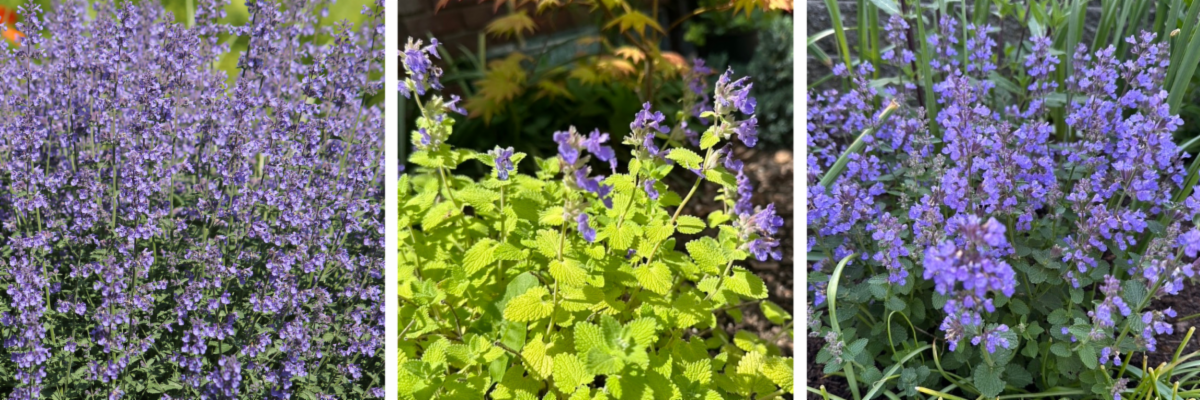
Nepeta cultivars Walker's Low, Chartreuse on the Loose, and Cat's Pajamas
photos by E Barth-Elias
| | |
Catmint has long been a summer favorite due to its extended bloom time, fragrance, tough-as-nails disposition, and attractiveness to pollinators. In addition, it tolerates a wide variety of soil conditions, is drought tolerant, and deer resistant. Catmint, or Nepeta spp., is an herbaceous perennial in the mint family (Lamiaceae). It is native to temperate Eurasia and Eastern Africa but has naturalized in North America.
Nepeta's trademark blue flowers, a summer staple in full sun locations, make a fine addition to meadows, naturalized areas, and cottage gardens. Maintenance is minimal, but most benefit from a shearing in midsummer to encourage reblooming. Not only are they reliable bloomers, but they also repel aphids and squash bugs. The mint-flavored leaves are edible and can be used in teas, soups, salads, and stews. Catmint is used extensively in folk medicine for digestive and respiratory ailments.
If you’ve ever brought home a charming plant from the nursery only to see it take over the garden, you’ll know the drawback of some catmints. The most common variety is Walker’s Low, Nepeta x faassenii. This hybrid (cross-pollination of two species) grows 2-3 feet tall and wide, too large for many neighborhood gardens. Fortunately, many new, small cultivars are available. These dwarf hybrids include the cutesy cat named series, in descending order of size, Cat’s Meow, Purrsian Blue, Cats Pajamas, and Kitten Around.
Some low-growing varieties make great ground covers and include Purple Haze, which blooms heavily in the spring and stays tidy, Pink Cat with bold, pink flowers, and Bokratune, which boasts larger leaves and flowers and hails from Russia. Chartreuse on the Loose is a low grower with eye-catching yellow-green foliage that doesn’t need pruning. For the go-big-or-go-home gardener, consider Six Hills Giant, reaching 3’ tall and spreading even more.
If you’d like advice on choosing a nepeta for your yard, the Royal Horticultural Society can help. They performed a trial of 123 Nepeta varieties from 2018 to 2021 in their test gardens in England. They published their results based on ten criteria, including strength and vigor, bloom time and disease resistance. See results HERE.
Incidentally, the common names of catmint and catnip are sometimes used interchangeably. Catnip is a particular species of catmint, known as Nepeta cataria. It’s recognized for its blissful effect on cats. While cats may nibble other varieties of catmint, they don’t produce the same euphoric effect.
It’s time to look again at this old favorite and find your new love among the many sizes and shades available in the nepeta cat-a-log of options. Who knew that “cats” get along with the bees, butterflies and birds so well!
J Gramlich
| | Please accept our apolgies for inserting the wrong photos above our pawpaw profile last month. For an accurate look at pawpaw flowers and fruit click HERE. | | |
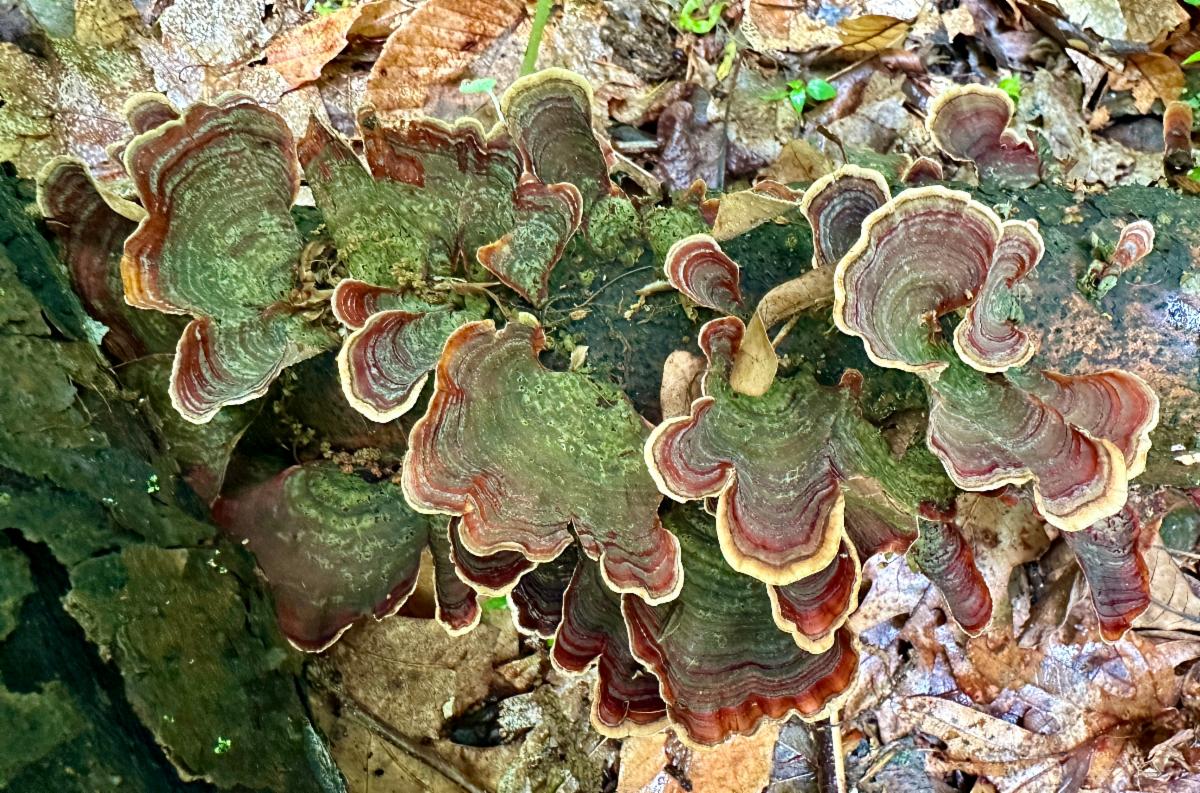
A Fabulous Fungus (Stereum fasciatum)
photo by E Barth-Elias
| | |
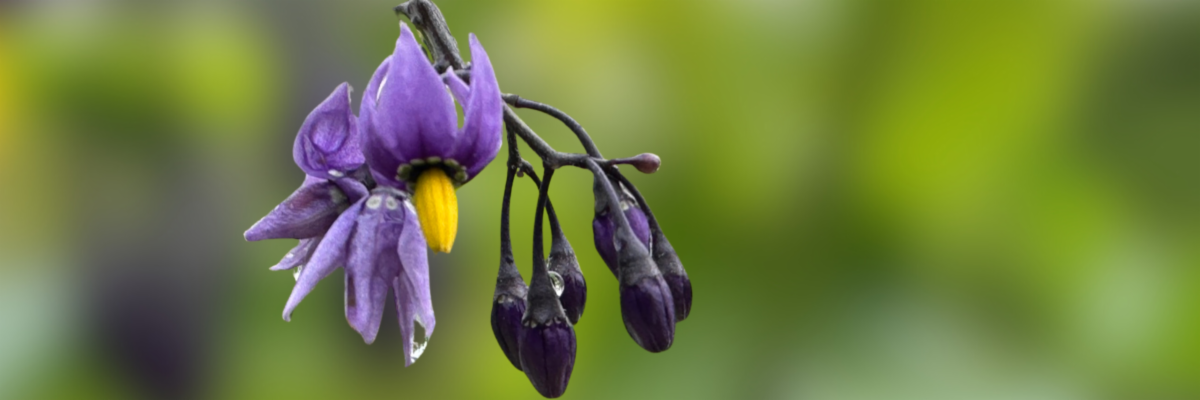
Solanum dulcamara (bittersweet nightshade) seeds can survive for 25 years!
Photo by E Barth-Elias
| | |
There are many kinds of banks. Some are used every day to hold savings, get quick cash, buy a house. Nature has riverbanks and snowbanks. We refer to banks of clouds. How about a soil seed bank?
Don’t confuse soil seed banks with the seed vaults that have been built all over the world to save the genetic heritage of the globe’s food crops. These man-made structures, some with foundations hundreds of feet underground, hold millions of types of seeds to ensure access to food in the future. But those pale in comparison to the seed banks created when seeds fall to the ground.
All viable seeds, whether above or belowground, are considered part of the soil seed bank. There are deposits—seeds that fall to the ground, are planted, or are delivered by wind or water and remain there—and there are withdrawals—seeds that don’t germinate, are eaten by critters, or simply don’t fall in a favorable environment.
Some of these seeds belong to plants that are important for biodiversity, such as perennial flowers that feed pollinators, tree seeds, or grassland seeds that feed grazing animals. The downside is that a large portion of the seed bank consists of long-lived weed seeds.
Digging deeply can bring many of those weed seeds to the surface, where they receive the sunlight and water they need to start growing. Those emerging weeds compete with desired plants, stealing space, sunlight, and water. We don’t want those garden thugs to take over. (Another reason to avoid tilling.)
It’s mind-boggling to think some of these weed seeds can persist in the soil for decades, or longer. In 1879, Michigan State University biologist William Beal buried 20 bottles each filled with sand and 50 seeds from 23 varieties of weeds to see how long they would last. At first, MSU scientists dug up one bottle every 5 years. All the seeds germinated. In 1920, they extended the interval to 10 years with the same results. In 1980, they extended the interval to 30 years. By then most of the seed species had died out. However, one species, Verbascum, still germinated when the seeds were exposed in 2021. That’s 142 years!
Sure, seed banks can be liabilities, especially when looking at the sheer volume and persistence of weed seeds. Common purslane produces up to 2 million seeds per season, but they only last about 5 years. Chickweed seeds are viable for about 10 years. Eastern bitter nightshade seeds can survive for up to 25 years!
But these banks are also assets. They hold most of the planet’s plant biodiversity, called in the journal Nature Communications “biodiversity reservoirs.” They keep soil temperatures from fluctuating as climate change slowly heats the atmosphere. The reservoir of stored seeds cools soils in summer and warms them in winter by raising soil organic carbon concentrations.
Habitat destruction affects seed bank biodiversity. Recent research suggests that the benefit of seed banks may be disappearing from grasslands. Studies of other habitats have found similar trends. Human activity, including climate change, has altered the density and diversity of seed banks, and not for the good.
Seed banks can’t be responsible for saving the entirety of the planet’s seeds. A 2018 article in the journal Nature Plants reported that 36 percent of the world’s endangered plant species cannot be stored in seed banks.
The next time you visit your garden, instead of viewing soil as simply a growing medium, think of it as a buried depository holding potential and diversity, good and bad.
THE SEEDY SIDE OF GARDENING: University of Illinois Extension
S Vradenburg
| | |
It's time! Tickets are on sale for the
2025 Tour of Gardens
featuring a self-guided tour of six Gardens of Distinction
plus our must-visit Posie Shoppe
Saturday, June 21st ~ 9:00 a.m. through 4:00 pm
Add a virtual tour option to your tour ticket for your post-tour pleasure, or if you are unable to attend the tour,
enjoy it virtually with a virtual tour ticket.
General admission $30 ~ General admission plus virtual tour $40
Virtual tour ticket ~ $20
The Virtual Tour can be viewed between June 28th and July 6th.
Become a tour Patron and enjoy a catered breakfast in a secret garden.
~ $150 (Platinum) and $120 (Gold) Patron levels ~
Tickets must be purchased in advance and are available on the Summit County Master Gardener website or by cash or check at Celebrations and Songbirds (Fairlawn), Suncrest Gardens (Peninsula), Graf Growers (Copley), and Canton Road Garden Center (Akron).
Don't miss this exceptional event!
Visit https://summitmastergardeners.org/tour-of-gardens/
for further details and updates.
| | |
June Checklist:
J Gramlich
| | |
More learning opportunities:
| | |
In early June the world of leaf and blade and flowers explodes,
and every sunset is different.
John Steinbeck
| | We invite you to share The Root of It with your friends and family. If you would like to subscribe to our mailing list please visit our website, scroll to the bottom, and follow the link under Join our email list. | | The Root of It staff: Karen Edgington (Editor), Emma Barth-Elias (Photo Editor), Carolyn Christian, Jennifer Gramlich, Sarah Vradenburg, and Geoff Kennedy (Technical Advisor) | |
We Would Like your Feedback
Contact us at: newsletterscmg@gmail.com
To discontinue receiving this newsletter please click on the UPDATE YOUR PROFILE link below. You may then choose what types of information you would like to receive from us.
| | | | |