In the latest issue of Discoveries: | | |
🔬 Discover how Sanford Burnham Prebys scientists are reprogramming the environment around pancreatic tumors to boost immunotherapy and chemotherapy.
🧫 Explore research into bacterial genomes that could lead to regionally personalized probiotics.
🧠 Learn about a new method for decoding the 3D structure of the human genome—and what it means for understanding health and disease.
📰 Don’t miss a new opinion piece in The San Diego Union-Tribune by Sanford Burnham Prebys President and CEO David Brenner, MD, exploring how the CIAO Study and cutting-edge tools are reshaping how we measure—and improve—our biological age. Plus, meet our newest faculty member, celebrate a recent faculty and get to know some of our outstanding postdocs.
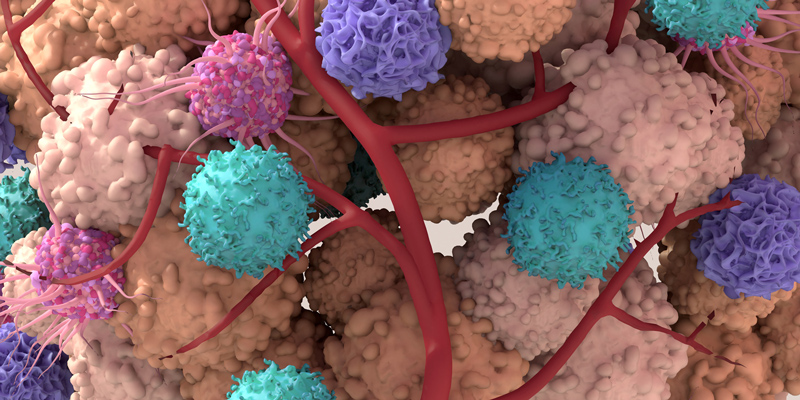
| | Image credit: Design_Cells/Shutterstock. | | Reshaping tumor neighborhoods to give treatments a boost | | |
Cancer cells constantly interact with their surroundings, which scientists term the tumor microenvironment. This includes obtaining extra resources needed to fuel their unchecked growth. This cellular scavenging process—known as macropinocytosis—affects the area surrounding the tumor, making the connective tissue stiffer and preventing immune cells from reaching the tumor.
Scientists in the Commisso Lab at the NCI-designated Cancer Center at Sanford Burnham Prebys published findings, July 24, 2025, in Cancer Cell demonstrating that blocking macropinocytosis reshapes the tumor microenvironment to be less fibrous and to allow more access to immune cells. These changes made immunotherapy and chemotherapy more effective in treating pancreatic ductal adenocarcinoma tumors in mice.
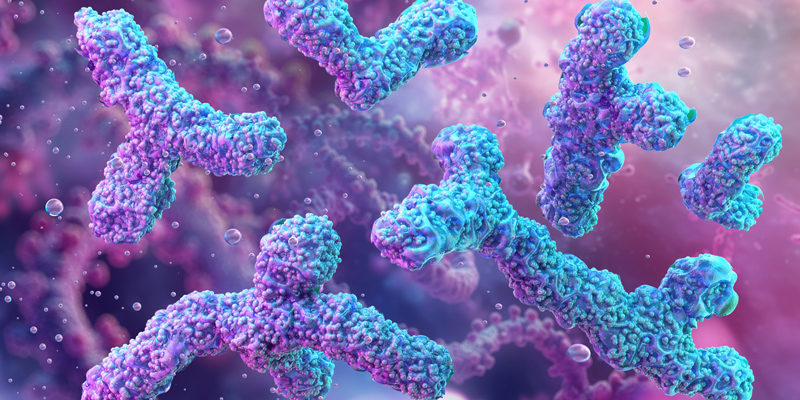
| | Image credit: Corona Borealis Studio/Shutterstock. | | Bacterial genomes hold clues for creating personalized probiotics | | |
Probiotics are emerging tools used by neonatal intensive care units to promote healthy outcomes and prevent intestinal diseases such as necrotizing enterocolitis. Probiotic treatment often includes the administration of bacterial strains that belong to the Bifidobacterium genus. Bifidobacterium strains are especially abundant in the guts of children—particularly children who are breastfed—and are considered beneficial to human health.
Scientists have sought to use probiotics to deliver the benefits of Bifidobacterium to infants suffering from malnutrition. Researchers in the Osterman lab at Sanford Burnham Prebys and colleagues at Washington University School of Medicine, Sabanci University and the University of California San Diego published findings, July 16, 2025, in Nature Microbiology demonstrating the ability to predict the nutritional adaptations of Bifidobacterium strains by analyzing the distribution of hundreds of metabolic genes in thousands of Bifidobacterium genomes.
| | |
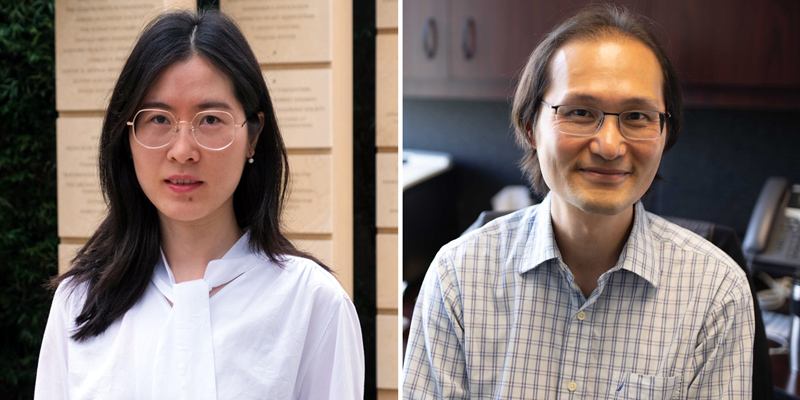
Kelly Yichen Li, PhD, lead author and Yuk-Lap (Kevin) Yip, PhD, senior author.
Image credit: Sanford Burnham Prebys.
| | Cutting to the core of how 3D structure shapes gene activity | | |
In biology textbooks and beyond, the human genome and DNA therein typically are taught in only one dimension. While it can be helpful for learners to begin with the linear presentation of how stretches of DNA form genes, this oversimplification undersells the significance of the genome’s 3D structure. Problems with this 3D structure are associated with many diseases including developmental disorders and cancer.
Scientists at in the Yip lab at Sanford Burnham Prebys and colleagues in Hong Kong published findings, June 27, 2025, in Genome Biology demonstrating a new approach for better understanding the human genome’s 3D structure and its influence.
| | |
Advancing Health Through Philanthropy
Philanthropy fuels the breakthroughs happening every day at Sanford Burnham Prebys—and there are many ways to make your impact. In addition to one-time or recurring gifts, consider giving through your Donor-Advised Fund (DAF), making a Qualified Charitable Distribution (QCD) from your IRA, or donating appreciated securities such as stocks. These strategic giving options may offer tax advantages while supporting transformative biomedical research.
For more information, please visit sbpdiscovery.org/support-us/ways-to-give.
| | Leading cancer and metabolic disease expert Michael Karin joins Sanford Burnham Prebys | |
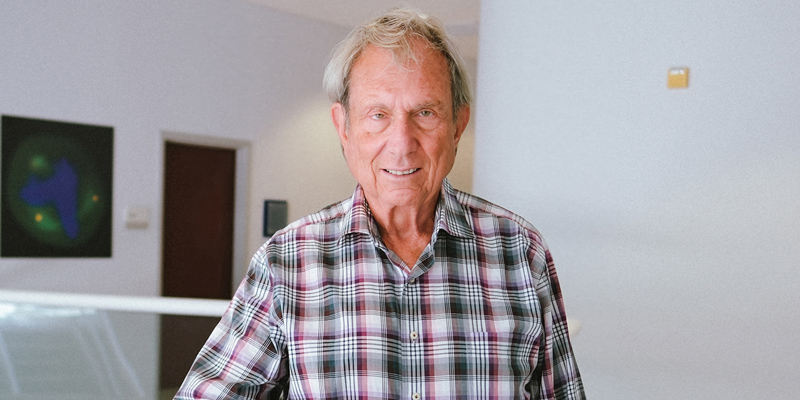
Image credit: Sanford Burnham Prebys. | | |
Michael Karin, PhD, has long been fascinated by what happens when inflammation—ideally a short-term burst of biological activity to promote healing or fight infection—turns chronic and potentially deadly.
At Sanford Burnham Prebys he will continue investigating how chronic inflammation can promote tumor formation. Karin also will serve as director of the new Center for Metabolic and Liver Diseases.
Prior to joining the institute, Karin was a distinguished professor of Pharmacology and Pathology and the Ben and Wanda Hildyard Chair for Mitochondrial and Metabolic Diseases at the University of California San Diego.
| | Ani Deshpande promoted to professor in the Cancer Genome and Epigenetics Program at Sanford Burnham Prebys | |
Image credit: Sanford Burnham Prebys. | | The Deshpande lab studies developmental processes in stem cells that get hijacked by cancer, focusing specifically on acute myeloid leukemia (AML), one of the most common types of blood cancer. Several attributes of normal stem cells, including the ability to self-renew, are known to be co-opted or reactivated by cancer cells. | | Huijie Huang, PhD, Ranajit Das, PhD, Meenakshi Sudhakaran, PhD, and Sara Ancel, PhD. | | Meet the scientists of tomorrow | | We’re excited to introduce a new feature on our website spotlighting the talented postdoctoral researchers at Sanford Burnham Prebys. These early-career scientists are pushing the boundaries of discovery across cancer, neuroscience, immunology and more. Through a series of brief profiles, you’ll get to know the people behind the science—their inspirations, career paths and what drives their work. | | The Curebound Cancer Challenge is almost here | The Curebound Cancer Challenge will be held on August 2, 2025, and Sanford Burnham Prebys Dream Team is gearing up to ride, spin, run and walk for a cure! | | | |
We’re proud to be part of this inspiring event that unites our community to accelerate cancer research. Every dollar raised stays in San Diego, fueling discoveries at institutions like ours.
Join us. Support us. Or cheer us on! Together, we’re moving toward a world without cancer.
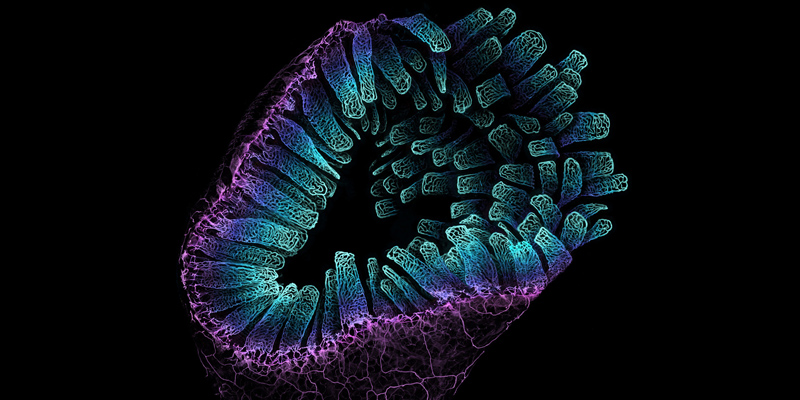
| | Opinion: How long are we going to live? The question should be: How well? | In his latest essay in The San Diego Union-Tribune, David Brenner, President and CEO of Sanford Burnham Prebys, discusses the CIAO Study and the developing tools that more precisely predict life expectancy. | | | Image credit: Satu Paavonsalo and Sinem Karaman, University of Helsinki. | | A confocal micrograph of blood vessel networks in the intestine of an adult mouse. | | | | |