You are Invited to Attend the June 5th National Academies Public Session on TMJ Disorders | |
|
The National Academies Forum on Temporomandibular Disorders (TMD) will host a public session to explore opportunities and challenges in interprofessional education and training. Speakers will also consider clinical practice, research, and care guidelines for TMD.
Learn more on the event page.
Click here to register for the meeting
| |
Breakthrough on Tissue Preservation Offers New Hope for Knee and Jaw Patients | |
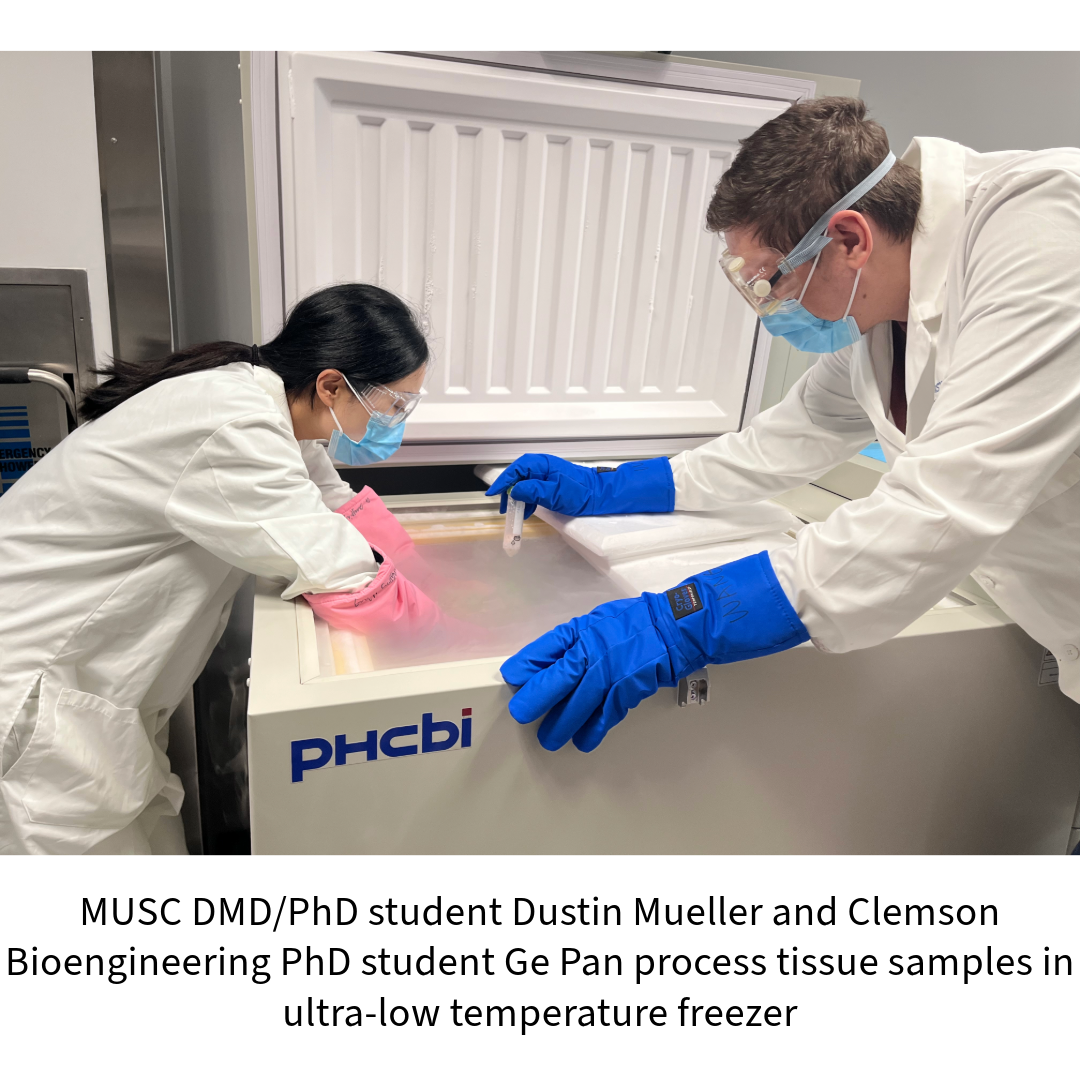
The article summarized below describes a new way to help the more than 35 million TMJ patients with TMJ disc degeneration and mechanical dysfunction, symptoms which can lead to surgery in 10 percent of cases. TMJ discectomy/removal has been used in clinical practice for decades, but often with unsatisfactory outcomes. The potential of using a graft of a TMJ disc from a healthy donor has been largely unexplored due to the disc’s complicated structure and function, its limited availability, and inherent challenges in preserving the tissue including long-term storage options (greater than 6 months). The lack of research on donated TMJ discs has forced the use of replacement grafts from the patient’s own tissues, which can result in pain and functional loss, additional surgical sites, prolonged recovery times and elevated risk of surgical site infections. This study addresses an urgent need for providing “off-the-shelf” availability of grafts, for both TMJ discs and knee menisci, that possess natural properties closely resembling those of the native tissues. | |
 | |
The following article appeared in Clemson News on April 15, 2024 https://news.clemson.edu/cool-research-breakthrough-tissue-preservation-method-offers-new-hope-for-knee-and-jaw-patients/
New hope for millions of patients who suffer from knee and jaw problems is emerging from a study that came out of Clemson University’s partnership with the Medical University of South Carolina and an industry collaborator.
Researchers have found a promising new technique that could help stem the shortage of meniscus grafts. The grafts are often needed to treat injuries and degeneration in the knee or the jaw’s temporomandibular joint (TMJ).
The solution involves preserving donated meniscus tissue by freezing it in a process called vitrification. This process allows better storage of grafts for longer periods of time, making more tissue available for transplantation.
The research team was headed by Shangping Wang, an assistant professor of bioengineering at Clemson University. The team reported its findings in the journal Advanced Healthcare Materials.
The challenge: The meniscus is a rubbery, crescent-shaped tissue that cushions the joint and keeps it stable during movement, such as running or chewing. When the meniscus wears out or is injured, it has limited ability to repair itself and causes severe pain and difficulty moving.
Doctors often replace a damaged meniscus in a person’s knee or jaw joint with preserved meniscus tissue. But the supply of fresh meniscus tissue falls short of what is needed for the more than 1 million patients who undergo surgical repair or meniscectomy each year.
The primary obstacle is that viable meniscus tissues can be preserved for less than a month, leading to a critical shortage.
In the new study, researchers have proposed a promising solution known as vitrification. The process enables living cells to be chemically treated and then cooled to extremely low temperatures without harming the living cells.
Using vitrification, researchers are able to surround the tissue in a transparent, glassy state. The process effectively prevents the formation of damaging ice crystals within the cells of the tissue.
One of the challenges the scientists faced, though, is that meniscus tissues have dense structures that can be difficult to permeate. It can be challenging to penetrate the tissue with chemicals for preservation, and the tissue becomes exposed to the chemicals for too long.
When that happens, it can harm or kill the cells. To make vitrification work, it is critical to strike a balance between penetrating the tissue with chemicals but not exposing it for too long, researchers said.
The solution: To address the problem, researchers combined computational modeling with micro-CT imaging to pinpoint the crucial balance they wanted to achieve. They were able to determine the minimal exposure time necessary to effectively penetrate the tissue during vitrification, while avoiding damaging or killing the tissue.
The researchers then used what they found in the computational model to effectively preserve whole meniscus tissues both in knee and jaw joints.
The upshot of the study is that the vitrified meniscus tissues can be stored at very low temperatures for a long time, making the tissue suitable for transplantation.
“This pioneering work represents the first successful application of vitrification strategies to preserve whole viable grafts in both tissue types which opens new avenues for the successful preservation of various avascular tissues and holds the promise of facilitating widespread adoption of viable graft transplantation and research endeavors,” researchers wrote.
The title of the study is “Viable Vitreous Grafts of Whole Porcine Menisci for Transplant in the Knee and Temporomandibular Joints.”
A provisional patent stemming from the work has been established through the Clemson University Research Foundation, with backing from Executive Director Chris Gesswein.
The Musculoskeletal Transplant Foundation was a partial funding source for Wang’s research.
Equally contributing authors of the study are Dustin Mueller, a DMD/PhD student from the NIH T32 dental research training program within the Clemson-MUSC Bioengineering Program and Hai Yao, Clemson’s associate vice president for biomedical Innovation.
| |
Veterinarians Pioneer Jaw Joint Replacement Impact for Cats and Dogs | |
|
The following article recently appeared on Vettimes https://www.vettimes.co.uk/news/vets-pioneer-jaw-joint-replacement-implant-for-cats-and-dogs/
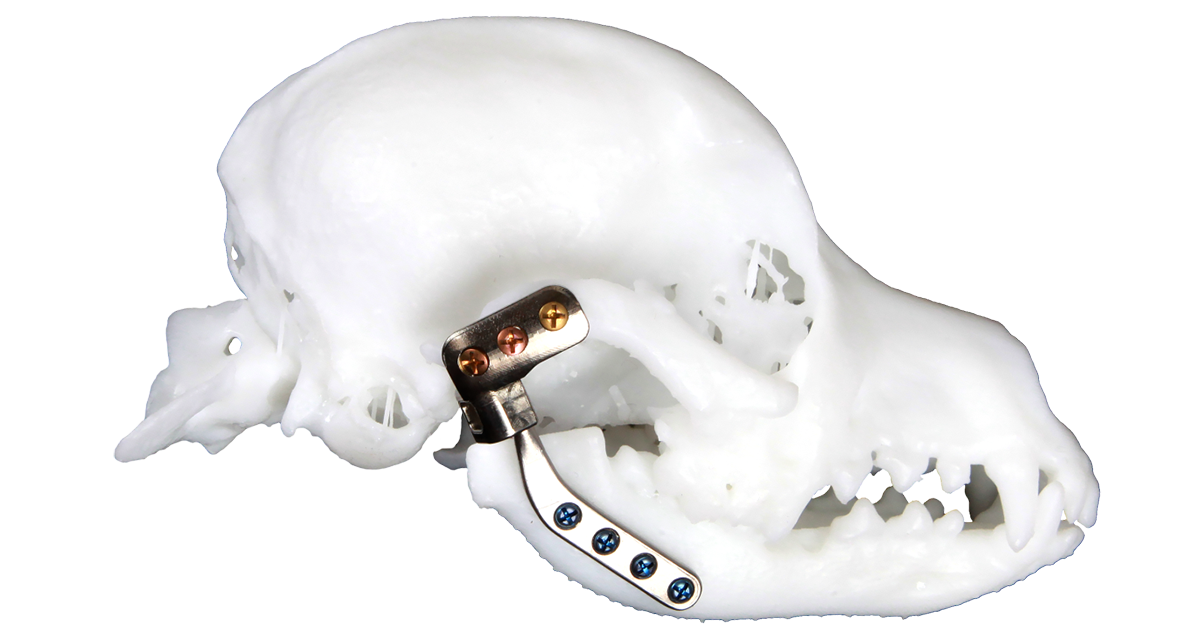
A team at the University of California, Davis (UC Davis) School of Veterinary Medicine has gained patent pending status on a TMJ replacement (TMJR) prosthesis that could aid pets with non-functioning TMJs due to injury or disease.
Initial research about the TMJR has been published in the American Journal of Veterinary Research.
Replacement
Boaz Arzi, chief of the Dentistry and Oral Surgery Service at UC Davis, said: “About five years ago, I suggested the need for a TMJR because we were seeing increased number of cats and dogs with fused jaws.
The joint replacement device uses a plate affixed to the mandible, with a neck and head that fit into a socket affixed to the skull.
“The only recourse we have for these animals is to remove all the affected structures in the jaws to enable opening the mouth.
“While this allows the patient to eat and drink, there is no longer functionality to the joint, and their mouth can never close properly again.”
Robust testing
Dr Arzi added: “Joint replacement in animals is well established in hips, and strides are in place also for the knees and elbows. Why not for the TMJ like in people with similar condition? Let’s create one.”
He partnered with Denis Marcelin-Little, a UC Davis veterinary orthopaedic surgeon with a background in hip replacement and implant design, and Tanya Garcia, a biomedical engineer in the school’s JD Wheat Veterinary Orthopedic Research Laboratory.
The TMJR is loosely based on one authorized in the US for use in humans, and is described as a hybrid of that and a hip replacement implant.
Robust testing of the maximum force the implant can withstand is ongoing, and suitable patients will be evaluated soon for a pre-clinical trial of the TMJR implant.
| |
Rare Diseases with TMJ Manifestations: A Systematic Review | |
|
Shrivastava M, Tian G, Ye L. Rare diseases with temporomandibular joint manifestations: a systematic review. Rare Dis Orphan Drugs J 2023;2:24.
https://www.oaepublish.com/articles/rdodj.2023.32
Abstract
Background: Rare diseases (RDs) are serious often chronic progressive diseases that affect a smaller number of individuals. RDs can manifest in any region of the body and have systemic effects that are detrimental to individual health. Although RDs are individually rare, there are various debilitating disorders arising from RDs. One of the disorders that have been shown to have a negative impact on the health of RD patients is temporomandibular disorders (TMD). There is a dearth of data on the rare diseases and potential manifestations of TMD. The objective of this systematic review is to provide an overview of rare diseases and temporomandibular joint (TMJ) manifestations.
Method: The criterion for analysis of a rare disease and temporomandibular manifestations was inclusion in the Orphanet Classification of Rare Diseases and/or the National Organization for Rare Disorders (NORD)/The Genetic and Rare Diseases (GARD) databases. Only rare diseases with TMJ manifestations were recorded.
Results: A total of 54 Rare [including Ehlers-Danlos Syndrome, Juvenile psoriatic arthrits, Lyme arthritis, osteomyelitis, Kawasaki disease, multiple sclerosis, systemic lupus] Diseases with TMJ manifestations and different TMD diagnoses were recorded. There were thirty-five studies derived from the Pubmed search, and the Orphanet input had 19 results. Overall, 13 different types of TMJ manifestations and TMD diagnoses were recorded in rare diseases.
Conclusion: TMJ manifestations associated with rare diseases are not uncommon. Healthcare professionals can play an important role in diagnosing and managing the complexity of Rare Diseases with TMJ manifestations. A multidisciplinary approach to TMD patients with rare diseases is advisable.
| |
Invisible Disabilities and the Job Hunt: Should You Bring it Up? | |
|
The following article by Sydney Pereira appeared on the website, Welcome to the Jungle. It is a topic not often discussed, but one that many TMJ patients can identify with.
For Hope Tocci, getting diagnosed and properly treated for her invisible illness was a decade-long journey. She was misdiagnosed at 13 years old for a disease that she later found out was a rare degenerative joint disease of the temporomandibular joint (TMJ) that causes extreme jaw and neck pain. “By the time I was in college, it just became totally unmanageable,” says Tocci, a Reno-based human resources recruiting professional. The diagnosis left her with irreversible damage and significant weight loss. “I knew something was wrong with my body.”
But getting that diagnosis was the start of another journey of understanding her rights in the workplace as someone with an invisible disability. Tocci learned she was entitled to request reasonable accommodations through the Americans with Disabilities Act (ADA). She received a doctor’s note and was able to request to work remotely and negotiate for a 32-hour work week. This helps her limit driving and use ice packs in her workspace to manage pain. “It’s been so much better on my health,” she says.
Click here to read the full article https://www.welcometothejungle.com/en/articles/invisible-disability-disclosure-job-search
| |
FDA Said It Never Inspected Dental Lab That Made Controversial AGGA Device - KFF Health News | |
|
According to documents obtained through the Freedom of Information Act, the Food and Drug Administration (FDA) “became aware” of the Anterior Growth Guidance Appliance (AGGA) following a joint investigation by KFF Health News and CBS News in March 2023. Subsequently, the FDA conducted its first-ever inspection of Johns Dental months later.
The inspection revealed that Johns Dental Laboratories failed to investigate customer complaints adequately, including those related to AGGA-related injuries. The FDA mandates that device companies investigate complaints and report them to the agency. Shockingly, Johns Dental had “never” alerted the FDA to any such complaints.
Full story at: https://kffhealthnews.org/news/article/fda-inspection-johns-dental-agga-device/
| |
CBS/KFF Health News Investigation | |
|
In a Special Edition of TMJ News Bites sent out in April we shared with you the CBS Mornings and KFF Health News investigative report on TMJ. We would like to share some of the responses we received:
"Thank you very much for sharing this. Very powerful. Good to see this as a mainstream news piece. Thank you for your work and all you do. " Kristina
"Nicely done! It is great to see that a larger audience is being engaged. Kudos to you in all that you do to help make the world a better place! " Don
"...This national news story is way overdue to expose the travesties that many with this condition suffer..." Paul
"Thank you we need to have a better understanding of this disorder. It's real!! Not in our heads!!!" Nancy
| |
|
Every day, The TMJ Association receives emails from patients seeking help, information and advice. It's messages like this one that fuel our passion to reform this area:
Hello and thank you for your time!
My 48-year-old daughter has SEVERE TMJ-
I am in search of a health care provider who understands TMJ disorder.
Stephanie’s jaw has slightly shifted to the left and deals with chronic and severe pain, jaw dislocating and not to mention the anxiety.... it's affecting her quality of life.
Over the years she has seen dentists, pain specialists, various doctors, emergency room visits and most recent a therapist telling her “to get connected with her inner self and meditate” what a joke!
Driving her car to and from work has become unbearable and is affecting her job performance.
I don't know where to turn or how to help her. It breaks my heart to hear her cry out in pain!
Thank you for any input.
Pam - a desperate mom
| |
NIH Funds Innovative Research on Back Pain | |
|
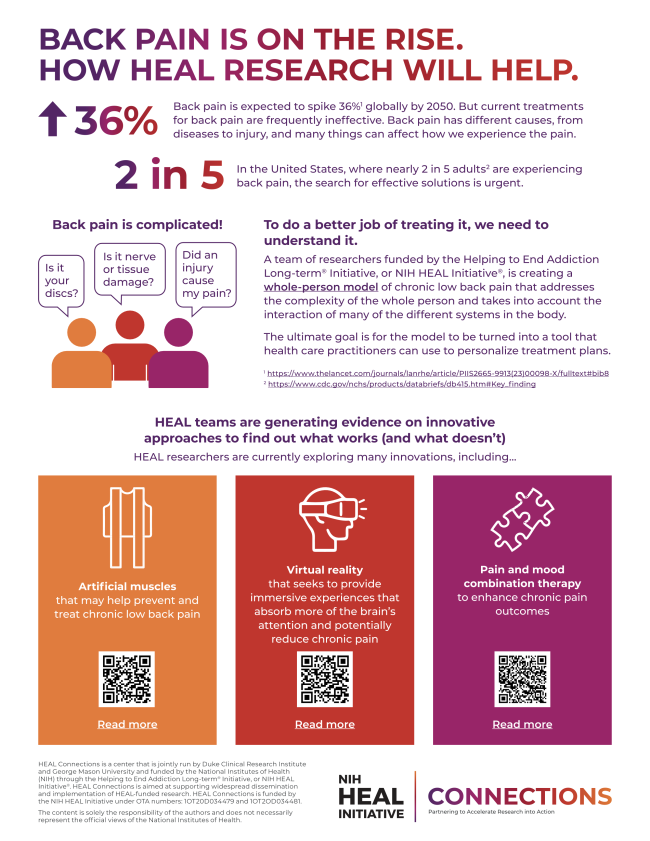
The Chronic Pain Research Alliance, an Initiative of the TMJA, focuses on advancing a collaborative and collective approach to the research, care and treatment of TMD and its overlapping conditions, including chronic low back pain. A recent study published in The Lancet found that by 2050, a 36% increase in total number of cases of low back pain is expected globally, driven by population growth and aging. To address the complexity of low back pain and its comorbidities through a whole-person model, the National Institutes of Health recently funded the Back Pain Consortium (BACPAC) Research Program. To learn more about some of the innovative research approaches included in BACPAC, click here to view this new infographic.
| |
Research Studies Recruiting TMJ Patients | |
|
Central and Peripheral Factors in Temporomandibular Disorder
Researchers at Emory University in Atlanta are in need of TMJ patients to participate in their study. They are investigating people who experience chronic pain in the head and/or face in everyday life. They are using unique tests to find out how the brain processes chronic and acute pain messages and will observe patients to see how pain and sensory processing differs in TMD. Click here to view the informed consent form for this study. Contact Daniel Harper, PhD (Principal Investigator) at 404-727-7789 or daniel.harper@emory.edu with any questions and to participate.
| |
|
Impact of Daily Physical Activity and Chronic Musculoskeletal Pain Survey
A research team from the Faculty of Rehabilitation Sciences of Hasselt University in Belgium is investigating the relationship between the intensity of daily physical activity and chronic musculoskeletal pain. They will be looking at fibromyalgia, chronic temporomandibular disorder, osteoarthritis, chronic neck pain, chronic shoulder pain, and chronic low back pain. The study involves an online survey which will take approximately 50 minutes to complete. More details and a link to the study is available at: https://uhasselt.qualtrics.com/jfe/form/SV_etl78e58y2YeUDQ
| |
University of Minnesota In-Person Study
For those of you in the Twin Cities, Duluth, Rochester, or nearby areas, a researcher working with the University of Minnesota is looking for participants to collect data as an early step toward development of a new medical device. There is one brief in-person meeting required, but the researcher can travel to meet you if you are interested. Please see below for details.
"Have you been diagnosed with TMD/TMJ Pain, Chronic Low Back Pain, and/or Painful Peripheral Neuropathy? Has your pain lasted for more than 3 months with an average daily pain intensity in the past week of ≥3/10 and at least one instance of pain ≥6/10 in the past week? If so, please contact groenke@umn.edu for more information regarding possible participation in an ongoing, at-home research study seeking to learn more about how the body responds to different pain levels. There is a $20 gratuity payment following successful completion of the study."
| |
|
University of Connecticut School of Dental Medicine Study Conducting a Research Study on TMJ Pain
This federally funded research project provides non-surgical treatments to persons with pain in the area of the TMJ. The purpose is to test a new treatment approach. All volunteers will get an X-ray of the face, and
will receive a splint (a mouth guard), plus non-steroidal anti-inflammatory drugs (like Advil), and weekly monitoring, as well as additional instruction in coping and managing the pain of temporomandibular dysfunction (TMD).
Those eligible for participation must meet the following conditions:
• TMD-related pain for at least 3 months.
• Must live in proximity to UConn Health, Farmington, CT, to allow for treatment, monitoring of progress, and follow-ups.
To view the patient consent form, click here. Call 860-679-2745 for more information or visit https://health.uconn.edu/dental/patient-services/oral-and-maxillofacial-surgery/tmj-treatment/
| |
University of Illinois Chicago Study of Social Media's Influence
YOUR OPINION MATTERS! Hello everyone! This is oral and maxillofacial surgeon Dr. Elbir. We are conducting a research project at the University of Illinois Chicago involving patients with TMJ problems, specifically those who have undergone or are going to undergo TOTAL JOINT REPLACEMENT of the TMJ. We aim to evaluate the effect of social media on patients' choice of surgeon. If you meet the criteria and are willing to participate in this scientific project, please take 2 mins of your time to answer this short survey of 10 simple questions, via this link: https://uic.ca1.qualtrics.com/jfe/form/SV_6Rtgu9RsKf7xGYK .
We appreciate every single answer from you! Your answers remain completely anonymous and this data is not going to be used for any other purpose. After 3 months of data collection, an article is planned to be published in one of the most respected journals in the field of oral and maxillofacial surgery.
Thank you for your valuable contribution to science!
| |
NIH Grant Opportunities for Researchers | |
|
Notice of Special Interest: Women’s Health Research
https://grants.nih.gov/grants/guide/notice-files/NOT-OD-24-079.html
In alignment with the White House Initiative on Women’s Health Research, the National Institutes of Health (NIH) is issuing this Notice of Special Interest to highlight interest in receiving research applications focused on diseases and health conditions that predominantly affect women, or are female-specific.
National Institute on Deafness and Other Communication Disorders (NIDCD)
- Expanding the understanding of sex differences impacting hearing loss, balance disorders, taste and smell abnormalities, voice disorders, speech, and language disorders.
- The prevalence, incidence, and natural history of hearing loss, balance disorders, taste and smell abnormalities, voice disorders, speech disorders, and language disorders in women.
- The physiological and psychological factors that contribute to the development or progression of communication disorders in women.
- The impact of communication disorders on women’s overall health and well-being.
- Improving the understanding of inherited or acquired hearing, balance, taste, smell, voice, speech, and language disorders that affect women disproportionately to inform treatments.
- The development and evaluation of interventions or treatment strategies, including pharmacological, behavioral, social, surgical and technology-driven approaches, for preventing, mitigating, or treating conditions impacting women in NIDCD mission areas.
Notice of Special Interest (NOSI): Translating Biomaterials-Based Technologies to Commercially Viable Products
https://grants.nih.gov/grants/guide/notice-files/NOT-EB-24-001.html
The purpose of this Notice of Special Interest (NOSI) is to invite NIH Small Business Innovation Research (SBIR) and Small Business Technology Transfer (STTR) applications focused on advancing paradigm-shifting biomaterials-based technologies leading to commercialized products. Additionally, this NOSI aims to generate private-sector interest and engagement in the development of innovative and emerging biomaterials-based technologies of biomedical and clinical relevance with high commercialization potential.
HEAL Initiative: Studies to Enable Analgesic Discovery (R61/R33 - Clinical Trial Not Allowed)
https://grants.nih.gov/grants/guide/rfa-files/RFA-NS-25-012.html
This notice of funding opportunity (NOFO) aims to encourage research grant applications for initial translational efforts that will enable a drug discovery program for novel, non-opioid, and non-addictive treatments for pain. The program provides funding to develop and validate assays to support a distinct testing funnel and conduct screening efforts to identify and characterize potential therapeutic agents including small molecules, biologics, and natural products. Preliminary in vivo pharmacokinetic, pharmacodynamic, and efficacy studies may also be supported. The goal of this NOFO is to advance projects to the point where they meet the entry criteria for the Pain Therapeutics Development Program or other later-stage translational programs.
This NOFO is part of the NIH Helping to End Addiction Long Term (HEAL) initiative to accelerate the discovery and preclinical development of safe and effective therapeutics to treat pain with little or no addiction liability.
Notice of Special Interest (NOSI): Maternal Health and the Dental, Oral, and Craniofacial Development of their Children
https://grants.nih.gov/grants/guide/notice-files/NOT-DE-23-005.html?utm_medium=email&utm_source=govdelivery
The National Institute of Dental and Craniofacial Research (NIDCR) is issuing this Notice of Special Interest (NOSI) to encourage research on prenatal environmental and physical stressors experienced by women during pregnancy that affect their child's dental, oral, and craniofacial (DOC) tissues through altered maternal physiology. The purpose of this NOSI is to support research elucidating the impact of maternal, environmental, nutritional, pharmaceutical, and/or infectious exposures upon the developing and formed oral and craniofacial complex.
The Intersection of Sex and Gender Influences on Health and Disease (R01 Clinical Trial Optional)
https://grants.nih.gov/grants/guide/rfa-files/RFA-OD-22-028.html
The purpose of this Funding Opportunity Announcement (FOA) is to invite R01 applications on the influence and intersection of sex and gender in health and disease, including: (1) research applications that examine sex and gender factors and their intersection in understanding health and disease; and (2) research that addresses one of the five objectives from Strategic Goal 1 of the 2019-2023 Trans-NIH Strategic Plan for Women's Health Research "Advancing Science for the Health of Women." The awards under this FOA will be administered by NIH ICs using funds that have been made available through the Office of Research on Women’s Health (ORWH) and the scientific partnering Institutes and Centers across NIH.
Understanding Chronic Conditions Understudied Among Women (R01 Clinical Trial Optional)
https://grants.nih.gov/grants/guide/rfa-files/RFA-OD-23-014.html
The purpose of this Notice of Funding Opportunity (NOFO) is to invite R01 applications on chronic conditions understudied among women and/or that disproportionately affect populations of women who are understudied, underrepresented, and underreported in biomedical Research should align with Goal 1 of the 2019-2023 Trans-NIH Strategic Plan for Women's Health Research "Advancing Science for the Health of Women." The awards under this NOFO will be administered by NIH ICs using funds that have been made available through the Office of Research on Women’s Health (ORWH) and the scientific partnering Institutes and Centers across NIH.
(R21 Clinical Trial Optional)
https://grants.nih.gov/grants/guide/rfa-files/RFA-OD-23-013.html
ARPA-H Announces New Funding Opportunity
The Advanced Research Projects Agency for Health (ARPA-H)) Sprint for Women’s Health has released a new request for solutions (RFS) on “Objective and Quantitative Measurement of Chronic Pain in Women” (Topic #5).
Two funding tracks are available:
- "Spark" Awards (early-stage research, ~ $3M per award)
- "Launchpad" Awards (later-stage development, ~ $10M per award)
Key Dates:
- Submissions Open: March 13, 2024
- Question Deadline: March 27, 2024
- Submission Deadline: April 12, 2024
- Pitch Phase: May-July 2024
- Invitation for Collaboration & Negotiation: July-August 2024
- Awards: September 2024
To read the RFS and for additional information, please visit: https://sprint.investorcatalysthub.org/request-for-solutions/
| |
The TMJ Association is the ONLY patient advocacy organization fighting for the best science that will lead to a greater understanding of Temporomandibular and related disorders and treatments that will help and not harm patients.
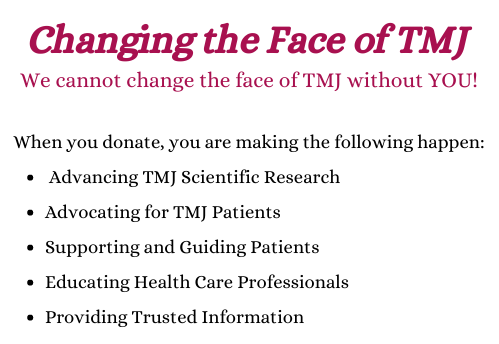
We cannot change the face of TMJ without YOU. Make a tax-deductible contribution today! Your contribution is more than a donation. It is how we will ensure that TMJ patients have a voice — through education, patient support and advocacy.
We cannot do this important work without you! Thank you for your generosity.
| |
|
About The TMJ Association ... Changing the Face of TMJ
The TMJ Association, Ltd., is a nonprofit, patient advocacy organization whose mission is to improve the quality of health care and lives of everyone affected by Temporomandibular Disorders (TMJ). For 35 years, we have shared reliable information on TMJ with people like you. We invite you to visit our website, www.tmj.org.
| |
|
The TMJ Association, Ltd., P.O. Box 26770, Milwaukee, WI 53226
info@tmj.org | www.tmj.org
The TMJ Association, Ltd., is a nonprofit 501(c)(3) tax-exempt organization.
Copyright © 2024. All Rights Reserved.
| | | | |