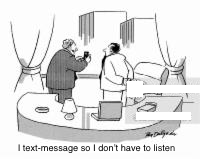
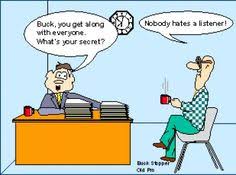
These days, it’s hard to be heard above all the noise in our lives-- from background racket to loud disruptions to simply information overload.
Noise is both constant and distracting. As a result, we delete it...get swept up by it... try to control it.
What if...
In the midst of our noisy lives, we could actually harness the ability to hear and be heard? If we just took the time to really listen, our lives might be more efficient and less chaotic. And dare I say? More joyful.
Yet listening is a real... well... fill in the blank---Challenge? Talent? Both.
You know when you are in the presence of a genuine listener. You feel seen, heard and acknowledged. It’s like receiving a meaningful gift.
Effective listening requires an open, attentive and seemingly unhurried approach. An excellent listener doesn’t interrupt, cues into body language, seeks to understand, asks insightful questions and provides relevant feedback.
At the root of conscious listening is the ability to pause. When we are able to pause, we take a moment to focus. This allows us to listen more fully- whether to ourselves, another person or the environment around us.
Like the age old adage, “Count to 10 before you speak”, pausing is a conscious act. It need only be for a few seconds, but for most of us- oh how hard it can be to gracefully implement! Yet when we do, pausing is instrumental in the flow of our conversations.
When we pause, we can notice our breathing. Our breath is the one physiologic function we can have the most immediate impact with. Simply breathing in for a count of 4-6 and breathing out for the same count (coherence breathing) can alter our heart rates and create a sense of calm. From that place, better listening can arise.
Good listeners pause before they begin.
They take those breaths and ground themselves, becoming present. Their ears are open as well as their bodies, allowing them to take in both the verbal and non-verbal messages. This grounding creates a space that fosters safety and communication.
Good listeners pause during the conversation.
They check in on their own emotional and physiologic states, notice and name what’s going on, and adjust. By recognizing their own thoughts, biases and feelings, they gain a better bird’s eye view. In this way, a good listener is able to respond rather than react.
Good listeners pause the conversation.
They may interject a thoughtful question or restate for clarification and understanding. Pausing affords the opportunity to gain perspective and share distinctions.
Good listeners pause at the end.
They reflect, show appreciation, and you have the sense they are still right there with you.
Our world is a noisy place. Our lives are full of distractions and to do lists. Time can be an elusive commodity. We often feel disconnected and dissatisfied. Who couldn't benefit from better connections, deeper understanding and more joyful, purposeful interactions? It begins with how we listen.
Try An Experiment:
- Take that deep breath.
- Try one or all of the good listener techniques.
- What do you notice? For yourself? For the people around you?