|
Turtle Tracks Newsletter
July 2026 - Happy Birthday America!
| | | FOLLOW US ON FACEBOOK TO KEEP UP TO DATE ON FUTURE EVENTS! | |
Meet Save-A-Turtle at Upcoming
Florida Keys Events! 🐢💚
| |
Looking for a fun way to learn about sea turtles while supporting local conservation? Join Save-A-Turtle of the Florida Keys at one of our community events this summer!
Our knowledgeable volunteers love sharing the fascinating world of sea turtles and the work being done to protect them throughout the Florida Keys. Stop by to ask questions, learn about nesting season, discover how you can help, and see how together we're making a difference for these incredible marine animals.
Whether you're a longtime supporter or just discovering our mission, we'd love to meet you!
Locals Sunday at the Key West Aquarium
July 5 | 10:00 AM – 4:00 PM
Join us for Locals Sunday and discover how community members play an important role in protecting nesting sea turtles and hatchlings throughout the Florida Keys. Our volunteers will be available to share conservation tips, answer questions, and provide information about getting involved.
Caturdays at Sloppy Joe's
Every Saturday in August | 11:45 AM – 8:00 PM
Save-A-Turtle is proud to participate in the popular Caturdays fundraising event at Sloppy Joe's. This lively community event features entertainment, charitable fundraising, and the famous blinking cat-ear headbands that help raise funds for local nonprofit organizations throughout the Keys.
While you're visiting, be sure to browse our collection of turtle-themed merchandise. Every purchase directly supports Save-A-Turtle's conservation, education, and outreach programs, helping us continue our mission to protect endangered and threatened sea turtles in the Florida Keys.
Can't make it to an event? You can still support our efforts by visiting our online store and shopping our turtle-inspired merchandise from anywhere.
We hope to see you this summer!
Check out our ONLINE STORE.
|
🐢🌊 From the Field with Sherri Crilly -
How Turtle Excluder Devices Help Protect Sea Turtles
| | |
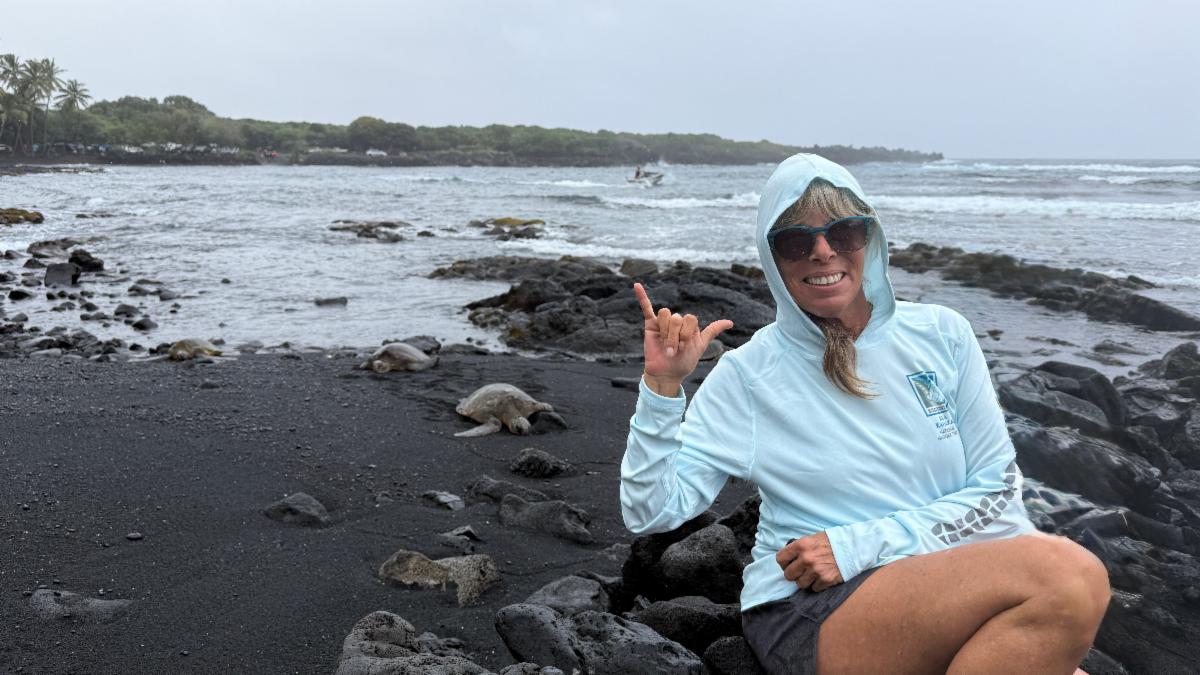
My name is Sherri Crilly, and I have been a volunteer with Save-A-Turtle since 2016. I am also an Florida Fish and Wildlife Conservation Commission (FWC) permit holder and volunteer for sea turtle nesting, stranding, and salvage in the Lower Keys.
Last month we discussed Head Start Programs with sea turtle hatchlings, and while the results show a significant increase in hatchling survival rates, many researchers, including NOAA, believe that the only way Head Start programs will help increase the overall population of sea turtles is through beach protection and Turtle Excluder Devices (TEDs) on commercial fishing nets. So, let's talk about what a TED is and how it helps decrease sea turtle mortality rates.
As we previously noted, in the United States alone, an estimated 12,000 sea turtles are unintentionally caught in fishing nets, resulting in the death of over one-third of those turtles. Globally, that number is estimated to be between 250,000 and 300,000 sea turtle deaths due to drowning as a result of bycatch.
Many countries, including those in the Americas, Australia, India, Malaysia, Thailand, and Pakistan, have mandated that shrimp fishing vessels that trawl with nets must use TEDs to prevent the deaths of sea turtles and other animals such as sharks, fish, seals, dolphins, and seabirds. In fact, any shrimp exported to the United States must be certified as coming from fleets that use TEDs.
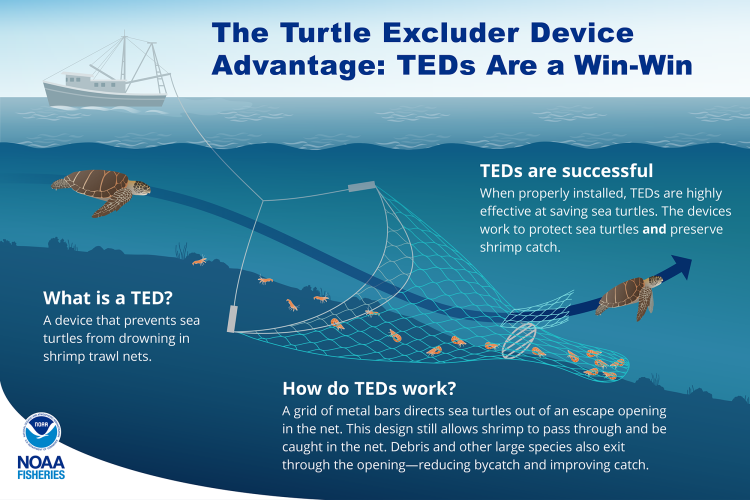
So how does a TED work? As cited by NOAA in Turtle Excluder Devices (Updated June 18, 2026):
"A TED is a simple grid made of metal bars that is fit into a trawl net. Small animals, such as shrimp, pass through the grid into the mesh bag at the end of the trawl and are captured. When larger animals like sea turtles enter the trawl net, they are bumped against the metal grid, which prevents them from passing through. They can then swim through an opening either at the top or bottom of the net and escape."
TEDs are not something new being used to reduce sea turtle bycatch. In fact, the first TEDs were introduced in the late 1970s, reducing bycatch from shrimp trawlers by only 30%. Throughout the 1980s and 1990s, many versions were tested to produce the best results without inhibiting fishermen's shrimp harvest.
The article continues, stating:
"Current TED designs are determined to be 97 percent effective in excluding turtles from shrimp trawls. NOAA Fisheries gear experts continue to work with the shrimp fishing industry to develop new and effective designs that further reduce bycatch while minimizing impacts to the target catch.
Today, many shrimp trawlers operating in the U.S. waters of the Gulf of America* and South Atlantic are required by federal law to equip their trawls with a TED."
NOAA and scores of sea turtle organizations around the world are working diligently to implement TEDs in fishing fleets where they are not currently required by law. As you can see, the use of these devices drastically reduces bycatch and will ultimately increase the survival of adult sea turtles around the planet. This will, in turn, give those initial Head Start turtles a better chance of reaching maturity and returning to their birth beach to deposit their own clutch of eggs.
WATCH A VIDEO about TEDs
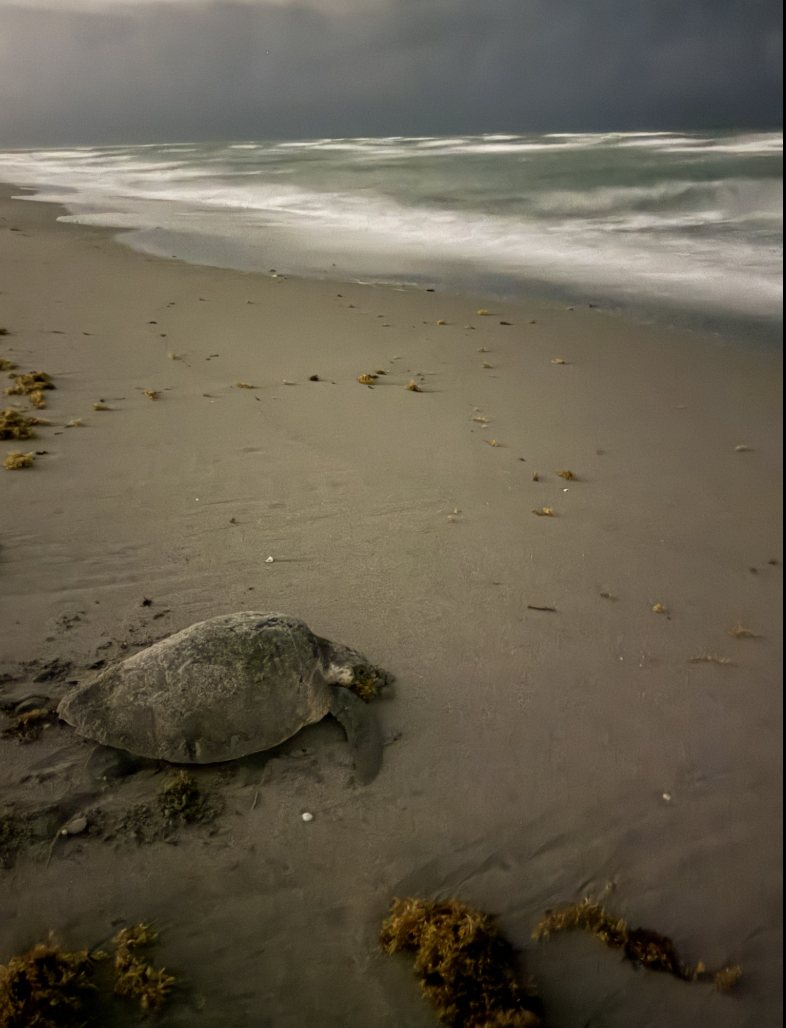
| | 🐢 Rare olive ridley sea turtle nest documented in Florida for the first time 🐢 | | |
Researchers with Loggerhead Marinelife Center have documented what they say is the first known olive ridley sea turtle nest in Florida, after spotting the rare turtle nesting on Jupiter Beach on May 18.
The turtle, named “Tini,” came ashore in an area more commonly used by loggerhead, leatherback, and green sea turtles. Olive ridleys are typically associated with nesting beaches in the southern Atlantic, including Brazil, Trinidad, Suriname, and Gabon, according to the center.
“Our team had been on the lookout for our usual third species of nesting turtles, green turtles, when this small and distinctive turtle came ashore to nest,” said Dr. Justin Perrault, vice president of research at Loggerhead Marinelife Center.
Olive ridleys are among the smallest sea turtle species and are known for their olive-green, heart-shaped shells. They are also famous for two nesting strategies: solitary nesting and the “arribada,” a mass nesting event in which thousands of females come ashore at once.
READ MORE HERE!
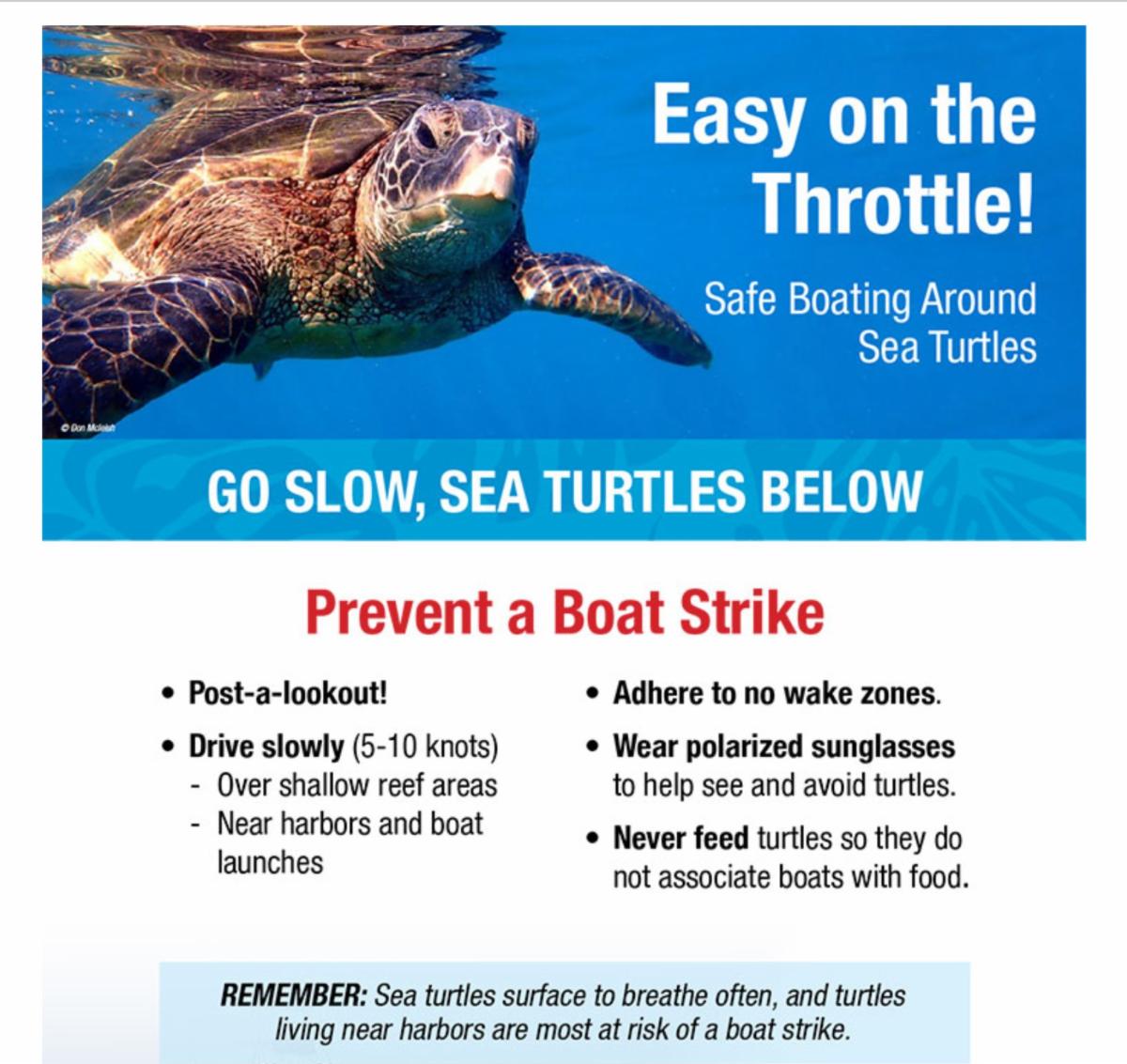
| | Safe Boating Saves Wildlife 💙🐬🐢 | | Outreach poster developed by NOAA Fisheries and the Hawai'i Division of Boating and Ocean Recreation | | |
The waters of the Florida Keys are home to an incredible variety of marine life, including endangered sea turtles, playful dolphins, gentle manatees, and countless other species. Sadly, boat strikes remain one of the leading causes of injury and death for these animals—but together, we can make a difference.
Help protect our marine wildlife by following these simple boating practices:
👀 Stay Alert – Keep a careful lookout for surfacing wildlife and unusual shapes in the water.
| | |
🚤 Slow Down – Observe posted no-wake and slow-speed zones, especially in areas where marine animals are known to frequent.
📞 Report Injured Wildlife – If you encounter an injured or stranded sea turtle, dolphin, manatee, or other marine animal, contact the FWC Wildlife Alert Hotline at 888-404-FWCC (3922).
Every responsible decision on the water helps protect Florida's unique marine wildlife and ensures these incredible animals will continue to thrive in the Florida Keys for generations to come.
| | |
Save-A-Turtle Board Meeting
(meeting link is static and good for each monthly meeting)
Monday, July 6, 2026
6:30 - 8:30PM
Zoom Link
Meeting ID: 829 7023 2616
Passcode: 210787
One tap mobile
+13052241968,,82970232616#,,,,*210787# US
+16469313860,,82970232616#,,,,*210787# US
| | 2026 Save-A-Turtle Board Members | | |
President: Dawn Bowles
Vice President: Heather Skelley
Treasurer: Jill Reilly
Secretary: Brenis Hill
Board Member: Harry Appel
Board Member: Jennifer DeMaria
Board Member: Chelsea Oatman
Technical Advisor: Sue Schaf
| | 🐢💚 Love Sea Turtles? Let’s Connect! | | |
If sea turtles inspire you as much as they inspire us, we’d love to stay connected. Follow along on Facebook and Instagram for turtle facts, simple ways to help the environment, and behind-the-scenes looks at our conservation work.
You can also support our mission by visiting the Save-A-Turtle Online Store.
Together, we can make a lasting difference for sea turtles and the oceans they call home. 💙🐢
10 Tremendous Turtle Facts
| | |
To report sick, injured or dead sea turtles in Florida
call FWCC at 888-404-FWCC (3922)
| | | | |