** This version of the newsletter corrects the named author of the AIRE Digital Story "Town Business." It was created by Jhamere Howard of West Oakland Environmental Indicators Project. **
by Catalina Garzón-Galvis,
Senior Health Educator, Tracking California
Tracking California and members of the
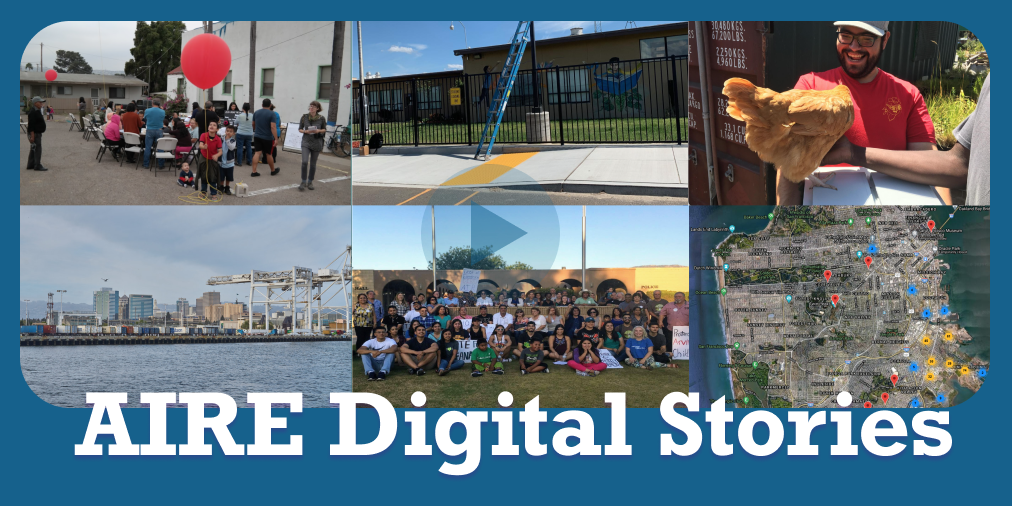
AIRE Collaborative - a network of community-based organizations leading efforts to monitor and improve air quality in their communities - looked to digital storytelling to support these efforts and to build community during pandemic times. Digital storytelling can be a powerful way to document and share lived experiences with environmental and health disparities with a variety of audiences. Digital stories are short 3-to-4 minute videos narrated by those who are directly involved in or impacted by an issue that can be leveraged to support community education, advocacy, and other actions to advance positive change.
In 2020 Tracking California worked with AIRE Collaborative members and
StoryCenter – a participatory digital media organization based in Berkeley CA – to plan a digital storytelling workshop for AIRE members. StoryCenter staff Allison Myers and Andrea Spagat facilitated an online workshop on digital storytelling for AIRE Collaborative members. In the workshop sessions each AIRE member drafted and revised a script for their story, got feedback from other AIRE members on their script, created an audio recording of their story, and compiled photos and other images to include in their story. The AIRE Stories project was supported with grant funding from the Energy Foundation.
Tracking California staff also provided support to AIRE members with outreach and communications planning to share and distribute each of their digital stories with target audiences, including community members, agency staff, youth, elected officials, and local media outlets. In December 2020 AIRE members held a virtual community screening event showcasing the six digital stories that AIRE members had created as part of the StoryCenter workshop. Attendees included air quality agency staff, members of Community Steering Committees for local community air monitoring projects, and elected officials.
To highlight the videos, Tracking California staff created
The Road to Clean Air, a StoryMap “virtual road trip” through California that highlights the stories and hometowns of AIRE members. Together, the AIRE Stories provide a glimpse into communities that are disproportionately burdened by toxic air pollution by elevating the voices and experiences of leaders engaged in air monitoring and other efforts to improve community air quality.