The Power of Visualization
See it. Feel it. Prepare for it.
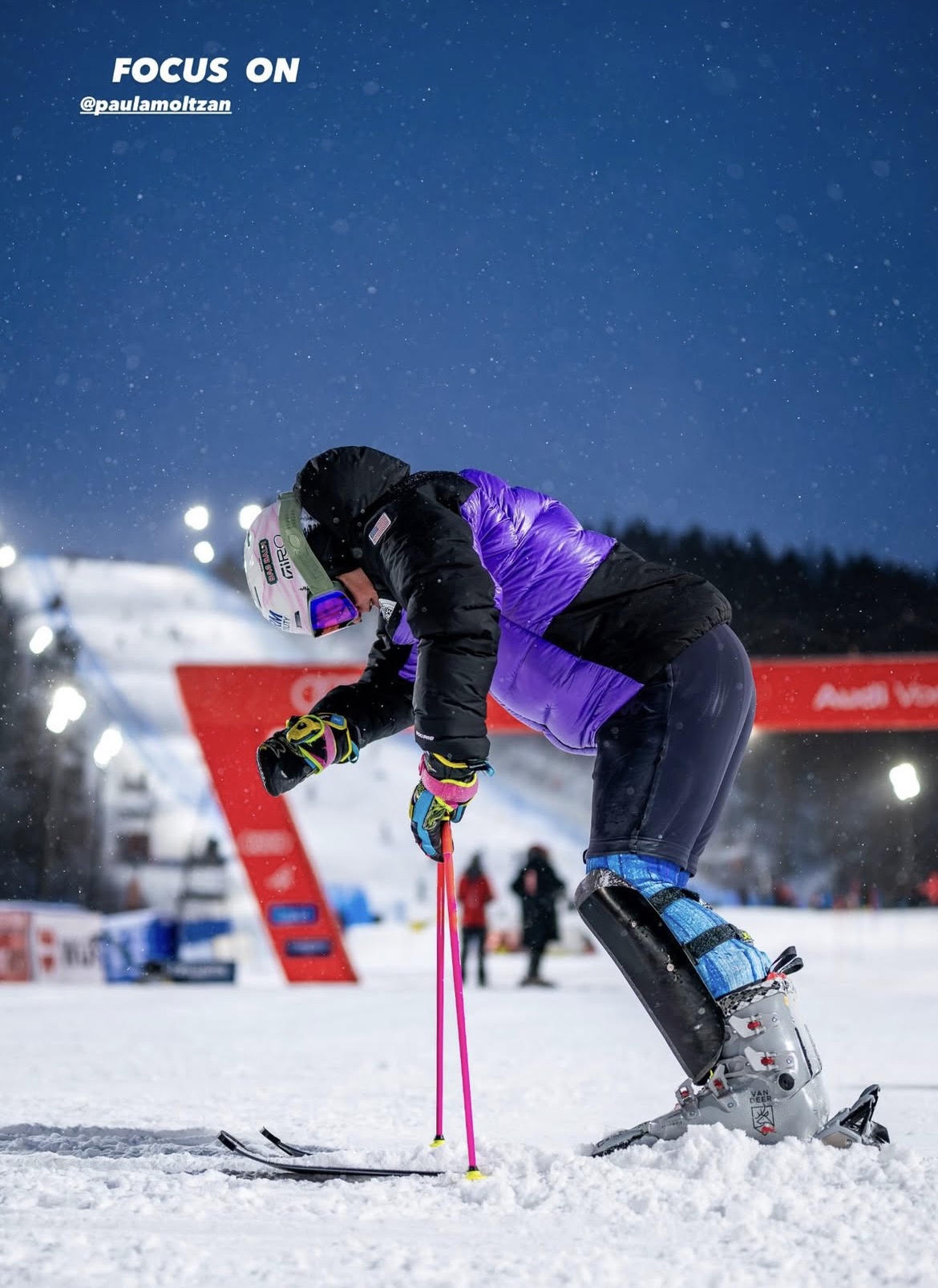
Have you ever watched a ski racer at the start, eyes closed, moving their hands, shifting their body, and absorbing terrain as they mentally prepare for a run?
They are mentally rehearsing. World Cup racers such as Paula Moltzan, pictured here, can be seen practicing this skill at the start of the race and on the hill as they inspect the course. As their hands sway and their ankles flex, they use their brain to imagine themselves skiing the course or a specific section of the race.
Visualization, also called mental imagery, is the practice of mentally going through a performance before it happens. Athletes can picture the course, feel their feet in their boots, rehearse their strategy, and prepare themselves to ski a course they have basically already run.
The science behind visualization is that vivid mental images or simulation activates the same brain regions and neural pathways as physically performing the movement. This strengthens muscle memory, improves confidence, and enhances the real performance. [1, 2]
The brain doesn't need to be on the hill for an athlete to prepare for racing on the hill.
To be clear, visualization doesn't replace physical training, course inspection, or technical preparation. It adds another tool to an athlete's toolbox.
WHY VISUALIZATION MATTERS
Ski racing is full of variables. Conditions change, courses are set differently, conditions can be icy or soft snow with ruts, and a racer can make a mistake, causing a setback and a cut to their confidence.
Visualization helps athletes become more familiar with what they are preparing to do. It can help them clarify their plan, connect a visual picture with the movements they want to make, and approach the start with a clearer sense of purpose and confidence.
Something to consider is that while mentally rehearsing a perfect run is helpful and trains the neurological pathways to perform as planned, visualization isn't always about imagining a perfect run every time.
A helpful tactic can be to also mentally rehearse how they want to respond when something goes wrong. What happens if they get thrown off balance? What will they do after a mistake? How will they bring their attention back to the next turn?
The goal isn't to predict exactly what will happen. It's to prepare for the performance, and also for the possibility that things won't go exactly as planned.
HOW TO VISUALIZE
Visualization doesn't have to be complicated, and it doesn't have to take long.
An athlete might take 30–60 seconds to mentally rehearse a section of the course or a few key movements. Encourage them to make the picture as specific as possible.
-
SEE IT: Picture the course, the terrain, the gates, and the line you want to ski.
-
FEEL IT: Imagine the movements, pressure on the outside ski, balance through the turn, and the rhythm of linking turns together.
-
PLAN IT: Choose one or two cues to focus on.
-
RESET: Imagine making a mistake, taking a breath, and returning attention to the next turn.
Some athletes see a vivid picture. Others experience visualization more as a feeling, a movement, or a sequence of actions, and some do both. Some focus on only doing things well, while others work on all aspects: doing things well and a solid reset when things don't go as planned. The benefits from visualization come from both, but focusing on doing movements properly is most beneficial. There isn't just one right way to do it. The important thing is finding an approach that helps the athlete prepare and increase confidence.
FOR COACHES
Visualization should be introduced during training, not just on race day. To start, it can be incorporated at the end of a dryland session for 15 minutes, even just visualizing a tennis ball and all its fine characteristics, and progress to something more intricate.
On the hill, it can be added after course inspection; ask athletes to take a moment to mentally rehearse their plan before they leave the start. Encourage them to picture key sections and identify where they want to focus.
Try asking:
- “What are your two key focus points for this run?”
- “Can you picture how you want to ski that section?”
- “If you get off your line, how will you reset and keep moving forward?”
Keep it simple. One clear plan is often more useful than trying to mentally rehearse every turn. And remember, visualization should support an athlete's plan, not create pressure to ski a perfect run.
FOR PARENTS
Parents can support visualization without becoming the athlete's race-day coach.
On the drive to the mountain or while getting ready, you might ask, “What's one thing you're looking forward to working on?” Let the athlete lead the conversation.
Some athletes will enjoy talking through their plan. Others may prefer a quiet moment to picture the course on their own. Both are fine.
We don't need to tell our athletes exactly what to visualize. We can help them develop the habit of preparing themselves.
TRY THIS: THE 30-SECOND MENTAL RUN
The next time your athlete is preparing for training or a race, give this a try:
- Take a slow breath - settle in & focus
- Picture a section of the course.
- Imagine skiing the section using technique worked on with the coach in training.
- Picture yourself responding to a challenge and continuing with your plan.
TIPS:
-
Add sensory details. Imagine the exact feel of your edges, hear the sound of the snow crunching, and feel the rhythm of your turns.
-
Keep it in the first person. Visualize looking through your own eyes rather than watching yourself like a movie.
-
Name the specific technique. Find your physical cue, such as keeping your hands forward or pressuring your outside ski.
-
Include emotional control. Imagine feeling calm and confident as you move through the section.
Then ask: “What stood out?” "What did you feel?" No pressure. No perfect picture required. Just practice.
The more athletes learn to prepare their minds alongside their bodies, the more tools they have available when it counts. While this is a simplistic approach and an introduction to visualization, this tool, when done properly, is amazingly effective.
There are many resources available for more information about visualization.
More Resources:
https://thenewhealthorder.com/how-to-visualize/
https://www.youtube.com/watch?v=VHISQ6xIGZE
https://www.peaksports.com/sports-psychology-blog/sports-visualization-athletes/
https://www.championsadvantage.com/
https://www.kidssportspsychology.com/improve-sports-kids-confidence-and-focus/
https://www.voiceinsport.com/post/mind/science-behind-visualization-whats-happening-in-the-brain
UP NEXT
We've talked about routine, awareness, and now visualization. Next, we'll bring these ideas together in Race Ready, how athletes can put mental skills into practice before and during competition.
Until then, let's help our athletes prepare, not just to race, but to feel confident and prepared to race.
|