This Issue: Interrupting Institutionalized Inequities
|
|
We at the Pullias Center send out our thoughts to everyone in the higher education community to be safe and well at this time. We know everyone is working to respond to the crisis. We are working with our partners to help protect equity as campus leaders respond to this crisis.
With that in mind, we want make sure you are aware of the
American Council on Education’s Engage Platform, which has been opened up to all users in higher education and which has a group devoted to sharing solutions related COVID-19. We encourage you to look to this national resource which allows you to connect to solutions with your peer institutions across all types of campuses and professionals.
As we interact with all our partners right now, we are making sure they think about how their responses affect the most vulnerable students, staff, and faculty. If we can help you and your campus think about how to foreground equity, please be in touch.
In the meantime, we know that many people are looking for fresh air and a bit of normalcy during this time. We therefore continue highlighting one faculty member’s work each month in our newsletter with our latest edition featuring updates about recent activity by Julie Posselt and her team. Their research on building cultures that uphold equity among the multiple priorities we hold is relevant to the challenges of decision making during this time.
Best wishes,
Adrianna Kezar
Director, Pullias Center for Higher Education
|
|
Change comes slowly in higher education, or so the best theory and evidence say. Yet there are exceptions to every rule, and exogenous shocks such as protests, wars, natural disasters and, as we are now seeing, a global pandemic can compel decisive, transformational changes that colleges, universities, and their members would otherwise resist.
Will disruptions and uncertainties of COVID-19 catalyze paradigm shifts or simply affect current cohorts moving through the system? We will all have to stay tuned to observe the ripple effects of this crisis, but in some respects, the shape of the splash is up to us...
|
|
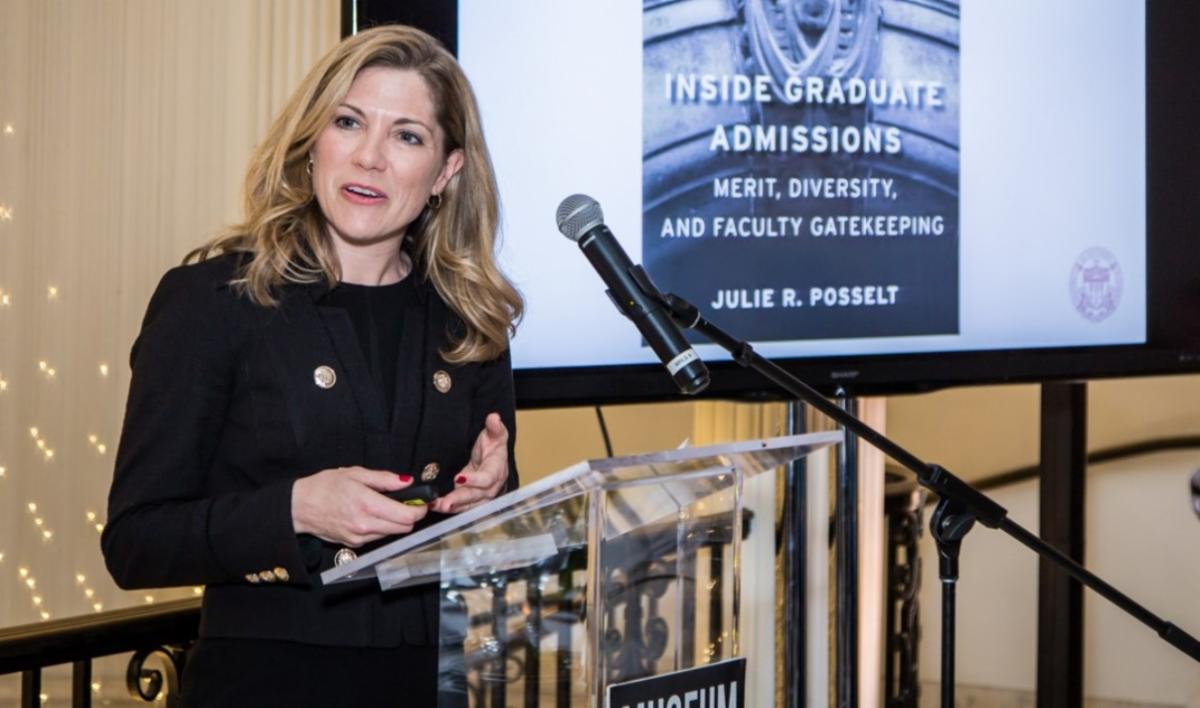
What are the hidden rules and practices that affect who gets respect and opportunities in higher education? How can we reconstruct these rules to encourage equity in the system? A new chapter in the
Higher Education: Handbook of Theory and Research book series by Julie Posselt and a team at the Pullias Center takes a hard look at these fundamental questions and suggests how evaluation and decision making can be leveraged for equity.
|
|
The Pullias Center’s Julie Posselt serves as a member of a very select panel that is tasked with no less than generating a comprehensive strategy and vision for the next decade of science in astronomy and astrophysics.The focus of the 15-person decadal survey committee, called the “Panel on State of the Profession and Societal Impacts,” entails putting a microscope on, or perhaps more appropriately aiming a telescope towards, social and cultural issues that need addressing across astronomy.
|
|
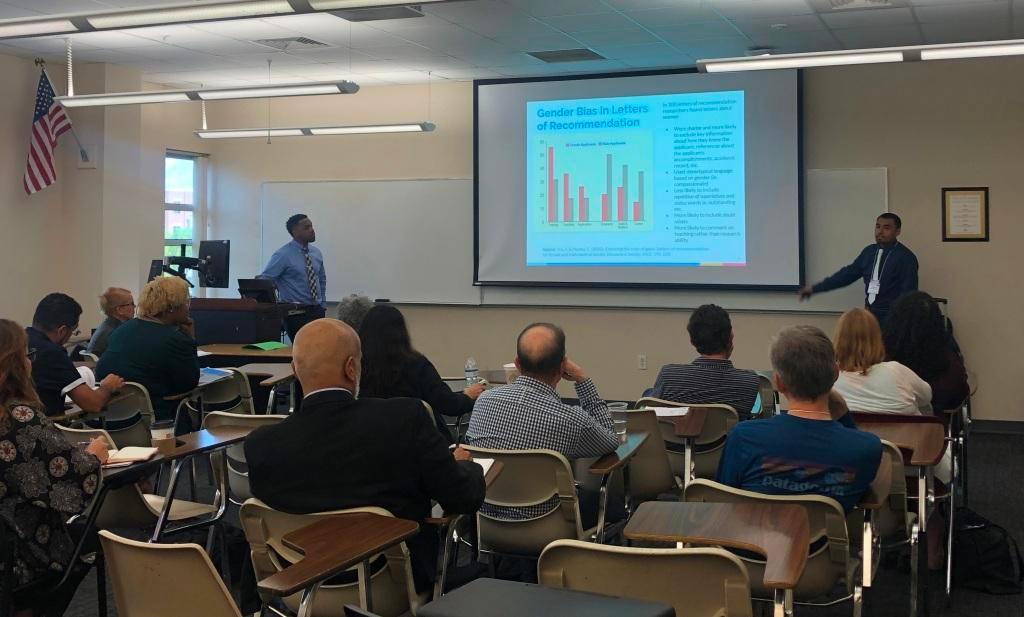
Letters of recommendation are used in admissions and hiring to glean information and qualities which may go unnoticed in the review of an applicant’s file. However, they are also one of the most common places that bias is written into applicant records-- sometimes in subtle ways.The Pullias Center's Julie Posselt, Steve Desir, and Román Liera are leading an effort to shine a light on this typically unrecognized source of bias that has the power to shape the careers of graduates and other applicants looking to enter or advance in the workforce...
|
|
Celebrating 25 Years of the Pullias Center
|
The opportunity to collaborate with the Pullias Center early in my career has had a lasting influence on my efforts to improve equity and access in higher education.
In the early 2000s I was invited to participate in the Center’s project that produced Preparing for College: Nine Elements of Effective Outreach, a volume published in 2004 and edited by Bill Tierney, Zoe Corwin, and Julia Colyar. Five elements of this project help explain why the Pullias Center has made such a lasting impression on my own research and policy work. More importantly, these five elements shed some light on how Founding Director Bill Tierney and the Pullias Center have made so many important contributions to higher education research, policy, and practice over these past 25 years.
|
|
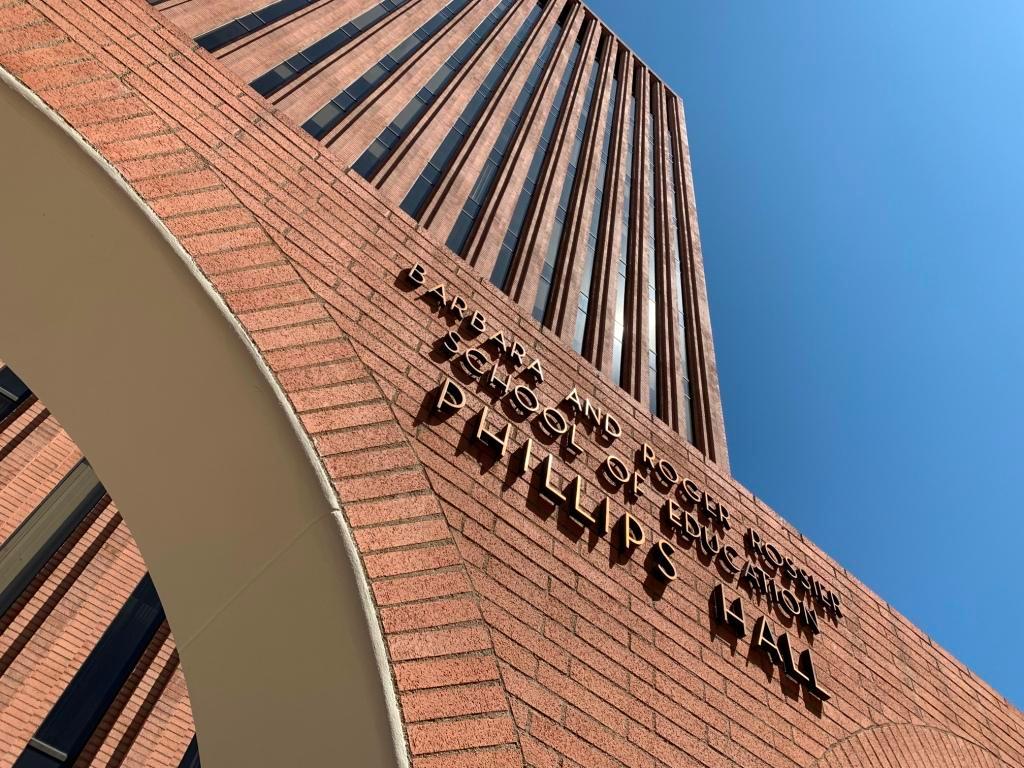
The USC Rossier School of Education's higher education administration program has jumped to #5 in the latest U.S. News & World Report rankings, up from the #8 spot last year. Particularly relevant to the Pullias Center,
USC Rossier remained especially strong in funded research by ranking #2 in funded research per faculty member.
For the fourth year in a row, Rossier was also ranked as one of the 15 best graduate schools of education in the country. Reaching #11 for the ranking year 2021 after earning #12 last year. USC Rossier has now been ranked in the top 20 in nine of the last 10 years.
|
|
Delphi Award Webinar on 3/31 - Award Application Window Open
|
As classes are moved online and campuses are closed in response to the COVID-19 pandemic, what can colleges and universities do to support their non-tenure-track faculty (NTTF)? To explore this question, recipients of the 2019 Delphi Award from Penn State and Santa Monica College will draw on their experiences in developing innovative models for supporting NTTF in a live AAC&U webinar at 2pm ET on March 31.
The application window for the 2020 Delphi Award is now open. The $15,000 cash award is given annually to two individuals or groups who have worked to support adjunct, contingent and non-tenure-track faculty in promoting student success.
|
|
Pullias Lands Pair of Grants
|
The Alfred P. Sloan Foundation has kindly gifted a $200,000 grant to the American Council on Education (ACE) in collaboration with the Pullias Center for research aimed at developing practice-based insights relative to equity-minded leadership in higher education.
The TIAA Institute has awarded the Pullias Center for Higher Education a one-year $50,000 grant through the end of 2020 to study and document cases of institutions that have made significant changes in policies, programs, and practices to better support non-tenure track faculty (NTTF), which includes contingent and adjunct faculty. .
|
|
Pullias in the Media
Projects and People Making News
- The Pullias Center's groundbreaking study on skateboarding culture was covered in several media outlets including KNX radio, KPCC radio, KCRW radio (NPR), KABC–TV, KNBC–TV, Los Angeles Times, and Education Dive
- The March issue of American Behavioral Scientist is co-edited by Joseph Kitchen, former Pullias Center postdoc and current assistant professor at University of Miami, and our own Adrianna Kezar, and covers "Supporting First-Generation, Low-Income, and Underrepresented Students’ Transitions to College Through Comprehensive and Integrated Programs"
|
|
Dr. Posselt's Recommendations
5 Things to Add to Your Media List from our Guest Editor's Research Team
|
|
Quick Takes
Additional Pullias Center News
|
|
The Pullias Center Newsletter will return in April
with Guest Editor Adrian Huerta
|
|
|
|
|
|
|