Rail Workers Weekly News Digest
Number 5 - February 4th, 2020
|
|
Below is a series of articles compiled over the previous week.
They are of interest to railroad workers.
_____________________________________________
|
|
Article 1 -
CREW STAFFING NEWS
FRA’S Own Report Blows Hole in Arguments Against Two-Person Freight Crews
The Federal Railroad Administration (FRA) in a 41-page report released Jan. 13th by its Office of Research, Development and Technology said what railroaders already know.
Researchers at the Volpe Center over a period of years performed cognitive task analyses (CTAs) that examined the mental demands placed on rail workers, including operating personnel, as they engaged with technology and performed their jobs.
“Results from the locomotive engineer and conductor CTAs indicate that train crews, a primary example of an elemental team in railroad operations, exhibit characteristics of high performing teams that are found across industries,” the report said. “These include mutual performance monitoring — to catch and correct errors — and active support of each other’s activities.”
“These teamwork activities went beyond the requirements of formal operating rules and were not explicitly covered in training,” the report states.
The Volpe Center has even received accolades from Transportation Secretary Elaine Chao herself, who praised its work at enabling safety and innovation for the nation in regard to transportation and infrastructure during the center’s groundbreaking in Oct. 2019.
“It has worked to reduce rail-grade crossing accidents, improve vehicle safety, and better manage the airspace…. The Volpe Center continues to provide important contributions to our national transportation system. Especially now, when we have entered a historic period of transportation innovation that promises to boost economic growth and improve quality of life. These innovations are occurring in all modes of transportation, including roads, rail, maritime, and aerospace…. All these innovations are exciting, but they can be disruptive. This is where Volpe’s contribution plays an important role. Volpe’s data and analysis provides trustworthy information that helps us distinguish between ‘High’ and ‘Hype’ performance innovations. Volpe’s data helps build confidence among stakeholders, including the public whose acceptance is critical to realizing the potential of ground-breaking innovations.”
|
|
Article 2 -
CONTRACT NEWS
Teamsters at CN Ratify New 3-Year Contract
(Editor's Note: This looks like a major victory for North American rail labor: 1 - the percentage voting YES; 2 - the contract was won thru strike action; 3 - the government did not side with the carrier and order the workers back to work; 4 - the strike enjoyed popular support among the workers and the general public; 5 - the effort was built around safety issues.)
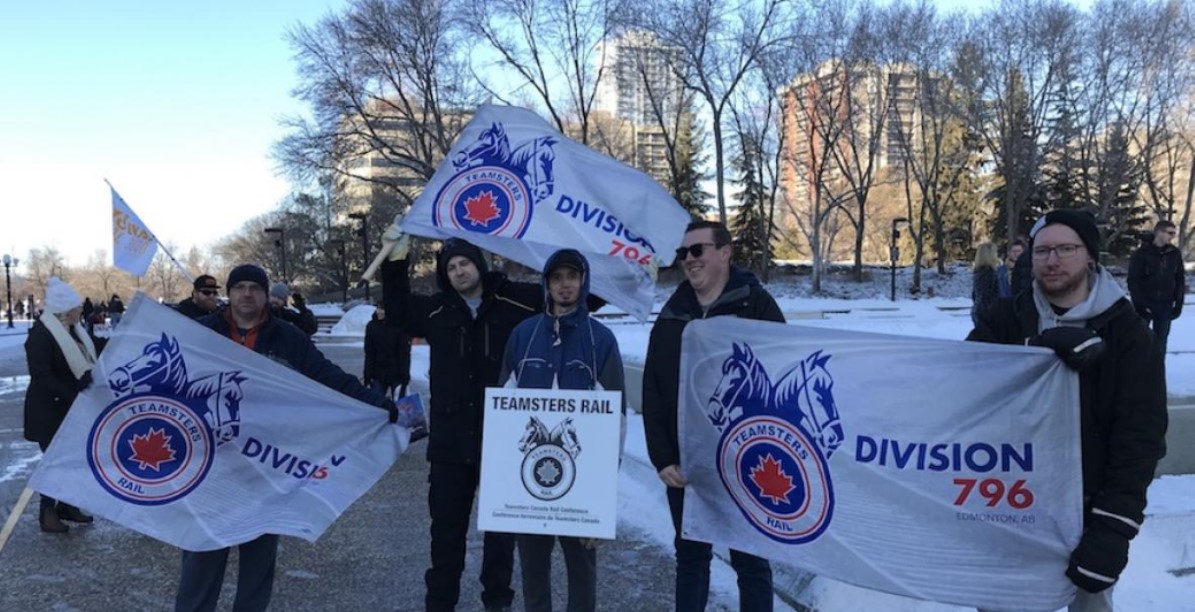
Montréal, January 31, 2021 – Conductors, yard workers and trainpersons employed by Canadian National Railway (CN) have voted 91.3% to ratify a new 3-year collective agreement. The over 3,000 workers are represented by the Teamsters Canada Rail Conference (TCRC).
Safety Focused
The new contract focuses primarily on safety, specifically with regards to crew fatigue and hours of work. The agreement was reached after an 8-day strike in November last year.
“We did not get everything we wanted, but we still succeeded in reaching a fair agreement which will keep the trains running while improving rail safety. That’s good news for our members, the company and all Canadians,” said the national president of Teamsters Canada, François Laporte.
“We’ve succeeded in getting CN to adjust some of its practices in the interests of safety. But the core problem of fatigue in the rail industry can only be resolved through government regulations,” added the president of the TCRC, Lyndon Isaak. “The issue of fatigue is still far from resolved.”
Key points from the new contract
During bargaining, the company sought to strip the collective agreement of its rest provisions while increasing the workload on conductors. The union prevented this from occurring.
The company has agreed to a number of changes relating to workplace safety. Of critical interest are the improvements made to provisions covering rest and fatigue.
CN does not recognize rest as a regulatory or safety issue. As such, when exhausted workers ask to be relieved after working beyond the 10-hour limit set out in the collective agreement, the company would previously tell workers to “do the work now and file a grievance later” if they were unhappy. Under the new agreement, the company will waive the “work-now-grieve-later” policy when fatigued employees seek to book rest and be relieved, meaning they would not be compelled to continue working.
|
|
Article 3 -
RAIL SAFETY NEWS
Engineer at controls during deadly train derailment near DuPont sues Amtrak
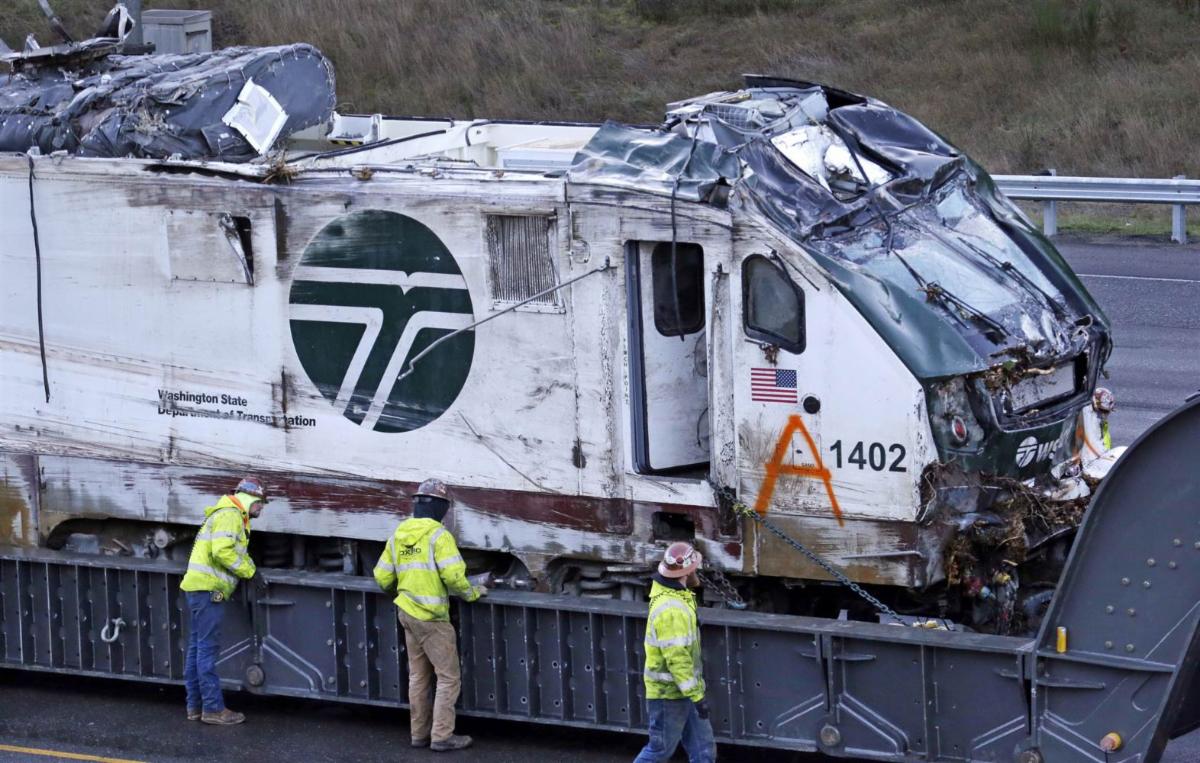
The engineer of the train that derailed near DuPont in 2017 filed a lawsuit against Amtrak this week. Steven Brown’s complaint alleges he wasn’t properly trained and technology that could have stopped the train hadn’t been installed Dec. 18, 2017 when the derailment of Amtrak Cascades 501 killed three and injured dozens.
An Amtrak spokesperson declined to comment about the lawsuit, which was filed Tuesday in Pierce County Superior Court.
One of Brown’s attorneys, Fred Bremseth said Wednesday: “He’s as much of a victim as anybody else. ... He’s a great engineer, a great human being.”
The lawsuit says Brown wasn’t properly trained “on the controls and instrumentation on the Seimens Charger locomotive he was driving,” or on the Point Defiance Bypass route.
It was the first public run on the new, 10-minute faster route from Seattle to Portland. The lawsuit also notes that Positive Train Control, the technology that slows down trains that are going too fast, wasn’t installed on the train or the track at the time.
|
|
Article 4 -
PSR NEWS
Union Pacific predicts more headcount cuts and yard consolidation in 2020
With so much efficiency reclaimed — enough to save revenue progress despite a double-digit volume loss in the fourth quarter — what's left for Union Pacific to do in its quest for ultimate efficiency?
Hump yards, train lengths and people, are still in the crosshairs as the railroad chases its long-term goal of a 55% operating ratio, executives said. Total workforce at Union Pacific will decrease by roughly 8% in 2020. More freight could also help reach this goal, and so far in 2020, rail executives are displaying differing expectations on that front.
Fritz remained optimistic volumes would return to some extent during peak season all throughout 2019. And though he ended up being wrong about that, the railroad is predicting a slight, but still positive increase in volumes for 2020. Union Pacific's CFO Jennifer Hamann said it was expecting a "1% or so" volume increase.
|
|
Article 5 -
CREW STAFFING NEWS
Maryland freight trains need a crew of at least two to run safely
A recent headline in The Baltimore Sun raised a prime question surrounding the railroad industry these days (“Tech could cut train crews from 2 to 1, but is it safe?” Jan. 21). Unfortunately, the accompanying article did not answer whether reducing the crew in the cab of freight trains to one person is safe and a freight rail worker wasn’t even quoted in the piece. As a railroad conductor for over 42 years and the union representative for 28 years, I can tell you that it is not safe!
The Maryland General Assembly rightfully agrees, having twice passed legislation overwhelmingly requiring two people on freight train crews. Unfortunately, the legislation was vetoed by Gov. Larry Hogan on both occasions, but the Maryland legislature is poised to override his veto (
“Unfinished business: Maryland legislature should override governor’s vetoes,”
Jan. 7). A recent poll shows that 87% of Marylanders support the legislation and the states of California, Wisconsin, Arizona, Nevada, Colorado, Illinois and West Virginia have already passed the legislation. The self-serving narrative from rail carriers — Union Pacific Railroad CEO Lance Fritz is quoted in the article — is that technology in the form of Positive Train Control (PTC) technology is the silver bullet that can replace a conductor on the train. Thousands of other freight railroad workers who have reported operational difficulties related to PTC can tell you it is not.
CEO Fritz said: “I’m 100% confident that we would not go down this path if we weren’t certain that fewer people in the cab of the locomotive had no impact on safety.” If he truly is concerned about worker and public safety, he should talk with freight conductors and engineers to hear first-hand how their fast actions, working together have saved lives, property and minimized damage done in communities across the nation as a result of train derailments and rail crossing accidents. Or how a conductor saved the life of their engineer by being able to direct first responders to their train during a medical emergency. Or the numerous other situations they encounter on a daily basis that PTC has zero effect on.
|
|
Article 6 -
RAIL EMPLOYMENT
U.S. Class I employment dipped in December
As of mid-December 2019, Class Is employed 131,486 people, down 1.31 percent since November's level and down 11 percent from December 2018's count, according to
Surface Transportation Board
(STB) data.
All six workforce categories posted month-to-month employment decreases. They were: executives, officials and staff assistants, down 0.09 percent to 7,622 employees; professional and administrative, down 0.91 percent to 10,811; maintenance of way and structures, down 1.48 percent to 30,780; maintenance of equipment and stores, down 2.67 percent to 22,745; transportation (other than train and engine), down 0.79 percent to 5,395; and transportation (train and engine), down 0.92 percent to 54,133.
On a year-over-year basis, all categories also posted decreases. They were: executives, officials and staff assistants, down 7.53 percent; professional and administrative, down 7.61 percent; maintenance of way and structures, down 3.44 percent;
maintenance of equipment and stores, down 16.73 percent
; transportation (other than train and engine), down 4.55 percent; and
transportation (train and engine), down 14.01 percent
.
|
|
Article 7 -
RAIL INFRASTRUCTURE
How Virginia’s $3.7 billion rail plan fits Amtrak’s long-term vision
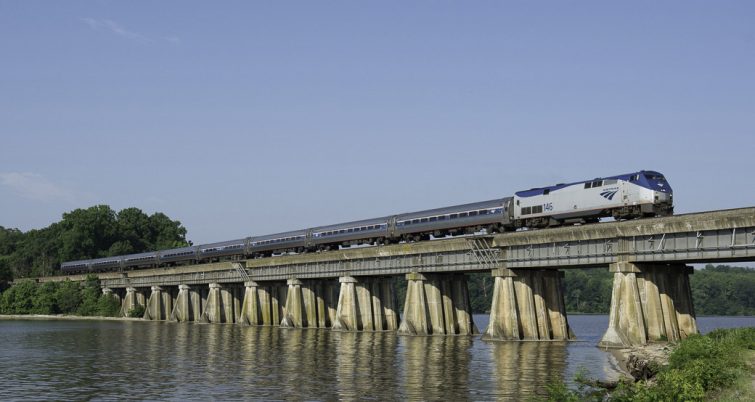
Amtrak trains in Virginia carried nearly a million passengers last year, a record in the state’s decade-long rail program.
Virginia’s pledge to invest $3.7 billion in rail over the next decade promises even more growth for the passenger railroad. With new routes and faster and more efficient service, the number of Amtrak trains operating in Virginia is expected to double by 2030.
In fact, Virginia is turning into a model for intercity train service, observers and railroad officials say.
The state exemplifies Amtrak’s growth strategy of focusing on adding short-haul trips that compete with car rides and flights in dense urban corridors, they say.
“This really is the perfect example of what we think America needs more of,” said Stephen Gardner, senior executive vice president and chief operating and commercial officer for Amtrak. “We will be connecting a whole number of cities in Virginia to the major population centers in the Northeast.”
|
|
Article 8 -
INTERNATIONAL NEWS
UK Rail Union Demands that Rails be Nationalized
UK Rail Union Supports Public Ownership of the Railways
The Rail, Marine & Transport Workers Union (RMT) demands public ownership as performance figures highlight the continuing failure of Britain's privatised railways
The rail union RMT today demanded full public ownership of Britain's failing private railways as the twice yearly rail passengers satisfaction survey today laid bare the state of the franchise chaos.
The survey found that the lowest ratings for overall satisfaction were given to failing franchises including Northern Rail (72 per cent), West Midlands Trains (73 per cent), South Western Railway (74 per cent), TransPennine Express (79 per cent),
The lowest ratings for value for money were given to South Western Railway (34 per cent), SouthEastern (39 per cent), Thameslink (42 per cent), Great Northern (42 per cent)
General Secretary Mick Cash said, “Passenger satisfaction continues to fall through the floor and the usual suspects of Northern, South Western Rail and TransPennine Express are failing passengers on a daily basis. Year after year passengers are asked to pay more for their tickets when their shameful service is getting worse.
"This Government must get serious about our railways yet today all we’ve seen is more spin about reversing the Beeching cuts. Boris Johnson must stop flogging the dead horse of privatised rail and bring these charlatan train companies and the rest of the network back into public ownership”
|
|
|
|
|
|
|