|
When Life Goes Beyond Your Expectations
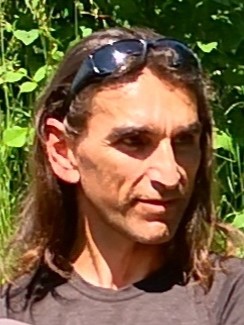
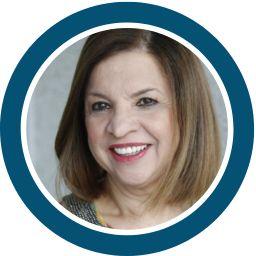
By Přemysl Ulman, Taos Institute Board Member
| | |
"You have to do it this way, because that’s how things have always been done."
I guess we all have experienced this sentence and I also guess we were never completely satisfied with this sort of answer to why we should do things in a certain way. As we grow up, we start taking a lot of things for granted. We stop exploring how the world got to the present moment. Not everyone gets to ask why things are the way they are, because it’s often too obvious. Yet is it?
As I look at my personal history, there were moments that had a significant impact on how I viewed human beings and the world and how I started relating to them.
I was blessed to be able to study philosophy in Rome, Italy, when I was a young man. Most of the pontifical universities base their theoretical systems on the thoughts of Saint Thomas Aquinas. At the university where I studied it was different. Operated by the Franciscan Order, the university presented a slightly different view of the world based on thoughts of the great medieval thinkers of their order, Saint Bonaventura, Duns Scotus and William of Ockham. The world did not have to be dominated by a “pre-set” order we could discover with our intellect. The world could be simply contemplated and admired in its beauty. The world was not created by a necessity; the world was created as a free expression of love and care. The real was not within things, called the essence of things, (knowable by the intellect, hidden for the senses) by which every single thing or person could be viewed as an imperfect decadence. The real was every single thing and every single person, and the idea of the essence was simply a mental concept helping us to become oriented in the multitude of radical and original uniqueness. I started believing in a world that could not be dominated by principles inherent to it, but in a world that, created out of love and as an expression of a free will, does not have to be dominated and could be further created in freedom, love and care.
During my philosophy studies I also "met” Emmanuel Lévinas and realized the transcendence of the Other; the Other that could never be completely dominated, the Other that should never be reduced to our “sameness,” but should be served and fostered in its "otherness," which does not represent a threat, but rather an enrichment.
This was philosophy that was supposed to prepare me for theology studies; theology that is often perceived as the science of the eternal and the universal truth. Yet studying theology was a very liberating experience that brought me to the discovery that pretty much everything in the Christian religion, often taken for granted and not questioned, was created as a reaction to specific local and temporal situations of need, which - with time and repetition - turned into habits (ethos or moris) and later became universal truths, supreme good, placed somewhere above human beings. I was asking myself questions: is there anything eternal, though? Is there anything universal or really “real,” which can cross the limits of time and space? The only thing that was left, I assumed, was a relationship. This mysterious “thing” we can maintain with someone or something, even though the person or the thing is gone.
With these conclusions and an openness for new developments, I started living the everyday life. I eventually became a psychotherapist and my assumptions created during my previous studies influenced how I met my clients. They were the persons with whom I started creating new relationships, whose stories were enriching my life. In the field of psychotherapy I was enchanted by narrative and collaborative practices.
Life took various turns. I was able to live in various countries, meet a variety of people and get involved in a variety of activities. A very significant one, during the last five years, has been teaching/facilitating the ICCP program in the Czech Republic and bringing it also to Slovakia. Social constructionism or relational practices, as I often call it, is the base for how to approach people, how to offer them the thesis that we do not need to take anything for granted and that we can create reality, which makes sense to us and in which we feel well.
I don't have a clear vision of how to materialize this in my position as a new Taos Institute board member, yet I trust the process, I trust life. I believe that new ideas are coming out of conversations. I have started conversations with various Taos networks and I hope to live the experience I have always lived: that life brings me to something better than I could ever imagine.
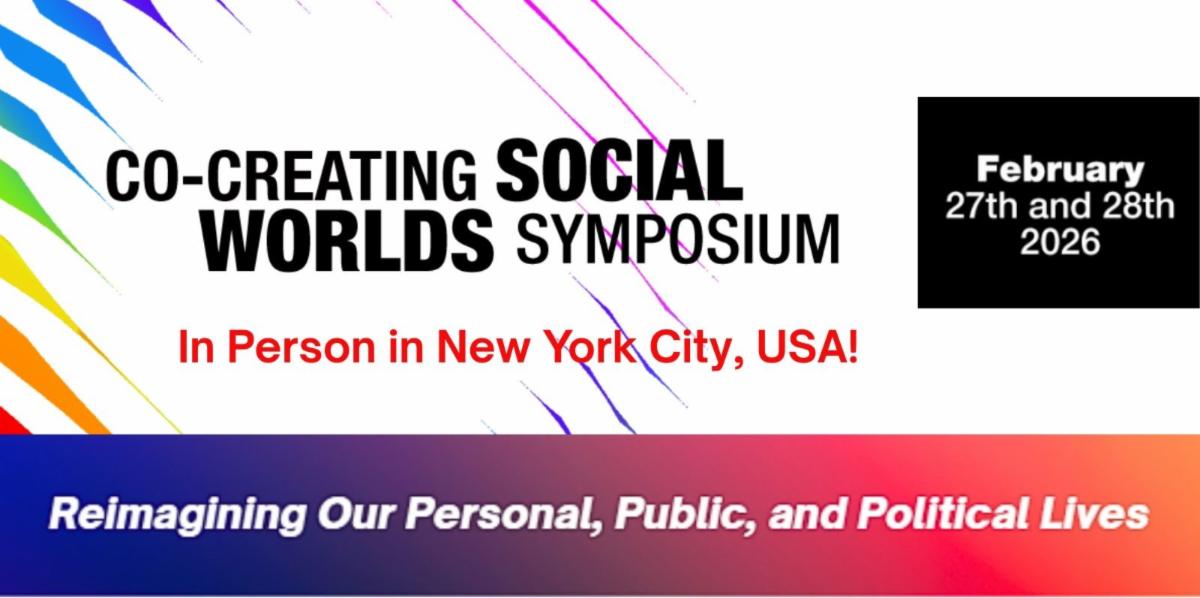
| | This is the first in-person Taos event since the pandemic and we hope people will gather in New York City, USA, February 27 & 28, 2026! This symposium is for anyone—changemakers, scholars-practitioners, therapists, healers, artists, educators, or simply the curious—seeking to make change through dialogue, collaboration, and relational practices in times of division. Register now! | | |
Call for Papers—There is still time to submit your abstract!
We invite practice-, art-, inquiry-, or philosophical papers that explore the symposium theme and invite exploration of the making of our social worlds through everyday practices for engagement and/or social transformation. We seek relational practices embedded in social construction, viewing language, knowing, and sense-making as a socially dynamic process. Submit a 50-word abstract by November 15, 2025. Details.
| | |
Self-Paced Course, Start Anytime
Provocative, unsettling, liberating, inspiring…all have been applied to the dialogues on the social construction of knowledge. The ideas have swept across the academic world and into personal and professional life. For many, they contain the ingredients for a promising life together on this planet.
We are pleased to introduce the Taos Institute's first online self-paced course! In six modules, each with 3 short videos and questions for reflection, Ken Gergen introduces basic premises of social constructionist theory and how they apply to professional practices in all domains as well as everyday life. More details here.
| |
Includes six modules with videos by Taos Institute Co-founder & President Ken Gergen! | | |
With Marilene Grandesso, Brazil
December 10, 9:00-10:00am EST
In this free webinar, Marilene Grandesso will present and reflect on Integrative Community Therapy (ICT), a conversational practice focused on working with communities and groups in general. Developed in Brazil in the mid-1980s by psychiatrist, theologian, and anthropologist Adalberto de Paula Barreto, ITC has expanded to more than 40 countries and is currently practiced in Portuguese, Spanish, English, and French. In the INTERFACI team, ITC is guided by the principles of social constructionism and is organized as a collaborative-dialogical practice that values the construction of new realities through the joint action of participants. the intention is to present ICT as a practice guided by social constructionism, inviting reflection and dialogue about its potential to promote transformative conversations in community contexts. More details.
| |
| If you can't join us live, all session recordings are available in the Taos Commons! | | |
Join with over 2700 members from around the world in the Taos Institute Commons online community (free) as we explore social constructionist, relational, and appreciative theory and practices. You will instantly get access to free webinars, free books, event replays, announcements, workshops and courses, special interest and language groups, and meaningful connections with others interested in creating more promising futures, one conversation at a time.
Join in the Taos Institute Commons — it's free, quick and easy, to become a part of our global family!
| | | |
TIE is a center of gravity for researchers, practitioners and other like-minded people in Europe, who challenge the known and frozen paradigms of understanding, to build a better world for tomorrow. You are invited to contribute to its new Embodied Constructionist Anecdotes blog. What anecdote would you like to share about a lived, embodied, and meaningful constructionist experience? Visit the TIE group in the Taos Institute Commons online community (free) to learn more.
| | |
TILAC serves as a regional and language hub to strengthen networks of cooperation and support among Spanish- and Portuguese-speakers; share and validate the unique knowledge and practices emerging from these regions; and contribute to the promotion of social constructionist thought. Join the Spanish or Portuguese group in the Commons (free), follow TILAC on Facebook or email tilac@taosinstitute.net.
| | |
The mission of TIJ is to build a network of collaboration and support led by Taos Institute Associates in Japan; to create a forum for dialogue centered on theory, to gather interesting cultural practices in Japan, and to disseminate them both domestically and internationally; and to contribute to the dissemination of social constructionist theory by translating foreign literature and organizing seminars. In addition to their Facebook page, you are invited to join the new Taos Institute Japan group in the Commons.
| | |
The RRN is a global initiative to explore, share, learn, and create practices and processes for doing research from a relational perspective. Online presentations featuring relational research projects will continue through the spring. Visit the Relational Research Network group in the Commons (free) for announcements. You may also explore their video series.
| | |
Taos Associates represent a network of more than 850 scholars and practitioners around the world, who have demonstrated exceptional talents, research, practices, and dedication relevant to the Taos Institute’s mission. You can find Taos Associates in your area on our website.
| | |
The ICCP Network, co-hosted by The Houston Galveston Institute and The Taos Institute, is an interdisciplinary program that provides an intensive, in-depth study of postmodern-social construction-relational theory and the possibilities for personal, organizational, and social transformation. ICCP partners with organizations in 15 countries and regularly host multilingual workshops. SAVE THE DATE for the International Conference on Collaborative-Dialogic Practices, June 24-27, 2026, Bratislava, Slovakia. Visit the ICCP website for details.
| | |
Performing The World 2025
November 13-16, 2025
What does creating and organizing power look like? Sound like? How is it created? How does it move? How does it dance? How does it sing? What ideas, emotions, relationships does it generate? How is the mess impacting the nature and tone of our creativity? How is our creativity and power impacting on the mess? These are some of the questions we want to explore together, not abstractly, but with those from far-flung communities of activists, artists, educators, therapists and play revolutionaries. Performing The World 2025 is starting to take shape. In this short video, co-convener Dan Friedman shares the names and stories of presenters already confirmed— from Kenya to Nigeria, Greece to Israel-Palestine. Register for the virtual gathering here.
| | |
January 17, 2026, 9:30-11:00am EST
In these challenging times, sharing your perspective and the lived experiences of your clients and colleagues is more important than ever. We need your voice! Please join us to learn about how to reach a wider audience through publication. Your facilitator, Dr. Anne Rambo, taught in a COAMFTE accredited graduate program for over 30 years and is now chair of AAMFT’s Family Therapists in Schools Interest Network. She is also the Special Sections Editor for the Journal of Systemic Therapies. She has particular interest in the intersection of social justice and family therapy, especially as it applies to at risk children and youth. Details.
| | One way the Taos Institute carries out its mission to create brighter futures through social construction is by creating and disseminating a wide variety of resources for scholars, practitioners, and students interested in dialogic and relational approaches. These free resources span many disciplines and languages. To suggest a resource, email info@taosinstitute.net. | | |
| |
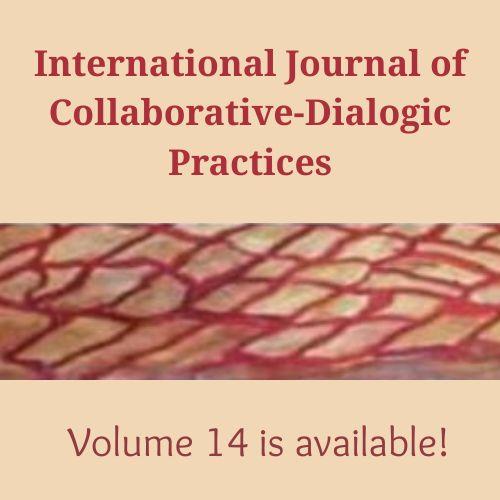
This month's feature: International Journal of Collaborative-Dialogic Practices, Vol. 14
The IJCP provides a forum for the exchange of ideas and narratives from practitioners who engage collaborative-dialogic values and orientations for professional and personal actions in their diverse daily work and disciplines. The aim is to inspire the continual development of these postmodern philosophical ideas and practices, and to formalize a growing community that enhances possibilities for collaboration and creation with others, ultimately contributing to more socio-relationally engaged lives. Volume 14 of the IJCP is live!
| | | | The Taos Institute is a non-profit educational organization. We strive to keep our offerings free or at low cost to make social constructionist, relational, and appreciative ideas available to as many people as possible around the globe. Please consider supporting our mission of creating brighter futures through social construction by making a donation. For small, convenient monthly contributions, consider becoming a sustaining donor. | | | | |