Managing the “Long Weekend Squeeze”: How Weekend Freight Strategies Protect Monday Operations

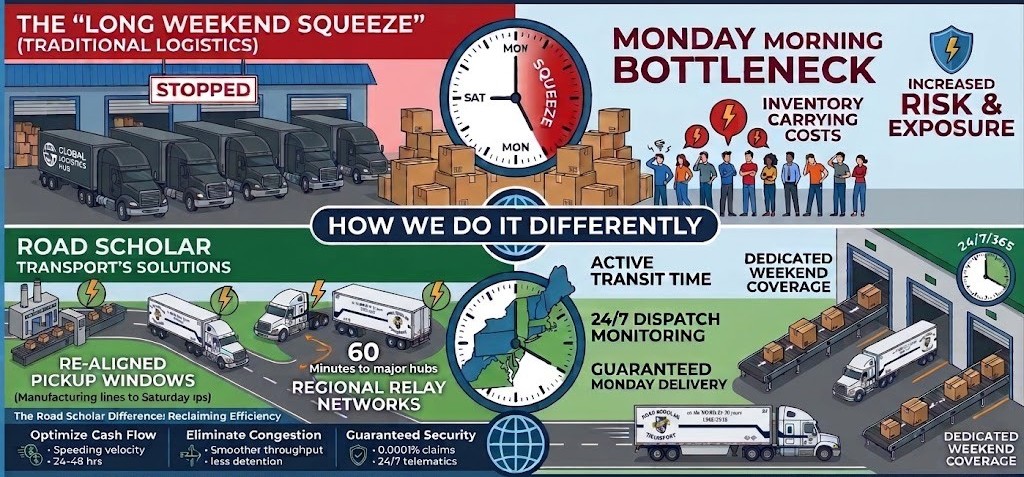
For supply chain executives and warehouse operations managers, Friday afternoon brings a familiar tension.  Docks are humming, manufacturing lines are clearing their weekly output, and outbound staging lanes are packed to capacity. Yet, for traditional logistics networks, Friday at 5:00 PM marks an operational shutdown.

When freight sits idle over a 60-plus hour weekend window, it triggers a chain reaction of hidden costs, inventory velocity slowdowns, and dock bottlenecks on Monday morning.  In today’s high-velocity manufacturing and retail environments—where lean inventory models leave little room for error—the traditional "weekend pause" has become one of the costliest friction points in supply chain management.

BLOGS

Protecting the Cold Chain When Refrigeration Systems Come Under Attack


Recent cyber incidents across Europe have shown how vulnerable the refrigerated food supply chain can be when connected refrigeration systems are compromised. In mid-October 2026, attackers remotely took control of refrigeration controllers at as many as 700 French supermarkets, forcing units into defrost mode or raising temperatures as high as 50°C (122°F). The result was widespread food spoilage, some equipment fires, and losses estimated in the tens of millions of euros. 


On November 2, a second wave struck grocery stores in at least seven countries, including Belgium, Sweden, Ireland, the Netherlands, Luxembourg, Estonia, and Finland (with reports extending to Italy and Portugal). Chains such as Delhaize, Carrefour, Spar, ICA, Coop, and SuperValu reported refrigeration systems set to defrost or elevated temperatures, again forcing the discard of chilled and frozen products. EU Agriculture and Food Commissioner Christophe Hansen described the repeated incidents as “a deliberate attempt to disrupt our food supply chain and undermine consumers’ confidence in it.” 

$12 Million Cargo Theft Scheme Highlights Why Carrier and Driver Vetting Matter More Than Ever


The transportation industry depends on trust. Shippers entrust carriers with valuable products, freight brokers rely on transportation partners to deliver shipments safely, and businesses depend on the supply chain to keep their operations moving. But what happens when criminals exploit that trust to steal millions of dollars in freight?


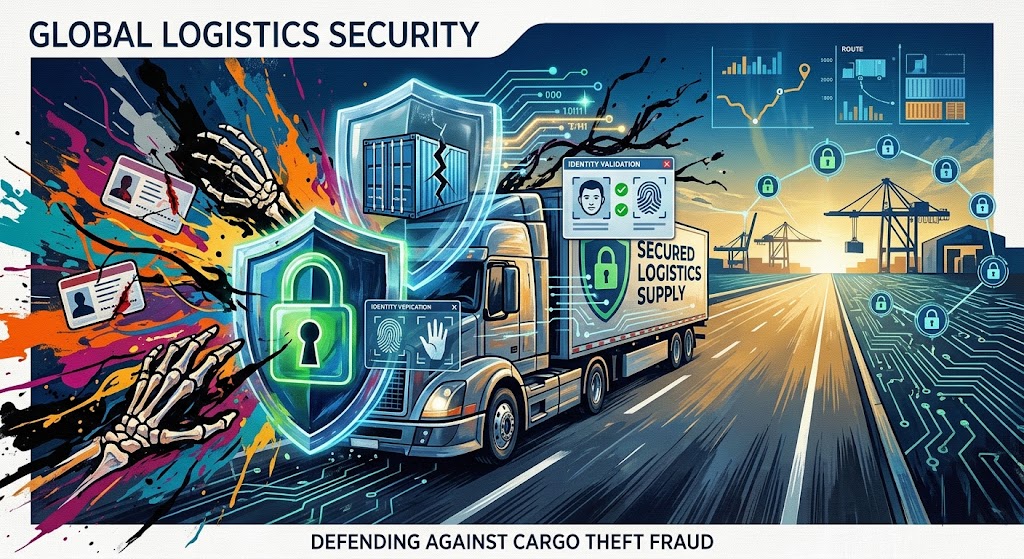
A recent federal cargo theft case involving an alleged $12 million scheme demonstrates how sophisticated criminals are finding new ways to infiltrate the trucking industry. Rather than simply stealing a truck or breaking into a trailer, the individuals involved allegedly took control of established trucking companies, used their identities to secure legitimate freight contracts, and diverted shipments before they reached their destinations.

Contact Us:

CustomerService@roadscholar.com

800-542-2301

www.roadscholar.com

 
Facebook  X  YouTube

View as Webpage