Finally, in 2006, we again transplanted the PWC, and ourselves with it, to a new life in the small house on a mixed-use street in Oakland, California, where Proprioceptive Writing remains alive and well today.
Almost immediately upon arriving in Oakland, now 15 years ago, Toby’s Parkinson’s kicked in, big time. The symptoms had already appeared in those last New York years, but we’d managed to ignore them. Toby was still teaching PW and poetry there, as he continued to do here in Oakland: teaching poetry, having Writes.
When we first got here, a doctor Toby trusted said to him, “You’ll have 10 good years. The rest will be hard.” That seemed okay back then to both of us. Yes, we’ll take it. And so it was. The first 10 years were better than the final 5, but through them all, the disease was with us. Still, at least once daily, Toby would light up with pleasure, he’d smile, he’d say something like, “In some ways, this is the best time of my life,” I think to bring a smile to my face. For sure, his words made me feel better.
Then came the years of heavy losses—of handwriting & legibility, so no more hand-written Writes. The loss of warm hands, then of balance, then of eye power to read, then of body controls, then of muscle, then of movement.
His spirits recovered from each new loss. He’d look glum for a day or two. (I couldn’t tell exactly what it was. Anger? I could understand that.) Then he’d reawaken, he’d regroup. He’d spend time with himself, thinking and dreaming. He’d report long sequences of harrowing hallucinations, intending to capture their poetry. He adapted to his body’s ever-diminishing capacity. He accepted it. He didn’t fight himself. A flame burned in his mind, and anyone who met him here could feel it. He always had one more poem in him. He said so, about a month before he died.
Toby was never much of a talker, he left that to me, and as time moved on he spoke less and less. Notwithstanding his silences, everyone involved in caring for Toby seemed to love him. They learned immediately that he was a person with patience. He would never rush others, nor criticize nor make demands. He couldn’t be false in any way. He was quick to forgive—himself, and everyone else. He was a great appreciator—of human soulfulness and native intelligence. (Some of you who wrote poetry with Toby will remember his saying, “We were poets before we weren’t.” Sooooo Toby.)
Of course, throughout those difficult years, Toby had me to deal with, and I was phobic about separation, if that’s the way to put it. I felt a nauseating stab in my gut whenever he mentioned the subject of his death. My adrenalin rose as I choked on his words.
His own view was more sanguine and less fearful. Early in his decline he invited over Parkies (one way Berkeley people with PD refer to themselves) to discuss compassionate dying. He loved and honored the collective. He was a team player. But that’s a story for another time. And this is a Newsletter so I must make haste.
I will jump to the time when Toby could no longer stand by himself or move his legs or arms; when he would be transferred from the recliner to the hospital bed, and back again, morning and night. It was then he wanted to arrange for assisted suicide, which is legal in California, though barely. Still, as soon as the official arrangement was made, Toby’s spirits lifted and the urgency to end his life faded. As long as he still had pleasure, Toby reasoned, why not go on? And he had pleasure in the movies we watched together every evening and the good dinners we ate, he in his recliner, me by his side.
Parkinson’s progresses at its own pace and is different for everybody. But some things are the same. Your body suffers a blow, your health deteriorates, you linger in these depths, but then, with time, your energy rises a bit, not to where it was before, but not as far down as the descent toward death first seemed. You plateau. That lasts for a day, a week, a month, a year. Until along comes another loss and again you descend; unable to think straight, unable to speak clearly or connect with the body that was your first home. Then again you rise to a plateau in a somewhat higher place, but not as high as you’d found yourself before.
With such a pattern, inevitably time runs out, and so it did for Toby. The day came when there were no more pleasures to be had. No more movies. No more dinners. No thinking aloud together. No laughing. No smiles. No holding hands. One day he said, in an even, calm, barely audible voice, “I’m ready.” I believe he had been waiting for the moment when he could imagine himself slipping away. Now it was within his reach and a look of pleasant surprise appeared on his face.
Five days later, Toby died. Did I know he was dying in those last days? Not really. He didn’t eat or drink, but he breathed steadily, his limbs were still, his face was restful. Then, finally (in the sense that one breath became his last), without fan-fare, and before our very eyes, he slipped away. gone.
In a radio interview, a physician (or was it a philosopher?) observed that the movement from life to death, though it happens in a nanosecond, is the largest of all transformations. This explains to me why, when I looked at Toby’s face in death, I received a great shock. How could that have been? How could I not have known, given the evidence of his progressive failure, that he would die?
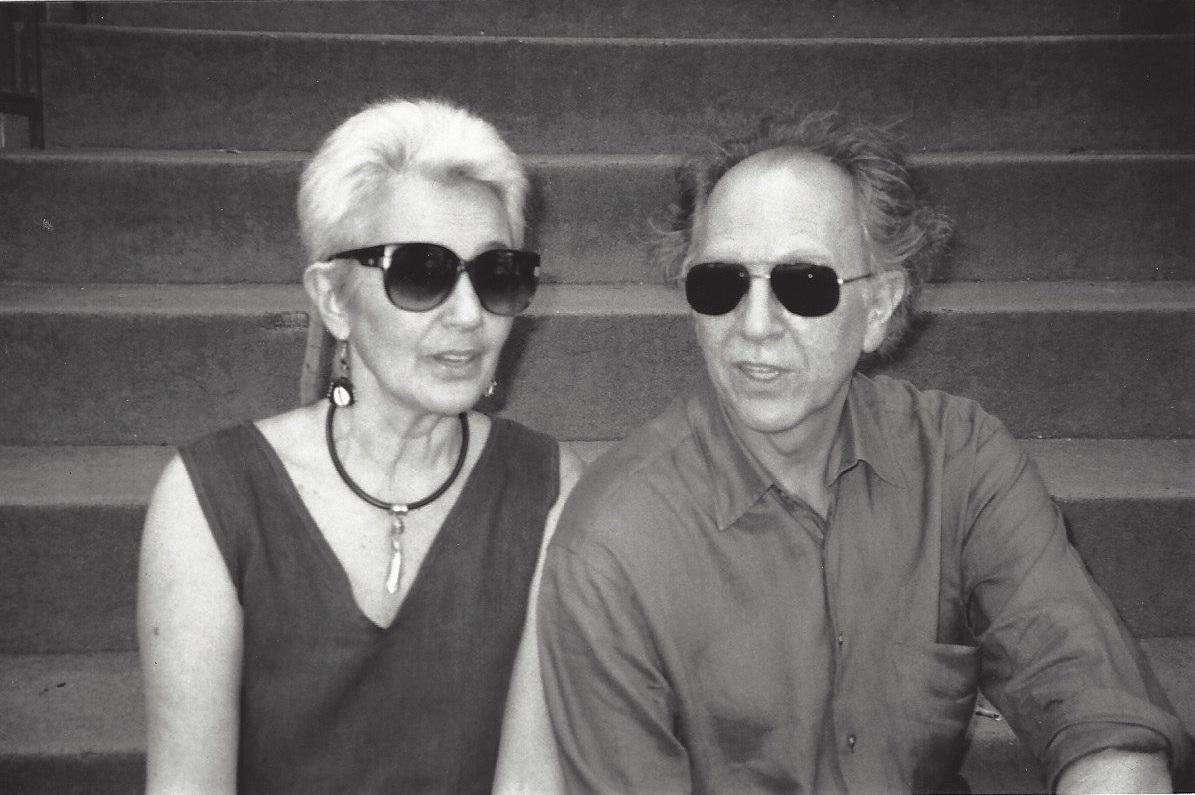
He was a gift. Forty-four years with Toby. Forty-four years of PW—and counting.
Signing off, for now, with heartfelt thanks to all of you who've shared so much of yourselves with PW and with us through these years,
Linda