May is Hepatitis Awareness Month | | | | |
Let’s raise awareness, break the silence and save lives.
Did you know that hepatitis B often shows no symptoms, yet left untreated, it can lead to serious complications, including liver cancer? The good news: safe and effective treatments are available to manage the infection and protect your health.
| | |
✔️ 1 in 12 Asian Americans is living with hepatitis B—most don’t know it,
✔️ 2 out of 3 Americans with hepatitis B are unaware of their infection and
✔️ 1 in 4 people with untreated chronic hepatitis B will develop liver complications.
This Hepatitis Awareness Month, take action to protect your health and your community: Get tested to know your status, get vaccinated to prevent infection and get informed to make empowered, evidence-based decisions.
| | This Week in Virology focuses on hepatitis B | | |
An interview with Hepatitis B Foundation President Dr. Chari Cohen was posted this week (here) by our friends with This Week in Virology, a podcast that's quite popular with scientists and nonscientists alike who are interested in viruses and the research around them.
In this conversation, Dr. Rich Condit ask Dr. Cohen about her background and her interest in hepatitis B, how the virus affects people and the Hepatitis B Foundation's work. Please give it a listen!
| | Join us for the 2025 HBV Community Forum in Berlin or online | | |
The 2025 Hepatitis B Community Forum will be held as a hybrid event on Sept. 8 in Berlin, Germany, just prior to the opening session of the International HBV Meeting. This unique forum brings together scientists, public health professionals and people living with hepatitis B and D to exchange knowledge, share lived experiences and strengthen collaboration in the fight against HBV.
The goal? To foster communication and community engagement that helps drive progress toward a cure and eliminate stigma and discrimination.
| | Announcing the winner of the 2025 Learn the Link Contest | | We’re thrilled to announce that Zinnia is the winner of the Hepatitis B Foundation’s Learn the Link multimedia art contest! | | | | Zinnia’s powerful and creative submission beautifully captured the connection between hepatitis B and liver cancer, raising awareness through a compelling visual message that truly resonated with our panel and audience. Her piece stood out for its originality, clarity and impact—and will be featured in awareness materials during Hepatitis Awareness Month (May), World Hepatitis Day (July) and Liver Cancer Awareness Month (October). | | |
You can watch the winning video here.
A huge thank you to everyone who participated and helped spread the message to #LearnTheLink between hepatitis B and liver cancer.
Stay tuned for more ways to engage and make a difference!
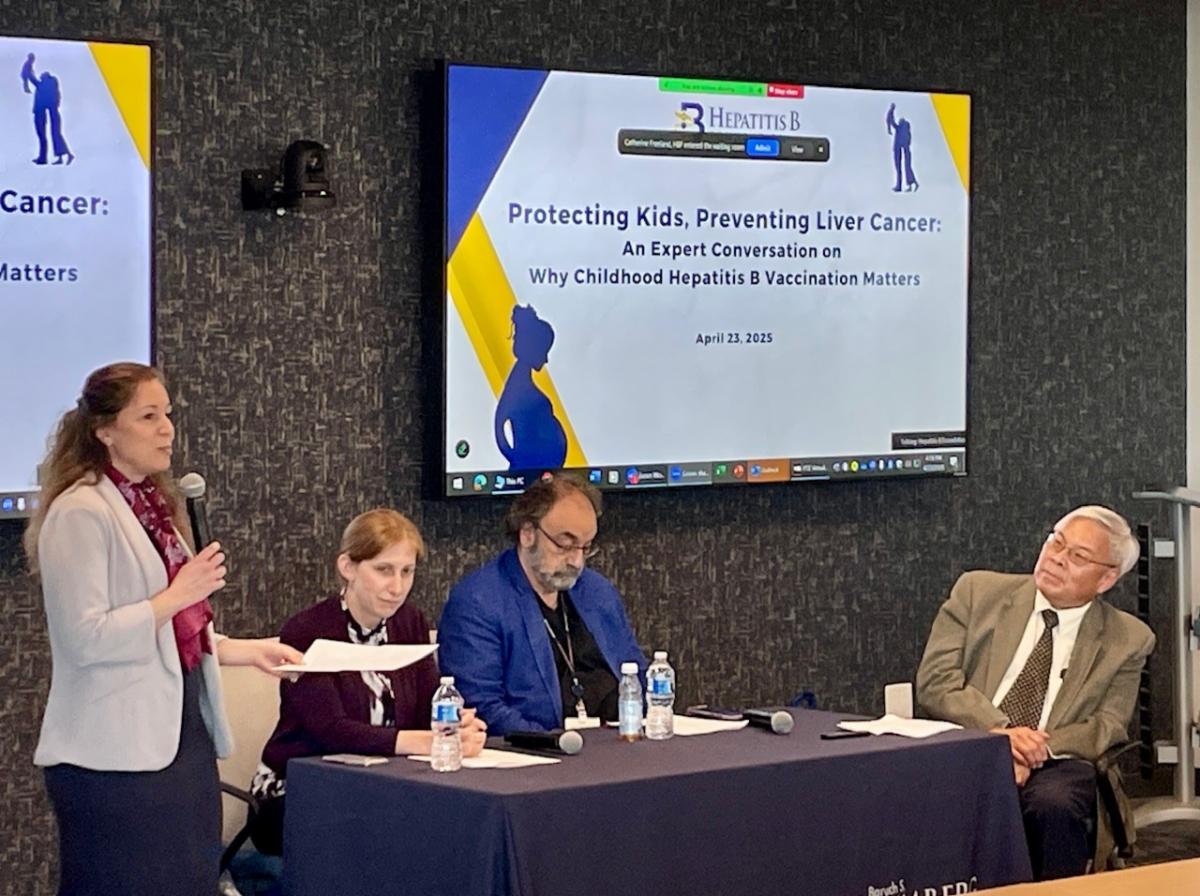
| | | Protecting kids, preventing liver cancer: An expert conversation on why childhood hepatitis B vaccination matters | | |
The Hepatitis B Foundation hosted a gathering of public health and health care professionals in and around Philadelphia to discuss hepatitis B vaccination, testing and related issues on April 23.
One of the speakers, Dr. Lori Handy, said physicians face a major challenge today helping parents understand why their babies need to be vaccinated against hepatitis B and they don’t leave medical school with the necessary knowledge to do so. Please read more here.
| | (L-R) Dr. Chari Cohen, Dr. Lori Handy, Dr. Kenneth Rothstein and Dr. Walter Tsou | | HBV-CARE 2025: A community response to funding cuts | | | | Recent funding reductions from USAID and other U.S.-based agencies have significantly impacted hepatitis B programs, restricting access to vital services like testing, treatment, education and public health support. In response, HBV-CARE—a network of clinicians, researchers, advocates and people living with HBV—is hosting a hybrid event on June 12, 2025, from 9:30 - 3:30 BST at the Francis Crick Institute in London. | | This year’s meeting theme is “Plan B”—a collective call to action. Instead of focusing on limitations, we aim to identify practical steps the HBV community can take together. We’re inviting participants to share personal stories, challenges, advocacy efforts and ideas for change. No selected speakers—this is an open floor format. | |
- Register here
- Read the 2024 Report here
- Share your experience (confidentially), click here
Let’s build a stronger response—together.
| |  | |
The day will conclude with a workshop to co-create meaningful outputs, such as a report, media content and advocacy materials.
Questions? Contact Dr. Marion Delphin at marion.delphin@crick.ac.uk.
| | Featured #BtheVoice storytellers from Taiwan | | This month, we spotlight Shane, Jason and Stanly—three individuals sharing their hepatitis B journeys to raise awareness and save lives. | | | | Shane was diagnosed with hepatitis B in middle school and had regular check-ups for years, but never started treatment. After missing follow-ups for two years, he returned to discover an 8.5 cm liver cancer tumor. He now urges others to stay consistent with check-ups and begin antiviral treatment early. Watch Shane's story here. | | | | Jason contracted hepatitis B and C after a childhood bone marrow transplant. Though he cured hepatitis C with generic medication, he was later hospitalized for a severe hepatitis B flare-up, requiring liver transplant preparation. His experience highlights the ongoing risks of chronic hepatitis B. Watch Jason's story here. | | | | |
Stanly ignored his hepatitis B diagnosis for years until acute symptoms and a later diagnosis of cirrhosis pushed him to take action. He adopted a healthier lifestyle and now continues antiviral treatment to manage his condition.
Watch Stanly's story here.
| | Hepatitis B is the leading cause of liver cancer. Early treatment and regular monitoring are key. Visit our storytelling website to check out more stories: www.hepbstories.org. | | |
New CE/CME opportunity: Interactive decision support tool
for HBV and HDV management
| | Clinical Care Options is pleased to introduce a powerful new Interactive Decision Support Tool designed to assist healthcare professionals in the monitoring and treatment of patients with HBV and HDV. This innovative tool provides personalized, guideline-based recommendations aligned with the latest AASLD, EASL and APASL clinical practice guidelines. | |
|
What You'll Learn:
- Whether and how to treat HBV and HDV in specific patient scenarios
- Comparative recommendations from US (AASLD), European (EASL) and Asian-Pacific (APASL) guidelines
- Practical guidance for clinical decision-making
| | | | | |
Earn free CE/CME credit— Healthcare professionals who complete the activity can earn free continuing education credit.
Tool title: Hep B consult: US, European, and Asian-Pacific guideline recommendations on whether and how to treat HBV and HDV
Make confident, guideline-aligned decisions in your practice—start exploring today by accessing the tool here.
| | Learn the Link Resources Now Available in Somali | | We are excited to announce that our Learn the Link resources are now translated for Somali-speaking communities! These materials help raise awareness about the connection between hepatitis B and liver cancer, empowering individuals to make informed health decisions. | | | Explore and share the resources with your medical provider, click here. | | New hepatitis delta fact sheets available in Arabic | | | | |
We’re pleased to share that hepatitis delta fact sheets are now available in Arabic! These resources are designed for both patients and healthcare providers to better understand hepatitis delta, its risks and available treatment options.
Access the fact sheets here. Help spread the word and support informed care in Arabic-speaking communities.
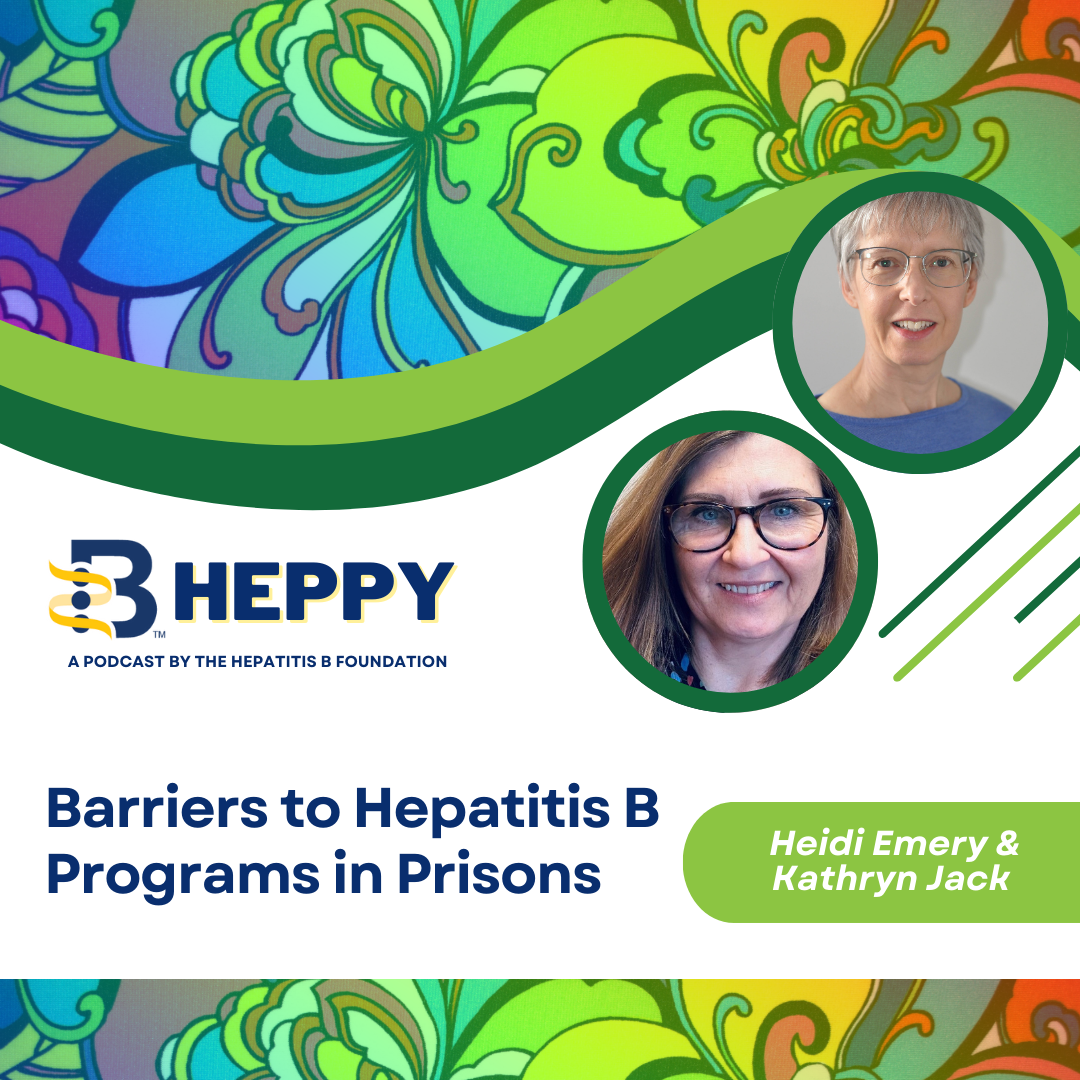
| | B Heppy Podcast: Barriers to hepatitis B programs in prisons | | | | |
In our latest episode, we speak with Heidi Emery and Kathryn Jack about their important qualitative review exploring the challenges—and opportunities—of delivering hepatitis B services in prison settings.
Tune in for insights on gaps in care, structural barriers, and how we can better support incarcerated populations.
Read the research posted here.
| | |
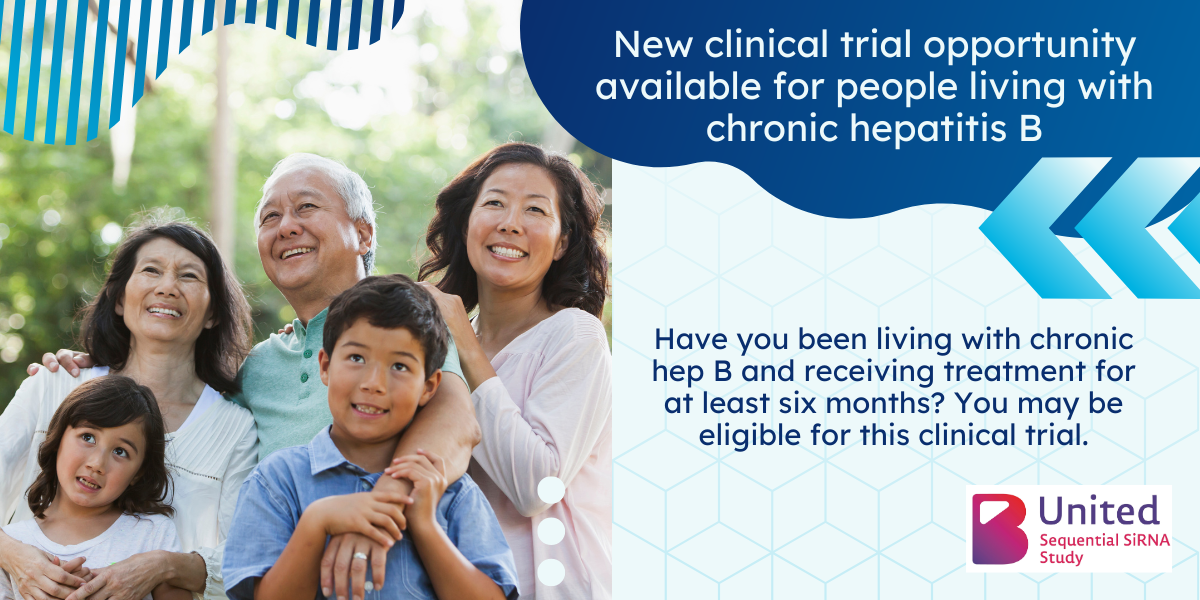
New clinical trial opportunity available for people
living with chronic hepatitis B virus infection
| | |
Check out this new clinical trial opportunity! GSK is launching a phase 2b study called B-United, which will test a study drug called daplusiran/tomligisiran (DAP/TOM) followed by another study drug called bepirovirsen as a potential new treatment for chronic hepatitis B virus infection.
You may be eligible to participate in the B-United study if you:
- Are at least 18 years old (the minimum age may be older in some countries),
- Have had diagnosed chronic hepatitis B infection documented for at least six months and
- Have been on stable nucleoside/nucleotide analogue (NA) treatment (sometimes referred to as antivirals, such as tenofovir or entecavir) for the past 6 months, without any changes for the past 3 months.
If eligible, you will continue NA treatment and receive an investigational therapy that consists of:
- daplusiran/tomligisiran OR placebo for 24 weeks followed by
- bepirovirsen for 24 weeks.
Following study treatment with daplusiran/tomligisiran (or placebo) and bepirovirsen, you will continue your NA treatment for 24 more weeks. The study doctor will then determine if you can stop your NA treatment and, if so, you will be off-NA treatment for up to 28 weeks while closely monitored by the study doctor.
The study is being run in many countries around the world.
To find out more information and see if you might be eligible,
please visit www.BUnitedStudy.com.
| | Seeking youth & adolescent perspectives on hepatitis B | | |
The Hepatitis B Foundation wants to learn about the experiences of young people living with hepatitis B to improve care and support. We are asking all
youth living with hep B to participate in a brief survey. Their insights will help inform clinicians and health care professionals about the unique needs of youth and adolescents. Sign up here.
Questions? Reach out to Catherine.Freeland@hepb.org
| | | Journal article of the month | | |
Epidemiological Burden of Hepatitis Delta Virus in the U.S.
Journal of Viral Hepatitis, 2025; 32:e70029
April 18, 2025
Click here to access the article
Marlowe EM, Swanson BE, Realegeno SE, Meyer WA. Gish R, Kagan RM
| | | |
Worldwide, the World Health Organisation says that hepatitis D affects almost 5% of people living with hepatitis B. In the U.S., hepatitis D is considered less prevalent than in other countries, but data on that point is sparse and reports vary.
This study tested blood samples from 5,251 people living with hepatitis B and found 114 specimens (2.2%) were positive. There were no significant differences by sex or age or between regions.
The authors reported: "This is the first nationwide seroprevalence study examining HBsAg-positive samples collected from 10 HHS regions across the U.S., which offers an overview of the prevalence of HDV in the U.S. through the use of HbsAg-positive remnant specimens in proportion to regional population sizes. Expanded screening for HDV would help identify patients who may benefit from HDV-related interventions."
| |
- July 28: World Hepatitis Day
- Sept. 8: International HBV Meeting Community Forum (hybrid), click here.
- Sept. 8-12: International HBV Meeting, learn more here.
| |
Learn more about our research and education programs at www.hepb.org
| |
The Hepatitis B Foundation is a global nonprofit organization dedicated to finding a cure and improving the quality of life for those affected by hepatitis B worldwide. Our commitment includes funding focused research, promoting disease awareness, supporting immunization and treatment initiatives, and serving as the primary source of information for patients and their families, the medical and scientific community, and the general public. | | | | | | |