Welcome to the University of Oklahoma Carceral Studies Consortium Newsletter. The Carceral Studies Consortium strives to build a community for intellectual exploration that includes faculty, staff, graduate students, community members, practitioners, and organizers.
Carceral Studies is concerned with the independent function and nexus of the political and social systems that organize, shape, sustain, and entrench practices of punishment, surveillance, incarceration, and harm.
|
|
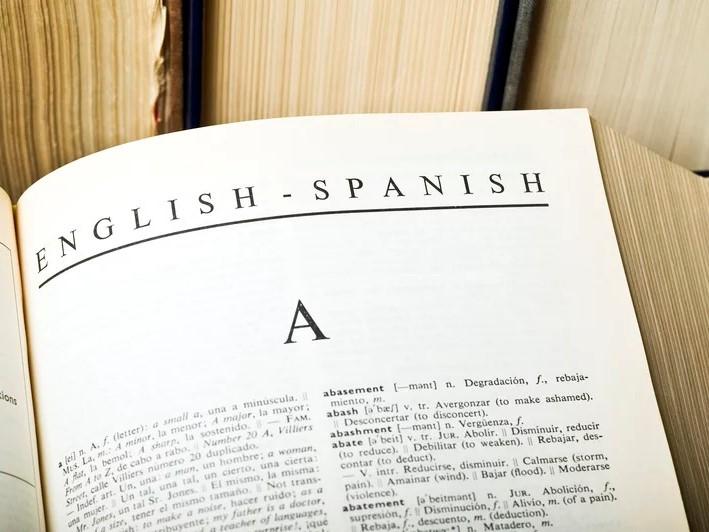
Michigan has recently banned many non-English language dictionaries stating that these books could incite violence. Chris Gautz of the Michigan Department of Corrections noted the reasoning behind prohibiting non-English dictionaries was a fear that “if certain prisoners all decided to learn a very obscure language, they would be able to then speak freely in front of staff and others about introducing contraband or assaulting staff or assaulting another prisoner.” Gautz elaborated on his point by specifying that “when it’s in a language that we don’t have the ability to read ourselves and understand exactly what it is that we’re looking for, we’re not able to allow it in.” Many of the incarcerated people in Michigan have expressed frustration and anger with the ban as it limits their ability to learn new languages or even access texts in their native tongue. For example, Kwesi Osundar, an incarcerated individual, has been requesting books in Swahili since 2009 with no luck. Osundar explained his disappointment with the system as an unresponsive administrative process ignored his grievances and requests.
|
|
As the anniversary of the Stonewall Riots nears, Allison Hope explains that the Pride Marches signify how activists “amid a climate of angst and fear and the criminalization of queer bodies and behaviors [were able to] flip the narrative from one of victimization to one of agency and empowerment.” Yet, as polls signal that most Americans support LGBTQ+ rights, there have been many concerted legislative efforts to undo decades of progress. Hope warns that “despite the rainbow apparel that will no doubt fill department stores this month, the legal, political and social groundwork has well been laid to rip the rug out from under us and take away the equal rights and protections we’ve gained.” Still, Hope remains optimistic in the face of over 240 proposed anti-LGBTQ+ legislation bills in 2022 that the community needs to “look no further than to the determination and resilience of those who took to the streets on June 28, 1969, and one year later, and every year after that, to understand how erasure simply isn’t an option.”
|
|
John Wessels / AFP via Getty Images |
|
In a recent study, researchers found support for reducing the likelihood of offending and violence by supporting at-risk men with behavioral therapy and financial assistance. The study’s authors recruited 999 of “the most dangerous men” in Monrovia, Libera, to participate in a randomized controlled trial. The participants were split into four groups that received either cognitive behavioral therapy (CBT), financial assistance, CBT and financial assistance, or no intervention. The CBT and CBT plus financial assistance groups displayed fewer offending incidents, with the effects of the latter group holding firm after a decade. The lead author, Christopher Blattman, hypothesized that therapy and financial assistance allowed the participants to engage in a few months of legitimate business activity and “practice” their new identities. The study's success has already fostered a sister program in Chicago that hopes to see a similar change in reintegration support.
|
|
Charles Rex Arbogast / AP |
|
The Marshall Project and NPR found that a new prison in Thomson, Illinois, is one of the most dangerous in the nation. The investigation led to five significant takeaways that endanger incarcerated individuals' lives. The first issue is double-celled solitary confinement which places two individuals in cramped quarters directly after incidents within the prison. The second issue arose when evidence surfaced that prison guards used physical restraints as a common form of punishment. Some reports explained that these restraints also prevented them from eating, drinking, or being able to use the restroom properly. Instead, incarcerated individuals were left to urinate on themselves and receive scars from the overly tightened restraints. The remaining takeaways cover the multidimensional forms of violence within the prison walls. These factors include how staff ignored the signs of preventable violence, failed to protect incarcerated individuals from diseases like COVID-19, and how the lack of safety caused many incarcerated individuals to suffer from health problems related to the trauma of survival.
|
|
Please share recent research you would like to see featured, including your own!
Send it to carceralstudies@ou.edu
|
|
Lead author Sabina Vaught is the founding chair of the OU Carceral Studies Consortium.
OVERVIEW: The School–Prison Trust describes interrelated histories, ongoing ideologies, and contemporary expressions of what the authors call the “school–prison trust”: a conquest strategy encompassing the boarding school and juvenile prison models, and deployed in the long war against Native peoples. At its heart, the book is a constellation of stories of Indigenous self-determination in the face of this ongoing conquest. Following the stories of an incarcerated young man named Jakes, the authors consider features of school–prison relations for young Native people to ask urgent questions about Indigenous sovereignty, conquest, survivance, and refusal.
|
|
ABSTRACT: Background - National Ugly Mugs (NUM) is a UK-wide violence prevention and victim support charity that provides a mechanism for sex workers to share safety information and obtain support for harms that they may experience during the course of their work. Over the past several years, NUM has witnessed a decline in sex workers willing to access police as part of their recovery journeys after experiencing victimisation. In 2012, 28% of those reporting to NUM chose to engage with the legal system; in 2020, this was down to 7.7% amongst off-street independent workers. Statistics for 2021 indicate a continuation of this downward trend. Furthermore, anonymous consent to share information with police also declined from 95% in 2012 to 69% in 2020. Methods - NUM conducted a survey of 88 sex working members in 2020. This information combined with our data on victimisation provides insights of the factors that deter sex workers from involving police as part of their justice-seeking efforts. Results - Survey results reveal that sex workers feel alienated and untrusting of police and courts. Conclusions - The implications of sex workers not sharing information about dangerous individuals with police and choosing not to participate in court processes signal significant flaws in our legal system regarding safe and inequitable access and pose dangers for all of us.
|
|
ABSTRACT: Female representation in policing has stagnated over the past three decades, even with repeated calls for diversification. One explanation for this is that agency attempts to diversify the workforce are merely perfunctory—departments recruit and hire women to placate reformers, but then remove them at opportune times. Guided by the gendered organizations framework, this study uses secondary data from the New York Police Department (NYPD) to examine the extent to which the NYPD used the discretionary nature of probation to remove women from the ranks. We find that a substantially higher percentage of women (compared to men) were terminated from the NYPD during probation, and for relatively minor offenses. We discuss the theoretical and policy implications of these findings.
|
|
ABSTRACT: Objective - According to a recent psychological model of defensive gun ownership, the perceived need to own a gun for self-defense corresponds with two independent construals of threat: specific threats, namely the Perceived Lifetime Risk of Assault (PLRA), and diffuse threats, namely the Belief in a Dangerous World (BDW; Stroebe et al., Personality and Social Psychology Bulletin, 2017, 43(8), 1071). The present study assessed how these threats correspond with two factors known to influence gun ownership: frequency of mass media news exposure and trust in law enforcement to protect citizens from violent crime. These factors represent social information on which people may base their threat perceptions, which could, in turn, influence defensive gun ownership. Method - The proposed indirect effects model was tested using structural equation modeling (SEM) over two independent online survey samples of U.S. handgun owners (total N = 1,691). The defensive gun ownership concept included measures of self-reported reasons for gun ownership, gun-use beliefs, as well as behavioral self-reports. Results - Both news exposure and trust in law enforcement indirectly related to defensive gun ownership, via their effects on specific and diffuse threat perceptions. News exposure indirectly related to higher reports of defensive gun ownership, whereas trust in law enforcement was indirectly associated with lower reports of defensive gun ownership. Conclusions - The results indicate that social information variables relate to defensive gun ownership via threat perceptions.
|
|
Updates, Events & Opportunities |
|
Carceral Studies Graduate Student Fellowship
Application Deadline Extended
The Carceral Studies Consortium offers an outstanding graduate student with an interest in advancing Carceral Studies a 12-month, .20 FTE position (8 hours per week). This CSC Graduate Student Fellow serves as the student representative on the Carceral Studies Board of Directors, as well as provides critical support for CSC initiatives throughout each academic year (July 1 to June 30). Applications will be accepted until the position is filled, with priority consideration given to applicants who apply before June 15, 2022.
|
|
|
OU Libraries and Carceral Studies Consortium Assemble “Racial Capitalism” Library Guide
In a collaborative effort between OU Libraries and the Carceral Studies Consortium, a library guide on “Racial Capitalism” is now available for all students, staff, and faculty. Racial capitalism contends that racist oppression is central to how capitalism operates. Racial subjugation is not one specific manifestation of a larger capitalist system, but rather, capitalism itself is a racial system. The guide includes resources (written, audiovisual, and contacts) for information about the carceral state, crimmigration, and race and labor.
|
|
|
ABOUT
The Consortium Newsletter will offer a roundup of a few selected articles that reflect today’s news, organizing, and thinking related to the carceral state. We understand that freedom work is built on education and engagement. Education requires an understanding of contemporary issues informed by their historical context. We hope that these curated articles will help you analyze the issues that we face and understand the community that we strive to construct.
Join the conversation!
We encourage feedback, suggestions, and article suggestions. Please reach out to carceralstudies@ou.edu with any ideas, thoughts, or recommendations.
If anyone you know is interested in receiving this newsletter and other information from the Carceral Studies Consortium, please forward them this email and they may click this link to subscribe.
|
|
Land Acknowledgment
The University of Oklahoma is on the traditional lands of the Caddo Nation and the Wichita & Affiliated Tribes. This land was also once part of the Muscogee Creek and Seminole nations. It also served as a hunting ground, trade exchange point, and migration route for the Apache, Cheyenne, Comanche, Kiowa, and Osage nations. Today, 39 federally-recognized Tribal nations dwell in what is now the State of Oklahoma as a result of settler colonial policies designed to confine and forcefully assimilate Indigenous peoples.
|
|
The University of Oklahoma is an equal opportunity institution. ou.edu/eoo |
|
|
|
|
|
|