|
Harvesting Insight: How AI Is Helping Winegrape Growers
July 24, 2025 | Wine Business Monthly
There are many uses for AI in viticulture, said Ros Harvey, founder of ag-tech innovator The Yield (which was recently acquired by Yamaha) a Napa Valley Grapegrowers event focused on AI. Uses include yield forecasts; crop health and risk management; labor and logistics cost reduction; climate, weather, and microclimate predictions; and supply chain optimization. But, as she and other speakers said, it all relies on data. “Realizing AI’s full potential…will depend on grower readiness, clean data/data management and thoughtful implementation.”
‘You Can’t Spray Your Way out of the Problem’: MD Winemaker on Fighting Spotted Lanternflies
July 17, 2025 | WTOP News
Seasoned grape growers are used to seeing invasive insects come and go, but spotted lanternfly “is different. It’s a real issue,” says Robert Butz of Windridge Vineyards in MD. Noting that SLF can damage grapevines so completely, they kill the plant, he’s had to step up his spray program. But, he believes, chemical control is not the answer. He advocates a multi-pronged approach—including scraping and even torching egg masses, and removing SLF host plants like tree of heaven—to try to interrupt the lifecycle.
Smoke Taint Researchers Work to Develop Tools to Better Address and Mitigate the Effects of Smoke Taint
July 16, 2025 | Wine Business Monthly
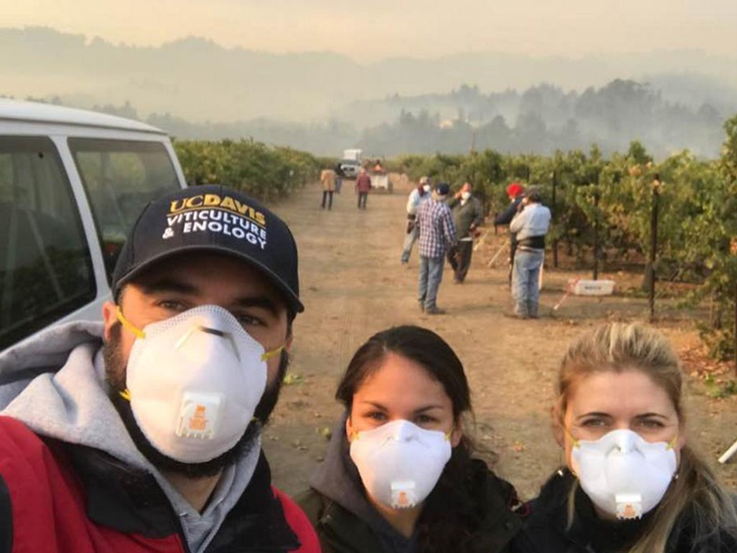
The West Coast Smoke Exposure Task Force’s Smoke Summit on July 15 featured promising reports on research to prevent smoke impacts in wildfire-adjacent vineyards. Researchers at UC Davis are developing barrier sprays and rapid assessment tools to help predict and prevent smoke taint. Geneticists at USDA-ARS, Albany, are exploring gene editing approaches to better understand the genes involved in the expression of smoke exposure in grapevines--and potentially switch them off. And scientists at USDA-ARS, Corvallis, are developing smoke exposure risk maps to predict exposure and risk down to the vine level.
Assessing Drought, Heat, and Cold Tolerance in Hybrid Bunch Grapes in South Mississippi
July 11, 2025 | Southern Region Small Fruit Consortium
The grape and wine industry in the subtropical Gulf South region is ripe for expansion, but Pierce’s disease and more frequent extreme weather events—drought, heatwaves and spring frosts—make choosing resilient cultivars challenging. Nine hybrid varieties were trialed at the Mississippi State University South Mississippi Branch Experiment Station in 2023, each exhibiting unique responses to drought, heat and cold, and showing signs of seasonal adaptation, too. With this data and a repeated 2024 trial, the study team plans to develop predictive models that connect controlled simulations with actual vine performance.
Fruit Update: Herbicide Drift on Grapes
July 9, 2025 | University of Minnesota Extension Fruit and Vegetable News
Shoe-stringing. Epinasty. Leaf strapping. Do you know what these words mean? If you’ve experienced herbicide drift on grapevines, you’ve seen these tell-tale signs, even if you didn’t know their names. Grapes show more dramatic symptoms of drift than other crops, explains UMN Extension Educator Madeline Wimmer. Read her tips for preventing drift, whether from outside or within your vineyard.
A Hybrid Wine Revolution Is Fermenting in New York
July 8, 2025 | New York Wine & Grape Foundation
Research at Cornell University to advance breeding innovations, field trials at Cornell Cooperative Extension to inform management practices and winemakers’ own experimentation in the cellar have helped hybrids shine in New York State. Speaking about the hybrid grape varieties Regent, Seyval Blanc and Vignoles in their vineyard, one winery manager says, “They deserve respect. We don’t believe that a grape needs to have been farmed by monks since the 13th century to warrant respect, and we don’t sacrifice quality or price for hybrids.”
Daily Consumption of Grapes Improves Muscle Strength Markers in Postmenopausal Women
July 8, 2025 | California Table Grape Commission
A new study from UC Davis published in the journal Food & Function provides the first clinical evidence that regular consumption of grapes—just 1.5 cups per day—can help postmenopausal women build and maintain muscle. In a six-week trial, postmenopausal women who consumed grape powder every day showed improved grip strength and gait speed and higher levels of irisin, a hormone released by muscle tissue that helps regulate metabolism and is beneficial for muscle and bone growth. The results suggest a promising strategy against age-related muscle decline, also known as sarcopenia.
The Importance of Mycorrhizal Fungi for Vineyard Health with Dr. R. Paul Schreiner
July 8, 2025 | Vineyard Underground Podcast
Tune into this podcast to hear Paul Schreiner (USDA-ARS, retired) discuss the important symbiotic relationship between arbuscular mycorrhizal fungi (AMF) and grapevines. AMF function almost like root hairs, Paul explains, reaching out beyond the root zone for nutrients in the soil. But their role goes beyond vine nutrition. Paul says, “AMF also help plants tolerate drought, play a role in helping plants ward off pathogens, and help make soil more stable and less susceptible to erosion.”
Uncorking White Wine Liking: Combining Analytical Chemistry and Chemometrics with Crowd-Sourced Data to Predict Quality Ratings
July 7, 2025 | Food Chemistry
New research uses machine learning to relate white wines’ chemical composition with consumer scores, using crowdsourced app-based wine ratings. Scientists analyzed the chemical profiles of 89 white wines, zeroing in on stand-out features like aroma, sweetness and acidity, then used regression modeling to predict the app’s quality ratings. What they found was, chemical properties can indeed predict consumer-perceived quality attributes, showing the promise of predictive models to inform the assessment of wine quality.
Carryover Effects of Yield Regulation on the Following Year’s Grapes
July 2, 2025 | IVES Technical Reviews
There are two ways to achieve vine balance, or the ideal leaf-to-fruit ratio: increasing canopy size or limiting crop load (crop thinning). In this trial, dropping fruit was shown to promote both grape ripening and nitrogen assimilation, as well as storage of nitrogen and carbon in the roots. Cluster thinning also alters the proportions of amino acids in the must for at least two years, which makes it a potential tool for modulating the organoleptic profile of wine. These carryover effects suggest that grape composition and nutrient management require long-term planning.
Rethinking Yield Management in Premium Pinot Noir Production
July 2025 | American Journal of Enology and Viticulture
A 10-year Oregon State citizen-science study led by viticulture professor Patty Skinkis found that raising Pinot noir yields by 39% had no consistent negative effects on quality. Instead of doggedly dropping fruit to achieve rigid standards, growers were surprised to find they could balance crop load and production goals for their specific sites. The findings challenge a long-held assumption in cool-climate viticulture and point toward a more economically sustainable and flexible model for crop load management.
Table Grapes with a Twist
June 26, 2025 | Good Fruit Grower
Grape breeders at Cornell, University of Minnesota, University of Arkansas, Texas A&M and private Arkansas-based fruit breeding company Gardens Alive are all working on new table grape varieties. Whether they’re vinifera or muscadinia crosses, the fresh-market cultivars they’re breeding promise to expand not only the traits of traditional table grapevines but also the markets where they can be grown, sold and consumed. “The wine grape scene in Minnesota has become commonplace,” a grower is quoted. “It would be fun to see the same thing happen in table grapes.”
What Are Those Speckles on My Grape Leaves?
June 26, 2025 | American Vineyard Magazine
Yellow Speckle viroid? Rupestris Speckle? Mostly, these colorful spots on grape leaves don’t signify problems in production, Dean Volenberg (University of Missouri) reports. But symptoms can mimic black rot, which is another story. Best to know your dots!
Comprehensive Management Strategies for Vineyards After Hailstorms
June 23, 2025 | Michigan State University Extension
Following a hail event in several Michigan winegrowing regions in late June, the Michigan State University Extension viticulture team issued this guidance on post-hail recovery and resilience strategies. “The first seven days following a hail event represent a critical window during which targeted interventions, such as strategic pruning, disease protection and canopy management, can dramatically influence the vine’s ability to recover both this season and next,” Paolo Sabbatini writes. “At this stage, every hour counts.”
Identification of Vitis Riparia as Donor of Black Rot Resistance
June 19, 2025 | Agronomy
German scientists identified two black rot resistance genes—RGB1 and RGB2—in Vitis riparia. When both are present, they provide additive protection, supporting the strategy of pyramiding resistances in breeding. The finding paves the way for developing grapevines that are resistant to multiple types of fungal foes, a key goal as climate pressure and disease complexity grow.
Ripening Period Stresses: Recognizing the Onset & Minimizing the Impacts – Part One
June 16, 2025 | Lodi Wine Growers
Did you know that, as grape berries ripen, they demand more potassium than any other mineral nutrient? In fact, “the peak demand for potassium in grapevines occurs during the ripening period, coinciding with peak seasonal temperatures, sunlight intensity and vineyard water use,” writes viticulturist Stan Grant on the Lodi Growers blog. Because California vineyard soils are typically low in potassium and are deficit irrigated, he explains, potassium deficiency is a common ripening period stress and it is one that inhibits fruit maturation.
EcoVineyards Inspiration for Eastern Washington
June 12, 2025 | Good Fruit Grower
Mary Retallack, the visiting viticulturist from Australia who gave the Ravenholt Lecture in Washington in April, urged grape growers to “cover your soils wherever you can.” It may seem counterintuitive, she said, but “pioneer plants” like weeds will attract worms; it’s nature’s way of “trying to open the soil.” “Bare soil puts the microbes on a starvation diet and the soil becomes like concrete, with little to no water infiltration,” she said. “I’m on a real quest to reclaim the area under vines.”
The Insect That Turns Vineyards Into Graveyards: The Glassy-Winged Sharpshooter
June 11, 2025 | Discover Wild Science
The glassy-winged sharpshooter—best known as the vector of Pierce’s disease—is native to the southeastern US and feeds on many more plants than grapes. Warmer winters and wetter springs have extended its range and shortened the time between generations. Areas once too cold and crops too far removed are now vulnerable to GWSS. The bacterium it carries has already been found in Italy’s olive groves.
Why California Is the Coldest State in the Nation
June 10, 2025 | American Vineyard Magazine
“There is more refrigerated space in California than any other state in the union,” says Nicola Twilley, author of Frostbite: How Refrigeration Changed Our Food, Our Planet and Ourselves. That’s because the state produces the nation’s—and most of the world’s—fruit and vegetables, which are kept fresh in cold storage. In turn, that “cold chain” of refrigeration has changed “the physics of freshness” (the expectations around time and distance from harvest) and what it means for produce, including table grapes, to be fresh.
Vine Nutrition Sensor Passes First Field Test
May 29, 2025 | LinkedIn
A new real-time vine nutrition sensor developed at the UC Davis Digital Ag Lab passed its first field test at the Cornell Lake Erie Research and Extension Laboratory in late May, correctly identifying nitrogen, potassium and phosphorus levels in grape leaves in situ. “This is the first-ever real-time leaf monitor capable of scanning for 10 nutrients (N, P, K, Ca, Mg, Zn, Mn, Fe, Cu, B) and 6 physiological traits (chlorophyll, carotenoids, anthocyanins, equivalent water thickness, leaf mass per area, structural nitrogen), all in one go,” writes Ali Pourreza, a PI on the team. It’s part of the NGRA-initiated HiRes Vineyard Nutrition project.
Vineyard Design Revised From First Principles, To Maximise Yield, Wine Quality and Mechanisation
May 2024 | Acta Horticulturae
This article represents among the last research iconic viticulturist Richard Smart was involved in before his passing on July 2. Appropriately, it is on canopy design and sunlight interception, reflecting new thinking (and climate change impacts) on the techniques he proposed in his seminal book (with co-author Mike Robinson), Sunlight into Wine in 1991. Here, Dr. Smart and his co-authors propose narrow row spacing and wide vine spacing, two spur-pruned canopy tiers (one trained upward; the other, down), all aided by mechanization and imaging. “We anticipate doubling yield and improving quality,” they write.
Find these stories and more, published every weekday, on our Facebook and X (Twitter) feeds. You can also find us on LinkedIn. Use #graperesearch to join and grow the conversation!
|