Attend from Anywhere:
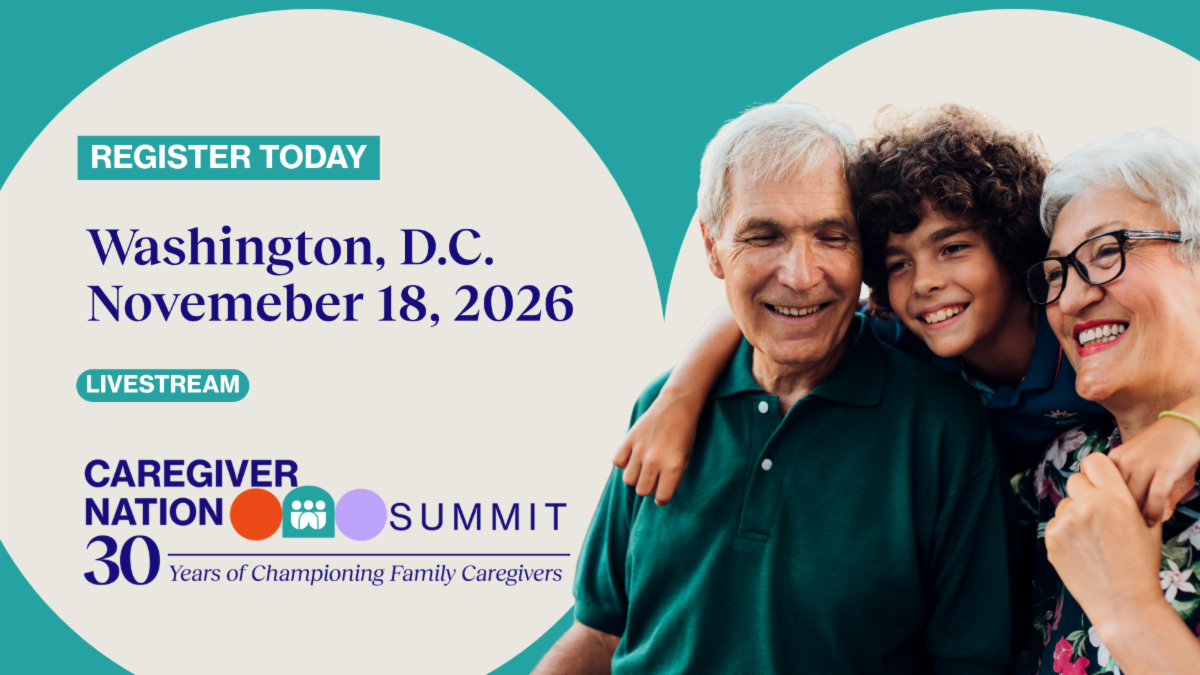
Livestream the Caregiver Nation Summit 2026
| |
30 years ago, family caregiving was invisible. Not anymore.
The Caregiver Nation Summit returns November 18 in Washington, DC, and this year carries the weight of NAC's 30th anniversary. The theme is Making Caregivers Visible, and the numbers explain why: 63 million Americans are family caregivers now, a staggering 20 million more than a decade ago. That's a crisis that's been hiding in plain sight, and it's time the systems around it caught up.
Join the livestream where distance is no longer an excuse to sit this one out. This is where caregivers stop being background noise and start setting the agenda.
Attend anywhere and claim your free spot on the livestream.
| |
A Win for Caregivers:
NAC Receives $2.5M WIN Challenge Grant
| | |
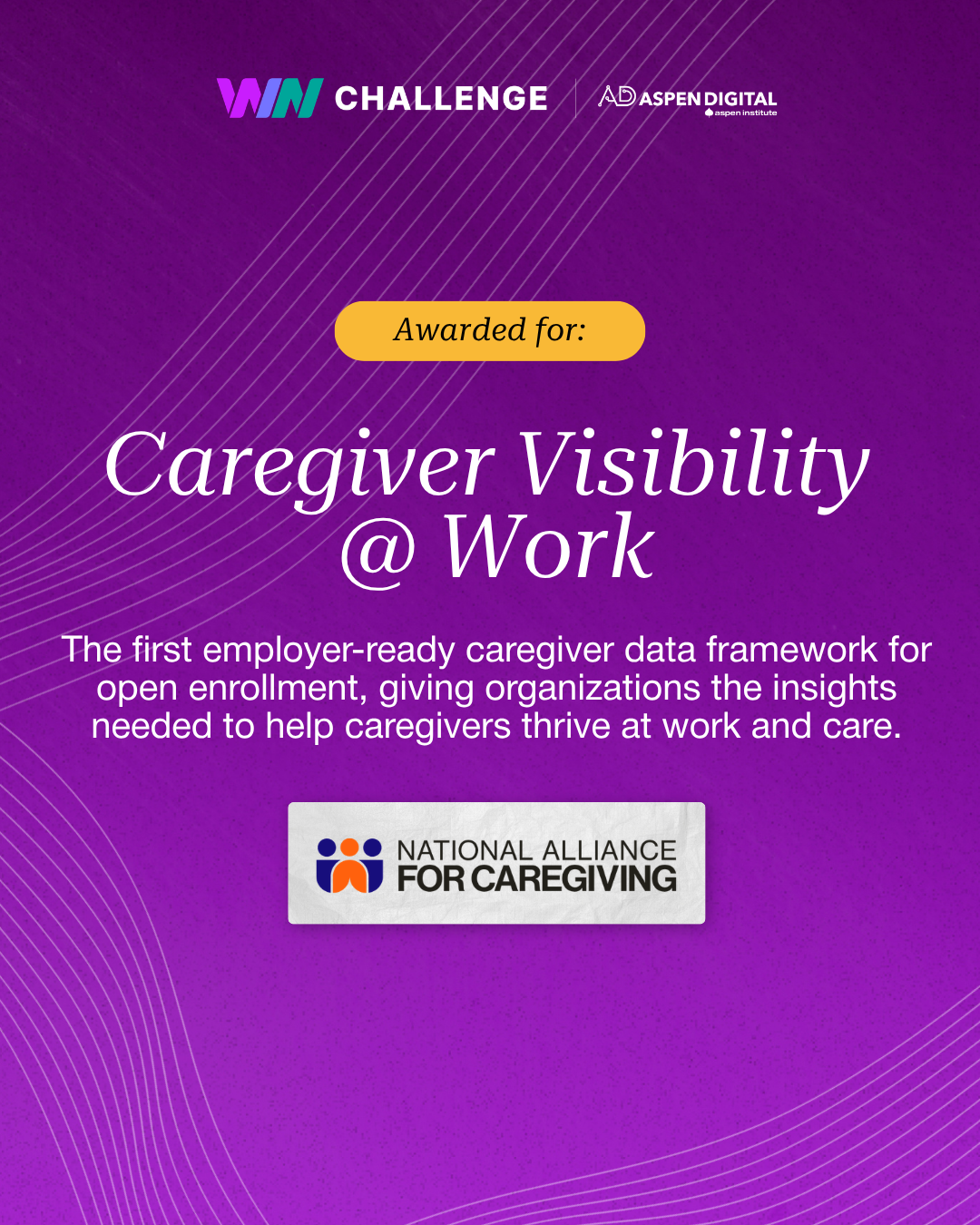
We're excited to share that the National Alliance for Caregiving has been named one of the 18 awardees of the $60 million Workplace Innovation Now (WIN) Challenge, receiving a $2.5 million grant to advance an innovative solution to help women thrive and everyone win in a rapidly changing workplace.
Our WIN Culture & Practices Challenge award will support our work to build the first employer-ready caregiver data framework for open enrollment, giving organizations the insights needed to help caregivers thrive at work and care, in partnership with the Johns Hopkins Carey Business School's Gender & Work Initiative and FamTech.org.
Led by Aspen Digital, a program of the Aspen Institute, and supported by Pivotal, a group of social impact organizations founded by Melinda French Gates, the WIN Challenge was launched in fall 2025 to discover and scale transformative ideas across three key pillars: Culture & Practices, AI, and Narrative. The 18 awardees, selected from nearly 900 applications, represent a new generation of workplace innovation.
We'll be among the solutions spotlighted at Aspen Digital's inaugural WIN Summit on October 22 in New York City. Learn more about ways to stay engaged with the Summit at summit.winchallenge.org.
See the full list of awardees at awardees.winchallenge.org, and help us spread the word by sharing our post.
| |
Making Sense of Policy for Family Caregivers
| | |
Family caregivers are at the center of nearly every healthcare journey, yet their perspectives are too often missing from the policies that shape access, affordability, and innovation. The experiences of America’s 63+ million family caregivers offer invaluable insight into how healthcare works and where it falls short.
Our Healthcare Access, Affordability & Innovation Initiative will ensure family caregiver voices and priorities inform healthcare policy and decision-making, championing family caregivers as essential care partners, healthcare navigators, and as current and future patients.
That's why the National Alliance for Caregiving's Policy Explainer Series turns complex healthcare legislation into clear, practical insights. Here are two recent explainers on laws that could ease the load for family caregivers:
The ASAP Act: NAC, the Alzheimer's Association, and Alzheimer's Impact Movement break down the bipartisan Alzheimer's Screening and Prevention (ASAP) Act (S. 3267 / H.R. 6130), which would expand Medicare coverage for FDA-authorized early detection tests, including blood-based biomarker tests. With 1 in 4 caregivers caring for someone with Alzheimer's or another dementia, earlier answers mean time to plan, access services, and pursue treatment. Congress should pass it.
The HOLD Act: NAC's Transplant Caregiving Collaborative and Waitlist Zero explain the Honor Our Living Donors (HOLD) Act, signed into law February 6, 2026. Donor reimbursement no longer depends on the recipient's income, so caregiver support for travel, lodging, meals, and lost wages can move forward.
Thank you to our sponsors, including Lilly and Biogen, alongside Genentech, Bristol Myers Squibb, GSK, Johnson & Johnson, and Otsuka, for making this work possible.
| |
Earlier Detection Could Change Everything for Dementia Caregivers
| |
Nearly 13 million Americans are caring for a family member with Alzheimer's or another dementia. Of those caregivers, 74% say they've been concerned about maintaining their own health since taking on the role, and unpaid dementia caregivers provide care valued at $446.3 billion a year.
In a recent joint blog post, Rachel Conant, Executive Director of the Alzheimer's Impact Movement, and Jason Resendez, President and CEO of the National Alliance for Caregiving, explain what earlier detection could mean for them. The bipartisan ASAP Act (H.R. 6130 / S. 3267) would give Medicare the authority to cover blood-based Alzheimer's screening tests, helping families get answers sooner and giving them more time to plan, adjust, and protect their health and finances.
Watch the recording of Rachel and Jason's webinar on the ASAP Act and how advocates can help move it forward here.
| | Stories from Rural America: Caregiving in Their Own Words | | |
Across rural communities, family caregivers are essential to helping older adults stay at home, connected, and supported. Lutheran Services in America is lifting up their voices through its Rural Aging Action Network (RAAN) and a video series, Rural Family Caregiver Voices.
Hear directly from caregivers in Montana, Minnesota, North Dakota, and South Dakota, including Hannah, who cares for her father, and Del, who cares for his wife. Their stories show the commitment behind family caregiving, the challenges of limited rural resources, and why listening to caregivers is key to building stronger, more responsive systems of support.
RAAN's companion series, Coming Together: Aging in Rural America, shows how community-led partnerships are connecting older adults to food, transportation, housing, and social engagement so they can age in the communities they call home.
| | | |
Share Your Story:
Did Caregiver Training Make a Difference?
| |
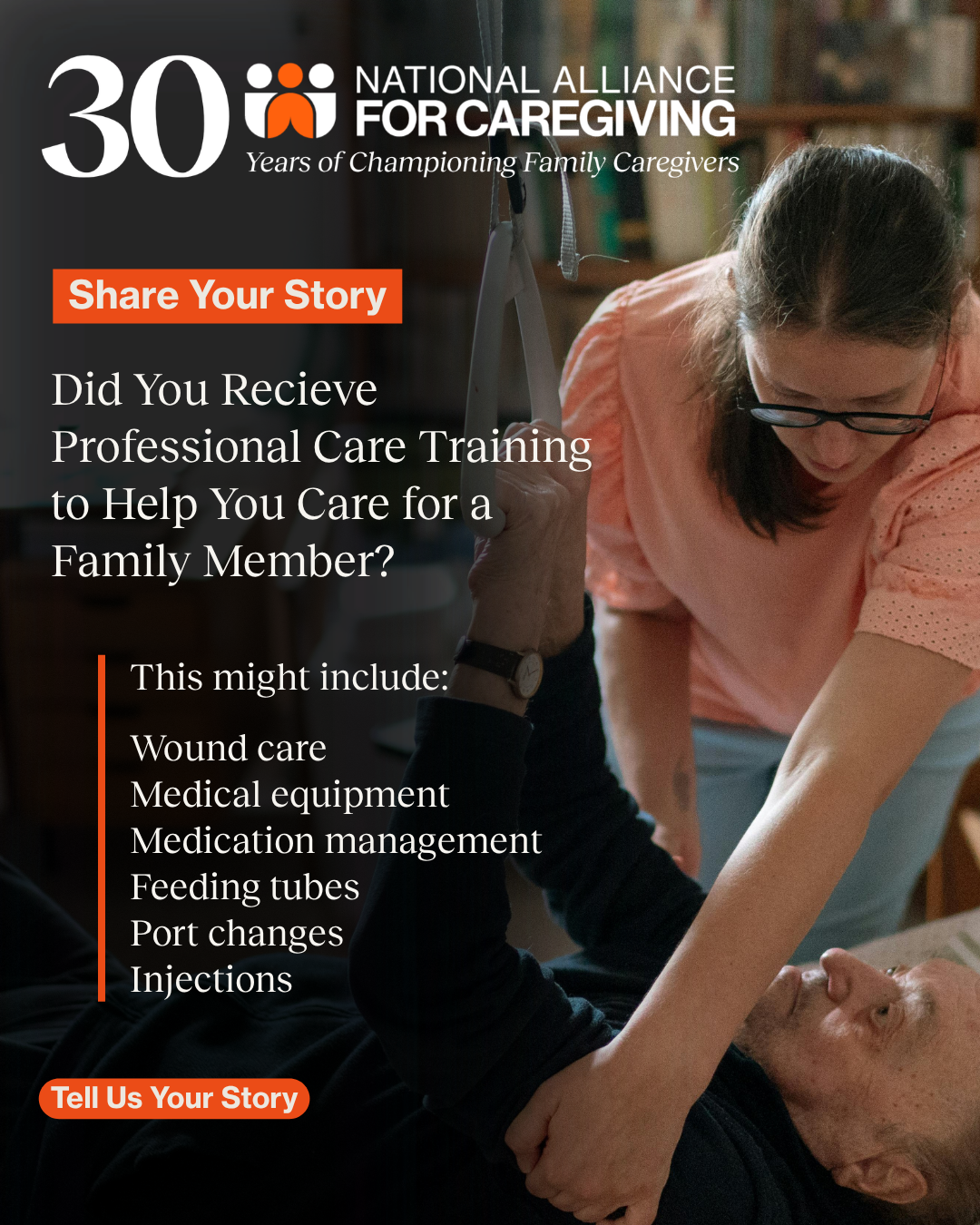
Family caregivers are routinely asked to do work once reserved for nurses: wound care, medication management, feeding tubes, and operating medical equipment, often with little or no preparation. When caregivers do receive training, it can be the difference between feeling overwhelmed and feeling confident.
We want to hear from caregivers who were trained to provide specific care for a family member, and what that training meant to them. Your story can show policymakers why caregiver training matters and help expand access to these services.
It takes 3–5 minutes to complete.
| | | | |
Future of Business and Tech by Mediaplanet published an op-ed from NAC President and CEO Jason Resendez on why employers can't support caregivers they can't see. Drawing on NAC's Caregiving in the US 2025 report with AARP, he notes that roughly 15% of American adults balance a job with family caregiving, yet most employers have no idea who they are. Jason urges HR leaders to count caregivers, make benefits visible and safe to use, and make flexibility the default.
Read more from Future of Business and Tech here.
| | | | |
Capital B News featured an essay by Feylyn Lewis, PhD, a former youth caregiver and Assistant Dean of Student Affairs at Vanderbilt University School of Nursing, on the children, especially young Black men and boys, who carry family caregiving responsibilities largely unseen. The article cited NAC's Caregiving in the US 2025 report with AARP, which found that Black family caregivers spend more than 34% of their annual income on caregiving-related expenses, compared to 14% among white caregivers. The piece also highlights young caregivers who are building their own support networks and advocacy platforms.
Read more from Capital B News here.
| | | | |
Capital Gazette ran "When a friend becomes a caregiver," a piece by Paula Span on the friends and neighbors who fill caregiving gaps for older adults as more people age alone or without children. The article cites NAC's Caregiving in the US 2025 report with AARP, which found that 11% of caregivers support someone who is not a relative, and notes that few policies, including the Family and Medical Leave Act, recognize caregiving friends.
Read more from Capital Gazette here.
| | | |
A New Leader for Aging in America
| |
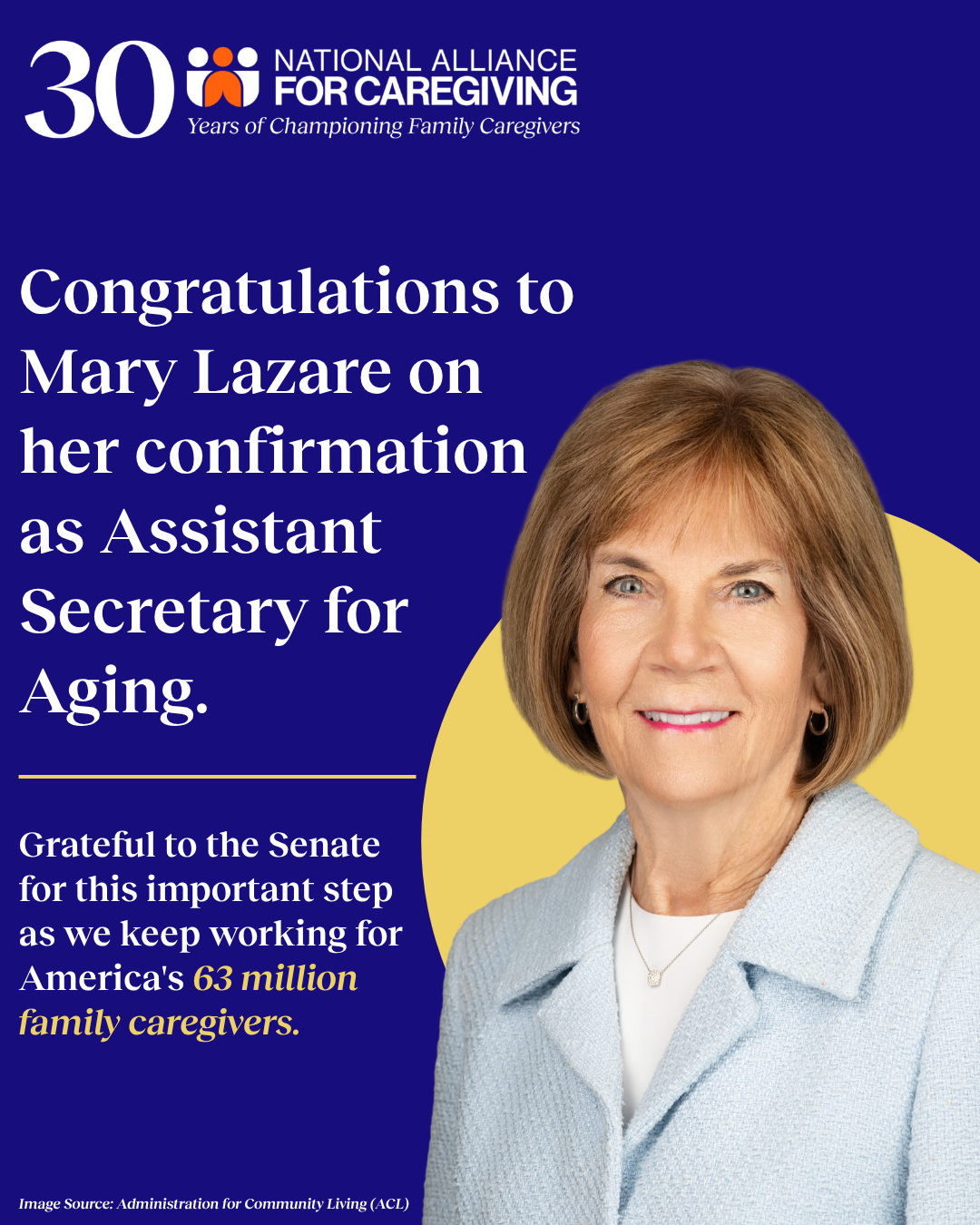
Congratulations to Mary Lazare on her confirmation as Assistant Secretary for Aging! We're grateful to the Senate for moving this forward.
The National Alliance for Caregiving looks forward to working together to implement the National Strategy and support America's 63 million family caregivers.
| | | | Throughout October, we're recognizing Breast Cancer Awareness Month, Health Literacy Month, Domestic Violence Awareness Month, National Disability Employment Awareness Month, Down Syndrome Awareness Month, and Spina Bifida Awareness Month. Many family caregivers are touched by these issues, and each is a chance to learn, share resources, and support the people providing care. | | | | Global Liver Institute: #OctoberIs4Livers Campaign | |
October is Liver Cancer Awareness Month, and the Global Liver Institute has developed a toolkit to support awareness and outreach.
Access it at globalliver.org/octoberis4livers.
| | | | Liver Cancer Lessons: Innovations Bringing New Hope to Patients and Families | This session explores how liver cancer treatment is evolving, including emerging therapies and what these advances mean for patients and families. | | | | Invisible Disabilities Week | This week highlights disabilities and chronic conditions that aren't always visible to others. It's a reminder that many people, including caregivers, are managing challenges that can't be seen. | | | | |
NAC will be spotlighted at Aspen Digital's inaugural Workplace Innovation Now (WIN) Summit, following our selection as a WIN Challenge awardee for Caregiver Visibility @ Work.
Learn how to stay engaged at summit.winchallenge.org.
| | | | Liver Cancer Lessons: Exploring Proton Therapy as a Treatment Option | NAC and Transplant Journey want to hear from cancer-related transplant family caregivers. This session explores gaps in caregiver recognition and support, including training, care planning, and coordination across clinical teams. Space is limited — register soon to share your story. | | | | USAging Innovations Hub Annual Call for Submissions | Have an innovative caregiver program to share? USAging is accepting submissions for its Innovations Hub through October 31, 2026. Submit your work to help others across the Aging Network learn from it. | | | | Caregiver Nation Summit 2026 | Marking NAC's 30th year, the Caregiver Nation Summit brings caregivers to Washington, DC for two days of research, hard conversations, and Advocacy Day meetings on the Hill. This year's theme, Making Caregivers Visible, reflects the urgency behind the numbers — 63 million family caregivers and counting. Join in person or watch free, live, from anywhere. | |
Why NIH Research Matters: Lori Frank in The Washington Post
| |
Lori Frank, Ph.D., Senior Research Fellow at the National Alliance for Caregiving, had a letter to the editor published in The Washington Post on October 4.
Her letter responds to the paper's September 26 article on dementia patients who become lucid near the end of life. That article cited a 2019 paper she co-authored, which explored whether some behavioral recovery may be possible even with brain changes thought to be irreversible. The paper grew out of a workshop held at the National Institutes of Health.
Lori writes that the article is a reminder of the value the NIH brings to the world. For a relatively modest investment, she notes, Americans benefit from scientists and staff who discover new treatments and answers to critical health questions. She has benefited personally from NIH support, first through training grants as an early-career researcher and more recently as a policy fellow studying the science of brain aging.
| | | Connect with NAC on social media to get the latest updates on our policy & advocacy efforts, research, and events. | | Join our online community to support and uplift family caregivers nationwide. | | | | |