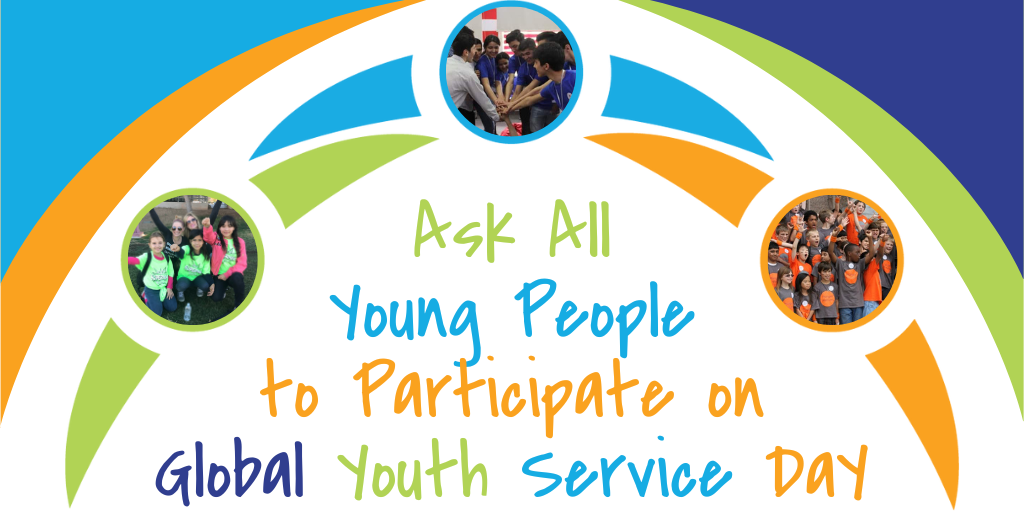
Celebrating 35 years of youth changing the world, Global Youth Service Day (April 28-30, 2023) is the longest-running annual youth participation event in the world and the only one that asks all youth ages 5-25 to find meaning and purpose by working together for the common good.
Participation rates are lower among youth from underserved and historically excluded communities, including:
- young people living in low-income neighborhoods and families;
- young people of color (Black, Hispanic/Latino, Asian, and Native/Indigenous); and
- young people who are usually served, but not asked to serve (including Youth Who are Homeless, Youth in Foster Care, Youth with Disabilities, Students in the Juvenile Justice System, Youth who are Immigrants or Refugees, Youth from Military Families, and Youth who Are LGBTQ+).
We challenge all program leaders and project organizers to make sure you are asking ALL youth to participate in your Global Youth Service Day activities, and to use GYSD to engage these young people for the first time in your programs.
Conduct an Inclusivity Check. Take time to think about whether your youth service projects really do provide all youth equitable opportunities to serve. Make sure that all youth are not only included, but are able to take on a leadership role in your service projects. These in-depth resources can help:
Here are 8 ways to make sure that all youth are not only included, but can take on a leadership role in your service projects.
1. Create affordable and accessible service opportunities.
- Provide transportation options for youth and their families so they can participate.
- Remove barriers and increase accessibility for people with disabilities. Make sure that aisles and corridors are at least 36 inches wide to accommodate people using wheelchairs or other mobility devices.
- Provide services such as interpreters or real-time captioning.
2. Connect with a variety of organizations.
Think about the organizations that exist in your community who might be potential partners in supporting youth with disabilities, youth from different cultures, Hispanic, African American, Native American youth, etc. Reach out to them and ask for their help in planning and inviting people in their network.
3. Focus on strengths.
A strength is a passion, skill, or talent. As you engage youth in service, you can help them use their strengths to create change in their community. Help youth think about ways to use their strengths during a service project. Youth who are shy might want to use their art or writing skills. Younger children can offer their creative ideas. Youth from military families who have lived in different parts of the world could share their global perspective.
4. Translate your materials.
It can be challenging for youth and their families with limited English proficiency to be involved in a service activity if the materials (letters to parents, flyers, promotional language) etc. are not translated into multiple languages. Also consider materials with large text or those translated into braille for people with visual impairments. (YSA offers the Youth Changing the World Toolkit in 9 languages.)
5. Inspire with stories of youth like them.
Youth are frequently inspired by other youth. Show examples of youth who have been agents of change in their community. Use images and descriptions that represent the diversity of the volunteer event and the community. For example, make sure that the images show the age range of your volunteers.
.
6. Provide opportunities for the people who are often the beneficiaries of a service project to serve.
People who are in long term hospital care are one group of individuals who often do not get opportunities to help their community. They might be going through a difficult time, but they also possess amazing skills and a passion for issues that they care about.
7. Use people first language.
8. Reflect and keep focused on making each project more inclusive than the last.
After your GYSD event, talk to everyone about the ways that you can continue to provide an inclusive environment. Keep the notes for next year. No project will ever be perfect – the important thing is that we keep learning and improving each time we plan a project.