Weekly Digest Number 51 - December 22, 2020 |
|
RCMP launch probe into Canadian Pacific runaway train crash that killed 3 crew members |
|
The RCMP's major crimes unit in British Columbia has opened a criminal investigation into a fatal runaway train crash and allegations of a coverup at Canadian Pacific Railway, following a derailment that killed three crew members near Field, B.C., in February 2019.
"This is going to be a complex investigation," RCMP Staff Sgt. Janelle Shoihet said, adding that the probe is being opened after consultation with B.C.'s prosecutor's office.
|
|
SMART-TD Leadership warns of FRA's New Brake Rule, urges caution |
|
(Editor's note: Ironically, the same week that the Canadian federal police embark upon a criminal investigation in Canada related to a runaway train due to brake failure (see article above), the US agency that is charged with RR safety issues sweeping changes to brake rules in response to rail industry wishes to rid us of "red tape and unnecessary regulation...)
On Friday, December 11, 2020, the FRA granted an extensive and exhaustive list of regulation changes, the vast majority of which served to lower the bar of safety and increase the profit margin for this nation’s rail carriers. This is evidenced in the no less than two dozen references of cost savings to the carriers as a result of this rulemaking. Not only has the FRA once again vacated its role as the country’s chief safety regulator, but it has also failed in its own mission statement, vision, and purpose. In addition to the time off-air regulation (increased from 4 hours to 24 hours, a 6 fold increase), the FRA has also made changes to regulations regarding single-car air brake tests, end-of-train devices, helper service, brake maintenance, additional brake-related items, utility employee duties, and various other rules and/or processes.
|
|
NTSB calls for tank-car placement to mitigate hazmat train risks |
|
Editor's Note: The NTSB has no ability to force regulation. It merely advises the rail industry... which almost never accepts and acts on the agency's recommendations).
The recommendation calls for all trains to have a minimum of five non-placarded cars between any locomotive or occupied equipment transporting hazardous materials, regardless of train length and consist, NTSB officials said in a press release.
The recommendation stems from two separate derailments of high-hazard flammable trains — one in Draffin, Kentucky, and the other in Fort Worth, Texas — that resulted in breached tank cars and hazardous material fires. The NTSB is investigating both derailments. The NTSB concluded that the severity of both accidents could have been less severe had the DOT-111 tank cars been placed in locations within the train where they were less likely to derail or to sustain accident damage, NTSB officials said.
|
|
Trackworkers Union Demands that UP Take Action on Covid-19 Safety |
|
Hundreds of Union Pacific employees have contracted Covid-19 at work. Two (2) of our BMWED Union Brothers have died. Dozens have been hospitalized, and some will never be the same. Our Union leadership has urged U.P. Management to do more to ensure our safety since the start of the Pandemic. Management is clearly more interested in grinding profits out of us for the shareholders than investing in our safety. Management’s greed in this moment WILL NOT STAND.
Union Pacific must immediately provide full quarantine pay and common sense Covid-19 safeguards on the job, or we will do everything we can under the law to make our jobs safe. Federal law protects our right to withdraw from service if dangerous workplace conditions present an “imminent danger of death or serious injury”. U.P. has until the end of the day on December 27th to respond to our safety demands. Get ready.
|
|
Biden Picks South Bend Mayor Pete Buttigieg For DOT |
|
(Editor's Note: Buttigieg has had limited experience and expertise with transport issues. We can only hope that he does the right thing by rail workers and railroad development. He cannot be worse than his predecessor Elaine Chao).
On December 15, the day after the Electoral College certified Joe Biden as the next President of the United States, Biden announced that he has nominated former Presidential candidate and South Bend, Ind. Mayor Pete Buttigieg as his Transportation Secretary.
Prior to running for President, Buttigieg served as the 32nd Mayor of South Bend, Ind., for eight years, beginning in 2012. “With bold thinking and innovative leadership, Buttigieg revitalized a city that had been struggling for decades after the Studebaker auto company collapsed and was once called one of America’s ‘dying cities,’ the Office of the President-elect noted. “He brought South Bend back from the brink, creating thousands of jobs and spurring local investment during his tenure. His ‘Smart Streets’ initiative helped change the fortunes of downtown South Bend — revitalizing the city, redesigning the streets, and bringing in major economic investment.
|
|
Canadian Pacific, IBEW agree to five-year labor pact |
|
The IBEW represents 360 signal maintainers at CP in Canada. The agreement is subject to ratification by union members.
"This tentative collective agreement is the result of hard work and good faith negotiating between the IBEW and CP," said CP President and Chief Executive Officer Keith Creel in a press release. "We look forward to its ratification and to five years of continued growth and opportunity with these employees."
|
|
FRA final rule requires states to report grade-crossing safety plans |
|
The Federal Railroad Administration (FRA) yesterday published a final rule requiring 40 states and the District of Columbia to develop and implement highway-rail grade-crossing action plans to improve public safety.
In addition, the rule requires 10 states that already have developed grade-crossing action plans — as required by the Rail Safety Improvement Act of 2008 (RSIA) and FRA's implementing regulation — to update their plans and report on the actions they've taken to implement them.
The final rule responds to a mandate in the Fixing America's Surface Transportation (FAST) Act that requires states to develop, implement or update action plans. Each plan must identify crossings that have been the scene of at least one accident or incident in the previous three years, multiple accidents or incidents in the five years or that are determined by the state to be at high risk for accidents or incidents, FRA officials said in a press release.
|
|
Passenger Rail News
High Speed Rail Alliance Proposes mid-range Priorities for Biden
|
|
1) Urgent Need: New Coaches and Locomotives - “Investing in trains” doesn’t just mean adding new rail lines. We also need to build more trains and train components in the U.S. And there are some great, near-term opportunities to transform what’s now a minor domestic industry into a jobs-creating global powerhouse.
A national plan will create the same kind of broad support for high-speed rail. It will show how high-speed lines can connect a wide swath of communities—big and small—into a dense rail network. It will also help Congress, state departments of transportation, and private actors establish priorities and invest early in high-impact projects.
|
|
The Rail Users' Network Sends Letter to New Amtrak President |
|
Dear Mr. Gardiner,
First, let me congratulate you on your appointment as the new President of Amtrak and wish you well in this new endeavor.
As you know, the Rail Users’ Network (RUN) is a national organization that has been advocating for improved Amtrak and better rail transit service in the United States since 2001.
While we recognize that Amtrak is facing a number of serious challenges related to the Covid Crisis, we believe Amtrak needs to make the case for passenger rail not only for the northeast corridor and state supported services, but also for the national network.
Now that it is clear that there will be a change in leadership at the national level, it is time for the National Railroad Passenger Corporation to aggressively make the case for additional funding from Congress to restore daily long distance service as soon as possible and no later than early next summer, for there are millions of Americans who depend on Amtrak to travel to work, see relatives, seek medical attention, food, and other necessities of life who live in rural communities all across America.
|
|
Commentary: Bring Back the Night Train |
|
Given the ongoing COVID crisis and our emissions woes, an overnight train between LA and San Francisco offers an alternative.
Rail operators in Europe are reviving an old solution to reducing emissions: bringing back more overnight trains.
|
|
China plans 10,000 km of new lines in three key regions |
|
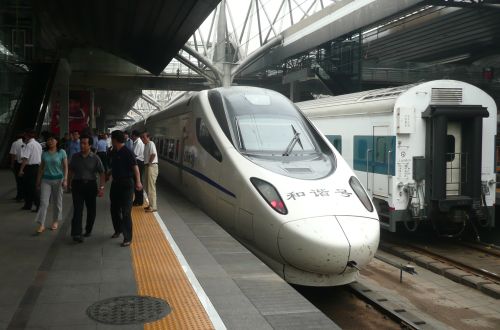
China’s National Development and Reform Commission (NDRC) has published plans to start construction of 10,000km of new inter-city and urban rail lines in the Beijing-Tianjin-Hebei, Yangtze River Delta, and Guangdong-Hong Kong-Macao Greater Bay areas in the next five years.
NDRC plans to build the initial 6000km of new lines during the first three years by accelerating the construction of a batch of relatively mature inter-city and urban rail projects. By 2025, a network of regional inter-city and urban railways will be formed to connect urban agglomerations within 1-2 hours of each other and enable so-called one-hour commuting circles.
|
|
|
|
|
|
|