|
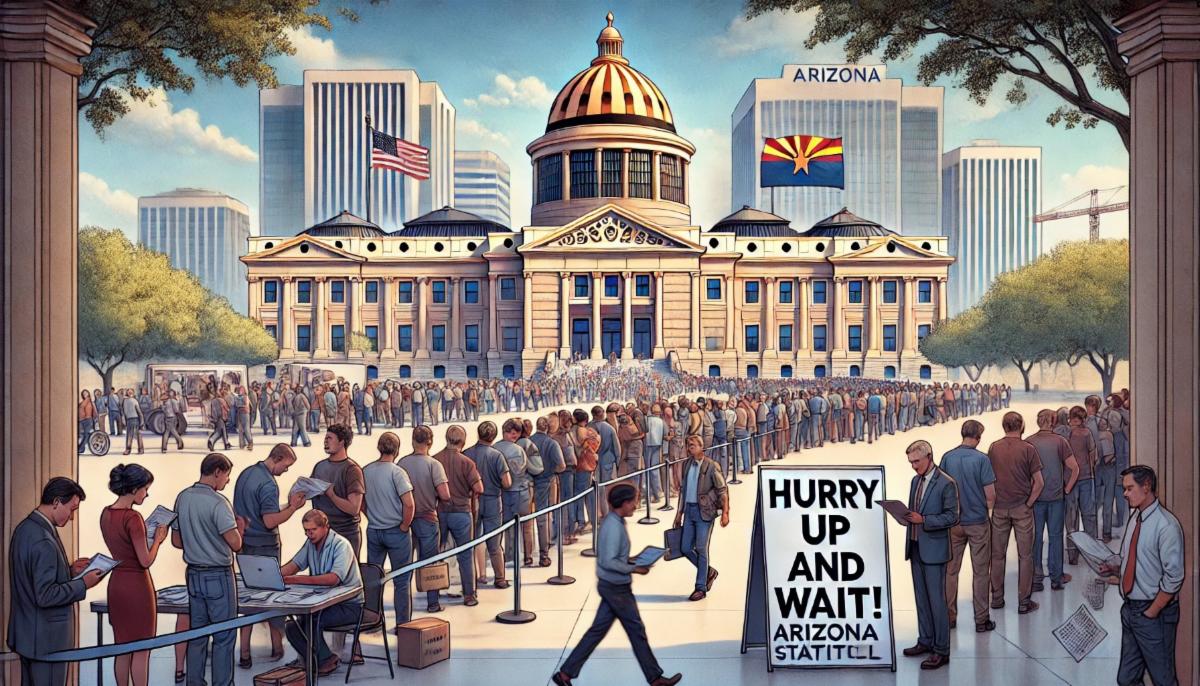
Today marks the 47th day of the legislative session, and we've already seen 1,802 bills, memorials, and resolutions introduced. Last week, bills that cleared committee moved quickly through their caucuses and onto the chamber floors, gaining momentum like a bullet train. This week, the legislature spent most of its time in floor debates and voting, with lawmakers tackling an average of 75 bills a day—an effort that took several hours. Now that these bills have made it through their original chambers, they face the next big hurdle: crossing over to the other side. With just four weeks left until the March 28 deadline, they need to be heard in committee in the opposing chamber; otherwise, they’re as good as dead. The momentum and essence of the Arizona legislature is very much a case of "hurry up and wait," as once this deadline hits, a standstill will occur while the budget is worked out.
HB2858: Appropriation; Glendale; 75th Avenue Reconstruction
The Arizona Department of Transportation (ADOT) is currently widening the Loop 101 freeway from I-17 to 75th Avenue. Included in the widening project is a reconfiguration of the 75th Avenue traffic interchange. HB2858 would appropriate $3 million from the state general fund in the next fiscal year for improvements on 75th Avenue between Deer Valley Road and the Loop 101.
The City of Glendale has scheduled these improvements for FY27, but state lawmakers representing North Glendale are interested in having the city make the improvements now while ADOT begins reconfiguring the 75th Avenue freeway interchange. By aligning state and city projects, improvements can be completed simultaneously—minimizing disruptions, accelerating completion, and reducing prolonged traffic congestion. This strategic approach also maximizes taxpayer value by ensuring road enhancements are implemented in sequence, preventing costly future repairs. The bill was heard in the House Appropriations Committee late Wednesday night and passed 17-1. It was then reviewed by the Rules Committee, which determined the proposed text is constitutional. The bill was subsequently debated and voted on by the entire body, passing 50-9 on Wednesday, the 26th. Please join me in thanking Glendale and Peoria legislators Tony Rivero (trivero@azleg.gov), David Livingston (dlivingston@azleg.gov), Lisa Fink (lfink@azleg.gov), and Beverly Pingerelli (bpingerelli@azleg.gov).
SB1308 Sober Living Homes
SB1308, reintroduced from last year with Senator Frank Carroll as the bill sponsor, establishes regulations for sober living homes in Arizona. The bill requires these facilities to obtain state licensure, follow operational standards, and undergo annual inspections to ensure resident safety and compliance. Key provisions include prohibiting unlawful patient brokering, mandating financial transparency, and enforcing strict drug and alcohol policies while ensuring access to medication-assisted treatment. It also requires fingerprint background checks for staff, restricts state referrals and funding to licensed homes, and grants authorities the power to impose sanctions or shut down noncompliant facilities. Additionally, the Arizona Department of Health Services must submit an annual report on licensed and unlicensed sober living homes, complaints, and enforcement actions.
The bill was heard in the Senate Health & Human Services Committee and passed 6-1. It was then discussed in both parties' caucus meetings this week. The bill was debated in the Senate Committee of the Whole on Thursday, the 27th, and is scheduled to be voted on next Monday.
HB2191 Religious Institutions; Development; Allowed Use
HB2191 would allow new single or multifamily housing units to be constructed on religious properties by-right, provided the development meets all listed requirements. The bill establishes height restrictions, minimum setback requirements, and maximum lot coverage limits for allowed-use development sites. It also outlines development and lease permissions and restrictions, as well as low-income housing requirements prescribed by the Arizona Department of Housing for eligible sites owned by a religious institution. The City of Glendale, along with the League of Arizona Cities & Towns, has been working with the bill sponsor on an amendment aimed at mitigating the potential negative impact of this bill. HB2191 was withdrawn from the House Government Committee and was heard in the House Appropriations Committee on Monday, the 24th, where it passed 11-5. An amendment was sent out this morning, and staff is currently reviewing it. However, the bill sponsor has indicated that the amendment should address our concerns.
SB1164 Immigration Laws; Local Enforcement
SB1164, titled the Arizona Immigration, Cooperation, and Enforcement Act (Arizona ICE Act), establishes guidelines for state and local cooperation with federal immigration authorities. This includes enforcing federal immigration laws, facilitating immigration detainer requests, and providing temporary housing for detainees. Under the bill, law enforcement agencies (LEAs) are required to make their best efforts to support federal immigration enforcement. LEAs may enter into agreements with federal agencies, such as the Department of Justice and the Department of Homeland Security, to enforce immigration laws, including participation in the 287(g) Program. State agencies are encouraged to consider incentive programs and grant funding to support these efforts. The bill prohibits any state agency, city, town, or county from adopting policies that restrict cooperation with federal immigration enforcement. The Attorney General is authorized to investigate and enforce compliance when violations occur, regardless of whether the policies are written or unwritten. Additionally, local and state agencies are not prohibited from utilizing available federal resources for public safety purposes related to immigration enforcement. Regarding federal immigration detainer requests, any LEA holding a person subject to an immigration detainer must notify the presiding judge, document the detainer in the case file, and comply with the request if it is legally sufficient. Detainers must be based on probable cause and supported by official documentation from U.S. Immigration and Customs Enforcement (ICE). The bill passed out of the Senate yesterday with a vote of 17-12.
|