|
In this issue:
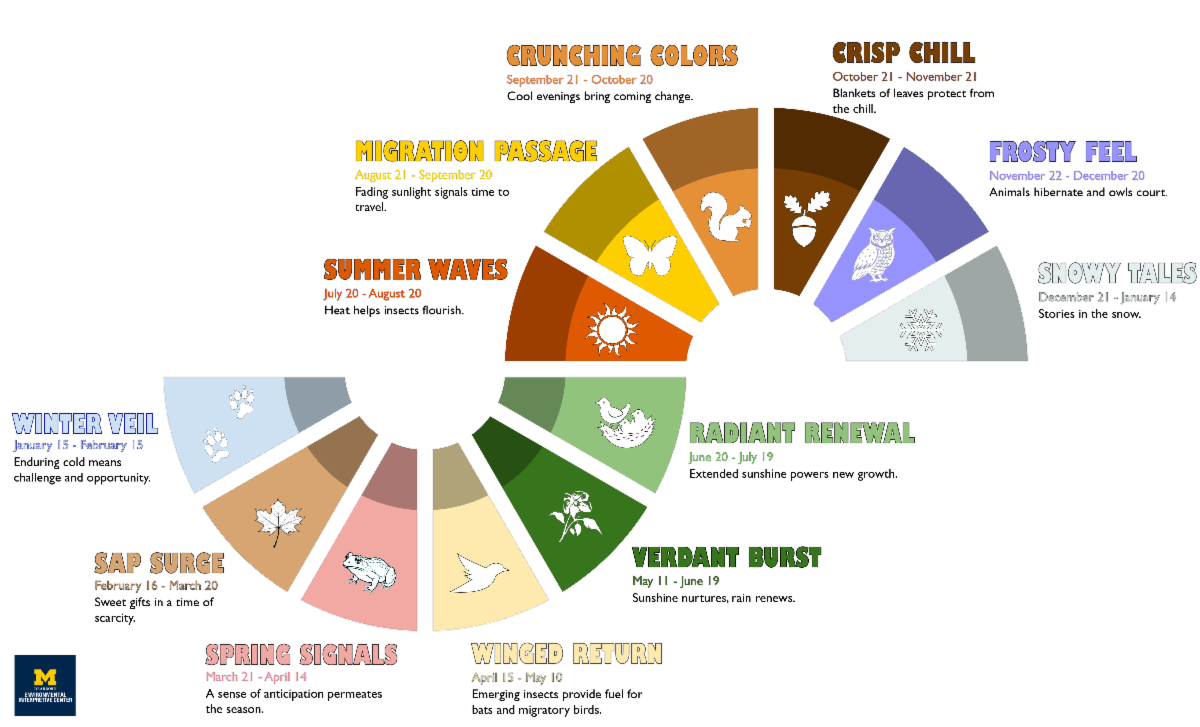
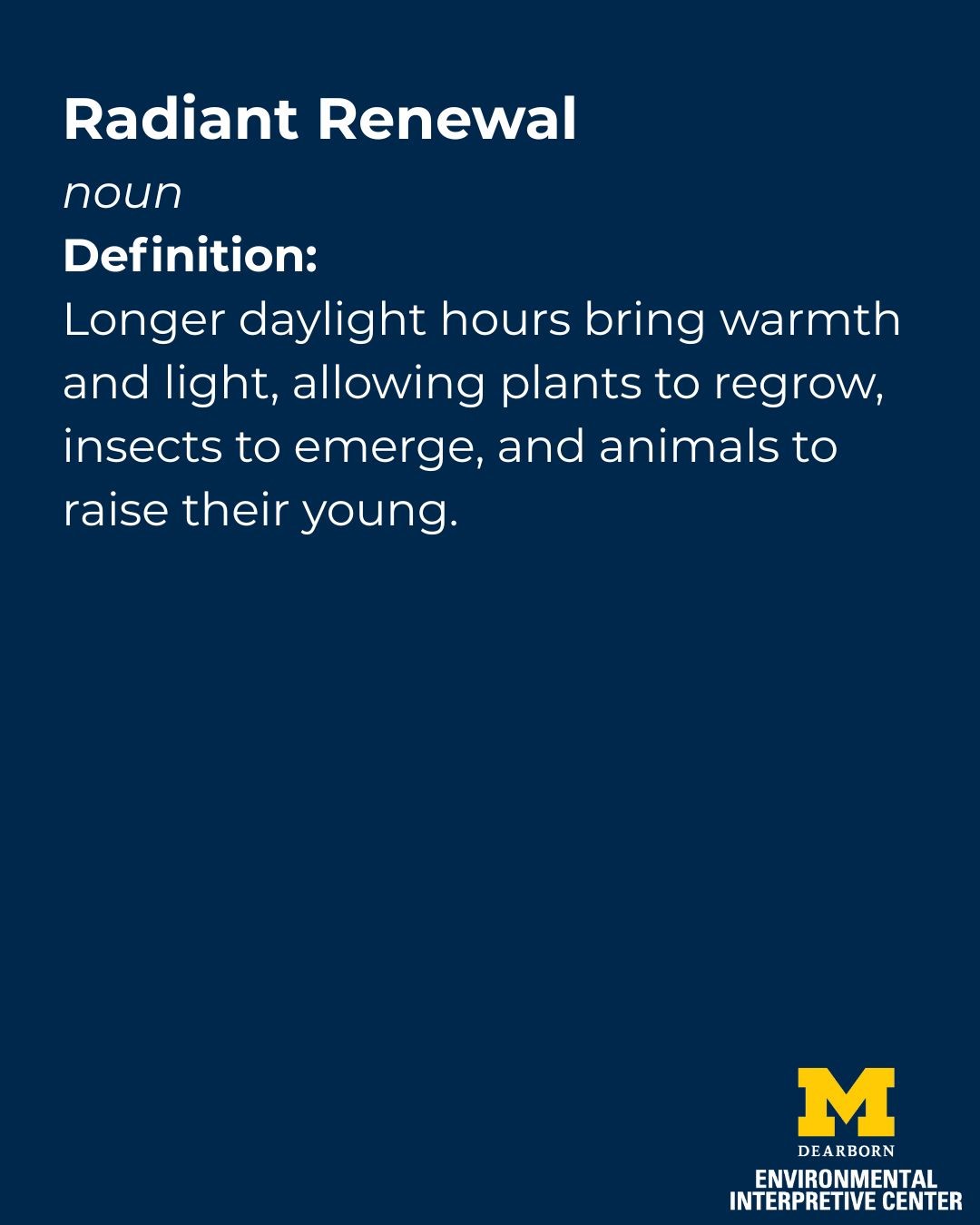
- Microseason: "Radiant Renewal" Revealed...we've come full circle!
- Help Us Reach Our "25 for 25" Goal!
-
EIC Activities & Partner Events
- Pollinator Photo Contest 2026
- Tales From the Trails: Mood Lighting, Naturally!
- Greenways: Taking Care of Our "Home"
- Save the Sibley Prairie!
| |
Microseasons Illustrated:
Radiant Renewal
| |
There's Still Time to Help Us
Reach Our Goal!
| | |
We had a great time celebrating our 25th Birthday on May 16! A link to some highlights of the event, filmed by Rick Morrone and his team, is available for viewing.
In celebration of the EIC's 25th Birthday, we are working toward our "25 for 25," to earn $25,000 by year's end. There is still time to help push us over the goal. Just click on the Giving Portal below.
| | Our "EIC Store" is also open, featuring our Microseason guide to seasonal changes and several prints made by Indigenout artist Hadassah GreenSky. Continue the 25th Birthday celebration with gifts for yourself! These items must be picked up in person at the EIC. | | Upcoming Programs and Partner Events | |
Photography in Nature Walk
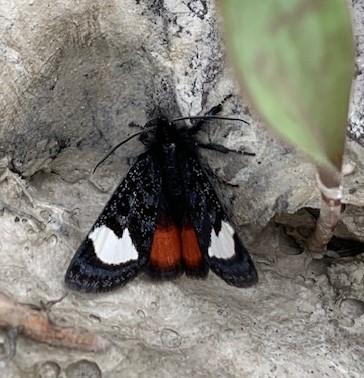
Look for the return of these walks in the cool of October. In the meantime, take some solo walks with your camera and your powers of observation on the Interpretive Trails at the EIC or branch out to your own favorite places nearby. For example, EIC Naturalist Dale Browne snapped this grapevine moth (right) hangin' out in her lush, green backyard garden! Don't forget--you can submit any pollinator photos to the Pollinator Photo Contest.... (see below)
| |
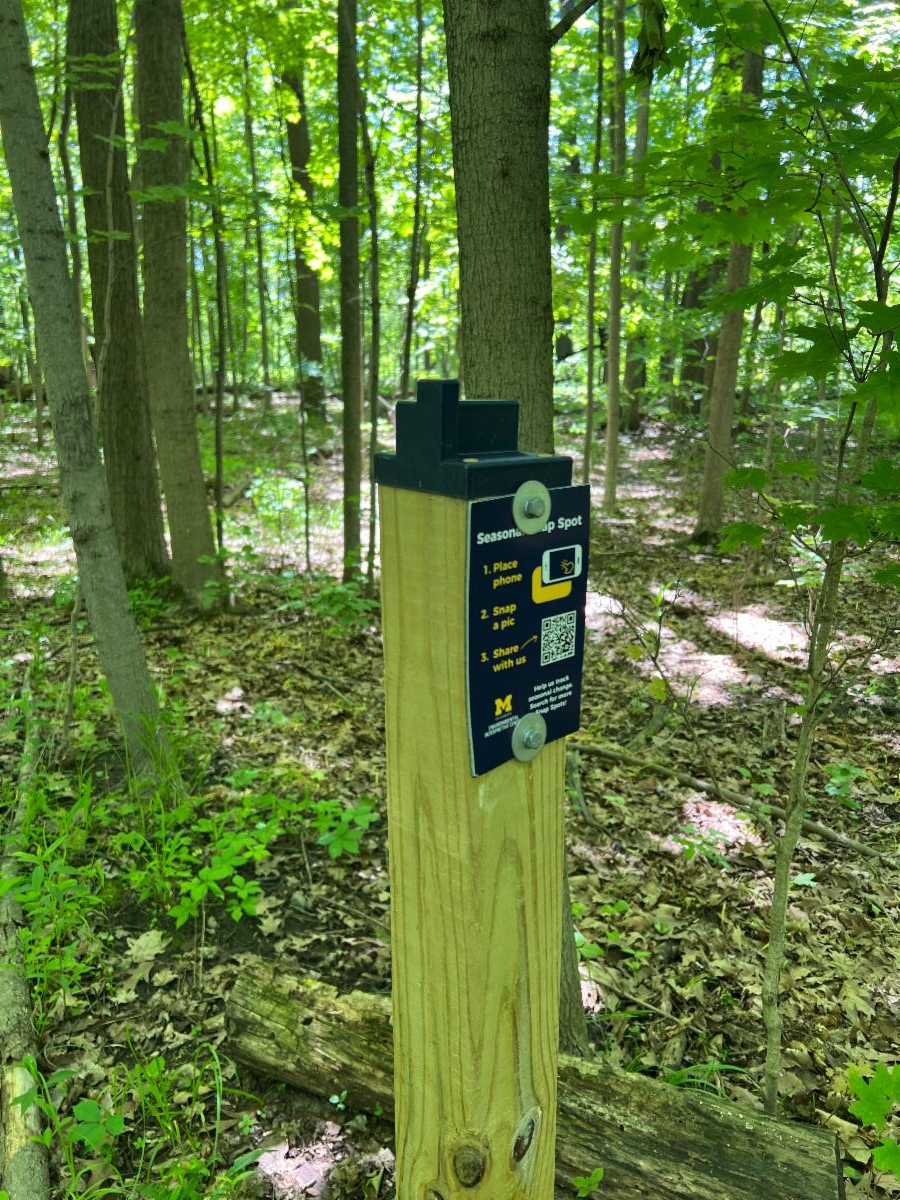
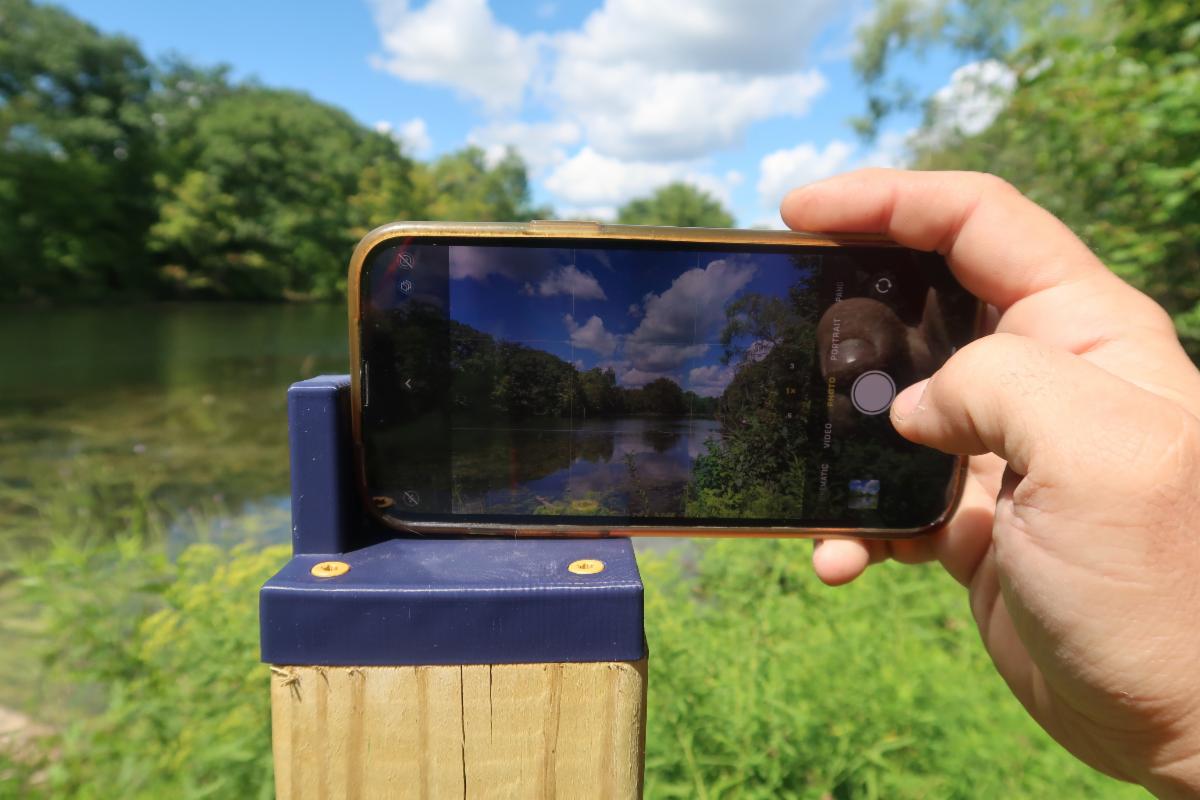
While you're out on the Interpretive Trails, take some time to snap a pic at one of the 10 "Seasonal Snap Spots," an Eagle Scout project to encourage visitors to share photos of the Study Area with the EIC. Use the QR code on the instructions sign to send us your "snaps." (Snaps of SnapSpots by Mike Solomon)
Have a great summer!
| | |
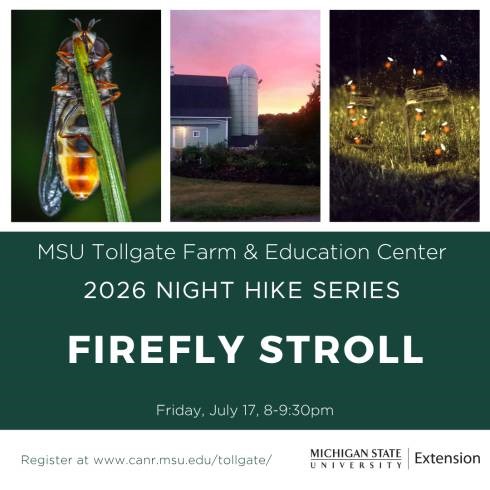
Firefly Stroll at MSU Tollgate Farm
Friday, July 17, 8 p.m.
Experience the magic of summer as fireflies light the night at Tollgate Farm. As dusk settles, discover the science behind their bioluminescence, learn to spot different species, and enjoy a peaceful stroll through fields and woodlands illuminated by nature’s light show.
Register for this MSU program that is off-site in Novi.
| | |
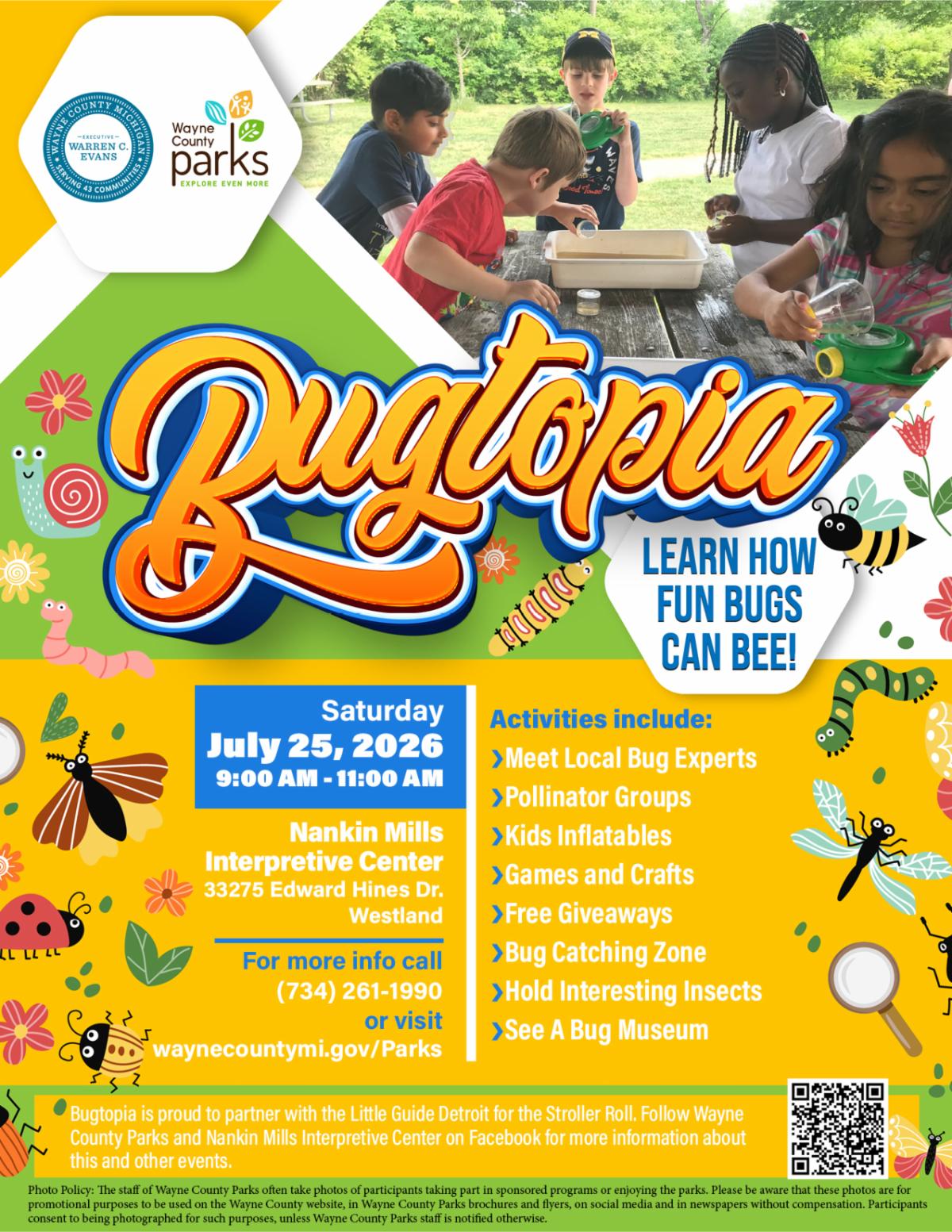
Wayne County Parks Bugtopia!
July 25, 9:00-11:00 a.m.
Nankin Mills Park
A Celebration of our tiny but important six-legged friends. Inflatables, live insects, catching insects, crafts and more at this free event!
Come see your EIC friends Mike and Dorothy while you visit a variety of organizations and their "bugs."
Contact Wayne County Parks
734-261-1990
| | |
Rick Simek Talks Stewardship
Sunday, July 26, 2-4 p.m.
Fair Lane, Home of Henry and Clara Ford
"Restoring Balance: Native Habitats and Invasive Plant Management at UM-Dearborn"
Friends of the Rouge Speaker Series *
| | | |
As part of this unique speaker series, put on by Friends of the Rouge and hosted by the Fair Lane Estate, EIC Natural Areas Manager will share his 30+ years of caring for the "Michigan story", told by the native plants and animals that inhabit the Environmental Study Area, this "Island of Green in a Sea of Suburbia."
Tickets are $20 per presentation and include admission to that session along with light refreshments. Registration for the series is available *here.
| | Pollinator Photo Contest 2026! | | |
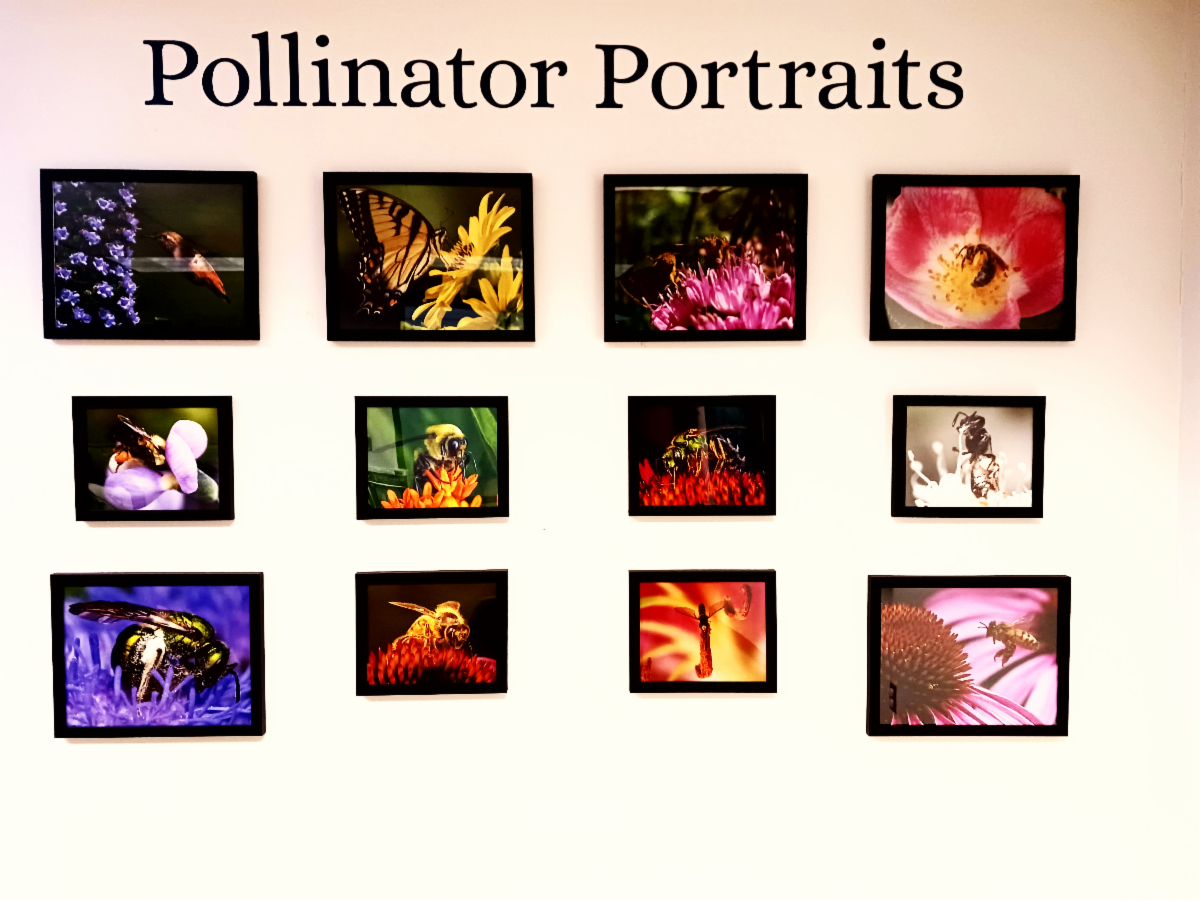
The Environmental Interpretive Center and UM-Dearborn Bee Campus USA are accepting entries in the 7th annual Pollinator Photo Contest! (EIC photo)
Since 2019, the University of Michigan-Dearborn has been certified as a Bee Campus USA affiliate by the Xerces Society for our efforts to promote pollinator education and conservation.
To learn more about the photo contest and to see some photographs taken over the history of the contest, including those portraits above, visit the photo contest website.
| | |
Mood Lighting, Naturally!
Not to be outdone by July 4 th fireworks, fireflies, also known as “lightning bugs,” begin their enchanting mood lighting in our backyards around late June or early July. We humans, however, are not the intended target of their enchantment; this is a true-to-life example of “la femme fatale.” These flashy ladies have a dark side that includes little-known tales of deception, poisoning, and death.
| | |
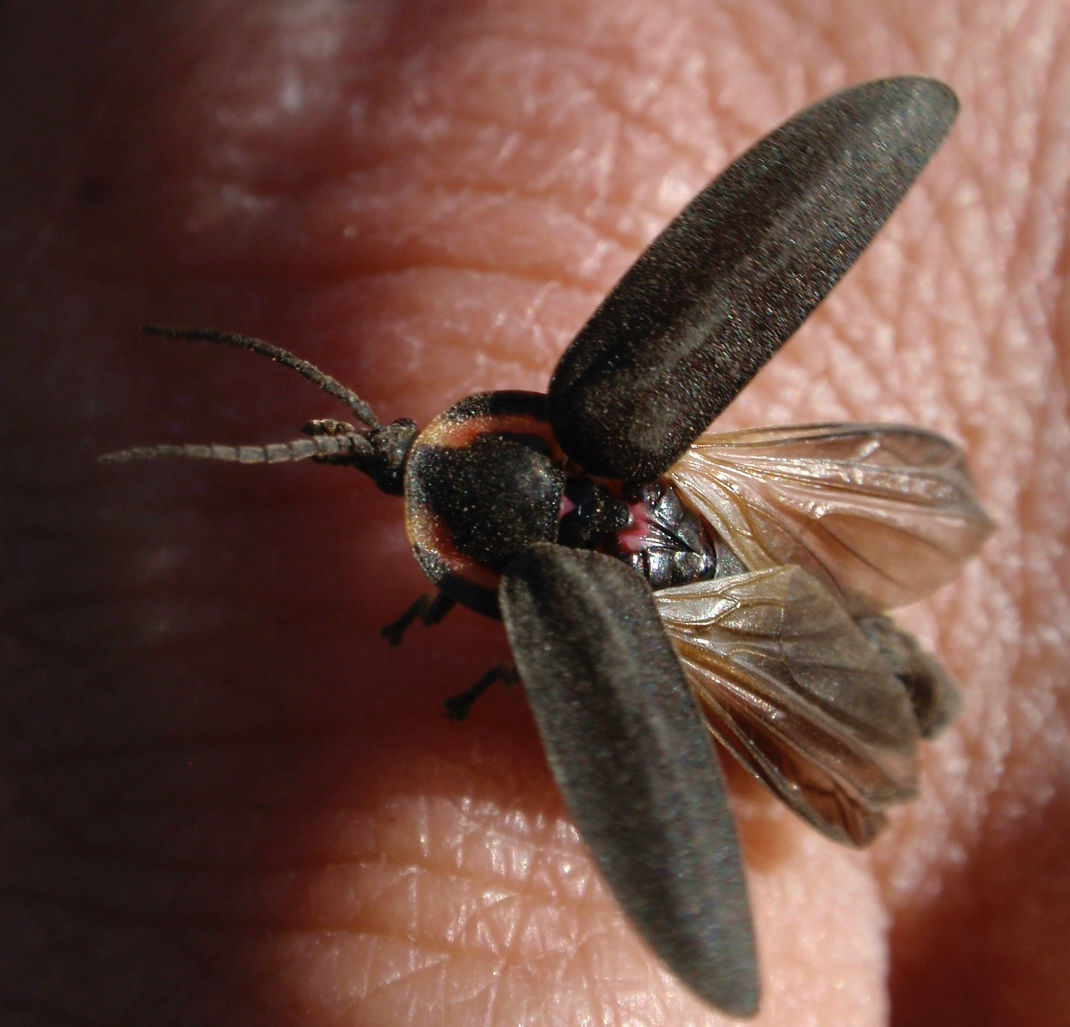
Whichever name you prefer, they are neither flies nor bugs; they are actually beetles. With no modern day “dating app” to find a mate, fireflies kick it old school with DIY mood lighting, created by their own bodies.
(Photo by Dr. Nate Walton, MSU Extension)
| | |
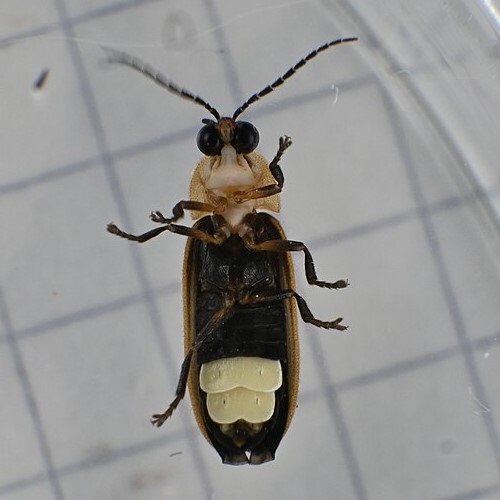
According to National Geographic, “Fireflies have dedicated light organs that are located under their abdomens. The insects take in oxygen and, inside special cells, combine it with a substance called luciferin to produce light with almost no heat.”
Males usually start the conversation by flashing their individual species’ light pattern in hopes that a female will flash that same pattern back. Each species has its own pattern—a code that lets individuals identify appropriate mates of the same species.
(Photo Dr. Nate Walton, MSU Extension)
| | It’s a good thing they can tell each other apart, because it’s now thought that Michigan currently has 20-30 species of firefly, difficult for humans to identify based on their flash. Michigan State University’s Gary Parsons says, “Michiganders can determine whether multiple species live in their backyard by differences in their behavior—some fly quickly into the air as they flash their bright light, others seem to float.” | | |
Now, back to those femme fatales. The females of the firefly genus Photuris have earned the nickname "femme fatales." By mimicking the flash patterns of other firefly species, the females lures unsuspecting males in closer, inviting them for dinner. Accepting an invitation from these ladies means the male will become the main course as her dinner.
(Photo by MSU Extension)
| | | |
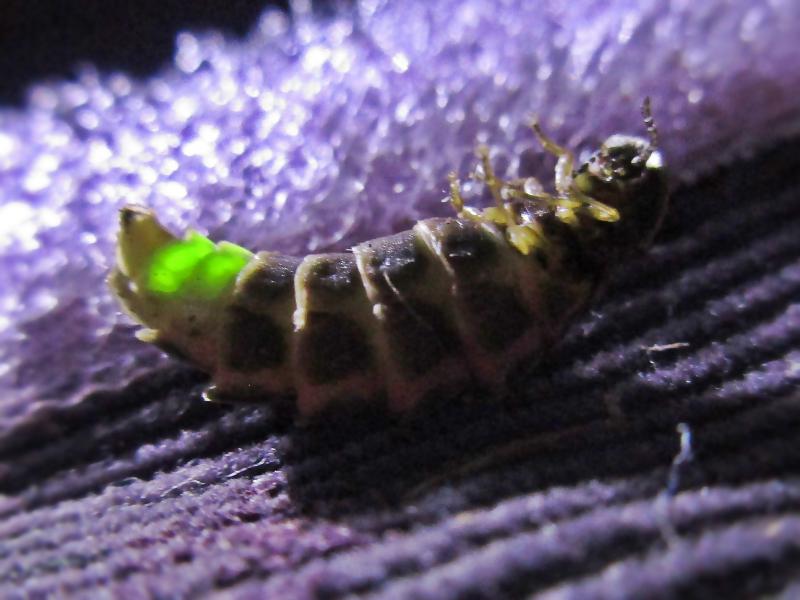
Preying on the males of other species allows Photuris females to acquire their toxins, called lucibufagins, which the females then deposit into their eggs as a chemical defense. Firefly larvae, nicknamed “glow worms” because of their internal chemical light, warn predators of their toxic taste. What moms will do for their kids! (Photo "Lampyris noctiluca (Glow worm) female, Maastricht, the Netherlands" by Bj.schoenmakers is marked with CC0 1.0. )
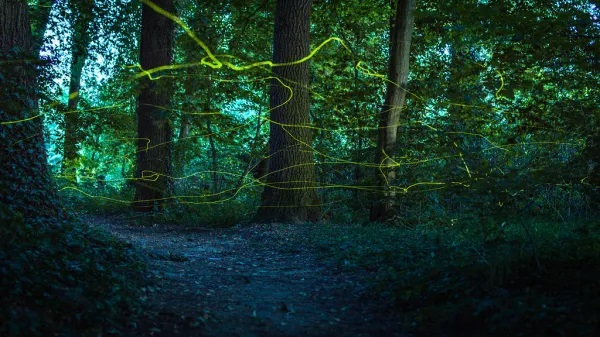
| | No matter how well firefly moms care for their offspring, there are threats to firefly survival that are out of their control. Outdoor lights prevent fireflies from seeing each other’s flashes, making it harder to find mates. (Photo "Fireflies fly high" by Myotis Myotis is marked with CC0 1.0.) | | | |
Other potential threats include habitat loss, pesticide use, and climate change.
Turn off your lights at night during firefly season to ensure you have mood lighting, naturally, for years to come!
-Dorothy McLeer, Editor
| |
Taking Care of Our "Home"
School’s out, summer is here, and it’s the peak of our growing season here in southeast Michigan! If you’re anything like me, you’re looking for excuses to spend time out in our habitat. A great way to get experienced with our local flora and fauna is finding a group of like-minded folks in your area to work together on stewardship.
According to Merriam-Webster, "Stewardship is defined as the careful, responsible, and ethical management of resources entrusted to one's care." Here at the EIC, stewardship of the Environmental Study Area (ESA) and its Interpretive Trails are a core part of our mission. To this end, we host a Stewardship Saturday on the third Saturday of every month.
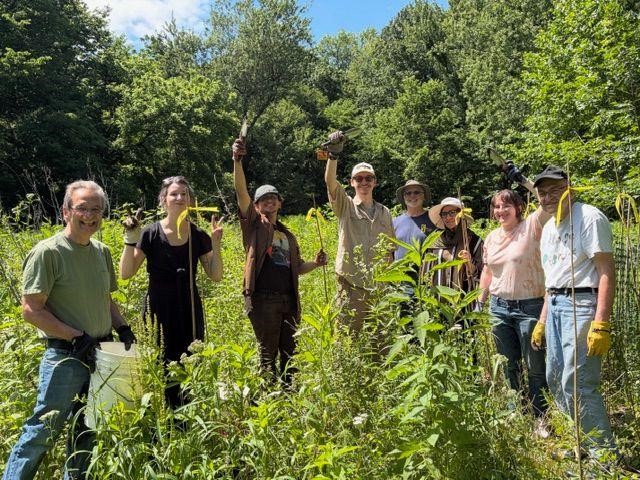
| | Natural Areas Manager Rick Simek takes a dedicated group of volunteers out to work together on projects far larger than any one person could tackle on their own. “The crew” has removed thousands of invasive plants, and collected and scattered countless native seeds! (EIC photo taken by volunteer Karthik Krishnamurthy) | | |
The ESA would not be anywhere near the rich, diverse ecosystem that it is without the tireless efforts of volunteers. Our next Stewardship Saturday at the EIC is on July 18th, and we would love to have your help!
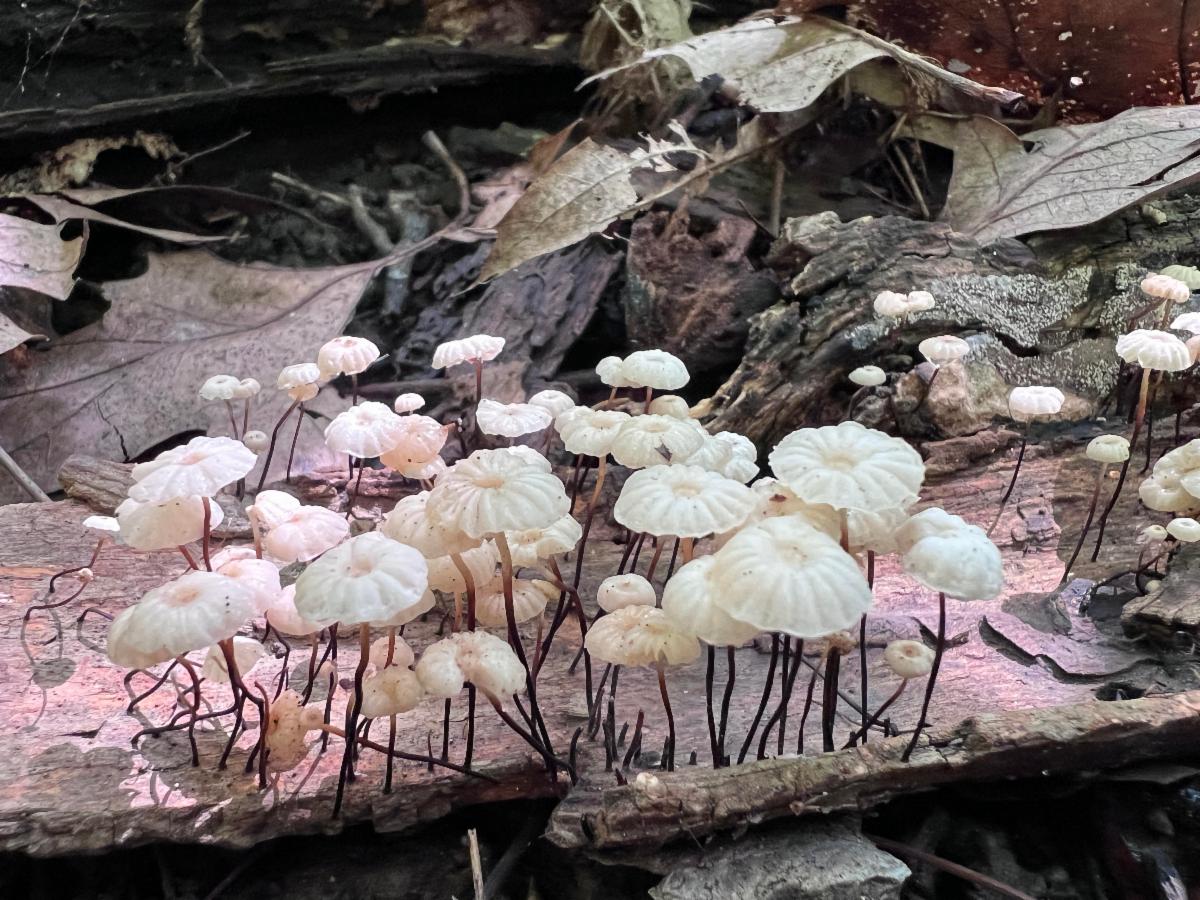
| | I don’t live as close to the EIC as you may, but another “local spot” I’m involved in helping steward is Cherry Hill Nature Preserve in Superior Township. That preserve is special to me, as it’s one of my favorite mushroom photo spots! I go there pretty much weekly. (Photo of "collared parachutes" by Mike Solomon) | | | Over time, I’ve become involved in stewardship and educational programs there, just by asking around. If you have a favorite natural space you enjoy, and you’re interested in becoming more deeply connected to it, consider reaching out to the folks in charge of it. Let them know what the space means to you, and that you’re interested in helping take care of it. You might be surprised at the difference you can make! | | |
For example, Save Sibley Prairie Coalition is a community group formed to advocate, fundraise, and inform the public about Sibley Prairie. The Prairie is a ~400-acre remnant of lakeplain prairie habitat, the largest remnant of its kind in Michigan! If you’re interested in learning more about prairie ecosystems, and what makes them unique, check out this
flipbook from the Coalition’s website.
| | |
Venturing outdoors and encountering nature is good for your health. Our trails are accessible, so please visit our Environmental Study Area. Stay engaged in learning activities and check out our Remote Learning Activities & Resources page for ideas to create a “Neighborhood Nature Journal” and “Family Nature Walk” activities!
| | | We also hope to see you in person at our upcoming programs! | |
Please remember...
The EIC Environmental Study Area is open daily from sunrise to sunset. We would like to remind nature-goers that fishing on site is prohibited and to leave bikes and dogs at home because they cause disruption and stress to the EIC wildlife.
| |
| | | |