Flamboyant Pioneer of the Comstock Lode


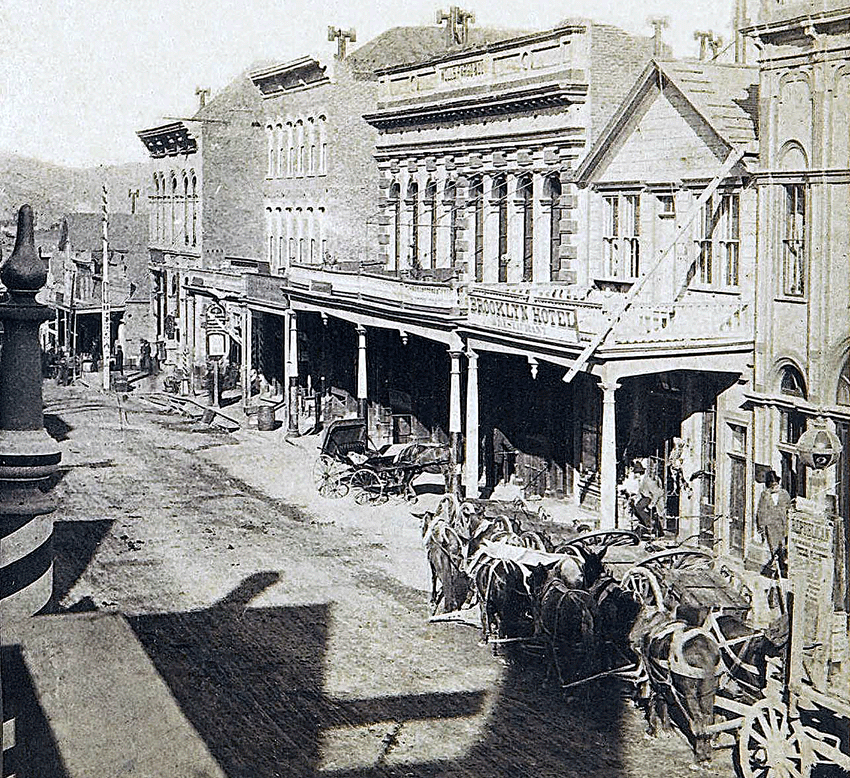
In the golden era of the mid nineteenth century, Virginia City, Nevada, stood as a roaring epicenter of wealth, ambition, and unbridled chaos. Built directly over the fabulous Comstock Lode, the mountain town vibrated with the constant, deafening clank of metal stamp mills and the routine thuds of mining explosions. It was a place where fortunes were mined from the deep earth in a single shift, and where men of unusual character found a natural home.


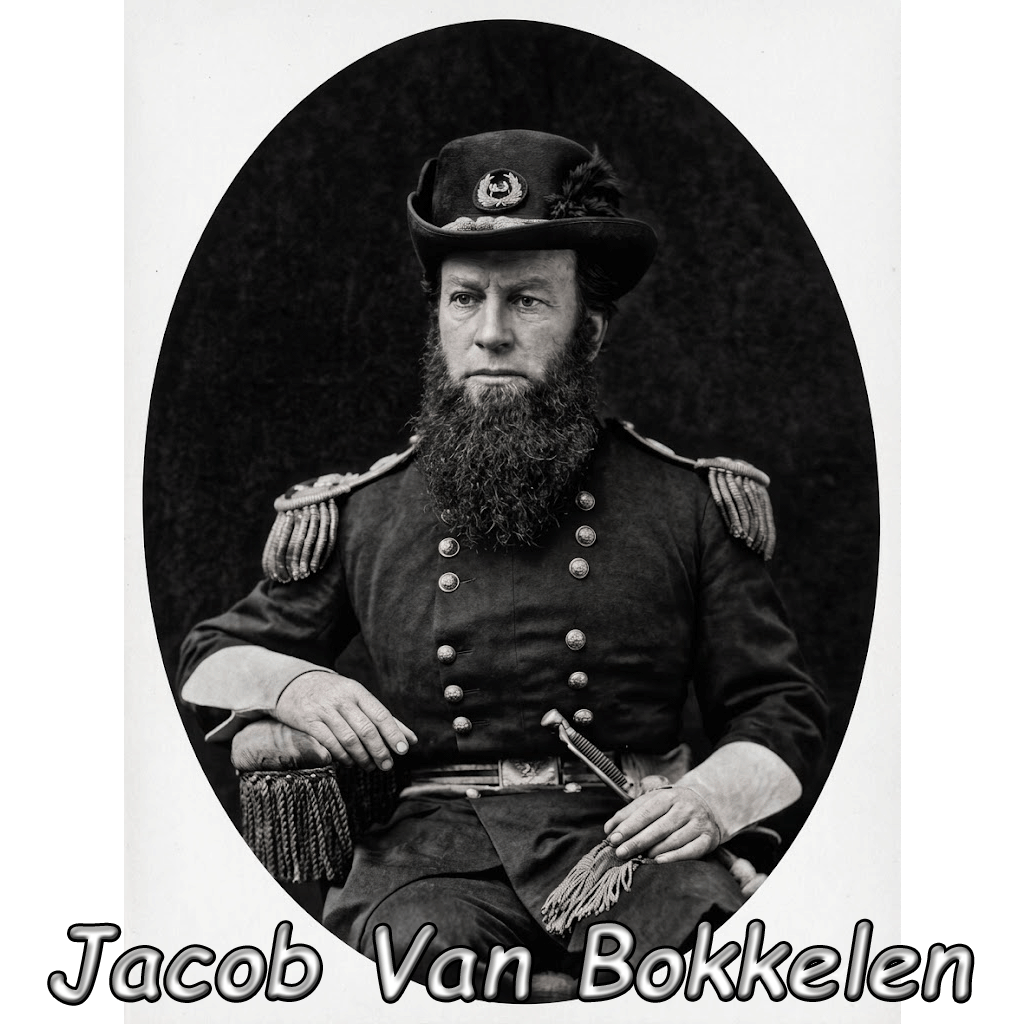
Among these local icons, none shone quite as brightly or as bizarrely as General Jacob Van Bokkelen. Born in New York City in the year 1822, Van Bokkelen was a man of remarkable resume. He had been a merchant seaman, a registered member of the famous San Francisco Committee of Vigilance, and later served with distinction as the Assistant and General Provost Marshal of Nevada during the American Civil War.


He was even chosen as the first president of the newly formed Nevada State Legislature, a testament to his high social standing and undeniable charisma.


By the early 1870's, General Van Bokkelen had settled into a prosperous role as a premier merchant in Virginia City, operating a thriving hardware and explosives business located at Taylor and B Streets. Yet, his public life extended far beyond commercial transactions. He was the bachelor proprietor of a highly popular beer garden and saloon, a peaceful and welcoming oasis where weary miners and local elites alike could sip cold beer, exchange gossip, and escape the harsh realities of industrial mining.


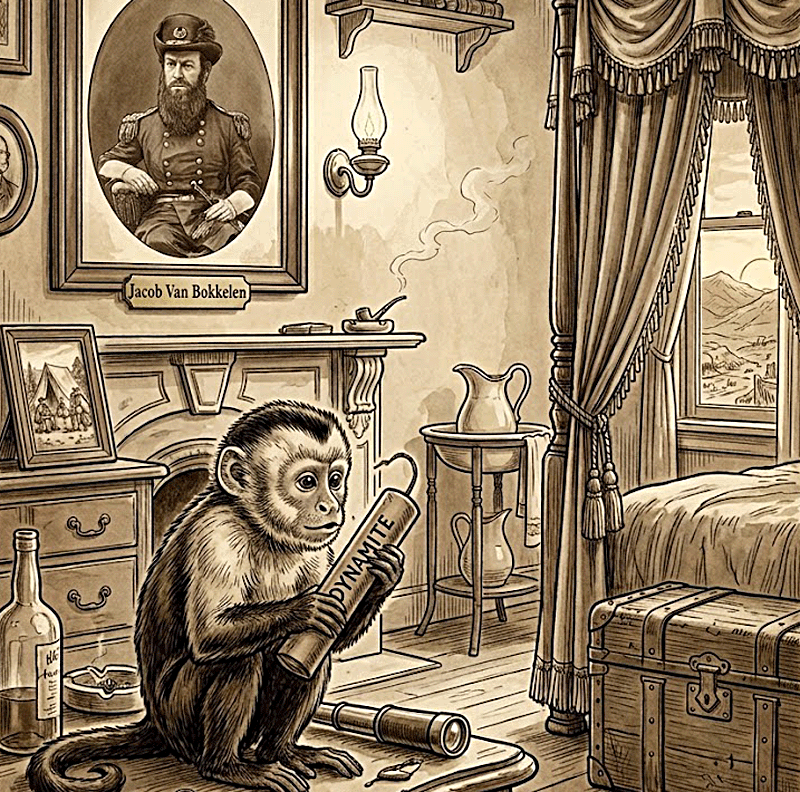
The true main attraction of this establishment, however, was not the liquor or the politics. It was Van Bokkelen's exotic pet spider monkey. The agile creature was known throughout the town for its mischievous antics, swinging from fixtures and entertaining patrons while they drank. To the townsfolk, the monkey was a delightful novelty, and Van Bokkelen was a beloved civic leader whose eccentricities only added to his considerable charm.

A Lethal Infatuation with Blasting


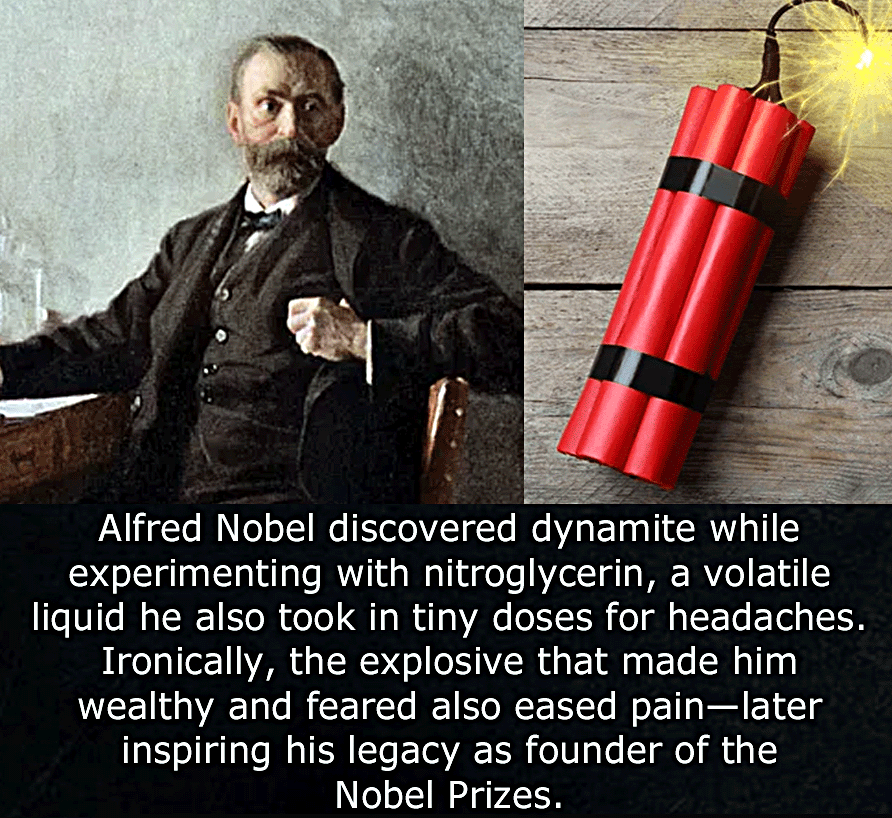
Beneath his respectable veneer as a saloon keeper and a public official lay a deep and increasingly dangerous obsession with the business of blasting powder. As the official local agent for the Giant Powder Company of San Francisco, which was the first firm in the United States to produce dynamite under a direct license from Alfred Nobel, Van Bokkelen was the gatekeeper of the town's mining lines.


Explosives were his true bread and butter, generating massive revenues as the surrounding silver mines pushed deeper into the mountain and demanded ever greater fracturing power. Over time, his professional intimacy with these compounds bred a perilous and misplaced familiarity.


Van Bokkelen developed an incredibly cavalier attitude toward the lethal materials he sold, openly boasting to his neighbors that he possessed such complete, unshakable confidence in the safety of dynamite that he regularly stored massive excess inventories within his personal living quarters and apartment when his retail storefront grew too crowded. What the citizens of Virginia City did not realize was that their trusted general had moved far beyond merely selling commercially manufactured dynamite. He had quietly transformed his downtown residence into a makeshift, unregulated laboratory for chemical experimentation.


Van Bokkelen was actively trying to develop a proprietary blasting agent that would surpass everything currently on the market, aiming to outshine Nobel's own inventions. A visitor to his quarters later revealed in a letter published by the New York Times that the general routinely kept multiple open crates filled with highly volatile gun cotton saturated in raw liquid nitroglycerine, mixed into a hazardous cotton pulp. In the heart of a densely packed wooden and brick mining settlement, Van Bokkelen was eating, sleeping, and living alongside hundreds of pounds of the most sensitive and destructive liquid chemicals known to nineteenth century science, completely oblivious to the impending doom he was compounding daily.

The Night the Comstock Trembled in Terror


The delicate balance between reckless experimentation and catastrophic failure finally shattered on the night of June 29, 1873. A monstrous and deafening explosion rocked the core of Virginia City. The sheer force of the blast sent shockwaves rolling through the mountainside, instantly awakening the entire population and throwing the settlement into absolute panic.


When the dense plumes of acrid chemical smoke and pulverized brick dust finally began to clear under the starlight, a scene of apocalyptic devastation was revealed. The explosion had completely pulverized Van Bokkelen's building and heavily damaged or obliterated numerous surrounding structures.


The human toll of the disaster was immediate and horrific. Ten individuals lost their lives in the sudden eruption of energy. Dozens of others sustained severe injuries and had to be pulled from the burning debris by the desperate efforts of the local volunteer fire department.


Rescue workers scouring the smoking rubble eventually discovered the body of General Van Bokkelen cast into a far corner of his shattered room, his features so severely bruised and charred by the intense heat that he was entirely unrecognizable.

Echoes of Ruin


In the immediate aftermath of the tragedy, the devastated community sought answers and struggled to comprehend how such an enormous catastrophe could happen in the heart of their city. As grief turned to a desperate search for accountability, an unusual and enduring theory took hold among the traumatized populace. Townsfolk quickly focused their blame on Van Bokkelen's pet spider monkey.


Because no trace of the animal's remains could be found anywhere within the wreckage, it was widely presumed that the monkey had been blown completely to bits at the very epicenter of the detonation. Popular speculation suggested that the mischievous pet had been playing with a highly sensitive container of liquid nitroglycerine inside the apartment and had accidentally dropped it onto the floor. The resulting impact would have caused an immediate detonation, which in turn triggered the mass explosion of the surrounding chemical experiments and the 150 pounds of commercial dynamite stored in the general's rooms.


The city went into immediate mourning, lowering all flags to half mast and canceling its grand upcoming Fourth of July celebration to redirect all funds toward burying the dead. For days, the streets were filled with somber, weeping funeral processions winding their way upward toward the terraced gates of the Virginia City Cemetery. There, General Van Bokkelen was laid to rest in an unmarked grave, a quiet and anonymous end for a man who had lived his life with such loud, theatrical bravado.

Ashes of Disaster to an Angelic Sanctuary


The physical scar left by the explosion remained an open wound in the town until a profound act of charity transformed the site of horror into a place of ultimate healing. Following the disaster and the subsequent clearing of the debris, the vacant property where the beer garden and the explosive laboratory once stood was put up for public sale.


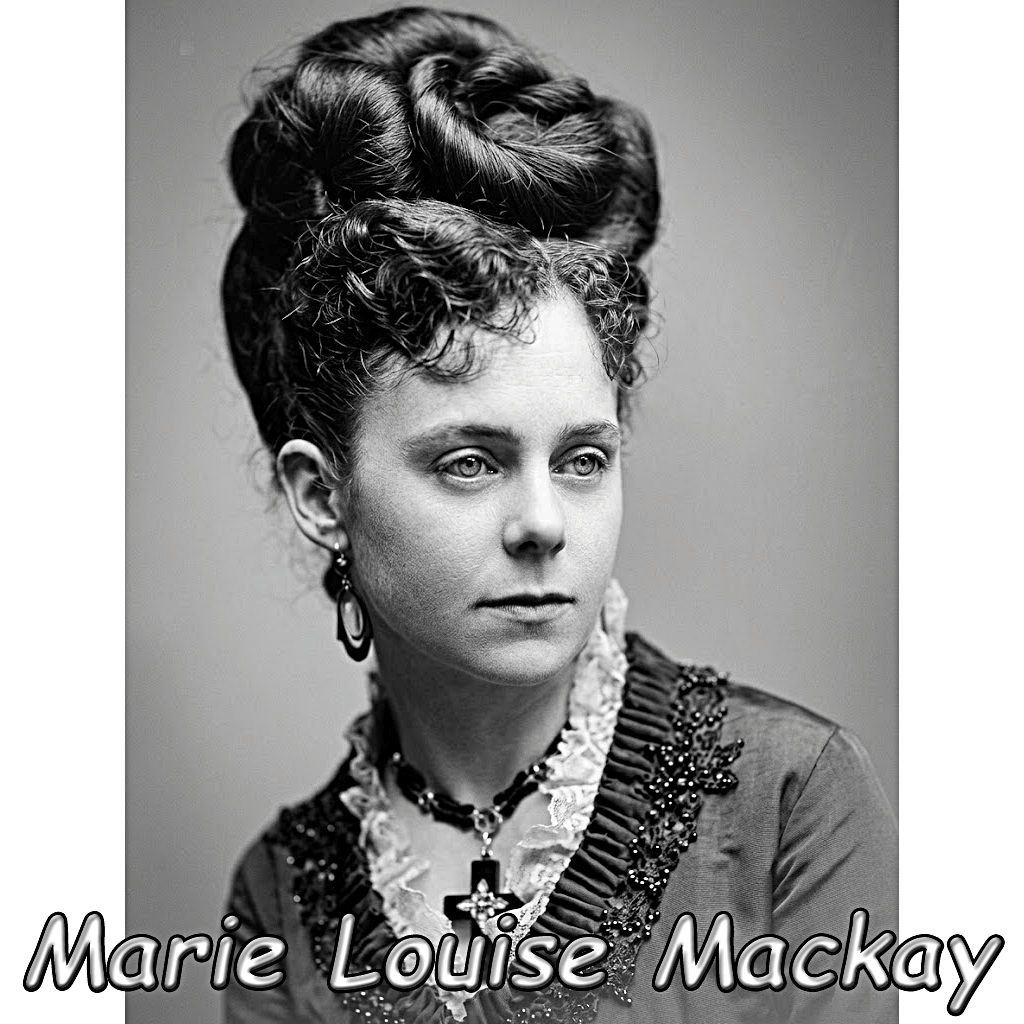
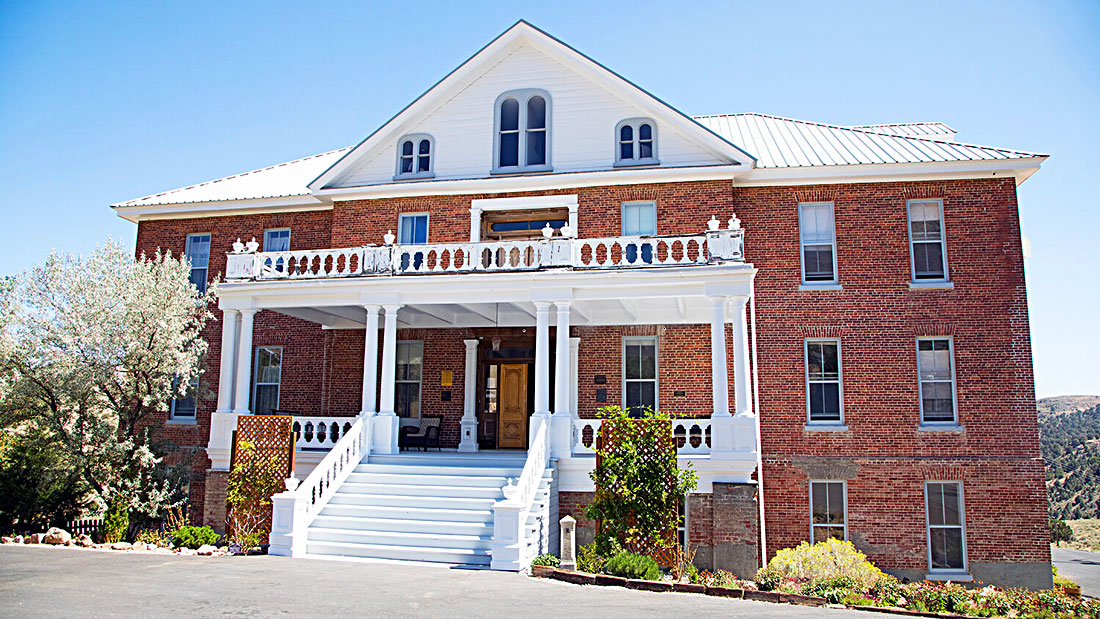
Marie Louise Mackay, the compassionate wife of the wealthy Silver King John Mackay, stepped forward to purchase the land. She generously donated the entire property to an order of dedicated Catholic nuns known as the Daughters of Charity, led by Bishop Patrick Manogue. On March 6, 1876, the sisters formally opened the doors of the St. Mary Louise Hospital on the very grounds where Van Bokkelen's home had exploded. 


It was a magnificent, state of the art facility featuring thirty six rooms, five spacious wards, and twelve private rooms capable of treating more than seventy patients simultaneously.


The Daughters of Charity became known as the sweet saviors and Angels of Mercy on the Comstock, providing crucial medical attention to injured miners, treating victims of industrial accidents, and caring for the numerous children left orphaned by the dual disasters of fire and explosion.


The site later transitioned into the Storey County Hospital and eventually evolved into what is known today as St. Mary's Art Center.


Through this extraordinary evolution, a piece of land that was once defined by reckless human folly, volatile chemical experiments, and a legendary spider monkey was ultimately redeemed, reborn as an enduring sanctuary of mercy, recovery, and creative expression for generations to come.