Week of March 17, 2025 | Vol. 15, Issue 11 | | |
Bourne Insights
Key Topics of Conversation this Week
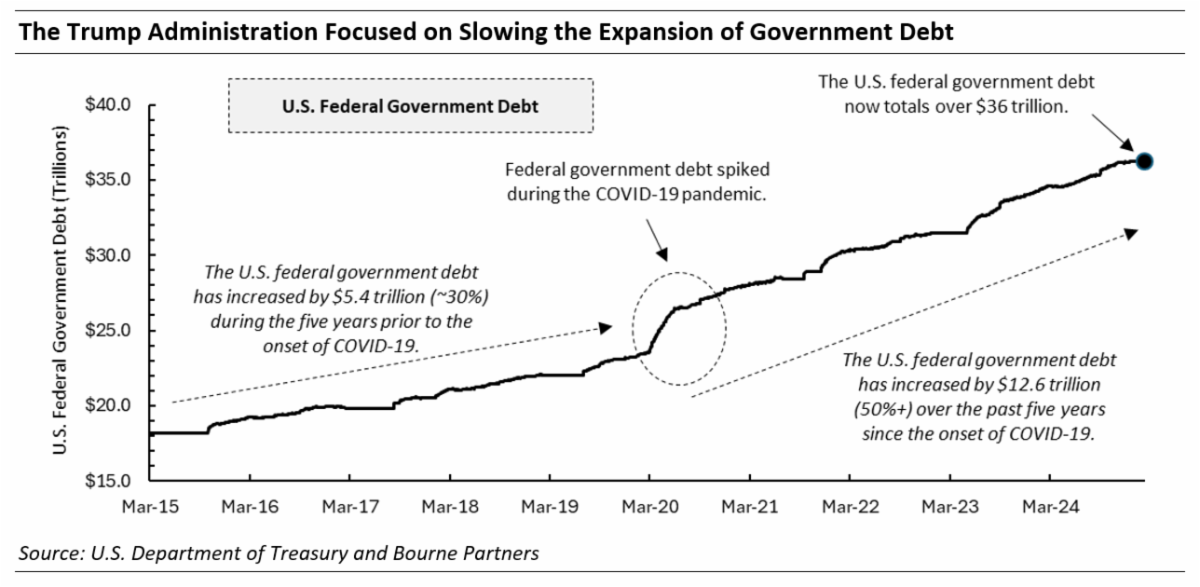
| | | | The federal government appears to have avoided a shutdown -- for now. The House of Representatives narrowly voted 217-213 to pass a continuing resolution (CR) that funds the federal government through September 2025. The Senate subsequently votes to pass the CR. This averts what would have been a government shutdown on March 14. Notably, the CR does not address Medicaid, Medicare, or Social Security. Medicaid funding, in particular, has been a major topic of conversation following a House budget plan on February 25 that called on the House Energy and Commerce Committee to cut the federal deficit by “at least $880 billion” over the coming decade. Republicans have indicated that there is no appetite to cut Medicare spending, so, presumably, Medicaid would be a major source of these spending reductions. In the meantime, the CR extended the popular Medicare telehealth flexibilities through September. Also, the CR does not address the 2.83% Medicare physician pay cut that went into effect in January, although Republican leadership promised to reverse this during the budget reconciliation process later this year. Finally, the CR did not address the expiration of enhanced tax credits for the Affordable Care Act exchanges, which are scheduled to expire at the end of the year. Read More | | | | The Trump administration continues attempt to reduce the U.S. federal deficit where possible. This includes new proposed regulation by the U.S. Centers for Medicare and Medicaid Services (CMS) (“the 2025 Marketplace Integrity and Affordability Proposed Rule”) that will shorten the end of enrollment period for health plans on the Affordable Care Act (ACA) marketplace, going forward, from mid-January to mid-December and eliminate the monthly special enrollment period for those with household incomes below 150% of the federal poverty level. These actions are intended to prevent people from waiting to enroll in an ACA plan until they become sick. Altogether these actions are expected to reduce federal healthcare spending by $11 to $14 billion annually. Also, CMS wants to crack-down on The expansion of the premium subsidies led to a significant increase in the number of applicants whose submissions did not match federal data sources. In 2022, there were 6.3 million applications with such data-matching issues, an increase of 2.6 million compared to 2020. Also, CMS reported receiving a "dramatic uptick" in complaints from consumers who said they were signed up for coverage without their consent. Finally, the proposed rule seeks to list "sex-trait modification" to a list of items and services that would not be considered as an essential health benefit in the 2026 plan year. Read More | | | | We continue to see more and more U.S. pharma companies invest in domestic manufacturing. Most recently, Merck (NYSE: MRK) announced plans to invest $1 billion in an extension to an existing production facility in Durham, North Carolina. This investment will add 225,000 square feet of space for vaccine production, and it appears to be part of a broader plan by Merck to strengthen its manufacturing in the United States. Specifically, Merck indicated plans to invest $8 billion in domestic manufacturing capabilities through 2028. In our view, this follows similar actions by large U.S. pharma companies (e.g., Eli Lilly) to redirect their manufacturing to domestic locations. For instance, two weeks ago, Eli Lilly (NYSE: LLY) announced a massive $27 billion investment in four new manufacturing facilities in the United States. All of this is in response to efforts by the Trump administration to revitalize U.S. pharma manufacturing through the use of tariffs and trade restrictions on countries like China, Canada, and Mexico, among others. Read More | | | | The Trump healthcare policy/regulatory structure continues to take shape. The Senate Health, Education, Labor, and Pensions (HELP) Committee voted to advance the nomination of Marty Markary as the new Commissioner of the U.S. Food and Drug Administration (FDA) (with a vote of 14-9) and the nomination of Jay Bhattacharya as head of the National Institutes of Health (NIH) (with a vote of 12-11). Dave Weldon, Trump’s nominee to lead the Centers for Disease Control and Prevention (CDC), withdrew his nomination. As with Secretary of Health and Human Services Robert F. Kennedy (RFK), Makary has been critical of former President Biden’s attempt to mandate vaccines for children. Also, Makary has been vocally concerned about the political power of the pharma industry. In 2016, for instance, he published a critique of how drugmakers “gamed” the Orphan Drug Act to secure protections for “rare disease” drugs they later expanded for wider use. He also authored a book called “Blind Spots” that attacks scientific “groupthink” and argues for greater scrutiny of medical dogmas. Read More | | | | Hinge Health filed S-1 with the U.S. Securities and Exchange Commission (SEC) signaling a possible initial public offering (IPO) in the near future -- and possibly a revival of an otherwise dormant, post-COVID, digital health IPO market. There were twenty (20) digital health IPOs in 2021, according to Rock Health, but this fell to only two IPOs in 2022 and none in 2023. In 2024, there were also only two IPOs in the broader healthcare IT space, including Waystar Holding (NASDAQ:WAY) (revenue cycle management; $967.5 million) and Tempus AI (NASDAQ:TEM) (precision medicine; $410.7 million). Founded in 2014, Hinge Health a digital health company focused on physical therapy (joint and muscle health), and the company plans to trade on the New York Stock Exchange under the ticker symbol “HNGE.” The company was estimated to be valued at $6.2B based on its most recent private market capital raise in October 2021. Today, Hinge Health is generating $390M of run-rate revenue (growing 30% annually) with a near break-even bottom line. Read More | | |
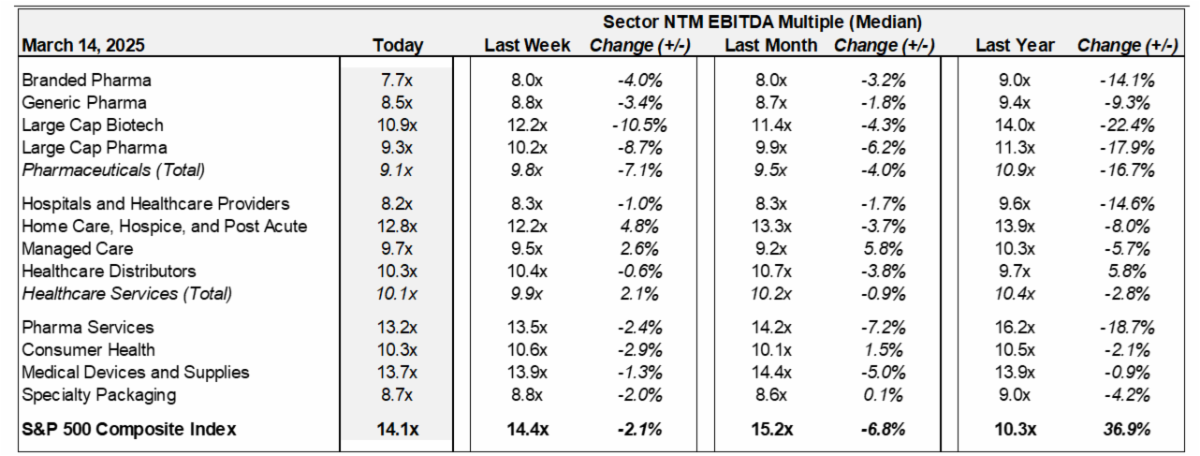
Note: Market values as of the close of business March 15, 2025
Source: S&P Global Intelligence
| | Active Banking Deal Contacts | | Select Banking Transactions | | | | |