|
Civic Federation Urges Linking Transit Governance Reform With Funding, Calls for Consolidation of Transit Services in Northeastern Illinois | |
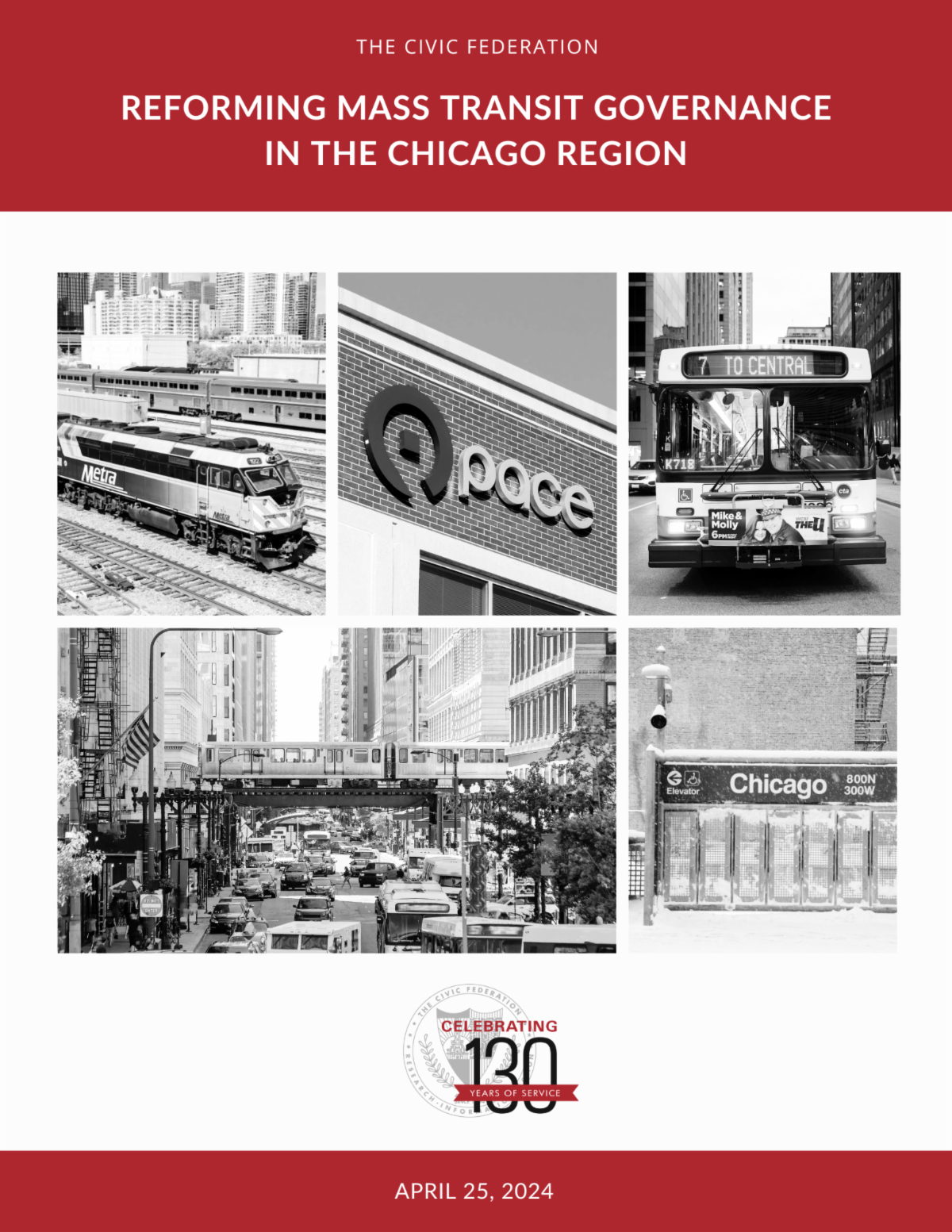
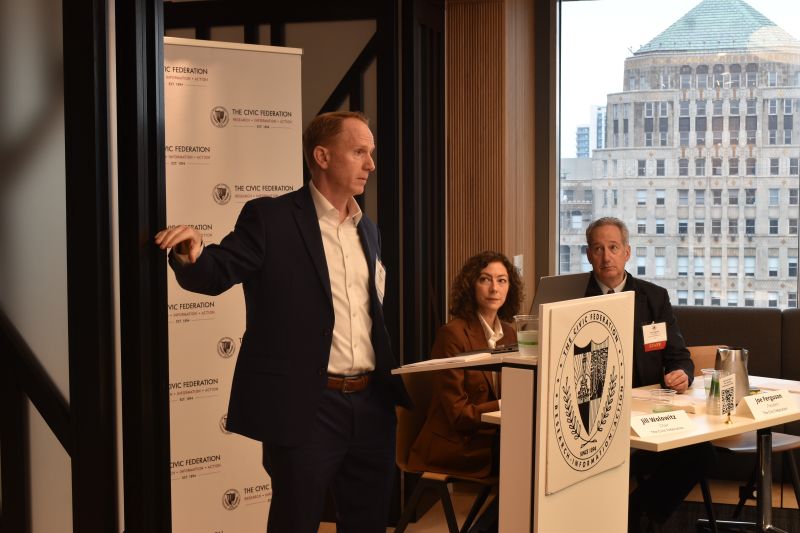
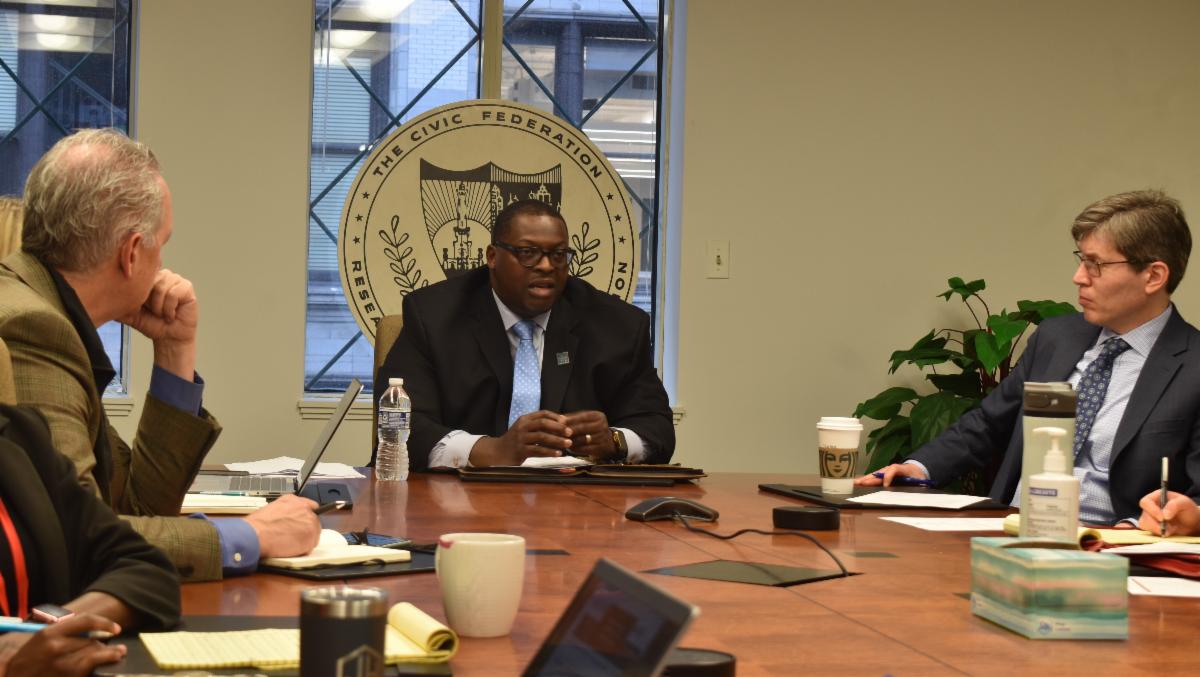
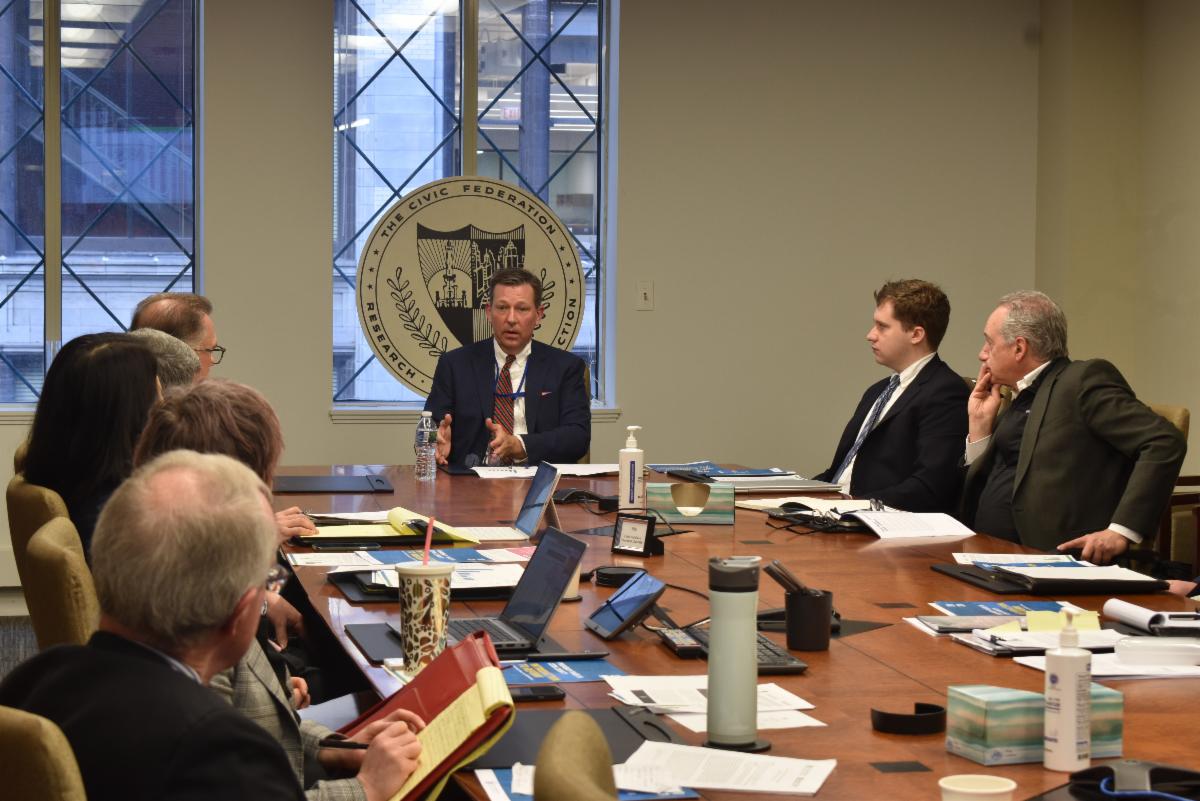
The Civic Federation today released a position paper calling on the Illinois General Assembly to pursue foundational structural reform of Northeastern Illinois’ mass transit systems—the Chicago Transit Authority (CTA), Metra, Pace and the Regional Transit Authority (RTA)—by centralizing the service boards and operations under a single, duly empowered and resourced regional transit agency. Doing so would allow for more efficient, effective, integrated and equitable service delivery as well as more financially prudent use of taxpayer dollars as the agencies and State approach a once-in-a-generation transit funding shortfall due to decreased ridership and fare revenue and increased transit operating costs.
In December 2023, the Metropolitan Agency for Planning released a Plan of Action for Regional Transit (PART) report, in which it laid out potential solutions to the region’s mass transit funding crisis. One option proposed significant structural, operational and financial reform through the centralization of the three area transit service boards under the RTA, while another option proposed giving the RTA greater authority and resources to provide improved coordinating support to the three agencies. While the Civic Federation recognizes each option as meriting consideration, it regards and calls for consolidation as the best and only comprehensive solution to a seismic transit funding and operational crisis.
|
|  |
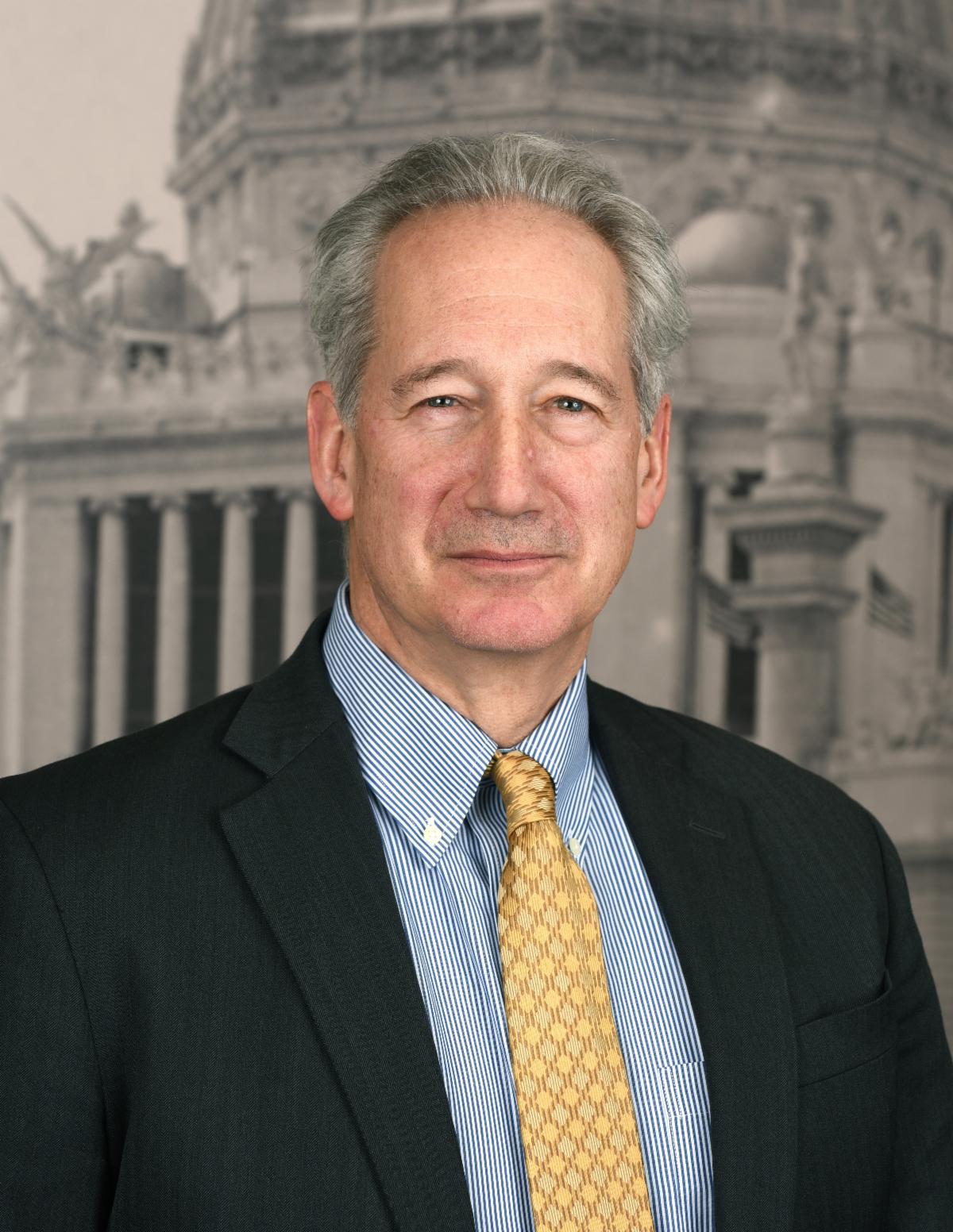 | |
The Civic Federation has continued its release of timely projects in recent weeks. On Thursday last week we released our 2024 Consumer Taxes in Chicago report, and in March we released an evaluation of Cook County's implementation of the Pretrial Fairness Act. Today we released a new report on transit funding and governance that calls for centralization of Northeastern Illinois' mass transit agencies, which we anticipate will be of interest and use to State lawmakers as they consider potential solutions for the fiscal cliff fast approaching our regional mass transit agencies.
Also on our minds: Chicago Mayor Brandon Johnson's $1.25 Billion Housing and Economic Development Bond proposal, designed to address the fiscal cliff facing the City's affordable housing and economic development programs. While finding the proposal to be a sensible reset to the City’s overreliance on TIF, certain planning shortcomings of the proposal highlighted by the Civic Federation in live testimony were repeatedly referenced in aldermanic questions of City officials during a four-hour City Council Committee on Finance meeting.
In addition, we’ve welcomed expert guest speakers to our recent Board and committee meetings; their presentations are highlighted below. Hearing from leaders like these is a staple of the Federation's priorities—in addition to enriching our understanding of critical issues facing our region, these meetings help us forge paths for future collaboration and elevate one another's work.
Joe Ferguson
President, Civic Federation
|
| |
RECENT CIVIC FEDERATION REPORTS | |
|
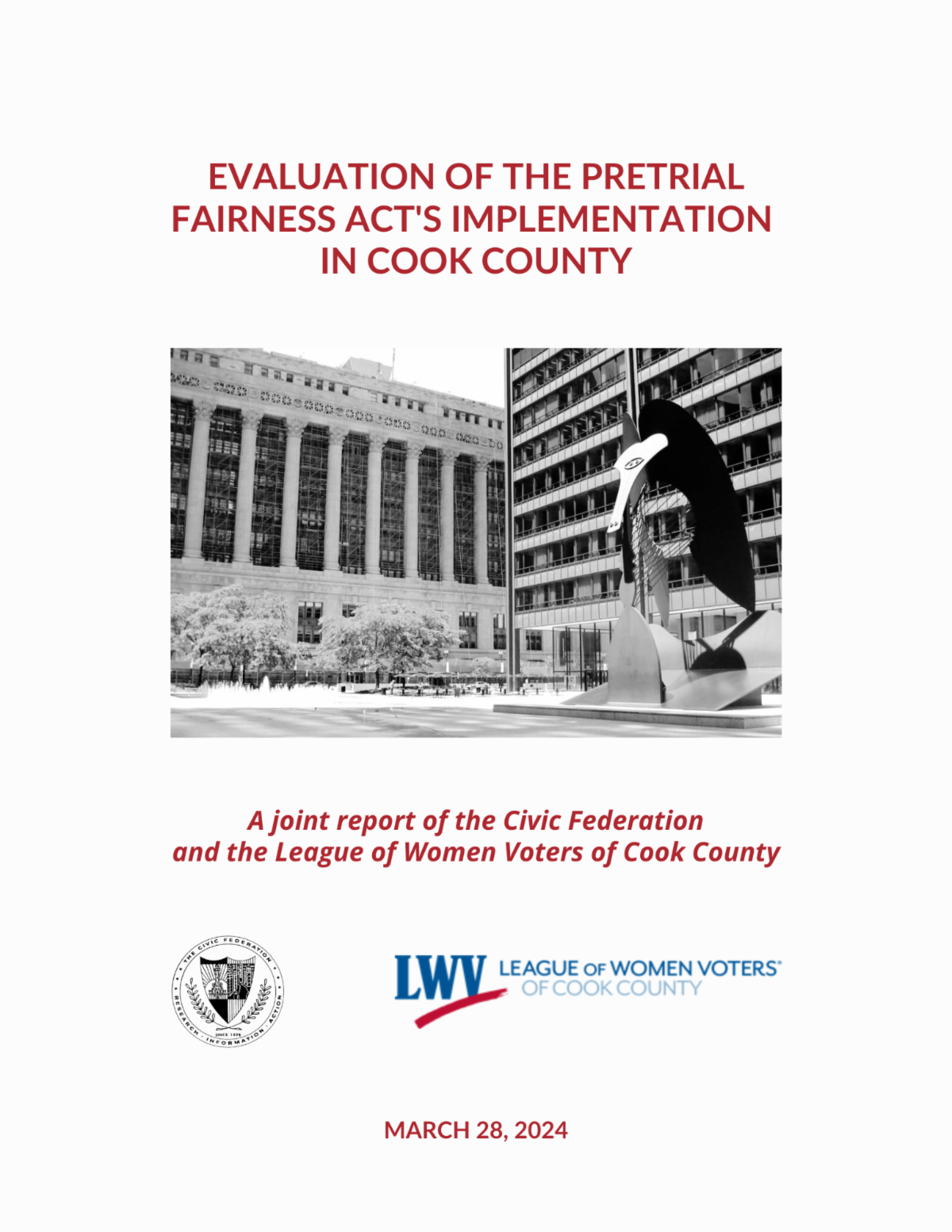
The Civic Federation and League of Women Voters of Cook County released a joint report on Thursday, March 28, 2024, evaluating Cook County's implementation of the Pretrial Fairness Act since the Act took effect nearly seven months ago.
The two organizations have found through observations of initial pretrial hearings that Cook County was well prepared to implement the Pretrial Fairness Act due to past reforms, existing resources and advance preparation. The law appears to be working as intended, with an emphasis on ensuring that people who pose the highest risk to public safety are held in detention.
| |
|
The Civic Federation released
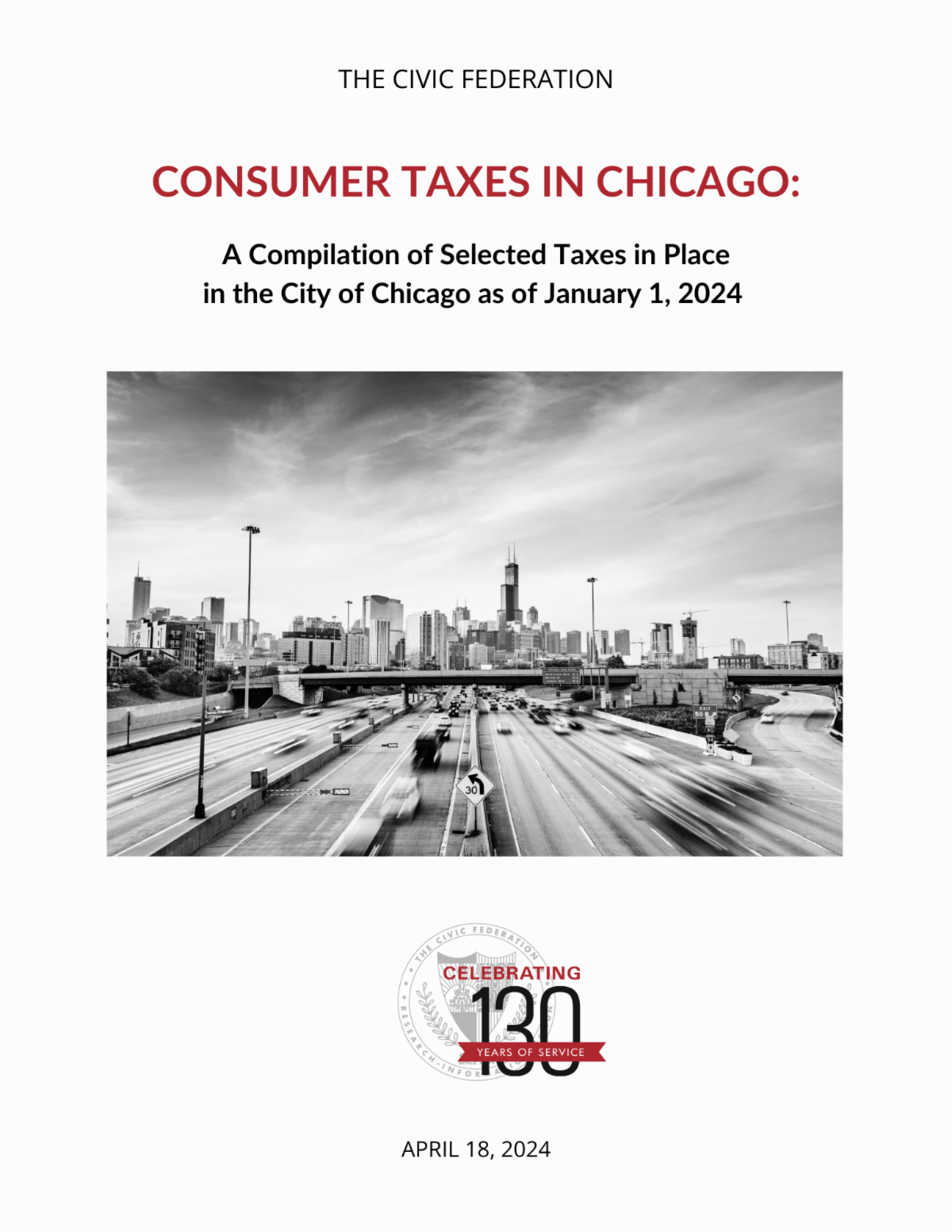
Consumer Taxes in Chicago: A Compilation of Selected Taxes in Place in the City of Chicago as of January 1, 2024 on Thursday, April 18, 2024. This annual report lists and describes selected consumer taxes within the City of Chicago. For ease of use by non-specialists, the taxes in this report are grouped under the following categories: sales taxes, tobacco and nicotine-related taxes, cannabis-related taxes, beverage-related taxes, utility-related taxes, accommodations-related taxes, transportation-related taxes and other taxes. The tax rates presented in this report are effective as of January 1, 2024.
| |
CIVIC FEDERATION ATTENDS WINTRUST COMMERCIAL BANKING 7TH ANNUAL JUNIOR BOARD FAIR |
|
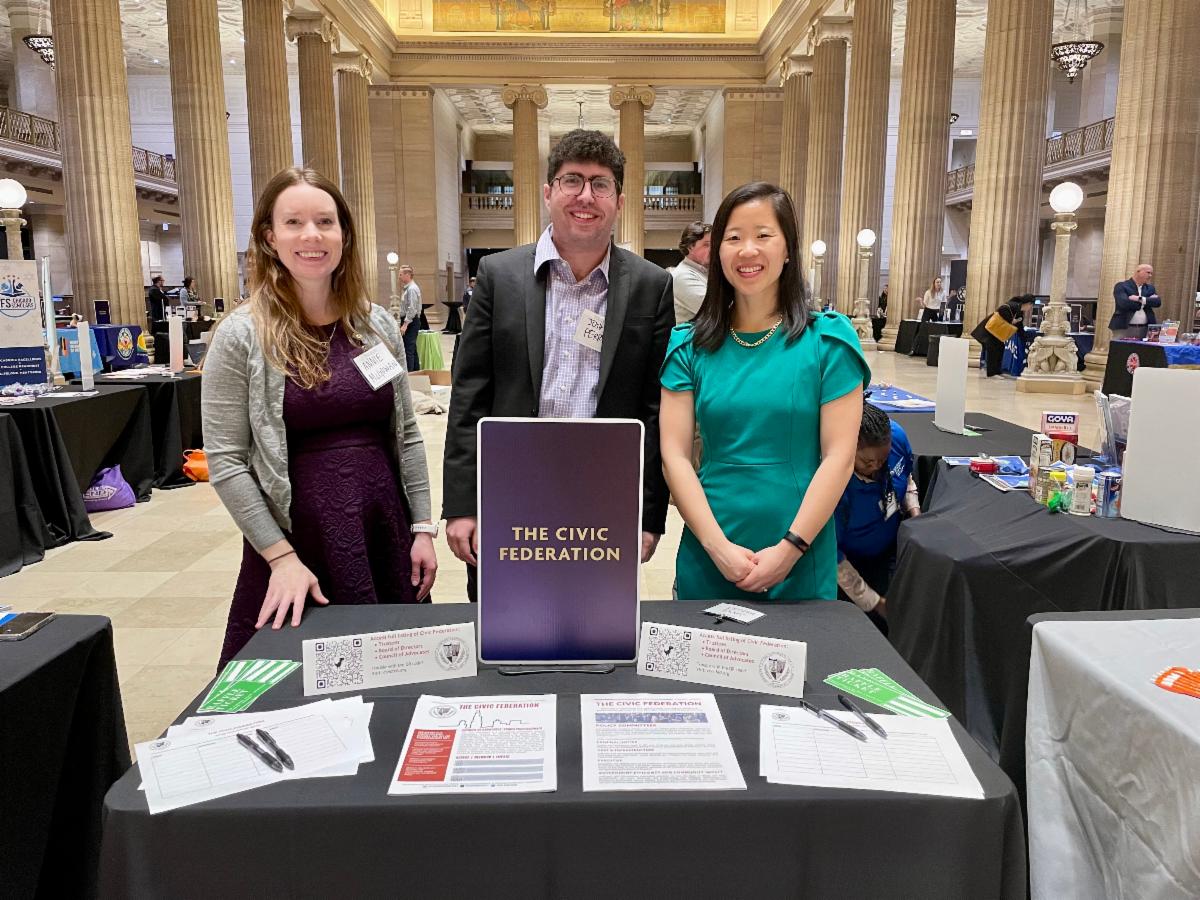
The Wintrust Commercial Banking 7th Annual Junior Board Fair, held on Thursday, April 18, 2024, was a great opportunity to engage the next generation of Chicago's civic and business leaders! Thank you to Civic Federation Vice Chair Kandace Lenti for inviting us to participate again and Council of Advocates members Sean Johnson, Judson W. Smith and Nick Tiniakos for joining us at the event.
Civic Federation staff pictured above, left to right: Research Director Annie McGowan, Communications Specialist Josh Perry and Director of Development Jaye Hobart.
| |
FERGUSON SPEAKS TO ROTARY CLUB OF CHICAGO ON POTENTIAL BENEFITS OF A CITY CHARTER | |
|
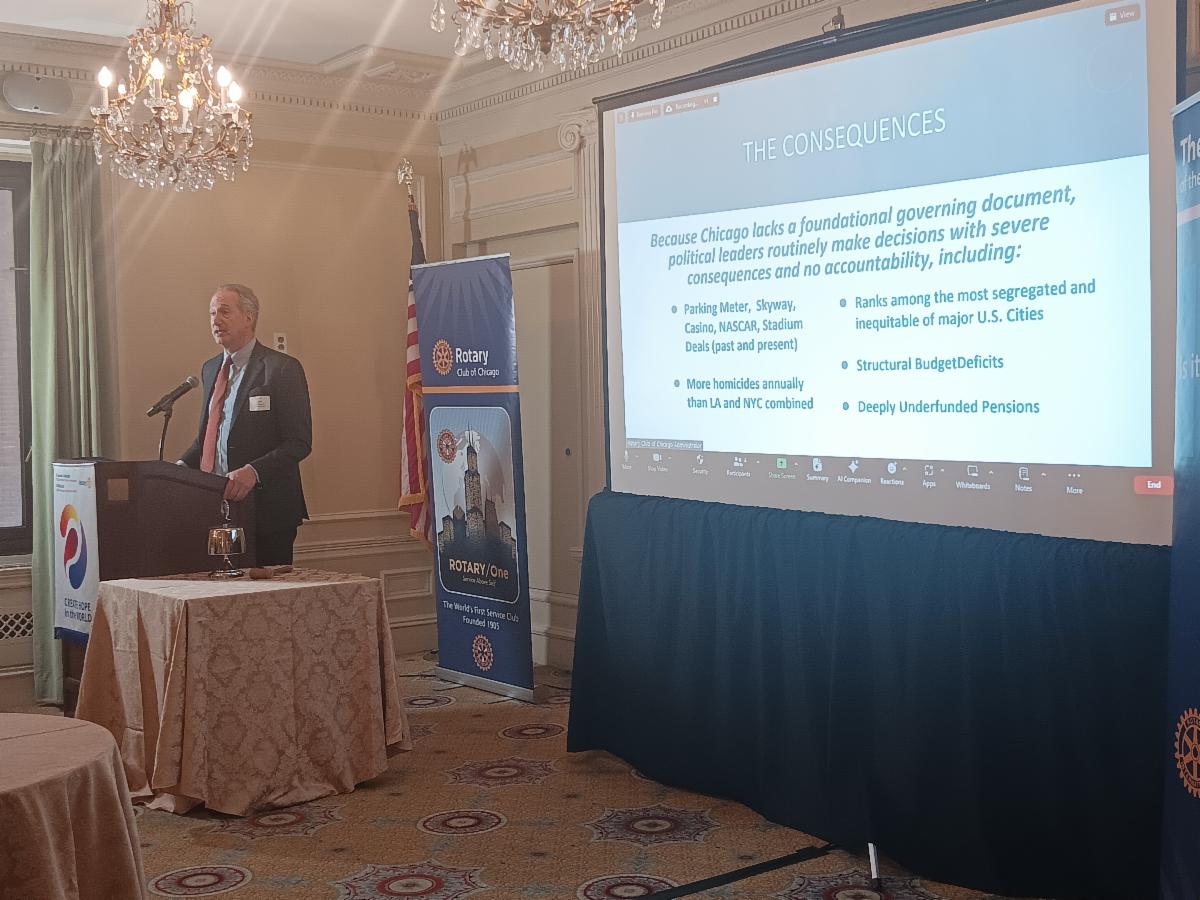
On Tuesday, April 16, 2024, Civic Federation President Joe Ferguson spoke with the Rotary Club of Chicago about the City of Chicago's governance structure and how it contributes to the City's ongoing issues, including public safety, police reform, structural deficits and debts.
Among topics covered, Ferguson explained that Chicago is the only major U.S. city without a municipal constitution or charter, which means the city lacks "an anchor point for accountable, transparent decision-making and public oversight." The creation of a city charter could help foster better governance and more sustainable, healthier civic engagement.
| |
FERGUSON DISCUSSES INVESTMENTS IN EQUITY AT IMPACT FOR EQUITY BREAKFAST |
|
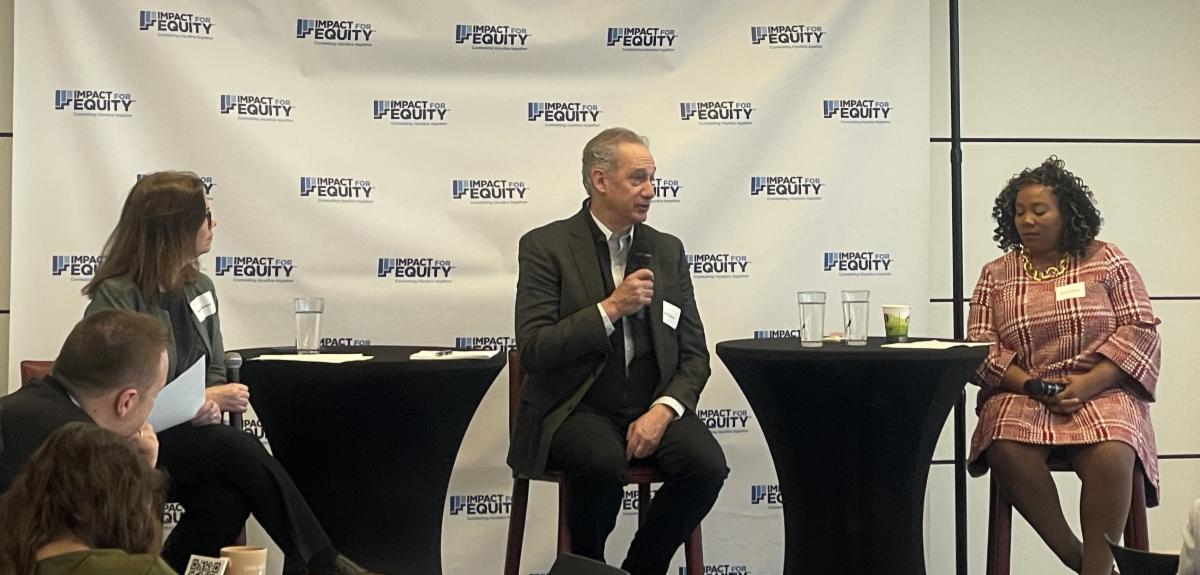
Civic Federation President Joe Ferguson and City of Chicago Budget Director Annette Guzman spoke with Impact for Equity’s Cara Hendrickson at the "Investments in Equity: A 2024 Perspective from Government and Business" breakfast on Wednesday, March 6, 2024. The three discussed the challenges the City of Chicago and Civic Federation face, how equity is addressed in the City’s budgeting process and how the government and business sectors can work together to address systemic inequities in Chicago. |
|
CIVIC FEDERATION TESTIFIES ON CITY OF CHICAGO'S PROPOSED $1.25 BILLION HOUSING AND ECONOMIC DEVELOPMENT BOND | |
|
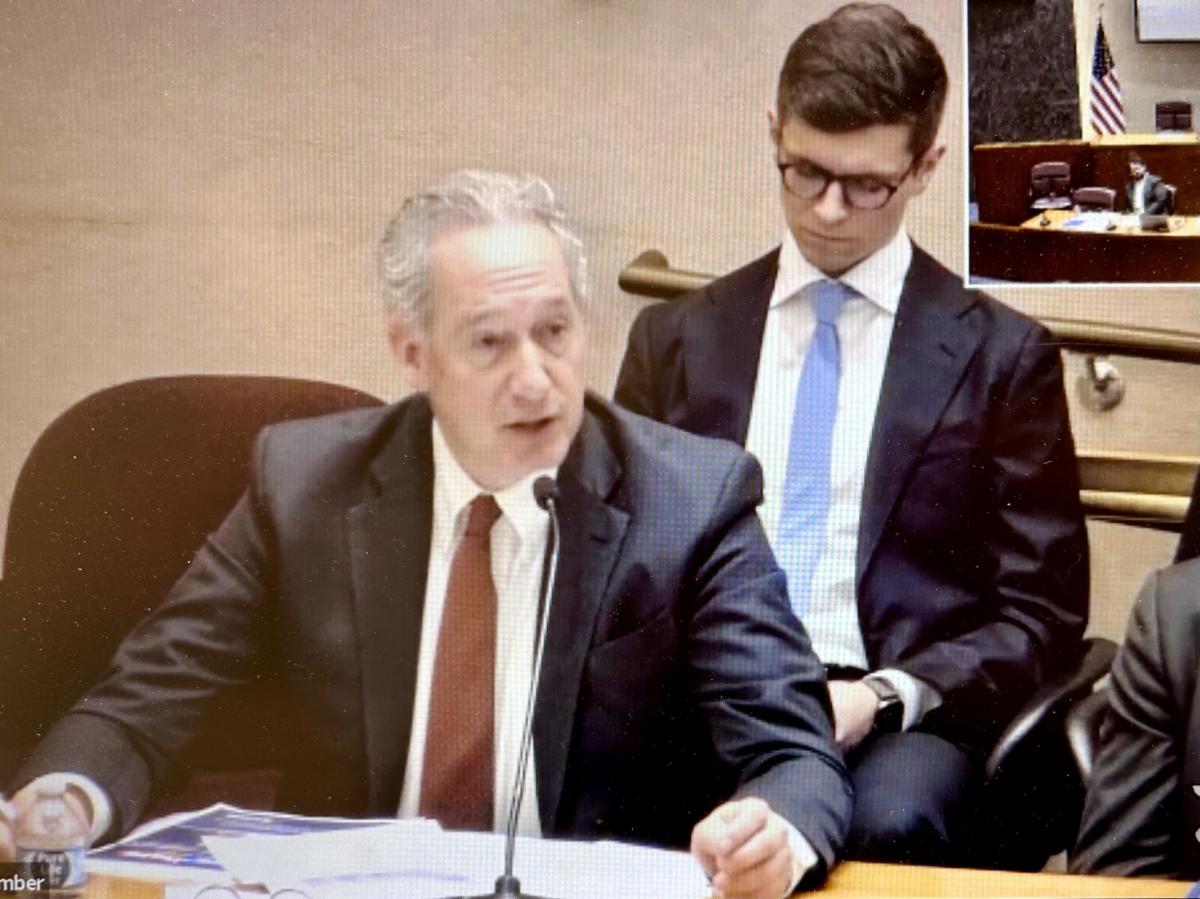
Civic Federation President Joe Ferguson testified on Thursday, April 11, 2024, at Chicago’s City Council Committee on Finance meeting regarding Mayor Johnson’s $1.25 Billion Housing and Economic Development Bond proposal. Overall the Civic Federation is encouraged by the proposal, but is concerned it is not connected to citywide planning.
Key points from Joe's testimony, the bond proposal:
- Represents a new funding tool for maintaining critical affordable housing and economic development programs as revenues decline from the expiration of as many as 47 TIF over the next three years;
- Would curb the City’s over-usage of TIF (Tax Increment Financing) by letting TIF districts sunset on a case-by-case basis and redirecting revenue from expiring TIFs to the City as a funding source to back new housing and economic development bonds while avoiding a tax increase;
- Will result in bond issuance incrementally, and in amounts where revenue is demonstrably sufficient to pay back the debt based on rigorous reporting requirements;
- While sensible, it is worrying in that the proposal is not connected to the existing capital improvement plan, or to a citywide housing plan or planning to replace TIF-subsidized infrastructure development, which will be critically important to generate fiscally sound decisions as the City has to deal with fiscal cliffs on the immediate horizon; and
- Uses revenue estimates that could change due to Chicago's upcoming property tax reassessment, which could affect property values that make up the tax base.
| |
|
FEDERATION WELCOMES SPEAKERS ON POLICING, TEACHERS' PENSIONS, AND IMPROVING EQUITY
IN THE PROPERTY TAX SYSTEM
|
|
The Civic Federation has been pleased to welcome three excellent guest speakers at our Board and committee meetings in recent weeks. | | |
|
The Civic Federation welcomed Brendan Deenihan, chief of security at Google, as our guest speaker at our Board of Directors meeting on Thursday, March 14. He discussed crime trends in Chicago and the U.S. as well as ideas for ways to improve the Chicago Police Department.
Deenihan advocated for CPD policies that decrease criminal activity and encourage proactive policing. He pointed to data from 2013 to 2023 that showed how crime often declined when Chicago Police Department leadership practiced proactive policing. He recommended Chicago look to cities like New York City and Los Angeles as blueprints for policing success; in both cities, homicides dropped from over 2000 annually in the early 1990s to less than 300 annually by the late 2010s.
Special thanks to Civic Federation Board Member Bert Nuehring and Crowe for hosting us for this meeting.
| |
|
The Civic Federation’s Pension Committee welcomed the Chicago Teachers' Pension Fund's Carlton W. Lenoir, Sr. as its guest speaker on Tuesday, March 26. Lenoir discussed CTPF's analyses of Tier 2 safe harbor issues, proposals to address safe harbor, CTPF's investment strategy and more.
Lenoir compared the benefits of Tier 1 and Tier 2 employees participating in CTPF’s current plan, which qualified as a Social Security Replacement Plan as of 2023. There are severe consequences if CTPF’s plan doesn’t meet the funding standards of three Safe Harbor formulas in future years, including forcing affected employees to participate in both CTPF’s plan and Social Security. One potential solution to ensure Safe Harbor compliance is to increase Tier 2 employee’s compensation limit to at least 90.5% of the Social Security tax wage base.
| |
Cook County Director of Property Tax Policy in the Office of Cook County Board President Toni Preckwinkle James Thompson discussed Cook County’s efforts to make the County’s property assessment and tax system more equitable during a meeting with the Civic Federation’s Property Tax Committee on Tuesday, April 9, 2024. County data shows homestead exemptions have a widely varying and routinely inequitable impact on homeowners through the unintended consequence of raising tax rates for all property owners, with a disproportionate concentration of high composite tax rates from exemptions in the South Suburbs. The County aims to educate others on the impact of exemptions, develop policy goals in this area and offer a tool for evaluating legislative exemption proposals. Its long-term goals include targeting inequitably adverse effects, improving progressivity in the tax system and more. |
|
|
Brian Septon is a principal and consulting actuary at The Terry Group. Brian provides advice and expert testimony on pensions, with a particular focus on public sector retirement programs. He is an established national leader in identifying and modeling the risks that accompany public sector pension programs, and in developing related policy solutions. In Illinois Brian has been called upon by government officials and civic leaders for his expertise and insights on the state and local pension programs.
Brian also serves on the board of the Illinois chapter of the Crohn’s & Colitis Foundation. He is a fully credentialed actuary and holds a Bachelor of Science degree from the University of Illinois. Brian lives in Highland Park with his wife and two teenage sons.
| |
BRIAN SEPTON
MEMBER, CIVIC FEDERATION BOARD OF DIRECTORS
Number of years with the Federation: 8
Committees: Criminal Justice, Executive, Healthcare, Pension, State Budget
What made you want to join the Civic Federation?
That’s easy – it was the research. I believe that one needs to “do the work” and really dig into budget proposals in order to develop reliable opinions in the public policy arena. I valued the Civic Federation’s commitment to doing just that. I was also drawn to the integrity of the board members and staff, as well as the opportunity to contribute to the greater good of the region.
What do you enjoy most about being a part of the Civic Federation?
I’d say it’s threefold - the policy debates, the difference we make, and the camaraderie. It’s amazing how deeply informed the board members and staff are on state and city finance – and this all makes for incredible policy discussions and research initiatives. This has all resulted in greater awareness and improved policy. And it’s the camaraderie too – it has been a thrill to meet so many interesting people from across Chicagoland.
What's your favorite Chicago hidden gem?
It’s got to be Lou Mitchell’s in the West Loop. The place hasn’t changed in decades - you walk in, and you’re transported to a different era. And it’s the best breakfast spot in the city – hands down!
What's a project you're working on right now?
It’s budget season – in the State of Illinois and across the country. We are preparing fiscal analyses on a variety of policy proposals across the country. It’s a busy time of year for sure!
How does the public perception of an actuary differ from what you actually do?
Many people think actuarial work is about analyzing a situation and producing a single number as a result. The work is much more nuanced – it’s more about drawing out insights and helping people understand the full range of impacts and associated risks. The iterative nature of the work is important too – there are learnings to be had at almost every turn.
| | | |
CIVIC FEDERATION IN THE NEWS | | |
|
As Chicago Looks to Expiring TIF Districts for Increased Revenue, Here’s a Reminder of How TIF Works
Chicago’s tax increment financing (TIF) program is in the news again for its role in Mayor Brandon Johnson’s $1.25 billion Housing and Economic Development Bond proposal. Civic Federation President Joe Ferguson testified before City Council’s Committee on Finance on the proposal this morning, making it a good time to re-post some oldies but goodies on TIF from the Civic Federation’s blog archives. These posts explain what TIF does and does not do with regard to government revenues and tax rates and can be read in conjunction with the TIF section of the Federation’s 2011 primer on property tax extension in Cook County.
A common misperception is that TIF programs divert or limit revenue from local governments like Chicago Public Schools. This is incorrect. Instead, TIF districts limit the taxable value of property, or the tax base, from which local governments can draw their property tax levies, which is the amount of money that governments request in property tax revenue to fund their budgets each year. TIF districts do not directly limit the amount of money for which local governments can levy.
|
| |
|
Civic Federation Position Statement on Graduated Real Estate Transfer Tax and Bring Chicago Home Proposal
Homelessness and a lack of housing affordability pose critical challenges for a growing number of people living in Chicago and at the same time contribute to a larger destabilization of the City’s ability to attract residents and businesses. These issues combined constitute the local dimensions of a national social and policy crisis that the City of Chicago and other governments must address with holistic attention to both their immediate humanitarian imperatives and impact on the larger community. Bring Chicago Home (BCH) advances not so much a solution as a response to certain aspects of a crisis that has arisen from a dynamic, evolving and complex set of policy and economic failures. However, there are a number of questions left open by the proposal in its current form. The referendum presents both an opportunity and a risk for Chicago. It is an opportunity to generate a new dedicated revenue stream for the homelessness crisis in Chicago that at the same time presents the risk of negatively impacting the real estate market, especially for a commercial sector already in distress.
|
| |
|
Interested in learning about Civic Federation membership opportunities?
Click here for more information.
| | | | |