|
CDC Community Transmission Levels
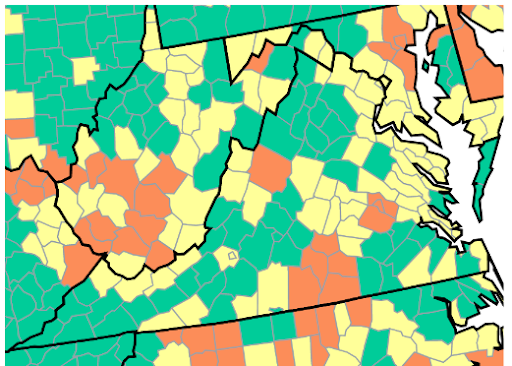
The CDC's COVID-19 Community Transmission Levels are a tool to help communities determine the best steps to take based on the latest data. Levels can be low, medium, or high and are determined by looking at hospital beds being used, hospital admissions, and the total number of new COVID-19 cases in an area. The community levels of COVID-19 transmission continue to change throughout BRHD.
As of Friday, June 3, the CDC categorizes Charlottesville City, Albemarle County, and Fluvanna County as “MEDIUM” transmission, while Greene County, Louisa County, and Nelson County are categorized as “LOW.” The CDC has provided recommendations for healthier outcomes, based on levels of transmission.
In those areas of medium transmission, the CDC recommends:
-
If you are immunocompromised or high risk for severe disease:
- Talk to your healthcare provider about whether you need to wear a mask and take other precautions (e.g., testing)
- Have a plan for rapid testing if needed (e.g., having home tests or access to testing)
- Talk to your healthcare provider about whether you are a candidate for treatments like oral antivirals, PrEP, and monoclonal antibodies
-
If you have household or social contact with someone at high risk for severe disease:
- consider self-testing to detect infection before contact
- consider wearing a mask when indoors with them
-
Stay up to date with COVID-19 vaccines and boosters
- Maintain improved ventilation throughout indoor spaces when possible
- Follow CDC recommendations for isolation and quarantine, including getting tested if you are exposed to COVID-19 or have symptoms of COVID-19
For more information and guidance, visit the CDC webpage on COVID-19 transmission levels.
| |
|
Pediatric COVID-19 Vaccines
COVID-19 vaccines are widely available throughout the District for everyone ages 5 years and older. BRHD is preparing for if/when COVID-19 vaccines for 6 month - 5 year olds are approved and will provide updates as they become available.
For current guidelines and recommendations on COVID-19 vaccines and boosters for children 5-11 years old, visit the CDC website. To schedule an appointment for vaccines or find details on the closest walk-in clinic to you, visit the BRHD website or search your zip code on the VDH website.
COVID-19 Vaccines at Local Health Departments & Mobi on the Mall
Beginning Monday, June 6, COVID-19 vaccine schedules for clinics at local health departments are changing. Vaccines and boosters will be available to individuals five years and older by appointments or as walk-ins on the following days:
-
First Monday of each Month: Greene County Health Department, 3:00-6:00pm
-
Tuesdays: Louisa County Health Department, 3:00-6:00pm
-
Wednesdays: Fluvanna County Health Department, 3:00-6:00pm
-
First Thursday of each Month: Nelson County Health Department, 3:00-6:00pm
-
Fridays: Charlottesville/Albemarle Health Department, 2:00-6:00pm
BRHD’s Mobile Health Unit will be on Charlottesville’s Downtown Mall (in front of The Whiskey Jar) every Wednesday in June from 12:00-3:00pm with vaccines and boosters for those who qualify. Starting Wednesday, June 8, 5-11 year olds can get vaccinated or boosted, too! No appointment is necessary, but minors must be accompanied by a consenting adult.
Looking for more information on vaccines and boosters? Visit our website for the latest, including to schedule your appointment.
COVID-19 Testing Options in BRHD
BRHD, UVA Health, and NEXT Molecular continue to offer free drive-through COVID-19 test sites throughout the District every Monday-Friday. PCR testing is available at no cost for anyone who needs it, regardless of symptoms. You can find the June testing schedule on the BRHD website.
You can also order free at-home COVID-19 testing kits through USPS. Follow all the manufacturer’s instructions for performing the test. Learn more below about how to report if you test positive for COVID-19 with an at-home test kit.
| |
|
Reporting a Positive At-Home Test
If you test positive with an in-home COVID-19 test kit, you can report your positive test to BRHD. If you choose to do so, you will receive follow up resources and guidance from our Epidemiology team with next steps on keeping you and your loved ones as healthy as possible.
| |
|
|
On May 26, the first case of Monkeypox was identified in Virginia. “VDH is monitoring national and international trends and has notified medical providers in Virginia to watch for monkeypox cases and report them to their local health district as soon as possible. Based on the limited information currently available about the evolving multi-country outbreak, the risk to the public appears to be very low.” Dr. Colin Greene, State Health Commissioner, MD, MPH.
Although rare, monkeypox is a potentially severe viral illness that is transmitted via close contact with an infected person or animal. Person-to-person spread occurs via prolonged close contact to or with direct contact with body fluids, or contact with contaminated materials such as clothing or linens. Illness typically begins with fever, headache, muscle aches, exhaustion, and swelling of the lymph nodes. After a few days, a specific type of rash appears, often starting on the face and then spreading to other parts of the body. Symptoms generally appear seven to 14 days after exposure and, for most people, clear up within two to four weeks. Some people can experience severe illness and die. As with many viral illnesses, treatment mainly involves supportive care and relief of symptoms.
If you are sick and have symptoms consistent with monkeypox, contact your healthcare provider, especially if you have:
- Traveled to central or west African countries, parts of Europe where monkeypox cases have been reported, or other areas with confirmed cases of monkeypox during the month before their symptoms began.
- Been in contact with a person with confirmed or suspected monkeypox.
If you need to seek care, call your healthcare provider first. Let them know you are concerned about possible monkeypox infection so they can take precautions to ensure that others are not exposed. Healthcare providers evaluating patients for suspected monkeypox should implement standard, contact, and airborne precautions.
To learn more about monkeypox, visit the CDC website.
| |
Bring the Food, Not the Food-borne Illness | |
|
Millions of people get sick from food-borne illnesses every year and that risk increases the more we are hosting cookouts, going on picnics, or taking home leftovers from the latest gathering. During the warmer months, bacteria grows faster so it’s more important to prepare and keep food safely during the summer.
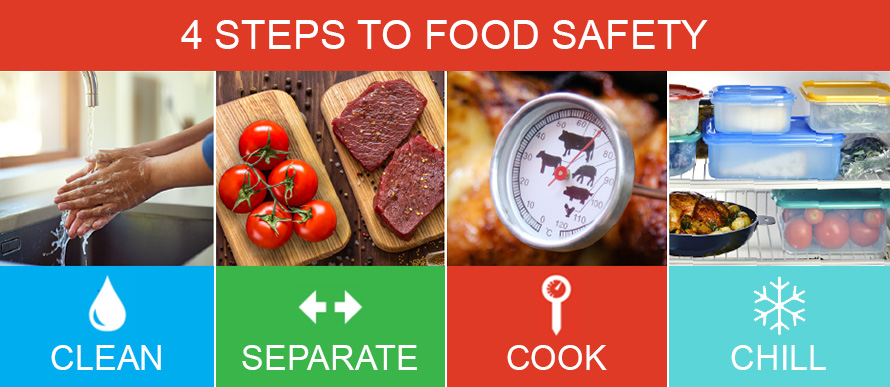
Following four simple steps at home—Clean, Separate, Cook, and Chill—can help protect you and your loved ones from food poisoning.
-
Clean: Wash hands often for 20 seconds with soap and water before, during, and after preparing food and before eating. Wash your utensils, cutting boards, and countertops with hot, soapy water after preparing each food item.
-
Cook to the right temperature: Food is safely cooked when the internal temperature gets high enough to kill germs that can make you sick. The only way to tell if food is safely cooked is to use a food thermometer. You can’t tell if food is safely cooked by checking its color and texture (except for seafood).
-
Chill: Refrigerate promptly. Bacteria can multiply rapidly if left at room temperature or in the “Danger Zone” between 40°F and 140°F.
For more information on food safety, visit the VDH website on food safety or the CDC website on cooking out safely.
| |
Make a Splash with these Safe Swimming Tips | |
|
Now that it is officially pool season, it is important to remember that staying healthy means staying safe around the water! Here are some tips for water safety this season:
-
Do your own mini inspection. Can you see the drain at the bottom of the deep end? Is there a report of chemical levels available?
-
Check for lifeguards. You should also be able to quickly and easily access things like a life ring or pole and telephone in case of an emergency.
-
Evaluate yourself. Stay out of the water if you are not feeling well, experiencing diarrhea, or have any open cuts or wounds. You should also shower before and after swimming.
Recently, our very own Jason Fulton had a conversation with Kasey Hott at NBC29 regarding healthy and safe swimming week. See his interview and learn more or visit the CDC webpage on swimming safely.
| | | | | |