|
How to Handle Our Political Differences
Ten ideas to ponder to decrease conflict with friends and family
By Dr. Robert L. Leahy, Ph.D.
| |
We live in a time of intense conflict where many people experience conversations about politics. Unfortunately, we often see friendships and family relationships disintegrate very quickly. People tell me that friends have dropped them because they supported a candidate or simply because a friend was a friend of someone with a different political view. Whatever your political beliefs, it's probably true that half the people in the country disagree with you about every single central point that you hold dear. That's the nature of a democracy. How can we live with these differences without getting into fights that lead to nothing but further resentment? How can we learn to get along?
Here are some ideas to ponder—and put into practice.
-
Is what you're doing working? You may think that arguing and labeling people is going to change things, convince them, or give you a sense that you're standing up for what you believe. Yes, it's possible for you to stand up for what you believe, but it may create intense friction and put your relationships in jeopardy. You may be right, but you may not be effective. It is usually the style of your communication that creates the problem. For example, if you say, “I guess you and I may disagree about that,” there probably won’t be a problem. But if you say, “I can’t believe that you supported that person. What is wrong with you?”— then you are likely to lose a friend.
-
What is your goal? If your goal is to change people's minds, ask yourself if this has been effective. Are people saying to you, “Thank you for telling me that I'm wrong, and now I have changed my mind and I completely agree with you”? If you give up persuasion, you may find that your time with friends and family is more rewarding. What if your goal was simply to listen, state respectively that we might not agree, and then move on to something else?
-
Are you labeling people who disagree with you? Are you telling people that they are naïve, racist, homophobic, fascist, communist, authoritarian, stupid, deplorable or sexist? How do people feel when you label them? How would you feel if someone labeled you? Do they feel insulted, humiliated, despised, and marginalized? Is that what you want?
-
You can decide to disagree and accept the difference as something you can live with. There is probably no topic that everyone agrees on and you already accept differences. Why is it a problem for you that someone has a different political view? Why do you need them to agree with you? You might think, “How can I have this person as a friend if they believe this or support this candidate.” You will lose friends if you cannot accept differences. One way of thinking about a friend is to think, “I accept the whole person—even the differences.”
-
Are you reducing the entire person to a political belief? We often generalize about people—“That is the kind of person that you are.” But imagine if you accepted that people have different beliefs about politics, religion, conventions, and sports teams. We can live with these differences. What are the things that you have valued in the past in this relationship? If a family member disagrees with you, does this cancel out everything about them? Should people cancel you out because you have a different point of view? People are more than one set of beliefs. Embrace complexity—even contradiction—and then you live in the real world. As Walt Whitman once said, "Do I contradict myself? Very well then I contradict myself, (I am large, I contain multitudes.)"
-
Think about learning about others rather than changing them. As a psychologist I am curious about why people believe a lot of things. Why are some people superstitious, why are others taking too many risks, and why do some people view life in a depressing way? What if you thought of yourself as an anthropologist and you wanted to learn more about why some people have views that differ from yours? Why are some people in favor of immigration while others fear it? Why are some people in favor of social welfare while others oppose it? Learning about people is different from judging them and marginalizing them.
-
Don’t take it personally. Sometimes we feel insulted that someone has a different view of something. But do you think that they developed this view to make you uncomfortable? Even if you think that they are misled, was it aimed at you? If you observe, suspend judgment, and accept differences, you may be able to see what you have in common and come to understand how complex these issues are. Did you develop your beliefs to make others feel worse? I doubt it. You had your reasons, your experiences, and your values. Let others have the same. It’s not about you, it’s about the complexity and differences that people experience.
-
It’s not awful that someone thinks something that you disagree with. We often respond to differences as if they are catastrophic. We may think that we cannot imagine tolerating the difference. If your friend disagrees with you on politics, what can you still do in your life independently of their beliefs? Can you still spend time together, talk about other things in your life, enjoy sharing your experiences? Or do you get hyper-focused on the difference and ignore the fact that you have a lot in common. Perhaps you can do almost everything that is important to do even if a difference exists.
-
Make room for differences. What if you thought of a person in your life as a collection of 100 qualities including their behavior, their personal qualities that you have in common with them, and their many interests. Of these 100 qualities, what if 10 are things that you don't agree on, but you decided to make room for them? You can decide to rise above the differences and focus on the other qualities. Making room for the differences doesn't mean you like them, but it means that you're big enough to include them and to accept them. Let's take living in New York City where I live. There are a lot of things that you can dislike about New York including the noise, the crowds and the expense. But if you're a New Yorker you try to make room for that and recognize that some things come with the territory. Differences of opinion come with the territory.
-
Make others feel respected and valued. What is true in a good intimate relationship is also true for all relationships. We all want to feel respected. We all want to think our friends value us. We all want to feel heard. I often counsel my patients to imagine that they are a diplomat and they can approach people with a sense of decorum and respect. We can do that by avoiding personal attacks—or threats. We can do this by pointing out what we have in common—not just our differences. We can summarize what others say, rather than tell them they shouldn’t say it. We can be open to the idea that we are not always right, but that we are willing to extend to others the same courtesy and consideration that we would want for ourselves.
Keeping our relationships requires work, flexibility, humility, acceptance and openness to differences. We are not clones of one another. I value all my friends across the political spectrum and care enough about them to know that our differences will not cancel our commonality. After all, that is what friends and family are all about.
| | | | Robert L. Leahy (B.A., M.S., Ph.D., Yale University), Director of AICT, completed a Postdoctoral Fellowship in the Department of Psychiatry, University of Pennsylvania Medical School under the direction of Dr. Aaron Beck, the founder of cognitive therapy. Dr. Leahy is the Past-President of the Association for Behavioral and Cognitive Therapies, Past-President of the International Association of Cognitive Psychotherapy, Past-President of the Academy of Cognitive Therapy, Director of the American Institute for Cognitive Therapy (NYC), and Clinical Professor of Psychology in Psychiatry at Weill-Cornell University Medical School. Dr. Leahy is the Honorary Life-time President, New York City Cognitive Behavioral Therapy Association and a Distinguished Founding Fellow, Diplomate, of the Academy of Cognitive Therapy. He has received the Aaron T. Beck award for outstanding contributions in cognitive therapy. | | |
Book Spotlight
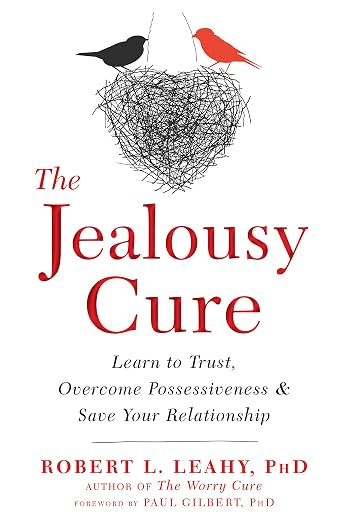
Dr. Robert Leahy, the director and founder of AICT, is the author and editor of 31 books that have been translated into 24 languages. Check out his book, The Jealousy Cure, to read more about his approach to tackling feelings of jealousy.
Several of his popular audience books can be found here:
| |
| |
|
Adult DBT Skills Group at AICT:
Emotion Regulation Module
We are accepting new participants in our DBT Skills Group. The group will meet weekly on Wednesdays from 7:00 PM - 8:30 PM on our HIPAA-compliant Zoom platform, starting on October 28th. Group is co-led by Kathleen Taylor, Ph.D., and Danielle Honigstein Kasturi, LMSW.
The DBT group will begin the Emotion Regulation module, focusing on increasing awareness of emotions, utilizing skills to regulate their level of intensity, and building resiliency. Group members will learn adaptive coping skills to reduce the force, impact, and duration of intense negative emotions in daily life.
The last day to enroll in the Emotion Regulation Module is November 10th.
| | | |
When Did We Stop Having Fun Together?
By Danielle Honigstein Kasturi, LMSW
Why Fun Is Vital in Long-Term Love
When couples first fall in love, having fun together often feels effortless. Partners seek novel experiences, share inside jokes, and connect easily. Over time, however, the demands of everyday responsibilities can make having fun together feel challenging and nonessential. Time together may focus more on managing a household than nurturing a connection. Yet, fun is not simply a nice-to-have in a flourishing relationship — it is essential to its longevity.
Shared enjoyable experiences help couples navigate challenges more successfully.
Experiencing positive emotions together helps partners think more clearly, solve problems more effectively, and manage stress collaboratively with greater confidence. Enjoying each other's company fortifies the connection that sustains couples through difficult moments.
Why Couples Stop Investing in Fun
Over time, couples may gradually withdraw from shared pleasurable activities as competing priorities take precedence. This can create a cycle of mutual disengagement in which neither partner initiates opportunities for connection. Several common obstacles contribute to this pattern:
-
Undermining positive experiences: Criticism or guilt can discourage partners from initiating activities together. For example, responding to a proposed date with, “It's about time you finally took me out,” turns a bid for connection into an experience of failure. Similarly, discussing household responsibilities during a date undermines its purpose. Protect opportunities for connection by expressing appreciation when your partner initiates an activity and keeping dates focused on romance and enjoyment.
-
Different ideas of fun: Partners need not share identical interests, but both should feel their preferences are understood and valued. When activities consistently cater to one partner, the other may feel unheard or resentful. Discuss what each of you enjoys and identify experiences you both appreciate.
-
Too little variety: Repeating the same routine can make time together feel monotonous. Trying new experiences, exploring unfamiliar places, or learning a skill together introduces novelty and excitement.
-
Competing demands on time and finances: Work, parenting, and other responsibilities can make quality time difficult to prioritize. However, fun does not need to involve elaborate plans, expensive outings, or an entire evening. Listening to a favorite song, sharing a hug, or playing with a pet can create meaningful moments of connection in just a few minutes, at no cost.
Making Fun a Priority
Breaking these patterns requires initiating connection even when it feels vulnerable. Rather than waiting for the perfect mood or moment, act in accordance with the relationship you want to build. Small, intentional efforts to enjoy one another's company can strengthen emotional intimacy. Start by examining how you currently spend your time. Consider what you could do less of in order to make room for more fun with your partner. Next, create a shared list of activities you both enjoy, varying in cost and time commitment. Schedule these activities in your calendars rather than relying on spontaneity. Committing to even five minutes of fun each day or one enjoyable activity each week can establish a new pattern. Ultimately, strong relationships require more than shared responsibilities and proximity, they also require opportunities to enjoy one another's company. Romance grows when couples consistently invest in experiences that bring them mutual joy.
If you and your partner find yourselves caught in routines that leave little room for fun, couples therapy can help you break these patterns and build new ones. Contact our office at (212) 308-2440 or intake@cognitivetherapynyc.com to schedule a couples therapy session to develop tools for making fun a priority in your relationship again.
| | |
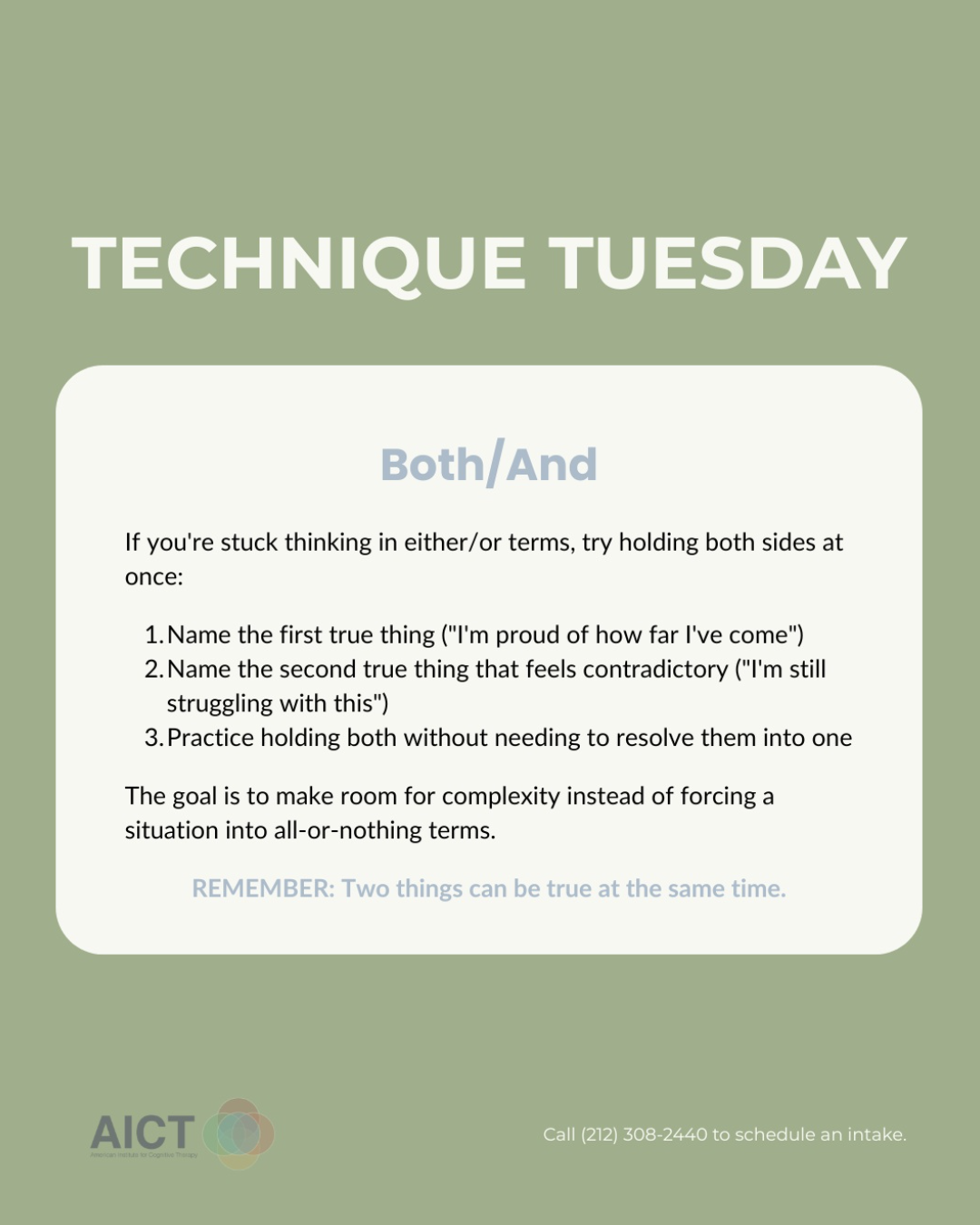
Catch up on our recent Instagram posts
Click on any post to view
| | |
The American Institute for Cognitive Therapy
150 East 58th St, 5th Floor Annex
New York, NY 10155
Phone: (212) 308 - 2440
Fax: (212) 308 - 3099
| | | | |