|
|
University of New Mexico
METALS
Superfund Center
Metals Exposure and Toxicity Assessment on Tribal Lands in the Southwest
|
|
|
Welcome to our November 2023 Newsletter! |
|
Highlight on
UNM METALS Data Management & Analysis Core (DMAC) Team
|
|
Data Management and Analysis Cores (DMACs) within Superfund Research Program (SRP) Centers are focused on supporting the management and integration of data assets. One of the DMAC’s missions is “to foster and enable the interoperability of data across the Center's projects and cores to accelerate the impact of the Center's research.”
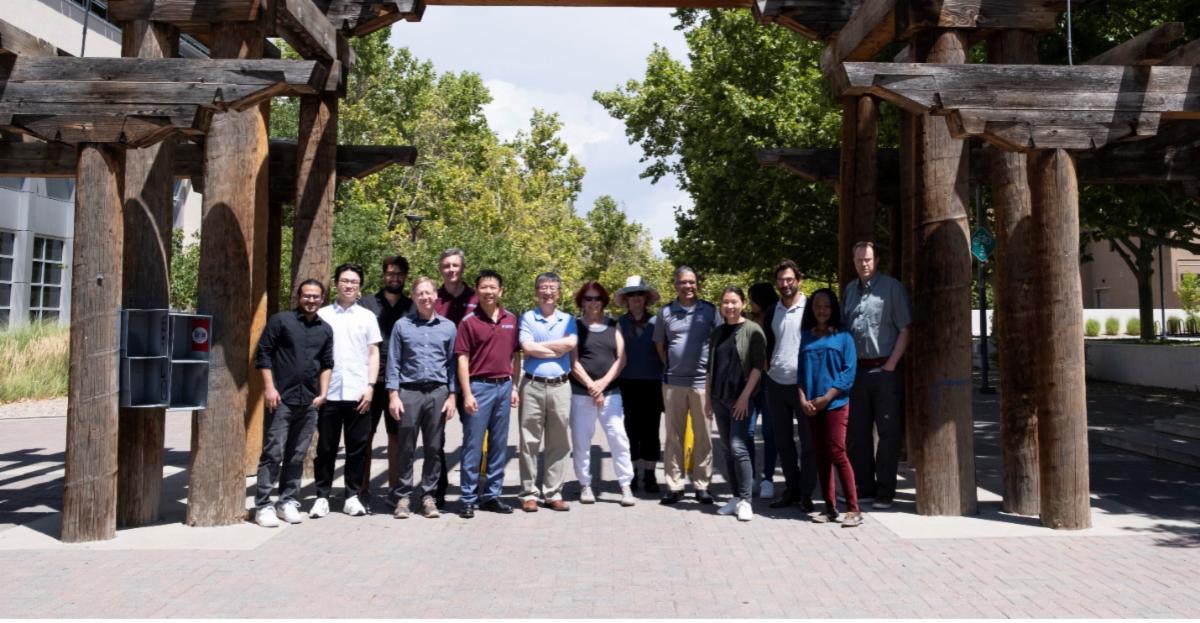
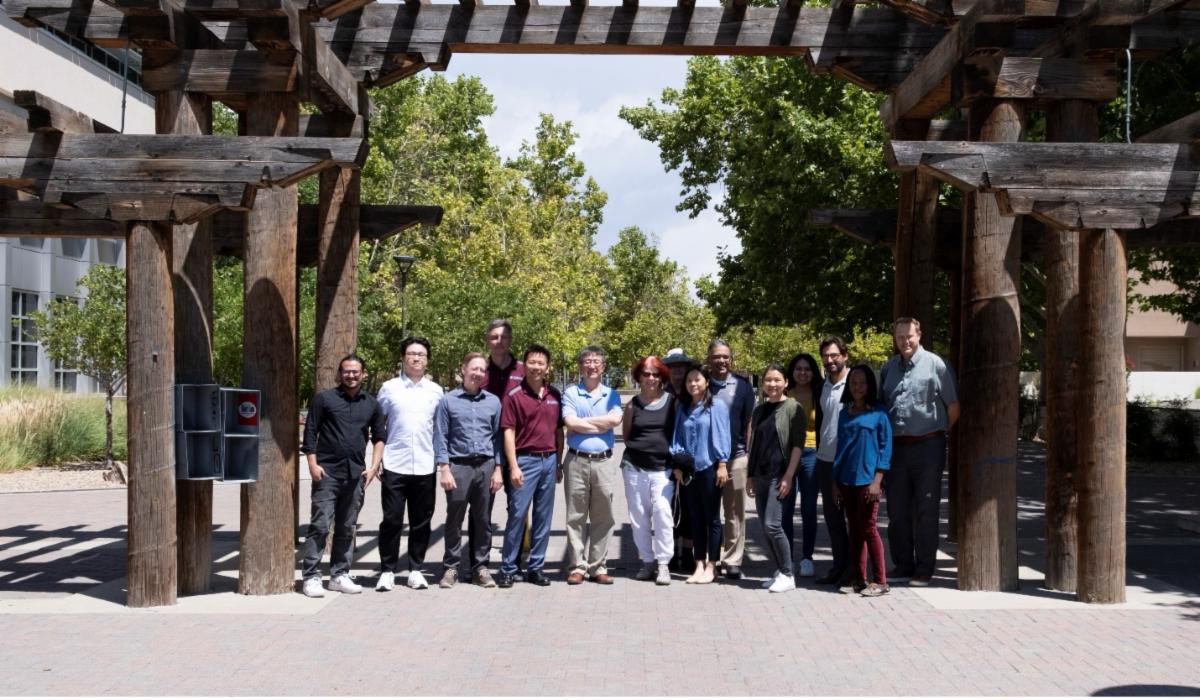
The UNM Metals Exposure and Toxicity Assessment on Tribal Lands in the Southwest (UNM METALS) SRP Center has always followed the NIEHS’s mission on inter-center collaborations. On August 8th, 2023, UNM METALS SRP (Center PIs: Drs. Johnnye Lewis, Jose Cerrato Corrales, and Matthew Campen; DMAC leads: Drs. Li Luo and Yan Lin) hosted colleagues from the University of Arizona SRP (Drs. Xinxin Ding, Nirav Merchant, and Bernardo Lemos), Texas A&M SRP (Drs. Ivan Rusyn and Weihsueh Chiu from Texas A&M University (TAMU) and Dr. Fred Wright from North Carolina State University) for a full day DMAC Summit in Albuquerque, NM. The purpose of the summit was to focus on cross-center collaboration opportunities for data management, analysis, quality control, and training across centers.
The DMAC Summit focused on strengths and available resources within each center as well as common areas of interest across all centers. UNM METALS SRP summarized our center’s DMAC strengths as: metal mixture modeling, mediation and causal inference, community-based geospatial modeling & statistics, web-enabled GIS (WebGIS), Tribal data sovereignty, and Findable, Accessible, Interoperable, & Reusable (FAIR) management and harmonization of sensitive data. TAMU SRP summarized their center DMAC strengths as: Geographic Information Systems (GIS) mapping & risk communication, WebGIS, statistical genetics, and high dimensional multivariate analysis and data mining. University of Arizona SRP summarized their DMAC strengths as open science data training, reproducible data analysis and pipelines, scaling data pipelines, geoinformatics, and genomics data analysis. The cloud-based platform CyVerse from the University of Arizona was discussed as a potential platform for future collaborations. Common themes were identified especially around “Geo” and a GIS community of practice across the three centers was discussed. Since August 2023, the collaborative team has moved forward with defining specific projects and held additional meetings between centers. One such meeting on August 31, 2023 aimed at establishing a GIS Community of Practice where each center presented GIS case studies and discussed collaboration opportunities.
|
|
UNM METALS
DMAC Leadership
|
|
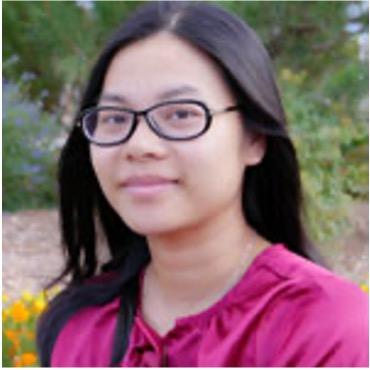
DMAC lead: Dr. Li Luo
Dr. Li Luo is an Associate Professor in the Department of Internal Medicine and Comprehensive Cancer Center at the University of New Mexico. She is a biostatistician with research interests and expertise in high-dimensional genomic data analysis and environmental chemical mixture modeling.
|
|
DMAC co-lead: Dr. Yan Lin
Dr. Yan Lin is an Associate Professor in the Department of Geography & Environmental Studies and Center for the Advancement of Spatial Informatics Research and Education (ASPIRE) at the University of New Mexico. She is a geographer specialized in Geographic Information Science (GIS) who focuses on the impact of space and place on health.
|
|
DMAC TRAINEE HIGHLIHTS
Daniel Beene received a NM-INSPIRES (1P30ES032755) Pilot project grant, entitled “Navajo WaterGIS Usability and Needs Assessment: Environmental Data Justice and Data Bias” in July 2023. Daniel was selected to participate in the 2023 Institute for Geospatial Understanding through and Integrative Discovery Environment (I-GUIDE) Summer School on Convergence Science in Action at UCAR in Boulder, CO. His team won the competition of team projects and attended the subsequent Geospatial Data Science meeting at Columbia University, in October 2023.
Theodros Woldeyohannes’s poster entitled “Researching Environmental Health Impacts from Unregulated Solid Waste Disposal (USWD) with Native American Communities” was awarded 2nd place graduate presentation in the 2023 NIH IDeA Western Regional Conference in Bernalillo, NM on August 2-4, 2023.
Theodros Woldeyohannes was awarded the 2023 UNM-OVPR Zancada Graduate Fellowship.
Chris Girlamo successfully defended his master’s thesis titled “Estimating Potential Exposure from Abandoned Uranium Mine Sites through the Machine Learning Classification of Animal Behavior: A Case Study in the Navajo Nation” on August 24, 2023.
|
|
DMAC Publications
The DMAC team recently led a publication to address which meteorological data are more reliable for modeling potential exposure to abandoned uranium mine sites. After extensive comparison among available meteorological data sources with drastic differences in spatial and temporal coverage, this study revealed that local direct measurement-based data produce a more accurate prediction than the other sources evaluated in the study. This study has the potential to inform future data collection methods, leading to more accurate predictions and better-informed policy decisions surrounding environmental exposure susceptibility and risk assessment.
Girlamo, C., Lin, Y., Hoover, J., Beene, D., Woldeyohannes, T., Liu, Z., Campen, M.J., MacKenzie, D. and Lewis, J., (2023). Meteorological data source comparison—a case study in geospatial modeling of potential environmental exposure to abandoned uranium mine sites in the Navajo Nation. Environmental Monitoring and Assessment, 195(7), p.834.
Other publications by the DMAC team
Gong, X., Liu, L., Huang, Y., Zou, B., Sun, Y., Luo, L., & Lin, Y. (2023). A pruned feed-forward neural network (pruned-FNN) approach to measure air pollution exposure. Environmental Monitoring and Assessment, 195(10), 1183.
Huang, Y., Gong, X., Liu, L., Luo, L., Leng, S., & Lin, Y. (2023). Maternal exposure to metal components of PM2. 5 and low birth weight in New Mexico, USA. Environmental Science and Pollution, 30, 98526–98535.
|
|
2023 NIEHS Annual SRP Meeting
to be held in Albuquerque, NM
|
|
The annual in-person meeting of the NIEHS Superfund Research Program (SRP) is being held at the Hotel Albuquerque in NM on Dec 4-6.
Grant recipients from across the country will provide research progress updates of their SRP-supported environmental health research. This year's meeting theme explores how utilizing team science can accelerate scientific discovery and solutions for those impacted by hazardous substances, with a special focus on engaging Indigenous scientists and community members.
We are still looking for sponsors. Please contact cwroman@salud.unm.edu if your company is interested in supporting this important meeting.
|
|
|
|
The catalogue book from the traveling art exhibit "EXPOSURE: Native Art + Political Ecology", published by the Museum of Contemporary Native Art featuring an introduction compiled primarily from interviews with the METALS team members Johnnye Lewis, Chris Shuey, and Mallery Quetawki, has won the New Mexico Book Association award in the Best Scholarly and Technical Book category, and was a finalist in the History category. The exhibit will be featured at this year's SRP annual meeting in videos, reproductions, and contributing artists on hand.
|
|
THRO’s 2023 Native American Heritage Month Image
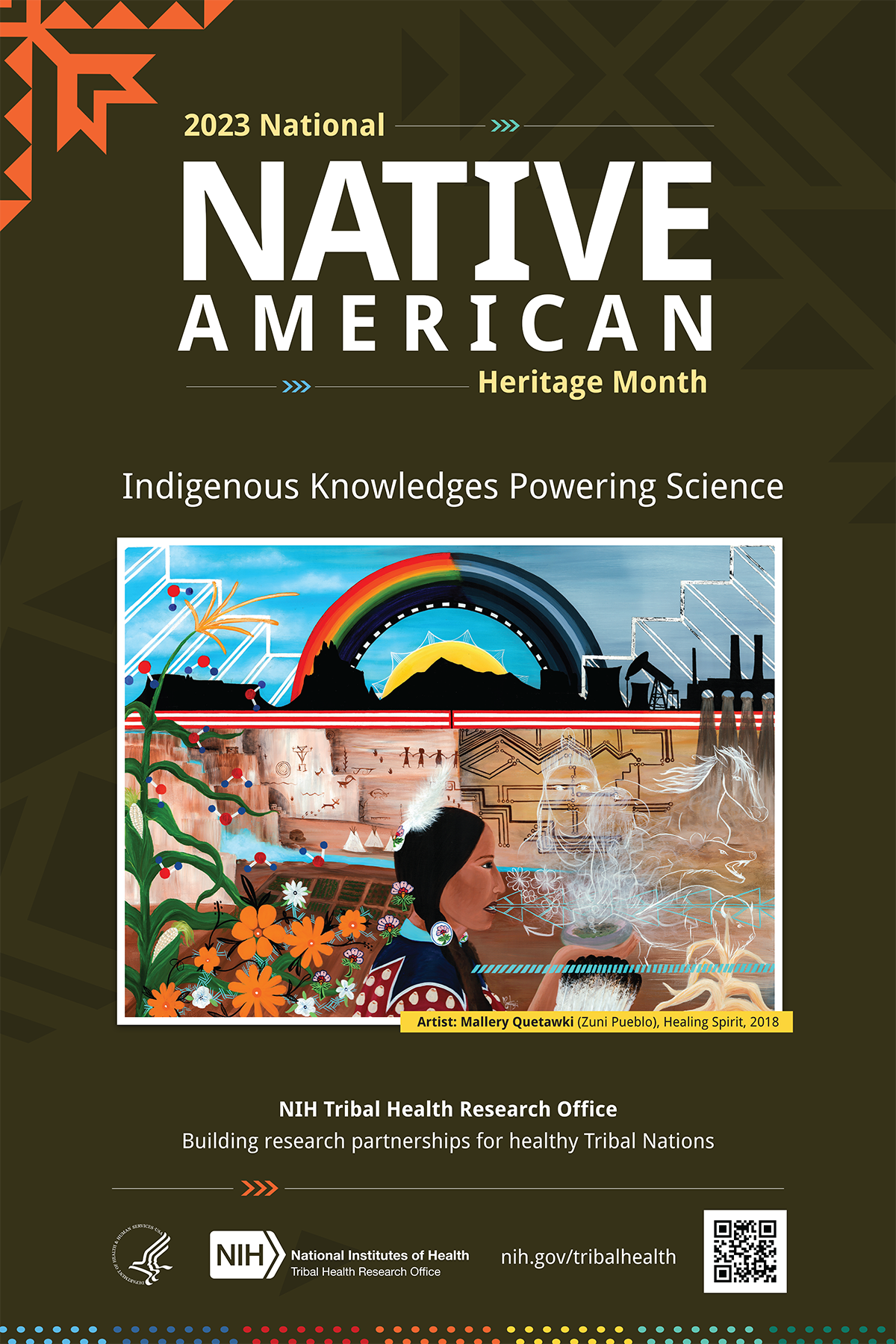
NIH’s Tribal Health Research Office (THRO) has featured the artwork of Zuni Pueblo artist-in-residence, Mallery Quetawki, as this year’s poster/image for Native American Heritage Month with the theme “Indigenous Knowledges Powering Science”. She created Healing Spirit, 2018, to showcase Native cultures’ connectedness to the land, air, and water.
|
|
4S Panel on Environmental Injustice and Irradiated Spaces
METALS researchers, Dr. Thomas DePree, Kirena Tsosie, and METALS community partner, Teracita Keyanna, will be giving an oral presentation at the Society for the Social Studies of Science (4S) annual meeting in Honolulu, Hawaii in November, 2023. https://www.4sonline.org/meeting.php
The panel, Environmental Injustice Global Record: Irradiated Spaces, is part of a larger set focused on varied kinds of spaces dealing with environmental injustice. The abstract for this talk focuses on Remembering the Church Rock Uranium Mill Tailings Spill on Navajo Nation and Imagining Possibilities for Restoring Indigenous Lands.
|
|
This was a collaborative effort including METALS SRP center researchers Daniel Beene and Dr. Johnnye Lewis. The publication focuses on aging infrastructure, public health as responsibility of government, and climate change impacts1.
UNM METALS and other Superfund Research Program (SRP) centers’ work with Native communities is highlighted in a recent SRP Science Digest feature.
|
|
NEW PUBLICATIONS
-
Levin R, Villanueva CM, Beene D, Cradock AL, Donat-Vargas C, Lewis J, Martinez-Morata I, Minovi D, Nigra AE, Olson ED, Schaider LA. US drinking water quality: exposure risk profiles for seven legacy and emerging contaminants. Journal of Exposure Science & Environmental Epidemiology. 2023 Sep 22:1-20. https://doi.org/10.1038/s41370-023-00597-z
-
Dashner-Titus EJ, Schilz JR, Alvarez SA, Wong CP, Simmons K, Ho E, Hudson LG. Zinc supplementation alters tissue distribution of arsenic in Mus musculus. Toxicology and Applied Pharmacology. 2023 Oct 4:116709. https://doi.org/10.1016/j.taap.2023.116709
|
|
Previous METALS eNewsletters
|
|
UNM METALS is supported by NIH/NIEHS grant # P42 ES025589 This material was developed in part under cited research awards to the University of New Mexico. It has not been formally reviewed by the funding agencies. The views expressed are solely those of the speakers and do not necessarily reflect those of the agencies. The funders do not endorse any products or commercial services mentioned in this presentation.
|
|
|
|
|
|
|
|