Shifting Seasonal Gears... | |
|
In this issue:
-
What's in Your Air Filter?
- Stealth Weeders
- Upcoming Programs
- Young Naturalist Program!
- Pollinator Photo Contest
-
Tales From the Trails: The Tale of a New Trail
- Greenways: Grow Your Own--Homegrown Tomatoes and More!
- In case you missed this...
| |
|
What's in Your Air Filter?
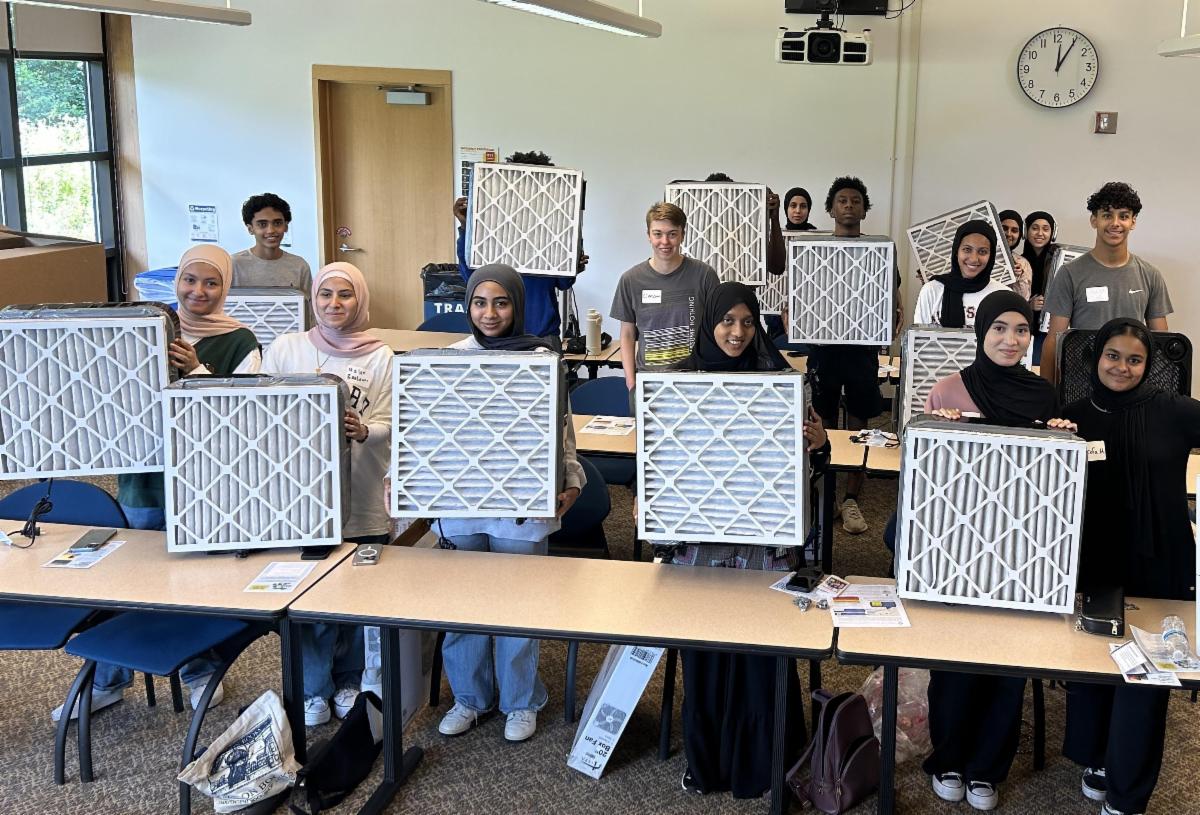
Students in this 2-week summer academy can answer this question! Hosted at the EIC and conducted by the Environmental Health Research to Action group (EHRA). EHRA is a community-academic partnership focused on supporting intergenerational leadership.
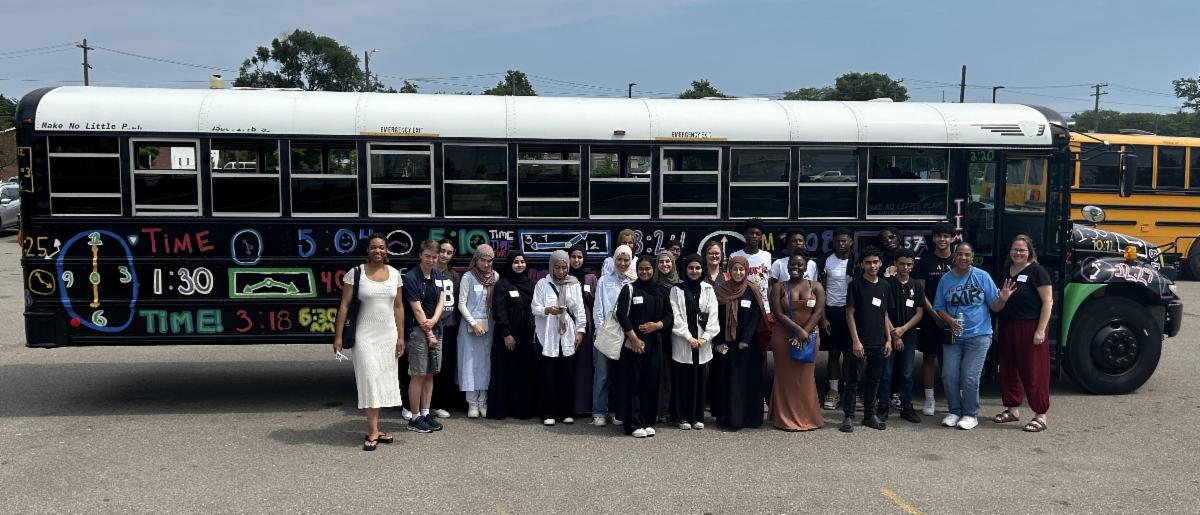
The founding community members include representatives from several community, academic, health care, government, and faith-based organizations. The summer academy, in its 6th year, welcomed 22 local high school students who learned about environmental health science and policy. The students shared their priorities with community, academic, and government leaders. Enjoy a short video on the EHRA home page featuring student reflections on their 2019 experiences.
| |
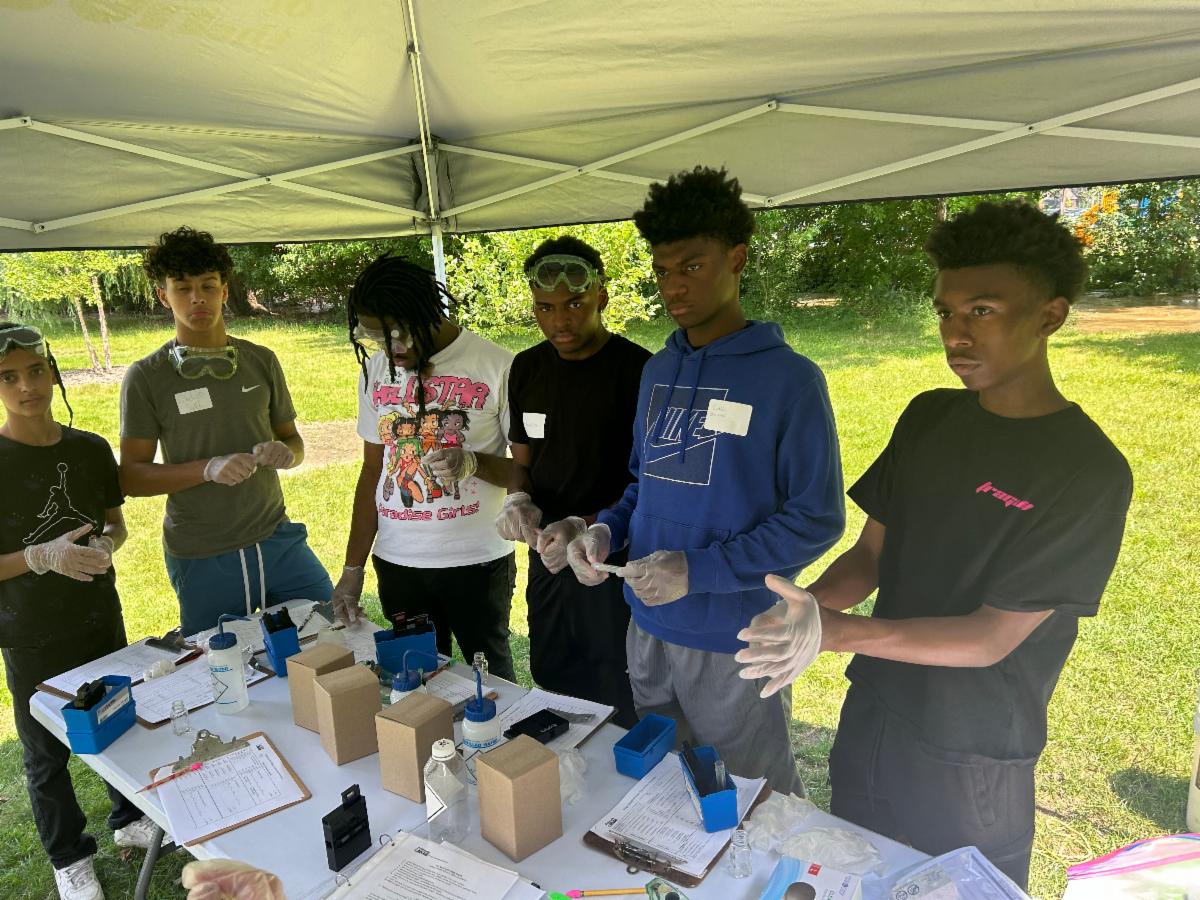
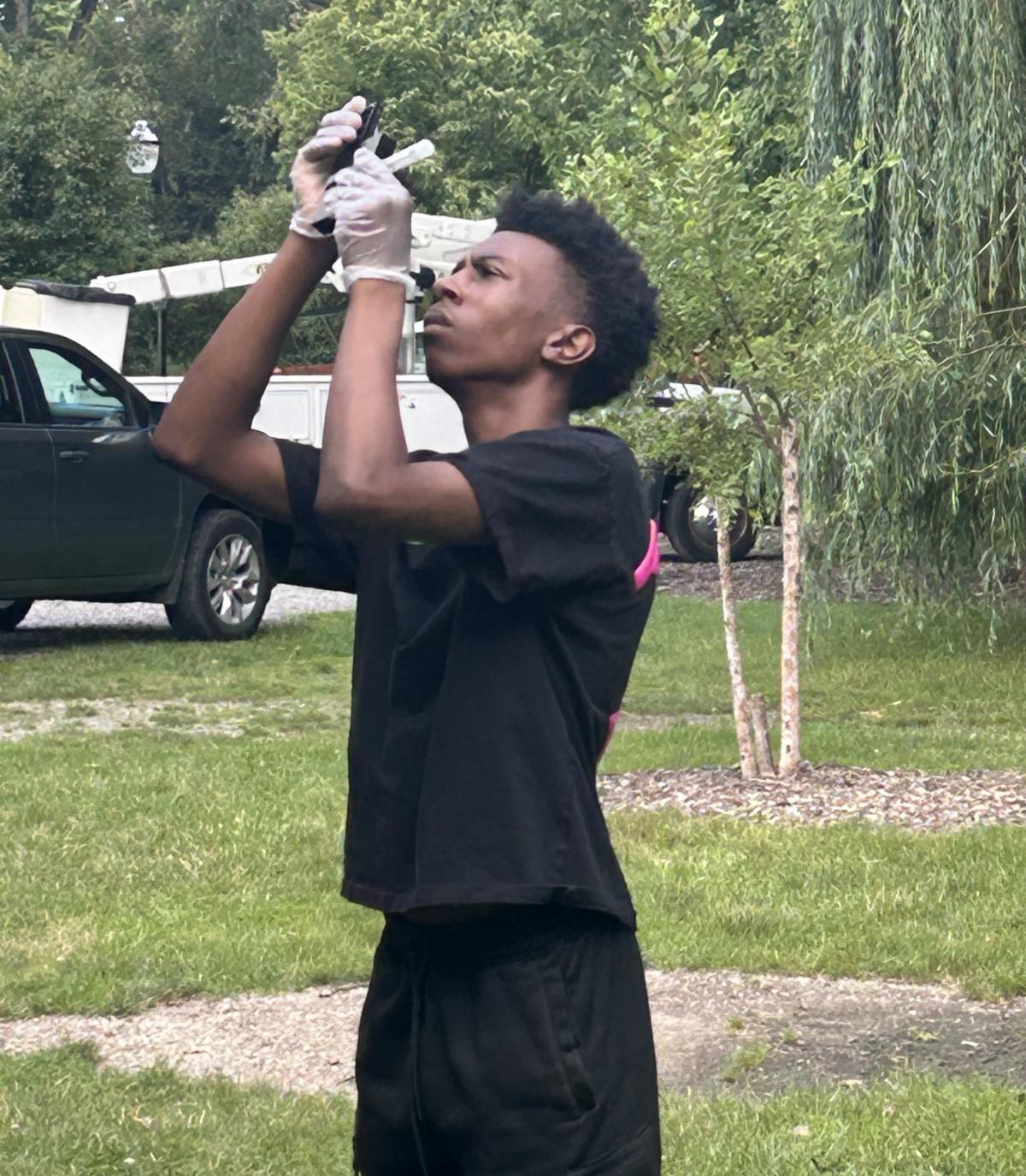
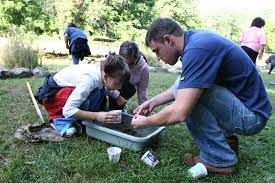
The content of the academy included an introduction to environmental health and justice; air, water, energy, and health; and community led science, including data collection and mapping techniques. These real-world experiences (like water quality testing at Dearborn's Ford Field, above) teach skills required for a variety of environmental careers, as well as increasing awareness of environmental issues in southeast Michigan. | |
|
EHRA’s creators are UM-Dearborn faculty members Drs. Carmel Price and Natalie Sampson. Dr. Price is an associate professor of sociology and an affiliate faculty of the Center for Arab American Studies and the Women and Gender Studies programs at the University of Michigan-Dearborn.
Dr. Sampson is an Associate Professor of Public Health, working across sectors and disciplines to understand and address the environmental justice implications of land use planning and infrastructure with community, academic, and agency partners.
| |
The EHRA Academy is supported by Community Action to Promote Healthy Environments (NIEHS RO1ES022616, RO1ES032389) & the Michigan Center on Lifestage Environmental Exposures and Disease (NIEHS P30ES017885). | |
Stealth Weeders
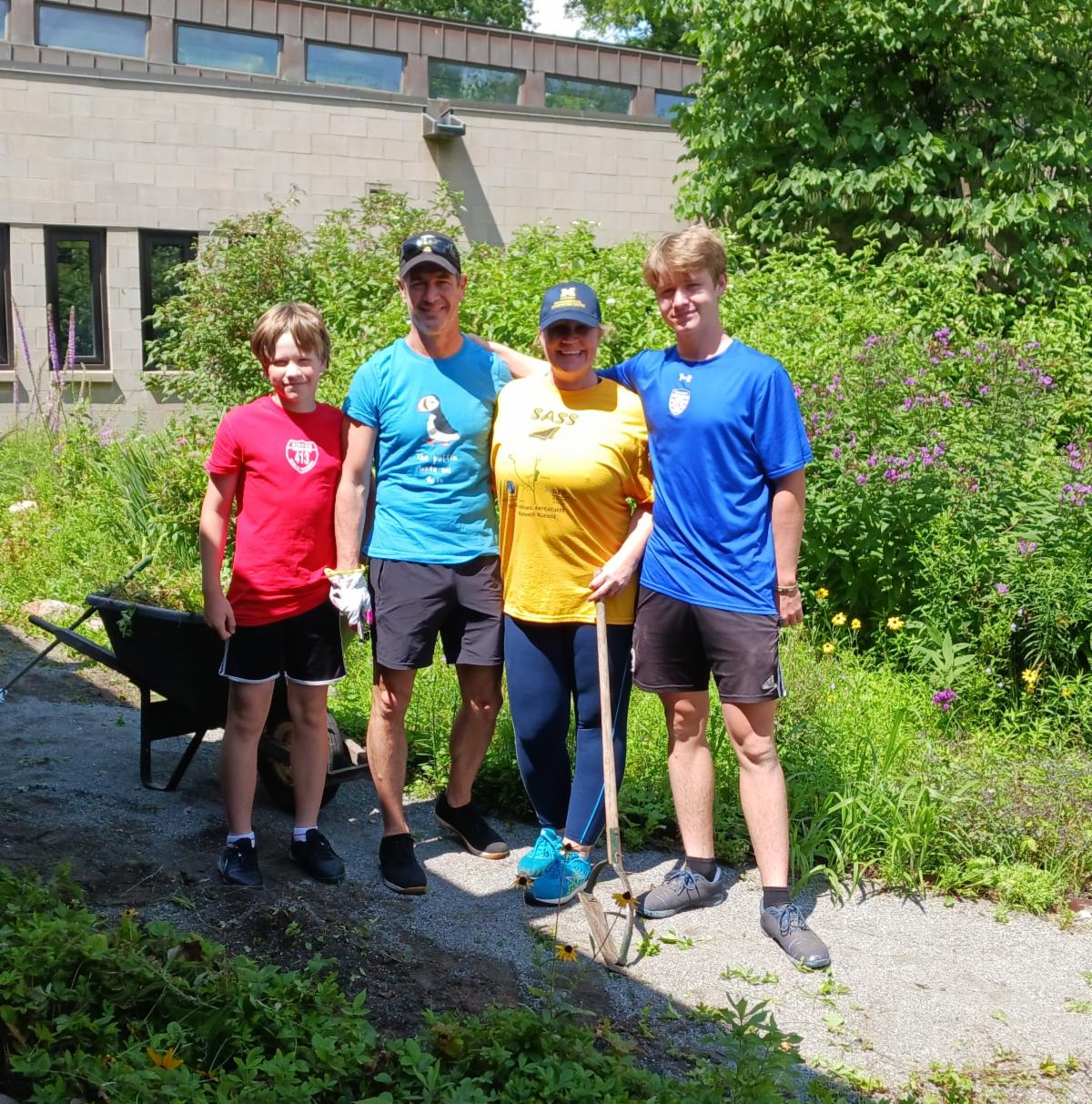
Weeding the rain garden became a family affair last week, due to the efforts of the Napieralski Family! That name may sound familiar because Jacob Napieralski is our EIC Director.
Jacob's wife, Lise, has consistently been volunteering time in the many EIC gardens that we steward, but this time she brought back-up. The foursome swooped in, filled several wheelbarrows with plants for the compost bins, and then vanished.
Thank you, Alex, Jacob, Lise, and James!
| |
|
Family Pond Exploration Evening Program
Friday, August 23
6:00-7:30 p.m.
The grown-up kids had their fun at the Rose Garden Pond last month, and now the younger kids get a turn! Learn what lives in and around the pond. Using dip nests, EIC naturalists will help participants catch and identify a variety of aquatic creatures. There is limited space for this program and registration is required.
| |
|
Recurring Programs
Nature Walk for Mental Health, August 2024
Schedule: 1:30-2:30 p.m. on August 7th
Relax, unwind, and get outside; with brief guided meditations, and 45-minute nature walks. You will be entered into a raffle for each event you attend, where winners will be announced at the final walk and celebration. Please dress appropriately for walking outdoors. This event is free and open to the public. Please register for this program.
Photography Walk, August 2024
Schedule: 2:30-3:30 p.m. on August 22nd.
Take a hike with an EIC Naturalist and Nature Photographer! Bring your own cameras and accessories, we supply the scenery. There will also be opportunities to submit your photos to be displayed in a Photography Showcase in April. Please dress appropriately for walking outdoors. This event is free and open to the public. Please register for this program.
| |
|
Join us for an hour of fun!
Wednesdays from 4:00-5:00 p.m.
September 11th and 25th. (August off)
Best for children 7 and under. For adults bringing children of various ages, there is an option for older kids (7+) to enjoy a nature walk with an EIC naturalist while younger kids. Free & open to the public. Meet in the EIC Exhibit Area. Music & Bubbles, Observe Wildlife, Nature Themed Books, Crafts or Activities, optional nature walk afterwards. Please register for this program.
| |
Saturday Morning Bird Walks
September 7-October 12
9:00 am-11 am
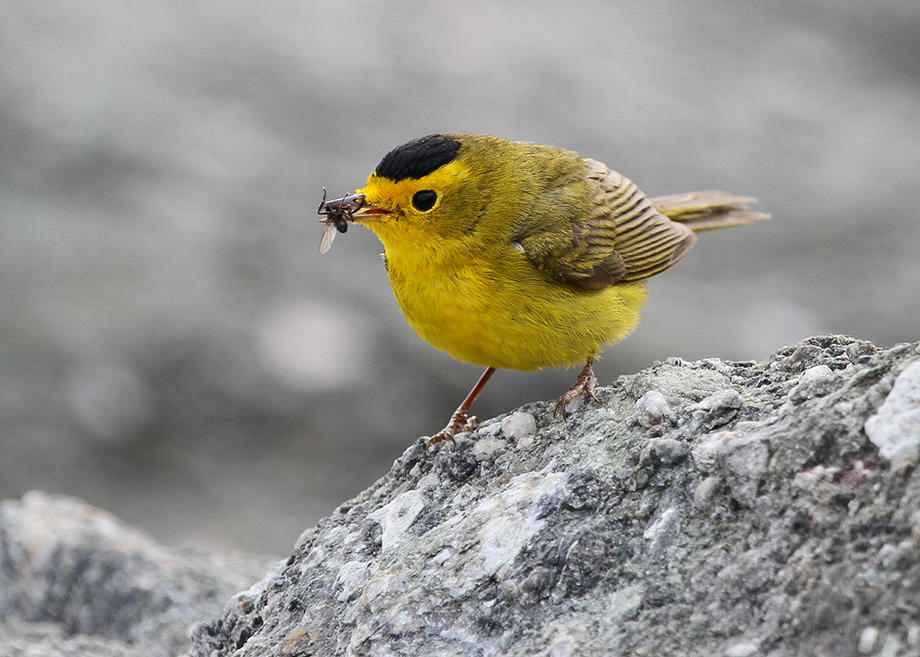
Join Rick Simek for a leisurely stroll to see which resident and migrating birds are foraging for their morning meal in the Environmental Study Area. Binoculars are recommended, but not required. Meet at the EIC. (Male Wilson's Warbler by Alexander Viduetsky )
| |
|
Young Naturalist Program! | |
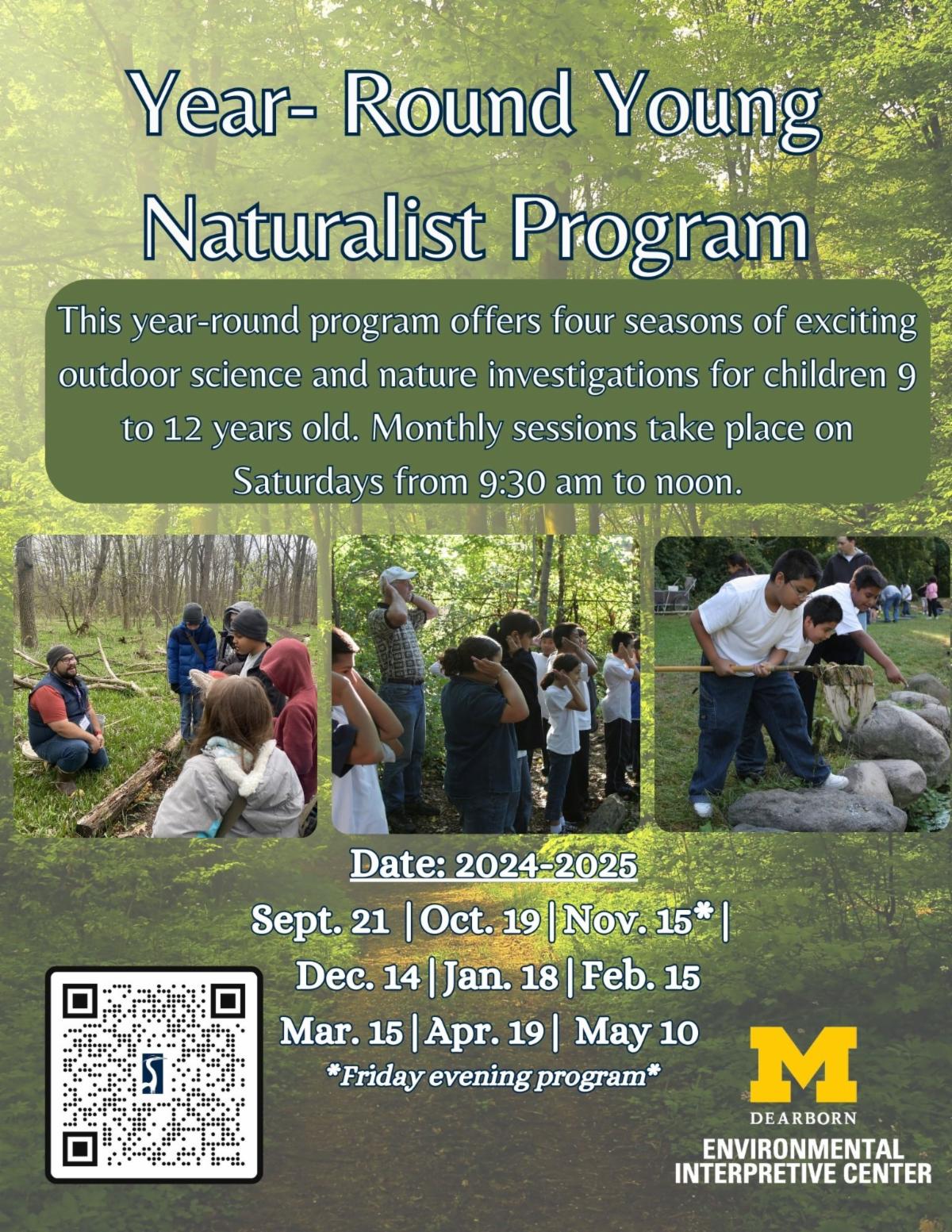
Year-round Young Naturalist Program!
This year-round program offers four seasons of exciting outdoor science and nature investigations for children 9 to 12 years old. Monthly sessions take place on Saturdays from 9:30 am to noon, starting in September and continuing through May.
Session topics include pond studies, insects and spiders, creatures of the soil, birds and migration, owls, animal tracking, wildflowers and trees, and learning about how maple syrup is made right here at the EIC. Participants receive a field pack, field guides, and assorted field equipment. There is a fee for this program, which requires pre-registration for this program.
| |
Pollinator Photo Contest
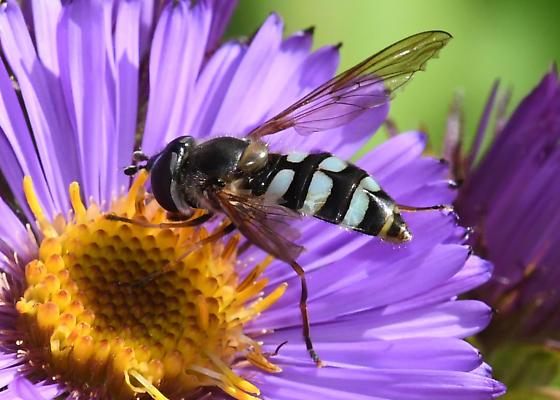
The EIC and UM-Dearborn’s Bee Campus USA Committee are accepting entries for the 5th annual Pollinator Photo Contest. Since 2020, hundreds of photos have been entered into the contest from 24 states in the US, as well as other countries, including Canada, Lebanon, Finland, Germany, and Chile!
(Syrphid fly photo by Roger Rittmaster)
| |
|
Photos may be submitted in either of two categories: pollinators up-close of pollinator-flower interactions. Entries will be accepted from June 1 to September 30, 2024, with winners announced by the end of October. Full contest details are available by visiting the Pollinator Photo Contest Website. | |
The Tale of a New Trail
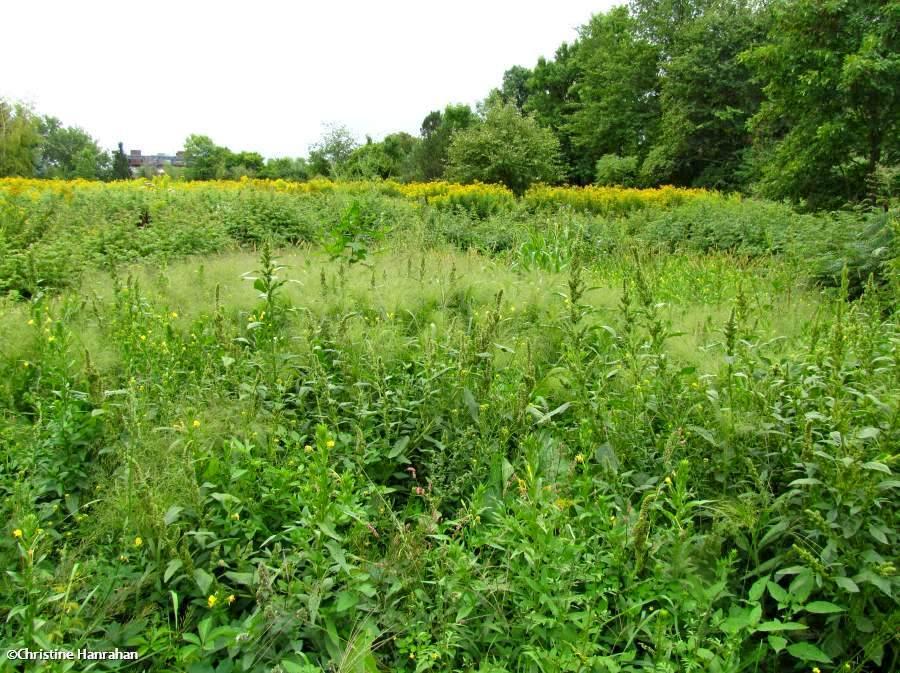
A new footpath in the Environmental Study Area (ESA) is now open for visitors to experience a habitat space that differs in several ways from other ESA habitats. Known as the old field, it is, as habitats go, very young.
How can a habitat referred to as “old” also be “young?”
| |
As time goes by, woody plants, such as thorny vines, shrubs and trees, begin to sprout up, mixing in with the meadow species. The formerly open field becomes “old,” but the habitat itself remains “young.” This transitional habitat type is known as old field. | |
To become old field habitat, a given space must have as its origin a history of being cleared and maintained by people, such as an agricultural field. When this type of management is discontinued and the space is left alone, an assortment of sun-loving plants, such as meadow grasses and wildflowers, sprout up and take hold, creating a pioneer plant community. (Old Field photo by Christine Hanrahan) | |
|
|
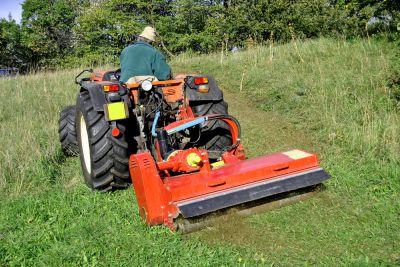
The back-story of the old field in the ESA involves a change in habitat management that took place not long ago. From the mid-1990s until around 2015, a two-acre space was brush-hogged every winter to enable university classes to study the pioneer plant community there each subsequent spring and summer. In just nine years since the mowing was discontinued, the space is now a mix of meadow plants and scrubby, shrubby woody plants and small trees: an old field.
| |
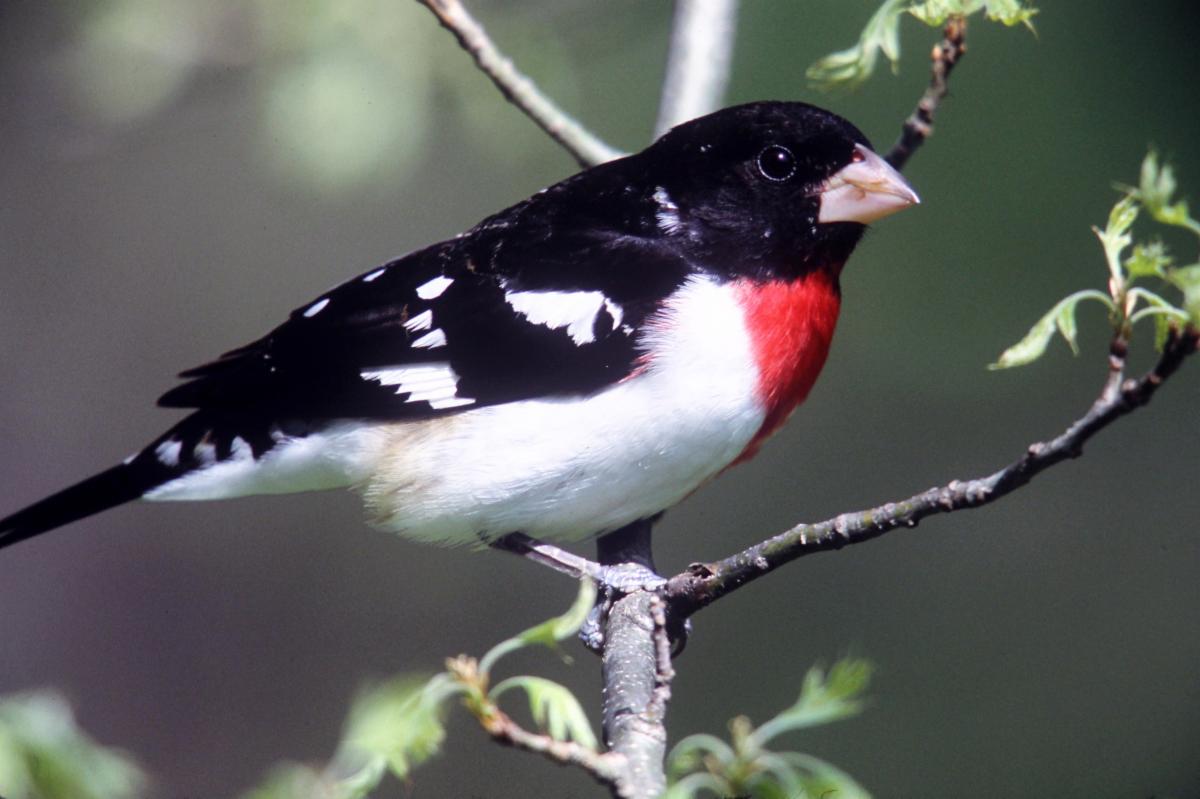
The plant species composition and habitat structure of the ESA old field provides four seasons of benefits to wildlife. The thickets provide ideal nesting shelter for bird species such as Gray Catbird and Rose-breasted Grosbeak. (Male RB-grosbeak by Jim Simek) | |
|
|
An assortment of butterfly species and native pollinators such as bumblebees frequent the many native wildflowers. A diverse plant community is now supporting a diverse array of flora and fauna.
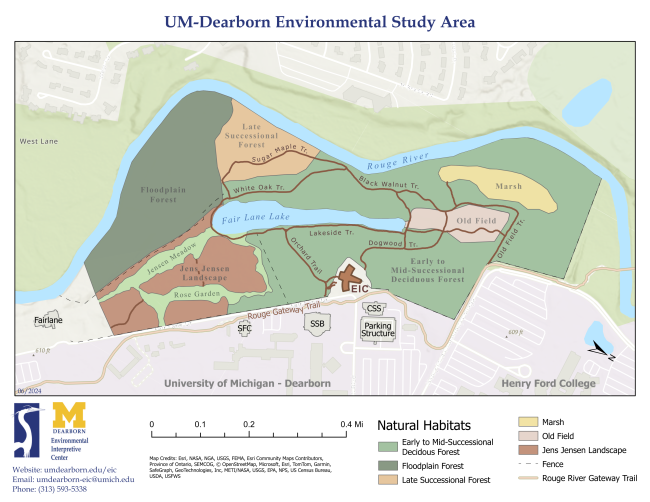
The new trail extension also has a practical benefit to people who wish to explore the ESA. Formerly, the footpath that ran adjacent to the old field’s northern border ended abruptly at a metal fence near Henry Ford College. ESA visitors had no other option than to reverse course and retrace their steps along the same trail. By running the new trail through the old field (see map below) and having it loop back to another footpath, visitors will now have a less confusing and more varied trail walking experience.
| |
|
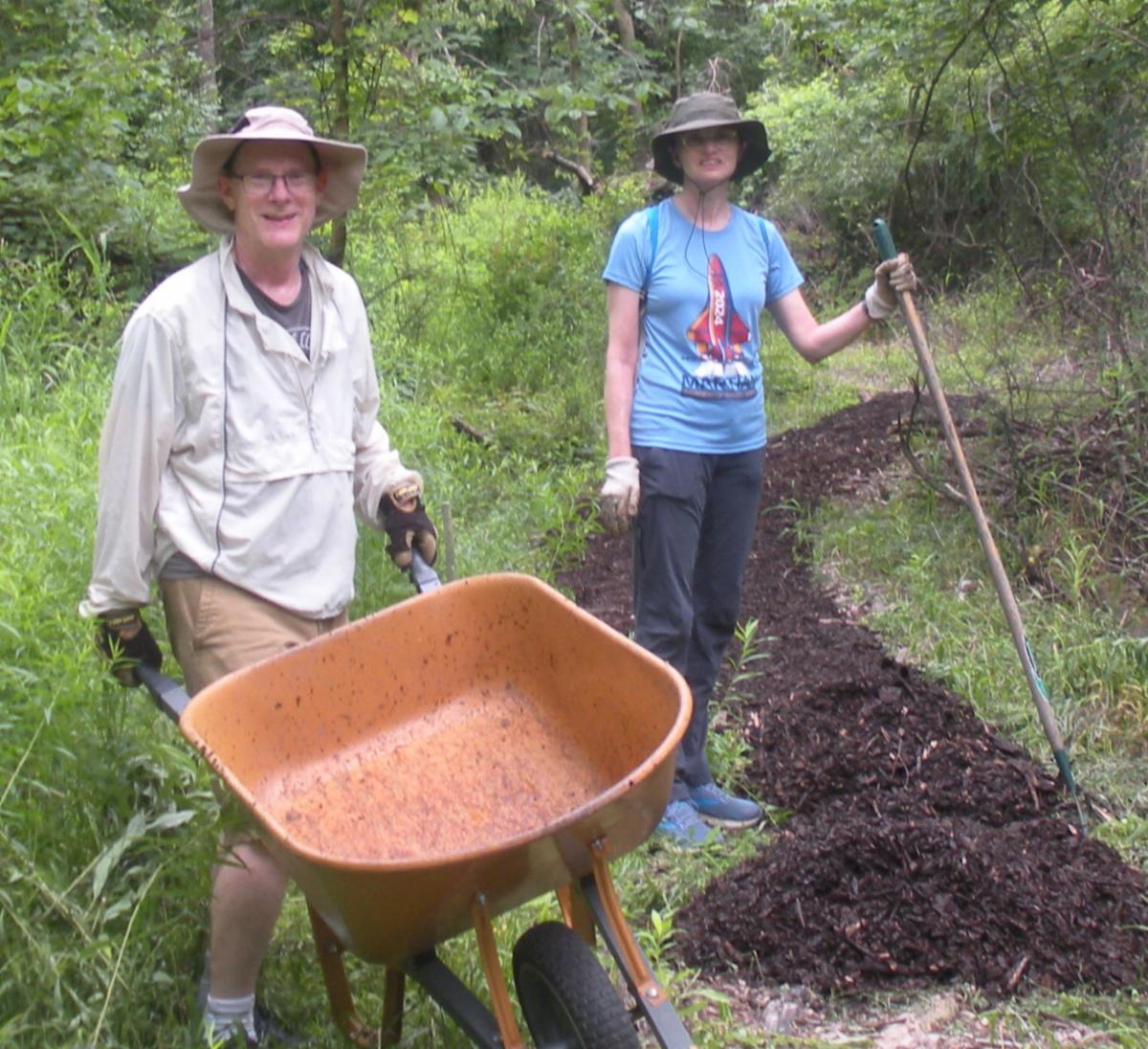
We are grateful for the assistance of the the following EIC volunteers in establishing the new trail: Chuck Irish and Lisa Campbell (pictured left), John Berger, Ouday Hashem, Michael Kowalski, Karthik Krishnamurthy, Keith Kushner, and Joe Turek. (Photo by Joe Turek)
We hope you can take some time on a future visit to the ESA to enjoy this new trail!
-Rick Simek, Natural Areas Manager
| |
|
Homegrown Tomatoes and More!
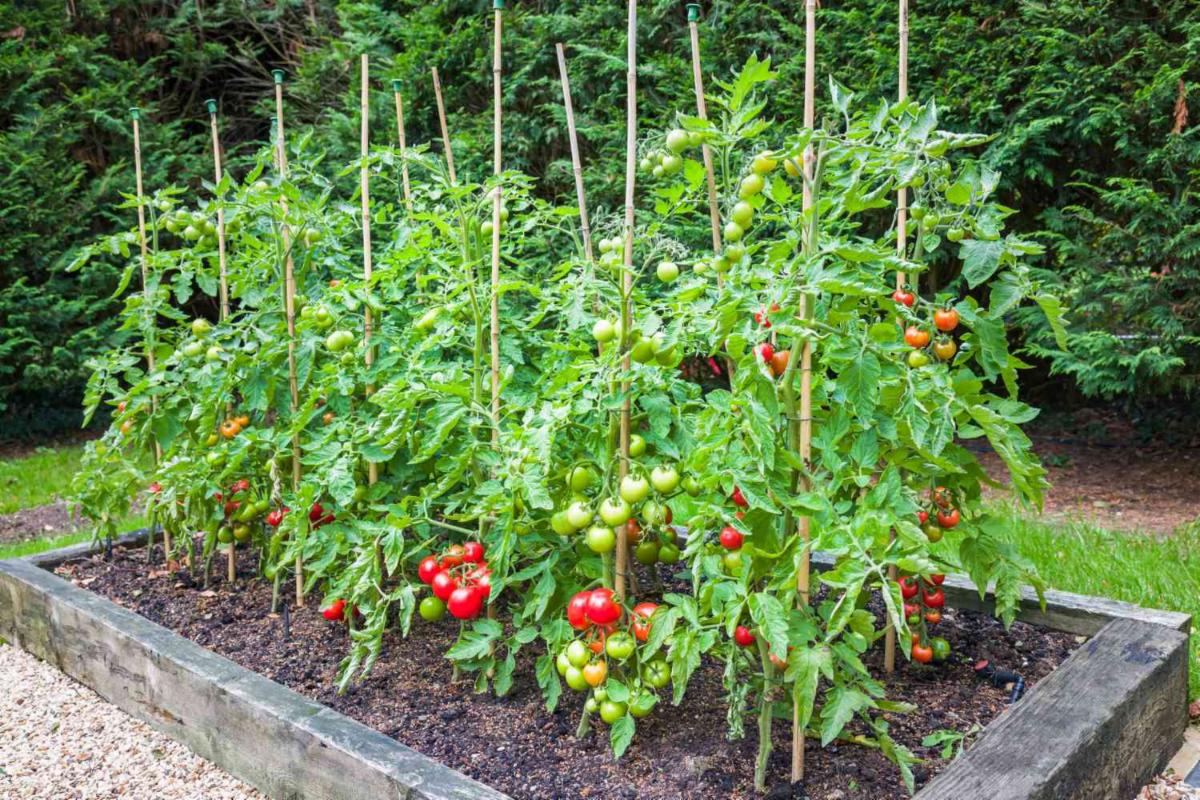
Have you ever tried to grow your own food? Like the classic Guy Clark song goes, "What would life be without homegrown tomatoes?" Growing fruits and vegetables at home is a simple way to reduce your grocery expenses as well as carbon emissions, food waste, plastic pollution, and other harmful effects on the environment.
Even better is organic gardening, which avoids the use of synthetic pesticides and fertilizers. This comes with an additional set of benefits, such as improved water retention and soil quality.
To promote the sustainable and rewarding practice of organic gardening, the Environmental Interpretive Center hosts a Children’s Gardening Program every growing season at the Community Organic Garden on campus. This program allows children ages 6-8 to grow their own food and learn about the “ingredients” of a successful organic garden.
| |
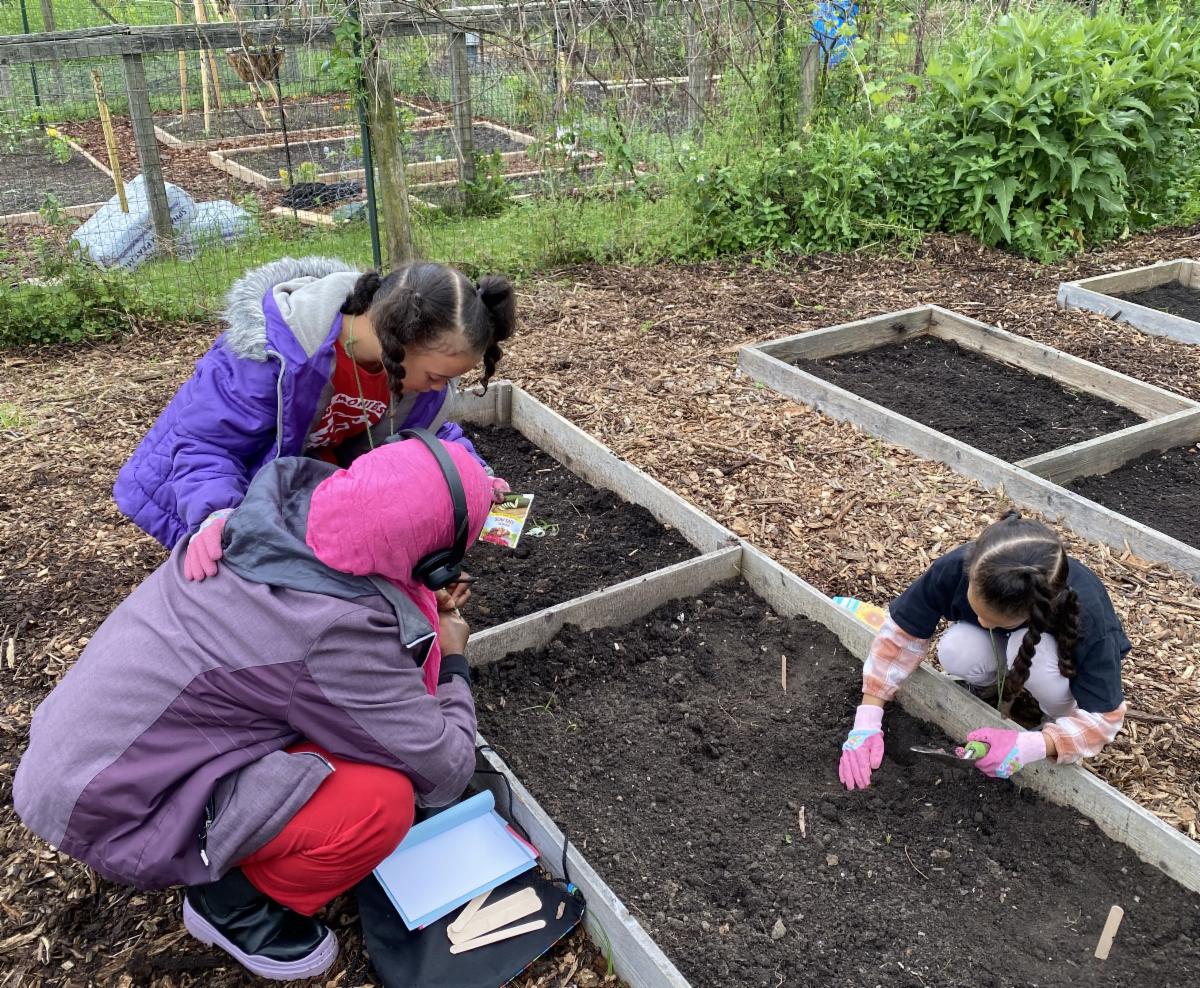
This growing season, I have had the pleasure of working with 13 young gardeners, who we like to call “Sprouts,” at the Children’s Garden. Each Sprout has been given their own small plot to maintain, as well as a few community plots to work on as a group. | |
|
|
So far, some of the children have been able to harvest the fruits (and vegetables) of their labors, taking home squash and radishes to enjoy with their families. They have learned about the importance of compost, pollination, and community in connection with gardening and food. To follow in the footsteps of these Sprouts, you can start growing food organically at your own home!
If you are interested in learning more about the Community Organic Garden and the Children’s Gardening Program, please visit the Environmental Interpretive Center website.
-Valerie Osowski, Children's Garden Co-Coordinator, Cooper Family Intern
| |
|
In Case You Missed This...
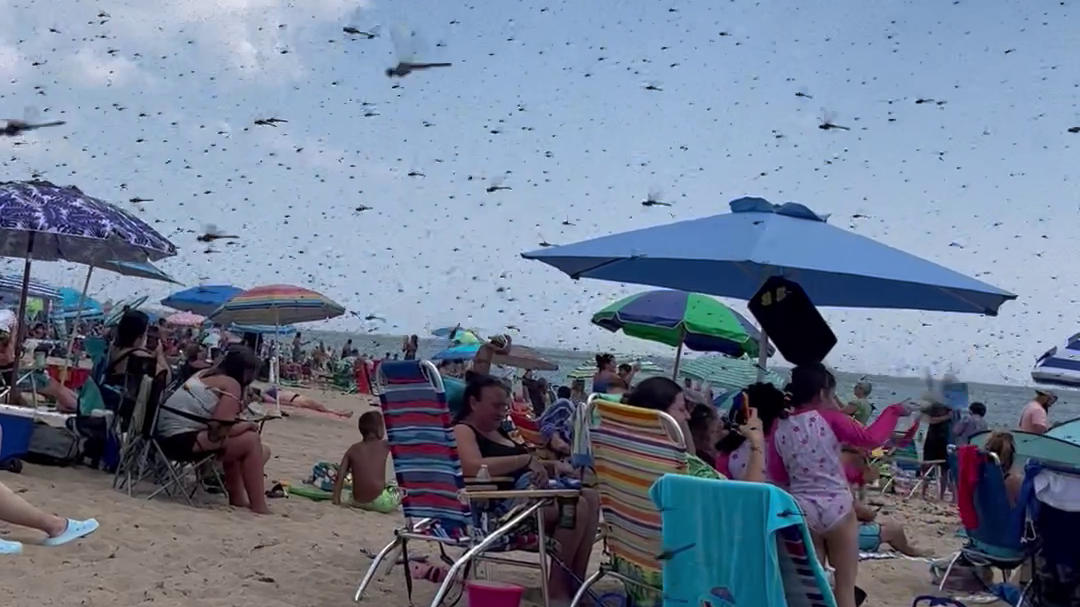
A "pop-up" swarm of dragonflies caused excitement at a Rhode Island beach. Virginia Brown, a dragonfly expert and author of "Dragonflies and Damselflies of Rhode Island,” said the swarm took place outside the typical migration period for dragonflies that's between mid-August and mid-September. Brown said dragonflies are a key part of the ecosystem, as they eat mosquitos and other pests, and also serve as food for birds and even carnivorous plants. "They're extremely important in that web of life."
| |
Venturing outdoors and encountering nature is good for your health. Our trails are accessible, so please visit our Environmental Study Area. Stay engaged in learning activities and check out our Remote Learning Activities & Resources page for ideas to create a “Neighborhood Nature Journal” and “Family Nature Walk” activities!
We also hope to see you in person at our upcoming programs!
| | |
Please remember...
The EIC Environmental Study Area is open daily from sunrise to sunset. We would like to remind nature-goers that fishing on site is prohibited and to leave bikes and dogs at home because they cause disruption and stress to the EIC wildlife.
| |
| | | |