Coast Posts
- A Newsletter From FEC
| |
News from Future Earth Coasts International Project Office
Shanghai | East China Normal University
| | |
Highlights:
- FEC-SIMSEA Webinar: Climate Change Biology and Its Approaches to Understand Phytoplankton Responses in the Warming Ocean
- Join FEC Webinar: Explore How Global Surf Culture Powers Coastal Conservation
- CROSS Coastz Programme Led by SKLEC Selected as One of the First UN Science Decade Endorsed Initiatives
- The 4th Mega-Delta Meeting: International Conference on Dialogue between Land and Sea
- The 4th Conference of Fisheries and Coastal Environment (CFCE)
- Chesapeake Bay’s Health Declines Slightly but Remains on the Right Track over the Long Term
- Anthropocene Coasts: Call for Papers – Tour de Coasts
- FEC New Publication | Hurricanes Induced Irreversible Large-Scale Loss of Mangrove Forests
- Updates from FEC Affiliated Projects: The ScubaVerse
- Updates from FEC Supported Networks: Positive Change for Marine Life
| | FEC-SIMSEA Webinar: Climate Change Biology and Its Approaches to Understand Phytoplankton Responses in the Warming Ocean | | |
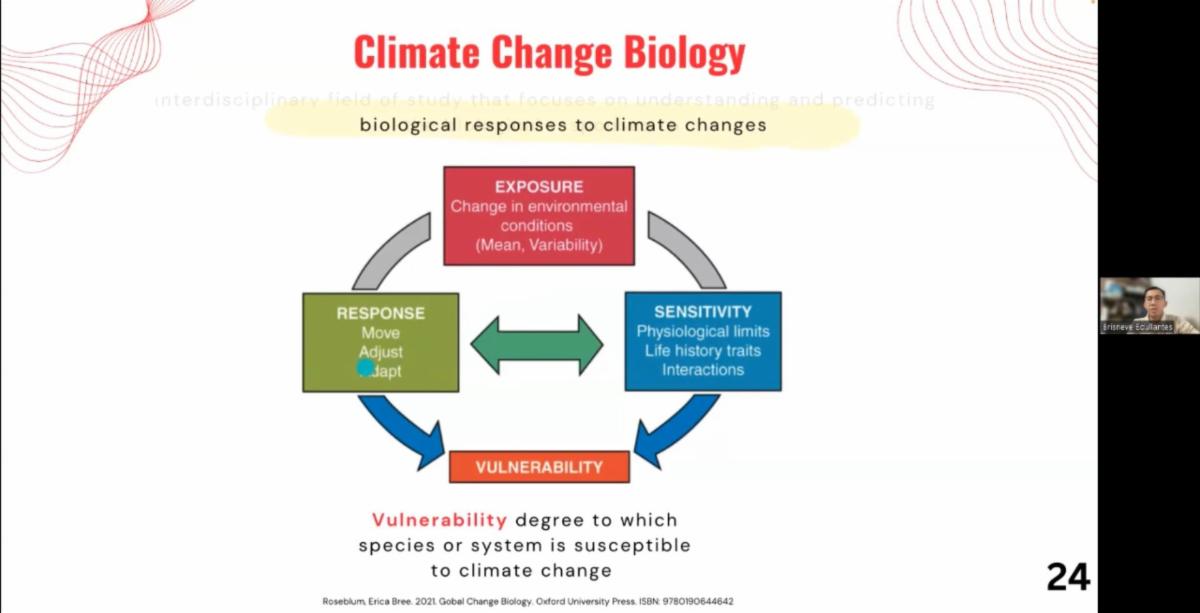
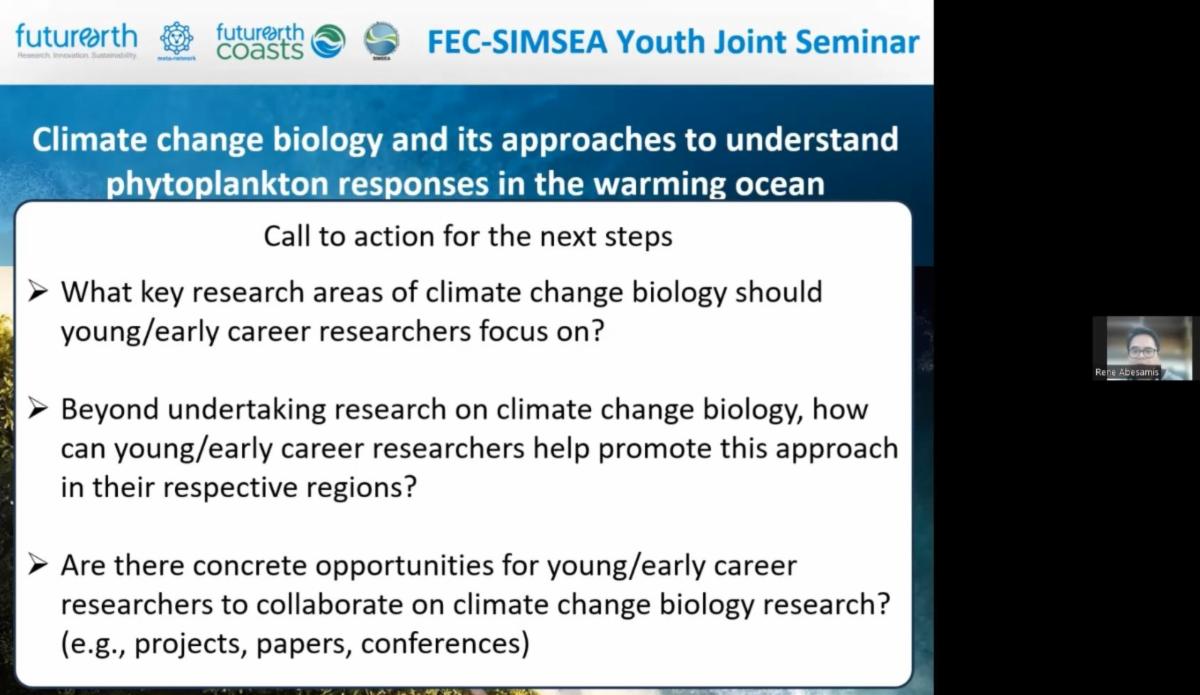
The FEC–SIMSEA Youth Joint Seminar, held on 18 August 2025, brought together early-career researchers, students, and marine scientists across Asia and Oceania to explore how climate change biology informs our understanding of phytoplankton responses to warming oceans.
The keynote lecture was delivered by Dr. Brisneve Edullantes, Associate Professor at the University of the Philippines Cebu, whose research focuses on environmental biology and microalgal ecophysiology. Dr. Edullantes highlighted the pivotal role of phytoplankton in global primary production, oxygen generation, and carbon cycling, while emphasizing their vulnerability to rising temperatures and ocean acidification. These stressors are driving shifts in phytoplankton biogeographic ranges, and contributing to the increased frequency and severity of harmful algal blooms, with cascading impacts on marine ecosystems and coastal communities.
Through observational studies, laboratory and mesocosm experiments, ecological niche modeling, and participatory research, Dr. Edullantes demonstrated how multiple approaches can reveal the adaptability—and fragility—of phytoplankton communities under climate change.
| | Join FEC Webinar: Explore How Global Surf Culture Powers Coastal Conservation | | |
Dive into Surf Culture and Coastal Futures!
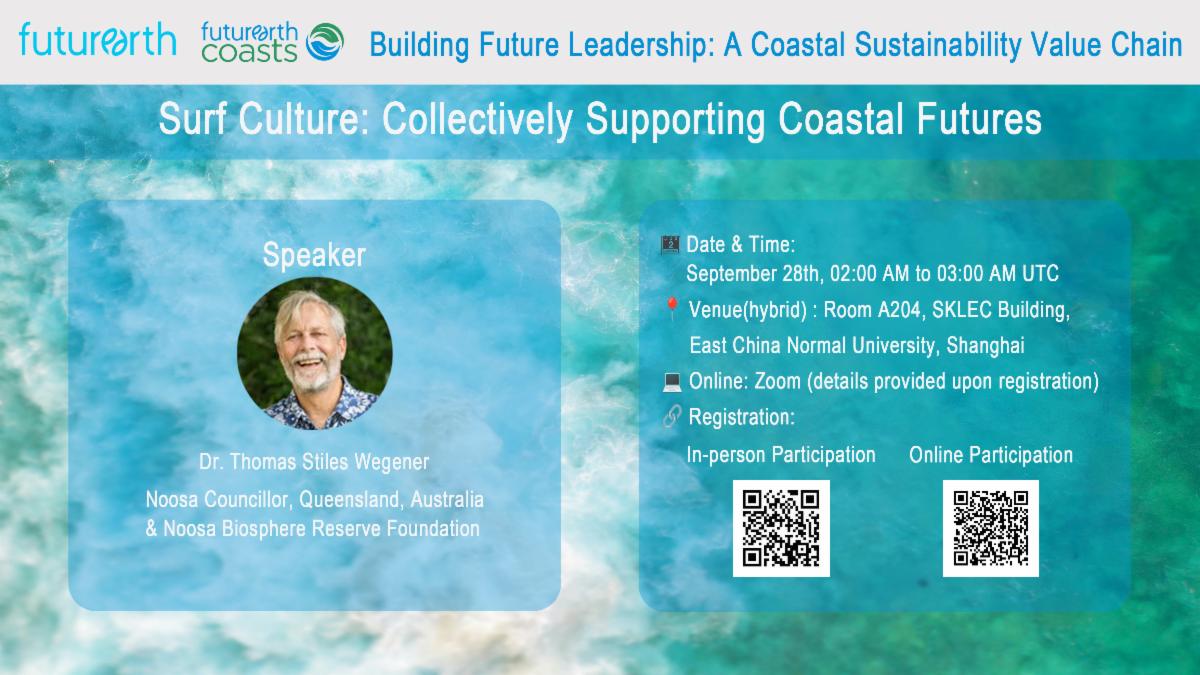
Future Earth Coasts (FEC) invites you to an inspiring hybrid seminar, “Surf Culture: Collectively Supporting Coastal Futures”, featuring Dr. Tom Wegener,an internationally recognized surfboard designer, environmental advocate, and elected Noosa Shire Councillor from Queensland, Australia. On September 28th, 2025 (02:00–03:00 UTC), join us to explore how surfing, once seen simply as a sport, has become a global movement shaping coastal conservation and community resilience.
This engaging session will delve into the expanding influence of surf communities worldwide and their growing role as environmental stewards. Dr. Wegener will share insights from his PhD research and on-the-ground advocacy, illustrating how surf culture fosters a shared identity centered around respect for the ocean and local environments. This webinar is ideal for researchers, environmental activists, policy makers, and anyone interested in community-driven conservation, sustainable blue economies, and the intersection of sports and advocacy.
Click here to read more.
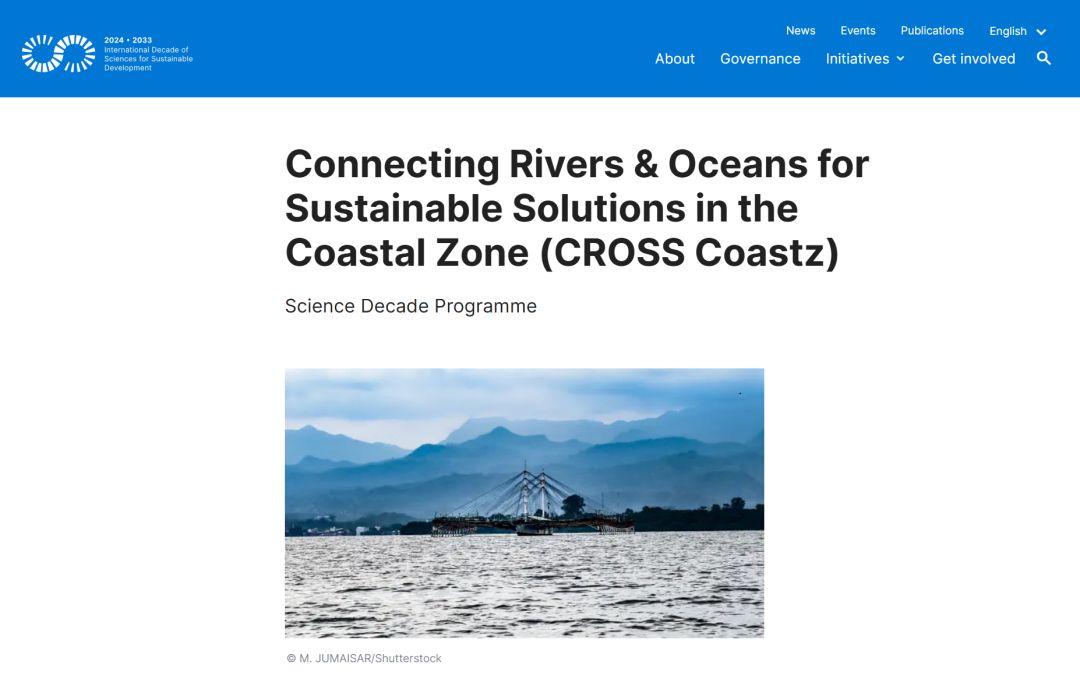
| | CROSS Coastz Programme Led by SKLEC Selected as One of the First UN Science Decade Endorsed Initiatives | | FEC is proud to contribute to the programme proposal "Connecting Rivers & Oceans for Sustainable Solutions in the Coastal Zone (CROSS Coastz)". This initiative is led by the State Key Laboratory of Estuarine and Coastal Research (SKLEC) at East China Normal University. The programme has been officially selected as one of the first 31 endorsed programs under the United Nations' International Decade of Sciences for Sustainable Development (2024–2033). FEC will play a key role in the CROSS Coastz initiative by bringing expertise in coastal sustainability, socio-ecological systems, and land-sea governance. Through its global network and focus on transdisciplinary collaboration, FEC will support science-based solutions and inclusive stakeholder engagement to drive sustainable coastal development in the face of climate change. | | The 4th Mega-Delta Meeting: International Conference on Dialogue between Land and Sea | | |
Rivers are crucial links between river basins and the sea, yet large river basins are often faced with flooding/draught, pollution, and sediment issues caused by climate change and human activities. Balancing economic development in these basins while mitigating negative impacts on the sea requires effective communication among scientists, policy makers, and practitioners from various sectors. This conference aims to bridge the gap between science and policy by facilitating such a dialogue.
Moreover, this year's conference will continue its collaboration with the Shanghai People's Association for Friendship with Foreign Countries to host the "Dialogue on Great River Basins." This year, the dialogue will focus on major rivers in Asia.
Dates and location: October 19-22, 2025, Shanghai,China
Themes:
- Influence of climate change and human activities on river deltas
- Cope with challenges for different deltas
- Initiation promotion: UN convention on Conserving River Deltas (UNCCRD)
Key Dates:
2025/09/12 Abstract submissions close
2025/09/20 Abstract acceptance notifications
2025/09/21 Registration opens
2025/10/1 Early bird registration closes
2025/10/19 Conference onsite registration
2025/10/20-21 Conference
2025/10/22 Excursion
Click here to read more.
| | The 4th Conference of Fisheries and Coastal Environment (CFCE) | | |
Dates: 1st – 4th February 2026
Location: Dar es Salaam, Tanzania
The CFCE has become a pivotal platform for advancing dialogue, research, and action around the sustainable development of fisheries and coastal environments within the framework of the Blue Economy. The 4th edition promises an even broader agenda featuring high-level panel discussions, scientific presentations, exhibitions, and networking opportunities tailored to address current challenges and innovations in the sector.
| | |
For media inquiries and further information, please contact:
Conference Secretariat
Email: cfce@ucc.edu.gh
Website: cfce.ucc.edu.gh
| | |
About the CFCE
The CFCE is a biennial conference that brings together researchers, policymakers, practitioners, and community stakeholders to promote collaborative research, exchange knowledge, and advocate for policies to support resilient coastal communities and the blue economy in Africa and beyond. The theme for this 4th edition of the conference is “Addressing the Triple Planetary Crisis for Sustainable Aquatic Environment, Resilient Economies and Communities”. This 4th CFCE is being organised by the Centre for Coastal Management- Africa Centre of Excellence in Coastal Resilience, University of Cape Coast, Ghana (FEC IPO-Ghana’s host institution), hosted by the United Republic of Tanzania and supported by the African Union Inter-African Bureau for Animal Resources (AU-IBAR).
| | Chesapeake Bay’s Health Declines Slightly but Remains on the Right Track over the Long Term | | |
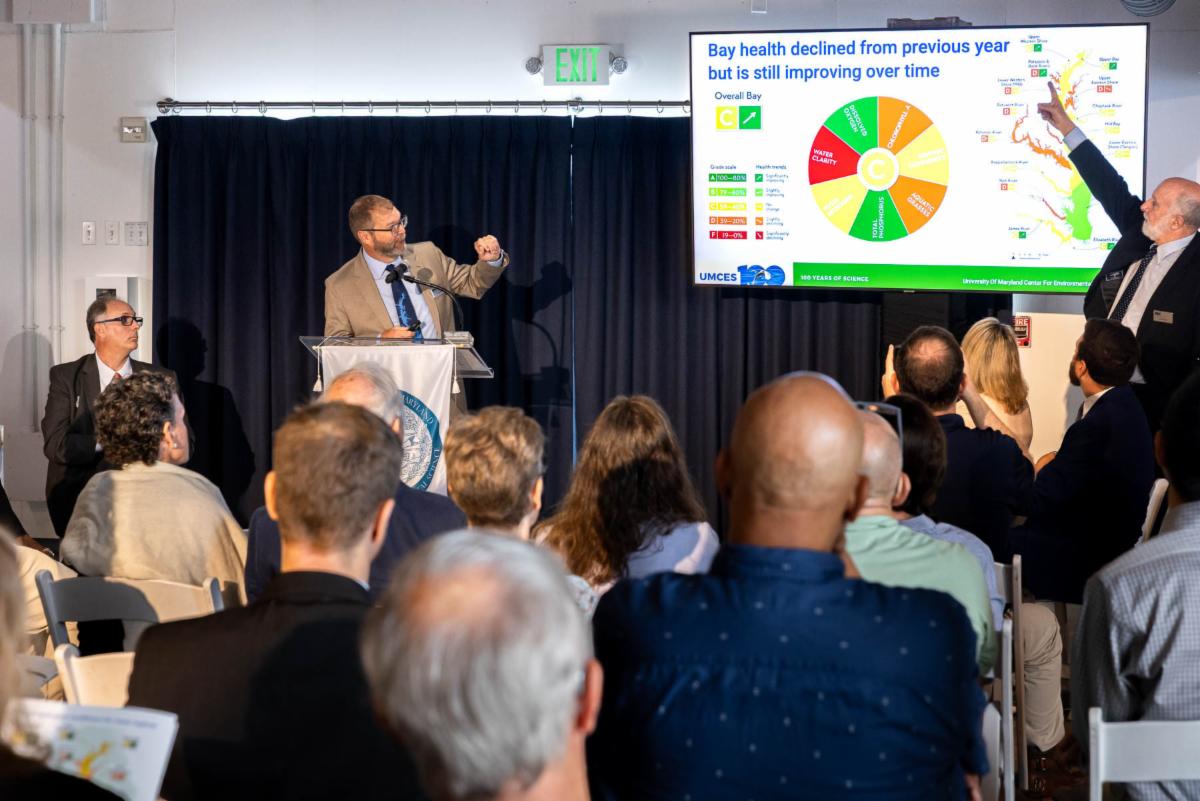
After a year of severe weather that included periods of prolonged drought followed by extreme rain events, the Chesapeake Bay earned a C on its annual Chesapeake Bay Report Card, declining slightly from the C+ it received last year.
Produced by the University of Maryland Center for Environmental Science (UMCES), the report card measures the health of the Bay based on seven different environmental indicators such as dissolved oxygen, water clarity and underwater grasses. UMCES also assesses the health and productivity of Bay’s watershed based on 12 ecologic, social and economic indicators.
The Chesapeake Bay’s watershed received a slightly higher grade than the estuary itself: a C+ (57%). This score is made up of indicators in three categories: Ecology, Society and Economy. The highest-scoring category was Ecology, with a B- (64%), followed by the Economy category with a C+ (55%). The lowest scoring category was Society, with a C (52%).
| | |
Anthropocene Coasts:
Call for Papers – Tour de Coasts
| | Anthropocene Coasts is launching a new special collection titled Tour de Coasts. | | |
This special collection is supported by FEC and provides a forum for knowledge exchange about priority coastal sustainability concerns and aims to create a comprehensive understanding of coastal sustainability challenges and opportunities from a global perspective.
For this Special Collection, Anthropocene Coasts invites manuscripts of all aspects of coastal sustainability challenges and opportunities globally including but not limited to: governance; individual, cultural, community, and ecological health; effective and inclusive communication; human behavioral change; food, water, and housing security; ecological analyses; economics and financial incentives; potential for managed coastal retreat; technology and increased connectivity; coastal disease threats and health benefits; use crises to inform; and modeling.
| The submission deadline for this collection is December 31, 2025. You can access the topical collection via this link. | | Dr. Katya Altman, Bureau of Ocean Energy Management, USA | Dr. Dwayne Porter, University of South Carolina, USA | | Dr. Heath Kelsey, University of Maryland, USA | Dr. Anja Scheffers, Southern Cross University, Australia | Dr. Xiaoyu Fang, East China Normal University, China | | |
New Article Published in This Special Collection
Dutta, S., Al Balushi, M., Al Harbi, F., & Paul, S. (2025). Fisheries management of the Arabian Peninsula region with special emphasis to the Sultanate of Oman: perspectives of climate change adaptations. Anthropocene Coasts, 8(1), 1-14.
https://doi.org/10.1007/s44218-025-00088-8
| | Hurricanes Induced Irreversible Large-Scale Loss of Mangrove Forests | |
Xixing Liang, Zhijun Dai, Xuefei Mei, Riming Wang, Wenjun Zeng, Sergio Fagherazzi
| | | |
Abstract
Mangrove forests act as effective natural barriers against tropical storms. However, little information is available on the resilience of mangrove forests against hurricane impacts. Here we quantify the response of Florida mangroves to hurricane forcing. We found that the mangrove area in South Florida experienced four sharp declines over the past thirty years, with a slow recovery trend observed after each decline. The loss of mangroves displayed an exponential decrease from the ocean to the upland during tropical cyclones, while the vegetation fringe underwent seaward extensions in fair-weather periods. Hurricanes of category three or higher were responsible for the sharp declines in mangroves, while sea-level rise was not related to vegetation loss. We project that mangroves loss in Florida mangrove can total 533 km2 by 2050 and 1,956 km2 by 2100, driven by an increase in frequency and intensity of tropical cyclones.
Click here to read more.
| |
Updates from FEC Affiliated Projects
| | | | The ScubaVerse Partners with Palau to Promote Sustainable Tourism | The ScubaVerse has signed a Memorandum of Understanding (MOU) with the Republic of Palau’s Minister of Tourism, establishing a partnership to promote the island nation as a premier diving destination. | | | |
The collaboration will highlight Palau’s unique marine environment while advancing marine conservation, responsible tourism, and sustainable underwater experiences. Together, The ScubaVerse and Palau aim to raise global awareness of the nation’s rich ocean heritage and ensure its protection for future generations.
Click here to read more.
| | |
Updates from FEC Supported Networks
| | Positive Change for Marine Life | | | | | |
Workshop empowers youths on waste segregation
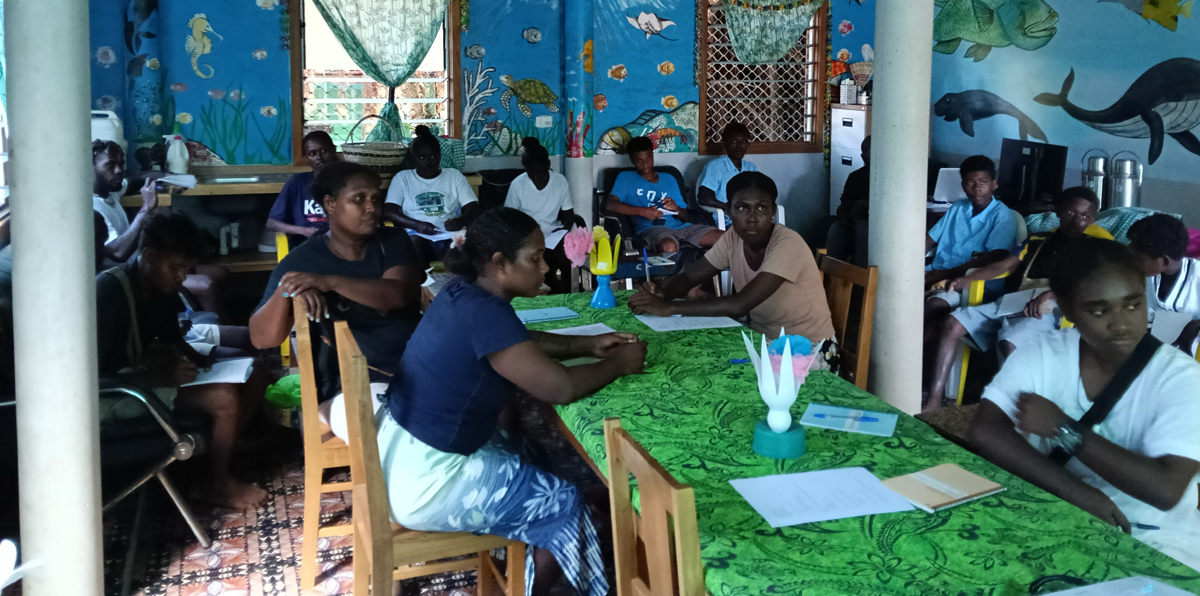
A youth-led environmental movement is gaining momentum in Gizo, Western Provincewith two youth groups from Malakerava and Tophill taking part in an intensive workshop aimed at tackling marine and land pollution through proper waste segregation.
The one-day training, held on Tuesday in Gizo with the support from the “Positive Change 4 Marine Life” program, focused on building awareness and practical skills among young people to manage waste effectively and protect the marine environment.
| | | |
According to program organizers, poor waste management in coastal communities is a major contributor to pollution, which threatens fragile marine ecosystems such as coral reefs and fisheries — key resources that sustain the livelihoods of many local families.
For this year, the program is based on advocacy and waste segregation.
Click here to read more.
| | | New FEC Publications (Since April 2024) | | |
○ Adhiambo, R., Mensah, P. K., Koomson, A., & Acheampong, E. (2025). Navigating stress: Impacts of temperature, polycyclic aromatic hydrocarbons, and heavy metals on the diatom Thalassiosira weissflogii adapted to tropical waters of the Gulf of Guinea. Aquatic Toxicology, 107388.
https://doi.org/10.1016/j.aquatox.2025.107388
○ Davies-Vollum, K. S., Puttick, S., Agyekhumene, A., Amolegbe, T., Aneyo, I., Boateng, I., ... & Sohou, Z. (2025). A stakeholder-informed framework for the sustainable management of coastal lagoons in West Africa. Anthropocene Coasts, 8(1), 1-11.
https://link.springer.com/article/10.1007/s44218-025-00093-x
○ Dutta, S., Al Balushi, M., Al Harbi, F., & Paul, S. (2025). Fisheries management of the Arabian Peninsula region with special emphasis to the Sultanate of Oman: perspectives of climate change adaptations. Anthropocene Coasts, 8(1), 1-14.
https://doi.org/10.1007/s44218-025-00088-8
○ Elrick-Barr, C. E., Smith, T. F., & Thomsen, D. C. (2025). Practitioner perspectives of wellbeing in rapidly changing Australian coastal communities. Ocean & Coastal Management, 266, 107668.
https://doi.org/10.1016/j.ocecoaman.2025.107668
○ Genchi, S. A., Vitale, A. J., & Perillo, G. M. (2025). Coastal cliff erosion: a bibliometric analysis and literature review. Anthropocene Coasts, 8(1), 1-18.
https://doi.org/10.1007/s44218-025-00072-2
○ Gutierrez, D., Calado, H., Toor, F. v., Moreira, M., Paramio, M. L., Martins, F., Santos, N., Melo, N., & Newton, A. (2025). Empowering Maritime Spatial Planning and Marine Conservation Efforts Through Digital Engagement: The Role of Online Platforms. Sustainability, 17(14), 6371.
https://doi.org/10.3390/su17146371
○ Jiang, W., Huang, Z., Dai, Z., Luo, J., Zeng, W., & Liang, X. (2025). Attenuation of hydro‐sediment dynamics progradation over mangrove wetland. Journal of Geophysical Research: Oceans, 130(2), e2024JC021531.
https://doi.org/10.1029/2024JC021531
○ Li, Y., Robinson, S. V., Nguyen, L. H., & Liu, J. (2023). Satellite prediction of coastal hypoxia in the northern Gulf of Mexico. Remote Sensing of Environment, 284, 113346.
https://doi.org/10.1016/j.rse.2022.113346
○ Li, Y., Xia, Z., Nguyen, L., Wan, H. Y., Wan, L., Wang, M., ... & Liu, J. (2025). Spatiotemporal dynamics of coastal dead zones in the Gulf of Mexico over 20 years using remote sensing. Science of The Total Environment, 979, 179461.
https://doi.org/10.1016/j.scitotenv.2025.179461
○ Liang, X., Dai, Z., Mei, X., Wang, R., Zeng, W., & Fagherazzi, S. (2025). Hurricanes induced irreversible large‐scale loss of mangrove forests. Geophysical Research Letters, 52(9), e2025GL115692.
https://doi.org/10.1029/2025GL115692
○ Matovu, B., Bleischwitz, R., Lukambagire, I., Alkoyak-Yildiz, M., Tarek, R., Etta, L., ... & Hsieh, Y. L. (2025). Examining the perceptions and attitudes toward Women's employment and leadership in the blue economy: A case study of India. Social Sciences & Humanities Open, 11, 101537.
https://doi.org/10.1016/j.ssaho.2025.101537
○ Ogier, E. M., Pecl, G. T., Hughes, T., Lawless, S., Layton, C., Nash, K. L., & Morrison, T. H. (2025). Novel marine-climate interventions hampered by low consensus and governance preparedness. Nature Climate Change, 1-10.
https://doi.org/10.1038/s41558-025-02291-4
○ Ogier, E. M., Pecl, G. T., Hughes, T., Lawless, S., Layton, C., Nash, K. L., & Morrison, T. H. (2025). Enhance responsible governance to match the scale and pace of marine–climate interventions. Nature Climate Change, 1-2.
https://doi.org/10.1038/s41558-025-02292-3
○ Onwubiko, C. C., & Aheto, D. W. (2025). Assessing the Role of Coastal Habitats in Flood Reduction in Selected Communities of Rivers State. Coasts, 5(2), 17.
https://doi.org/10.3390/coasts5020017
○ Salazar, Y. C. A., Genchi, S. A., Nuciari, L., Perillo, V. L., Piccolo, M. C., & Perillo, G. M. (2025). MiSMoS (MicroScale Morphology System): an inexpensive new method to survey 3D surface micromorphology. Latin American Journal of Sedimentology and Basin Analysis.
https://lajsba.sedimentologia.org.ar/lajsba/article/view/264
○ Valiela, I., Chenoweth, K., & Day, J. (2025). Meta-analysis of vegetation responses to experimental nitrogen enrichments done in salt marshes under different sea level rise regimes reveal interaction of N supply and sea level rise. Science of The Total Environment, 975, 179198.
https://doi.org/10.1016/j.scitotenv.2025.179198
○ Wu, S., Hu, Y., Zhao, W., Gong, L., Song, Y., Li, C., ... & He, Q. (2025). Human flood adaptation characteristics: A comparative study of three global river deltas. Journal of Hydrology, 133531.
https://doi.org/10.1016/j.jhydrol.2025.133531
○ Yang, J., Dai, Z., Mei, X., Lou, Y., & Fagherazzi, S. (2025). Wetland gain and loss in the Mississippi River bird‐foot delta. Earth's Future, 13(6), e2024EF005003.
https://doi.org/10.1029/2024EF005003
○ Zhao, X., Kaniewski, D., Wang, Y., Marriner, N., Salem, A., Alassal, S. E., ... & Chen, Z. (2025). On the long and winding road: unravelling the late emergence of Neolithic agriculture in the Nile Delta. Quaternary Science Reviews, 359, 109368.
https://doi.org/10.1016/j.quascirev.2025.109368
| | FEC Publications (April, 2024 - March, 2025) | | |
○ Anthony, E., Syvitski, J., Zăinescu, F., Nicholls, R. J., Cohen, K. M., Marriner, N., ... & Maselli, V. (2024). Delta sustainability from the Holocene to the Anthropocene and envisioning the future. Nature Sustainability, 1-12.
https://doi.org/10.1038/s41893-024-01426-3
○ Backler, S., Davies-Vollum, K. S., & Raha, D. (2025). An evaluation of coastal resilience policies in Anglophone West Africa through a regional comparative analysis. Marine Policy, 176, 106648.
https://doi.org/10.1016/j.marpol.2025.106648
○ Baker, M., Bleischwitz, R., Lukambagire, I., Etta, L. A., & Lutalo, B. (2025). Decomposing sand mining complexities to chart ocean sustainability narratives and pathways in the coastal zones of Africa. The Extractive Industries and Society, 23, 101646.
https://doi.org/10.1016/j.exis.2025.101646
○ Banerjee, S., Lahiri, R., Choudhury, A. K., Mondal, A., Kim, J. W., MubarakAli, D., & Satpati, G. G. (2024). Unraveling the potential of cyanobacteria as food and investigating their production and nutritional properties. Biocatalysis and Agricultural Biotechnology, 103421.
https://doi.org/10.1016/j.bcab.2024.103421
○ Day, J., Anthony, E., Costanza, R., Edmonds, D., Gunn, J., Hopkinson, C., ... & White, J. R. (2024). Coastal Wetlands in the Anthropocene. Annual Review of Environment and Resources, 49.
https://doi.org/10.1146/annurev-environ-121922- 041109
○ Day, J. W., Xu, Y. J., Keim, B. D., Brown, V. M., Giosan, L., Mann, M. E., & Stephens, J. R. (2024). Emerging climate threats to the Mississippi River Delta: Moving from restoration to adaptation. One Earth.
https://doi.org/10.1016/j.oneear.2024.03.001
○ Elegbede, I. O., Al Jufaili, S. M., Jolaosho, T. L., Tesleem, B., Adekunle, A. F., Modupe, O. O., ... & Halimat, A. A. (2025). Health-related dimensions of fishers for sustainable commercial fisheries in the Atlantic Gulf of Guinea: Ecological and social assessments. One Health, 20, 100972.
https://doi.org/10.1016/j.onehlt.2025.100972
○ Eriksen, S. H., Simpson, N. P., Glavovic, B., Ley, D., Carr, E. R., Fernández-Carril, L., ... & Degvold, F. (2024). Pathways for urgent action towards climate resilient development. Nature Climate Change, 1-4.
https://doi.org/10.1038/s41558-024-02190-0
○ Fivash, G. S., Stoorvogel, M. M., de Smit, J. C., van Rees, F., van Dalen, J., Grandjean, T. J., ... & van Belzen, J. (2024). Abiotic origins of self‐organized ridge‐runnel patterns on tidal flats. Limnology and Oceanography, 69(6), 1378-1389.
https://doi.org/10.1002/lno.12581
○ Harvey, N and Thom, B (2024) Coastal Governance in Federated Countries. In: Baird, Daniel and Elliott, Michael (eds.) Treatise on Estuarine and Coastal Science, 2nd Edition, vol. 7, pp. 307–326. Oxford: Elsevier.
https://doi.org/10.1016/B978-0-323-90798-9.00098-6
○ Issifu, I., Dahmouni, I., & Sumaila, U. R. (2025). Assessing the ecological and economic transformation pathways of plastic production system. Journal of Environmental Management, 374, 124104.
https://doi.org/10.1016/j.jenvman.2025.124104
○ Khalifa, A., Meselhe, E., Hu, K., Day, J., & Allison, M. (2025). The Great Mississippi River Flood of 1927: Morphodynamic Analysis of The Caernarvon Crevasse Event. Estuarine, Coastal and Shelf Science, 109234.
https://doi.org/10.1016/j.ecss.2025.109234
○ Leyva Ollivier, M. E., Newton, A., & Kelsey, H. (2024). Assessment of the Chesapeake Bay watershed socio-ecological system through the Circles of Coastal Sustainability framework. Frontiers in Water, 6, 1269717.
https://doi.org/10.3389/frwa.2024.1269717
○ Liu, P., Zhang, J., Liu, Y., Sun, Q., Zhang, D., Li, Y., ... & Chen, J. (2024). Sediment source-to-sink patterns along the Southeast China coast during the late quaternary: New insights from sediment geochemistry and OSL ages in the Ningde Bay. Palaeogeography, Palaeoclimatology, Palaeoecology, 112577.
https://doi.org/10.1016/j.palaeo.2024.112577
○ Liu, S., Hu, Z., Grandjean, T. J., Wang, Z. B., van Zelst, V. T., Qi, L., ... & Bouma, T. J. (2025). Dynamics and drivers of tidal flat morphology in China. Nature Communications, 16(1), 2153.
https://doi.org/10.1038/s41467-025-57525-y
○ Maire, E., Robinson, J. P., McLean, M., Arif, S., Zamborain-Mason, J., Cinner, J. E., ... & Hicks, C. C. (2024). Managing nutrition-biodiversity trade-offs on coral reefs. Current Biology.
https://doi.org/10.1016/j.cub.2024.08.031
○ Matovu, B., Bleischwitz, R., Lukambagire, I., Etta, L. A., Alkoyak-Yildiz, M., Tarek, R., ... & Suresh, A. S. (2025). Linking the blue economy to Women's empowerment to create avenues for the realization of ocean sustainability targets in the global south. Ocean & Coastal Management, 262, 107582.
https://doi.org/10.1016/j.ocecoaman.2025.107582
○ Matovu, B., Lee, M. A., Mammel, M., Lukambagire, I., Lutalo, B., Mwangu, A. R., ... & Muhoozi, Y. (2024). Mobilizing Evidence-based Knowledge for Sustainable Wetlands Co-management and Co-governance amidst increasing Anthropogenic and Environmental Stressors: Key Lessons from Mityana District, Uganda. Environmental Challenges, 17, 101014.
https://doi.org/10.1016/j.envc.2024.101014
○ Perillo, G.M.E., Piccolo, M.C., 2024. Global variability in estuaries and coastal settings. En: Whitfield, A.K., Elliott, M. (eds.) Treatise on Estuarine and Coastal Science, 2nd Ed. Vol.1 18-24 Elsevier.
DOI 10.1016/B978-0-323-90798-9.00038-X
○ Perillo, G.M.E., Gao, S., Cuadrado, D.G., 2024. Tidal flats: geomorphology and dynamics. En: Uncles, R.J., Mitchell, S., French, J. (eds.) Treatise on Estuarine and Coastal Science, 2nd Ed. Vol.2 809-842 Elsevier
DOI10.1016/B978-0-323-90798-9.00034-2
○ Politi, E., Brito, A. C., Gomes, M. R., Lebreton, C., & Falcini, F. (2024). Listening to stakeholders: Development of water quality indicators for transitional environments using satellite data. Ocean & Coastal Management, 253, 107140. https://doi.org/10.1016/j.ocecoaman.2024.107140
○ Raha, D., Davies-Vollum, K. S., Hemstock, S. L., Boateng, I., Islam, M. T., & Pierce, C. A. (2024). We need collaboration and co-creation to address challenges facing coastal communities. Nature Human Behaviour, 1-9.
https://doi.org/10.1038/s41562-024-01875-y
○ Scordo, F., Seitz, C., Abasto, B., Spetter, C. V., Cintia Piccolo, M., Buria, L., & Perillo, G. M. (2024). Nutrients limiting the growth of planktonic and benthic-littoral primary producers in Patagonian Andean Lakes. Inland Waters,1-31.
https://doi.org/10.1080/20442041.2024.2418681
○ Scordo, F., Seitz, C., Buria, L., Piccolo, M. C., & Perillo, G. M. (2025). Climatic and human impacts on Patagonian terminal lakes. Science of The Total Environment, 966, 178714.
https://doi.org/10.1016/j.scitotenv.2025.178714
○ Stoorvogel, M. M., de Smit, J. C., Wiesebron, L. E., van Belzen, J., van de Koppel, J., Temmerman, S., & Bouma, T. J. (2025). Plant species, inundation, and sediment grain size control the development of sediment stability in tidal marshes. Ecological Applications, 35(1), e3078.
https://doi.org/10.1002/eap.3078
○ Stoorvogel, M. M., van Belzen, J., Temmerman, S., Wiesebron, L. E., Fivash, G. S., van IJzerloo, L., ... & Bouma, T. J. (2024). Salt marshes for nature-based flood defense: Sediment type, drainage, and vegetation drive the development of strong sediment beds. Ecological Engineering, 207, 107335.
https://doi.org/10.1016/j.ecoleng.2024.107335
○ Stoorvogel, M. M., Willemsen, P. W., van Belzen, J., Temmerman, S., de Jonge, J. M., van de Koppel, J., & Bouma, T. J. (2025). Nature-based mitigation of shoreline erosion risks in tidal marshes created by managed realignment vs. sediment nourishment. Ecological Engineering, 210, 107439.
https://doi.org/10.1016/j.ecoleng.2024.107439
○ Valderrama-Landeros, L., Flores-de-Santiago, F., Ávila-Flores, G., Flores-Verdugo, F., Alcántara-Maya, J. A., Troche-Souza, C., ... & Suarez, E. (2024). IUCN Red List of Ecosystems, Mangroves of the Warm Temperate Northeast Pacific.
https://doi.org/10.32942/X2B03V
○ van Belzen, J. (2024). Ragworms Anecdotes. Journal of Trial and Error.
https://doi.org/10.36850/d17f-489b
○ Velilla, E., Snethlage, J., Poelman, M., van der Meer, I. M., van der Werf, A., Deolu‐Ajayi, A. O., & van Belzen, J. (2025). Too salty to farm: rethinking coastal land use in response to soil salinization. Restoration Ecology, e70006.
https://doi.org/10.1111/rec.70006
○ Venevsky, S., Berdnikov, S., Day, J. W., Sorokina, V., Gong, P., Kleshchenkov, A., ... & Giosan, L. Don River Delta Hydrological and Geomorphological Transformation Under Anthropogenic and Natural Factors: Century and Decadal Perspectives. Available at SSRN 4474057.
https://doi.org/10.1016/j.ocecoaman.2024.107364
○ Wolanski, E., & Kingsford, M. J. (Eds.). (2024). Oceanographic processes of coral reefs: Physical and biological links in the Great Barrier Reef (2nd ed.). CRC Press.
https://www.routledge.com/Oceanographic-Processes-of-Coral-Reefs-Physical-and-Biological-Links-i/Kingsford-Wolanski/p/book/9781032340746
○ Xue, L., Li, T., Li, X., Bi, Y., Su, L., Song, Y., ... & Shi, B. (2024). Short-term evolution pattern in salt marsh landscapes: the importance of physical constraints. Landscape Ecology, 39(5), 1-16.
https://doi.org/10.1007/s10980-024-01898-w
○ Zhang, W., & de Vriend, H. (Eds.). (2024). Delta sustainability: A report to the Mega-Delta Programme of the UN Ocean Decade. Springer Singapore.
https://doi.org/10.1007/978-981-97-7259-9
○ Zhao, Y., Peng, Z., Chen, X., Fang, D., Liu, S., Wang, X., & He, Q. (2024). Parameterisation and evolution of non-breaking wave nonlinearity over flexible vegetation. Coastal Engineering, 192, 104543.
https://doi.org/10.1016/j.coastaleng.2024.104543
○ Zhou, Z., Grandjean, T. J., de Smit, J., van Belzen, J., Fivash, G. S., Walles, B., ... & Bouma, T. J. (2024). Sediment dynamics shape macrofauna mobility traits and abundance on tidal flats. Limnology and Oceanography, 69(10), 2278-2293.
https://doi.org/10.1002/lno.12669
○ Zhu, Q., Xing, F., Wang, Y. P., Syvitski, J., Overeem, I., Guo, J., ... & Gao, S. (2024). Hidden delta degradation due to fluvial sediment decline and intensified marine storms. Science Advances, 10(18), eadk1698.
https://doi.org/10.1126/sciadv.adk1698
|
| |
Anthropocene Coasts
special column
| | | | |  | |
Anthropocene Coasts, the official journal supported by Future Earth Coasts, is archived by 17 databases, such as Emerging Sources Citation Index (ESCI), SCOPUS, Google Scholar, Catalogue of Chinese High-Quality Sci-Tech Journals (Geosciences), CLOCKSS, CNKI, Wanfang, CNPIEC, Dimensions, EBSCO Discovery Service, Naver, EBSCO Discovery Service, OCLC WorldCat Discovery Service, Portico, ProQuest-ExLibris Primo, ProQuest-ExLibris Summon, TD Net Discovery Service.
Official Website:
https://www.springer.com/journal/44218
Submission system:
https://www.editorialmanager.com/anth/default1.aspx
| | |
Anthropocene Coasts Seeks Associate Editors
| | |
Anthropocene Coasts, Future Earth Coasts' first official journal, is a Green Open Access journal hosted by East China Normal University. The journal publishes multidisciplinary research addressing the interaction of human activities with our estuaries and coasts.
To help build on the success of Anthropocene Coasts and to explore more exciting international opportunities representing the journal, we’re seeking more international Associate Editors who will recruit high-quality papers and increase the journal’s impact. Candidates will also be expected to coordinate with the Editors-in-Chief, Prof. Shu Gao and Prof. Ian Townend, to oversee manuscript review and make recommendations for manuscript reviewing.
Main responsibilities:
- Secure high-quality journal content. Actively support the journal during your term of office by soliciting submissions to the journal, leading or encouraging others to lead special collections and promoting the journal to peers, colleagues, and the wider coastal research community.
- Raise the journal’s profile in your country and internationally.
- Safeguard the integrity of the peer review process. Ensure it is rigorous, timely, unbiased, and confidential.
- Attend our editorial board webinars and work with the Editors-in-Chief to help journal develop.
Click here to read more.
| |
Special Collection: Coastal governance in the Global South
GUEST EDITORS:
Professor Sian Davies-Vollum
Dr Debadayita Raha
Dr Steve Puttick
For this Special Collection, Anthropocene Coasts invites manuscripts of all aspects of coastal governance and management in the Global South including but not limited to: coastal policy, governance for sustainable development, resource management, managing climate change (adaptation and mitigation), human-centred and community led governance, strategies for sustainable coastal livelihoods, health and wellbeing, and studies generating primary data that can inform coastal management.
Anthropocene Coasts is especially interested in studies that bridge basic theoretical research and management sciences. We encourage submissions from the Global South.
Update Milestones:
- August 30, 2024: Open call for abstracts closes; submit MS for 2x independent review
- December 1st, 2025: Manuscript submission deadline
Click here to read more.
| |
Topical Collection: Contaminants and sediment transport in estuaries and deltas
GUEST EDITORS:
Prof. Sergey Chalov
Dr. Evgeniya Panchenko
Prof. Michal Habel
Estuaries and deltas are vulnerable to environmental changes caused by economic activities and climate change. Sediments and a significant portion of contaminants transported as particulates are delivered to the deltas throughout the catchment. Some of the contaminants from rivers pass through estuaries into coastal waters and affect the highly productive marine ecosystem. Many deltas serve as secondary sources of sediment and pollutants. The study of sediment and contaminant transport is therefore essential for understanding the impacts on estuarine biodiversity. Research and monitoring of contaminant transport is crucial for the development of effective management strategies to maintain ecosystem sustainability.
For this Special Collection, Anthropocene Coasts invites manuscripts that focus on the protection and restoration of estuarine ecosystems and biodiversity, modern methods of pollution monitoring and sustainable management, physical and chemical mechanisms of sediment and contaminant transport, impacts of human activities and climate change on water quality and dynamics of sedimentation in estuaries and deltas.
Submission deadline: 17 October 2025
Click here to read more.
| | "World Large River and Delta Systems Source-to-Sink Online Talk Series" continue to update! | | Most of our subscribers are coasts-related researchers. If you would like to put some recruitment information or share some latest news about coastal research in FEC monthly newsletter, please feel free to contact us through fecchina@ecnu.edu.cn. | | | | |