NewsletterHeader5.png

Weekly Analyst Review

22 October 2026


Bottom Line Up Front

Al-Shabaab Explicitly Targets Christians in Kenya While Claiming Attack in ISS's Puntland Stronghold in Somalia


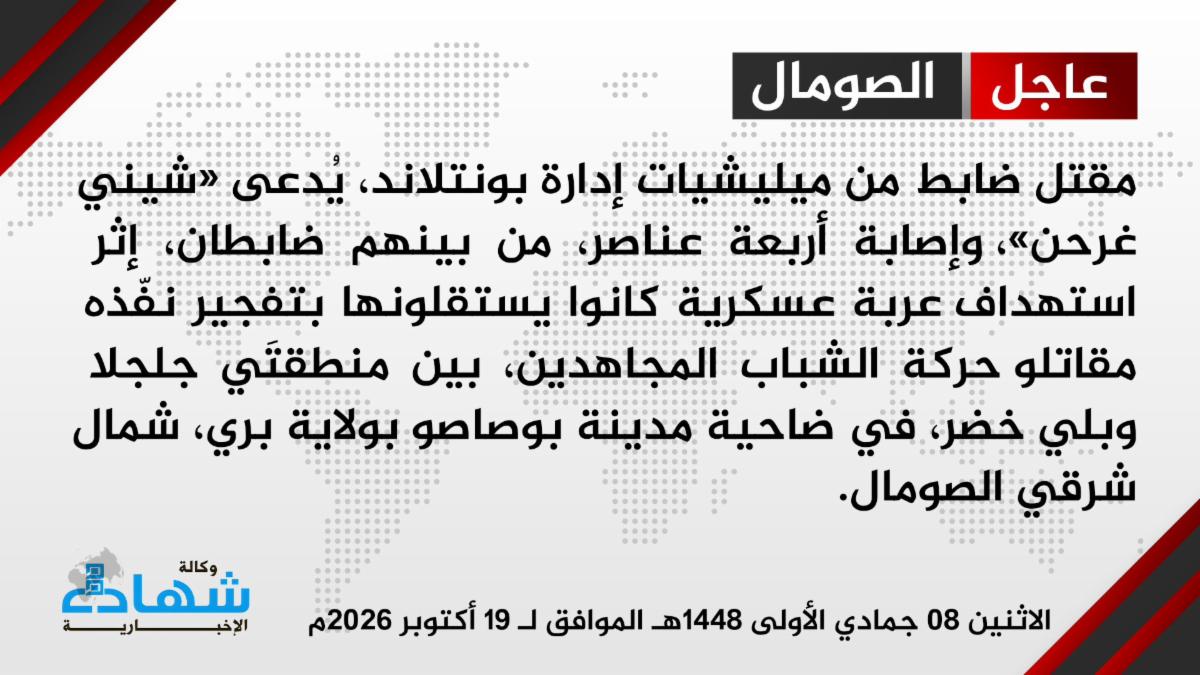
Al-Shabaab issued two particularly significant attack claims on 19 October, signalling an important shift in both its sectarian messaging and geographical ambitions. In Kenya's Lamu County, the group claimed an armed assault explicitly targeting Christian civilians, while in Somalia, it claimed an IED attack against Puntland security forces near Bosaso, killing one officer and wounding four others.


A First for Al-Shabaab? Christians Explicitly Named as Targets

Of particular significance is al-Shabaab's explicit identification of Christians as targets in its attack claim concerning Baure, Lamu County. While the group has a longstanding history of attacking civilians and non-Muslims, this marks what TRAC has identified as the first Shabaab claim explicitly singling out Christians as targets in their claim language. As such, Shabaab has drawn particular attention.


The wording closely resembles the sectarian framing routinely employed by Islamic State (IS) affiliates, particularly Islamic State West Africa (ISWA), which frequently emphasises the Christian identity of its victims. Al-Shabaab is clearly adopting a more explicitly sectarian propaganda approach, using religious identity to amplify the impact of its attacks, intimidate Christian communities and potentially compete for attention within the wider jihadist ecosystem.


The claim also underscores the persistent vulnerability of communities in Kenya's Lamu County, where proximity to Somalia continues to facilitate cross-border militant activity. However, the significance of this particular claim lies less in the location than in how al-Shabaab has chosen to describe its victims.


Al-Shabaab Claims Attack in Puntland — Islamic State Somalia's Territory

Equally noteworthy is al-Shabaab's claim of responsibility for an IED attack against a Puntland Administration militia vehicle between Galgala and Balli-Khadar, near Bosaso, killing officer Shini Garhan and wounding four others. Puntland's Bari Region, particularly the Bosaso area and nearby Cal Miskaad Mountains, has been a major operational stronghold of Islamic State Somalia (ISS), which has repeatedly targeted Puntland security forces through IEDs, armed assaults and drone attacks. TRAC has documented several such incidents in recent months, including an ISS-claimed IED attack near Bosaso on 2 August.


Against this backdrop, al-Shabaab's claim is especially significant because it places the group within an operational environment strongly associated with its Islamic State rival. While a single claim does not establish a sustained expansion into Puntland or a direct challenge to ISS, it raises questions about whether al-Shabaab is seeking to assert a greater presence, exploit existing security vulnerabilities or challenge its rival's influence.


TRAC Assessment: Two Claims, Two Potential Shifts

TRAC assesses that the significance of these developments extends beyond the attacks themselves. Al-Shabaab's explicit identification of Christian victims suggests a possible evolution in its propaganda, echoing the sectarian language of Islamic State affiliates, while its claimed operation near Bosaso raises questions about the group's activity in territory where ISS has maintained a prominent insurgent presence.


Taken together, the claims warrant close monitoring for signs of a broader shift in al-Shabaab's messaging and operational reach. Further explicitly anti-Christian claims or repeated attacks in Puntland would provide stronger evidence that these incidents represent an emerging pattern rather than isolated developments. It is impossible to underestimate al-Shabaab as the world's strongest, best-financed al-Qaeda franchise.

Other Developments

TRAC Incident Report: Decapitated Body and Severed Head Discovered Alongside Narcomanta Bearing Los Chapitos (CDS/CH)-Jalisco New Generation Cartel (CJNG) Signature in Culiacán, Sinaloa, Mexico

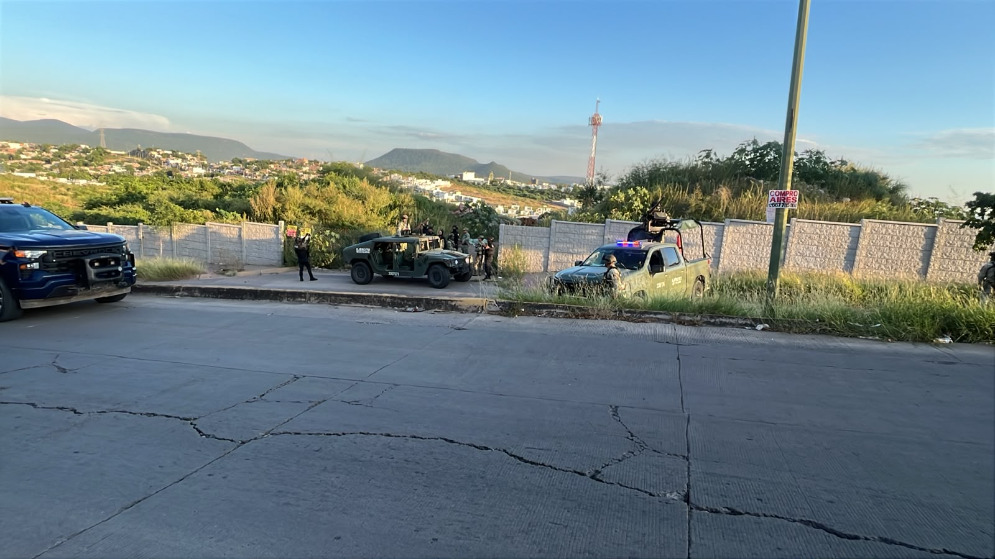
On 13 October 2026, authorities discovered a decomposing, decapitated body wrapped in a green blanket behind the San Isidro shopping centre in southern Culiacán. The victim's severed head was placed inside a cooler alongside the remains, accompanied by a narcomanta threatening a rival criminal actor and referencing civilian killings and territorial control. Unofficial sources linked the victim to La Mayiza (CDS/MZ), the rival Sinaloa Cartel faction, and alleged involvement in extortion and homicide.


Of particular significance is the inclusion of “IAG” alongside the names of Los Chapitos and CJNG. The initials refer to Iván Archivaldo Guzmán Salazar, whose purported endorsement adds weight to the message's presentation as a joint declaration. Such explicit references to individual cartel leaders are unusual in narcomanta signatures, making the wording especially noteworthy. The message comes amid uncertainty surrounding the FEU alliance, which has been associated with cooperation between Los Chapitos and CJNG. In June 2026, Mexican Security Secretary Omar García Harfuch stated that authorities had no current indications of continued cooperation following the killing of CJNG leader Nemesio Rubén Oseguera Cervantes, alias El Mencho.


TRAC assesses that the “Chapiza/CJNG/IAG” signature directly challenges the perception that cooperation between the factions has ended. Whether it reflects genuine coordination, Iván Archivaldo's endorsement or an attempt to invoke his authority remains unverified. Nevertheless, the deliberate presentation of a united Los Chapitos–CJNG front suggests that the FEU alliance continues to carry strategic value as a symbol of cartel cooperation and intimidation, even if its operational status remains uncertain. The key question is no longer simply whether FEU remains active, but whether its name and associated leadership still serve as instruments for projecting collective power in Sinaloa's ongoing cartel conflict.

(Claim) Baloch Liberation Front (BLF) Disavows Dasht Goran Attack and Accuses Baloch Liberation Army (BLA-Azad / BLA-A) of Misusing Its Flag in Kalat District, Balochistan, Pakistan

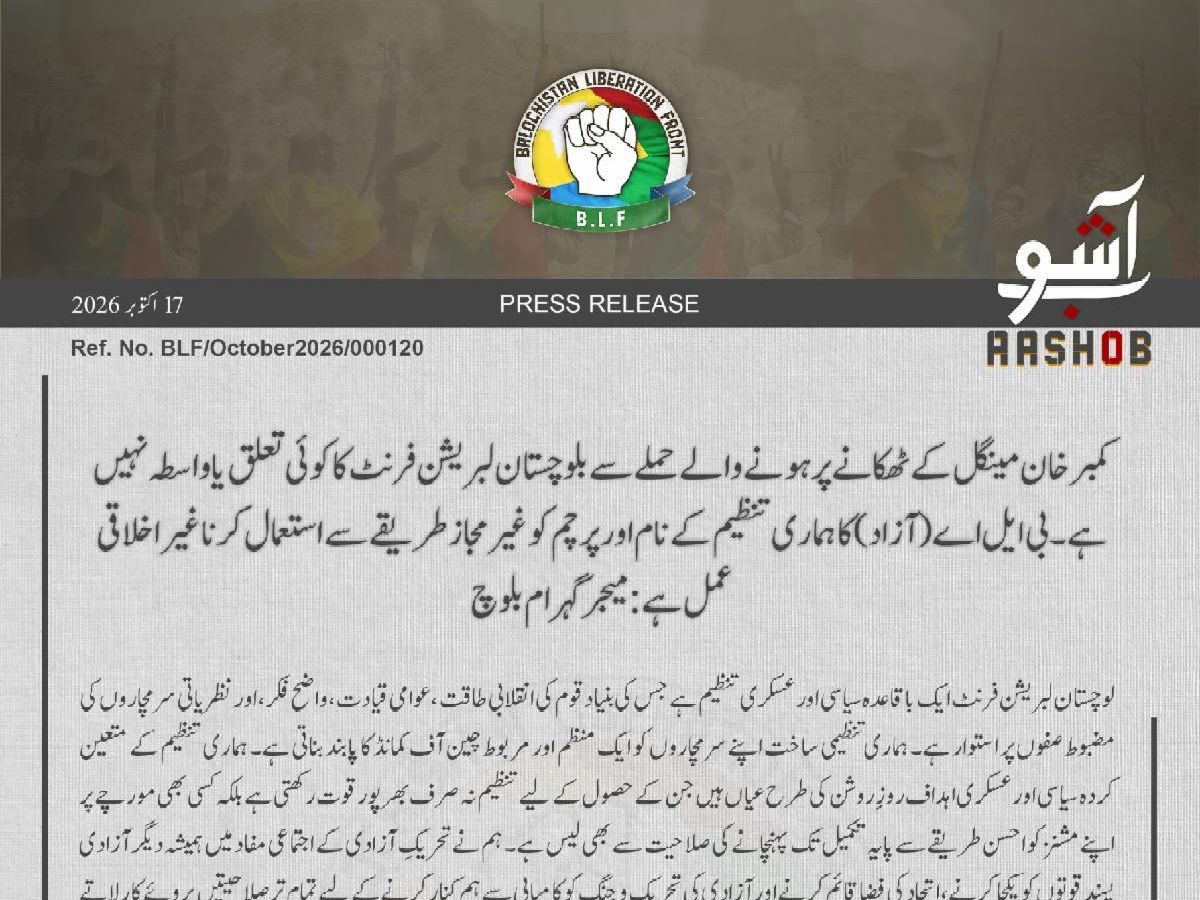
On 17 October 2026, the Baloch Liberation Front (BLF) issued a statement distancing itself from a recent attack on the house of Qambar Khan Mengal in Dasht Goran, in which Baloch Liberation Army – Azad faction (BLA-A) commanders allegedly used the BLF flag without authorisation. The BLF said it had no connection with the attack. The group also accused BLA-A elements of previously using the BLF’s name in criminal activity, including extortion, theft, robbery, and intimidation of local notables and the public. It said it had stayed silent until now to avoid projecting disunity within the Baloch movement, but that continued silence was no longer in the movement’s interest. It further alleged that the same group had killed BLF members in the past and described those responsible as fugitives answerable to the Baloch nation.


The BLF stated that no group has the right to use its name or flag, and that public use of the flag by others should not be read as support for or approval of the BLF. It criticised BLA-A as factional, centred on personality worship, and reliant on an outdated tribal-chieftain structure, which it said undermines that group’s claims to represent the public. The BLF warned that it can identify these elements and would hold them accountable, while describing its own policy as one of non-confrontation for the sake of national unity, which it said should not be mistaken for weakness.


The statement reflects the long-standing rivalry between the BLF and BLA-A rather than a new development. The BLF is aligned with BLA-Jeeyand through Baloch Raji Aajoi Sangar (BRAS), while BLA-A operates outside that coalition, so public disavowals and mutual accusations of this kind are consistent with existing inter-group rivalry. The statement is mainly aimed at protecting the BLF’s name and image among the Baloch public, and the BLF’s warning that it will “hold these elements accountable” is best read as rhetoric unless there is evidence of follow-up action. TRAC assesses that this is unlikely to alter the wider insurgency’s trajectory, though continued public disputes would be worth monitoring for signs of escalation into direct inter-group violence.

(Left-Wing Extremism): ‘Gen Z’ Protest Movement Calls for Nationwide Demonstrations on 31 October in Germany

TRAC is monitoring coordinated calls for nationwide demonstrations in Germany on 31 October 2026, amid growing concerns that the violent unrest witnessed in France and Italy could inspire similar disturbances across German cities. The emerging movement, operating under the banner “Gen Z regelt das” (Gen Z will solve it), is mobilising around grievances including rising living costs, education, military conscription and Palestine. While these demands are not inherently extremist, promotional material incorporates imagery of fires, destruction and violent confrontations, raising concerns that radical elements may seek to exploit the demonstrations.


TRAC has identified a central mobilisation channel circulating links to dedicated local Telegram groups for Berlin, Frankfurt, Hamburg, Munich and Cologne, alongside a separate channel promoting the movement’s TikTok presence. This city-specific structure provides participants with direct communication channels for organising demonstrations, distributing material and mobilising supporters. The rapid circulation of these links highlights an effort to translate online momentum into coordinated offline mobilisation, although the number of participants and degree of centralised control remain unverified. The larger Gen Z channels have over 3000 members.


TRAC notes that the movement explicitly draws inspiration from recent demonstrations in France, with slogans encouraging German youth to follow their French counterparts. The simultaneous organisation of demonstrations across multiple cities creates opportunities for rapid mobilisation and could complicate police deployments if isolated confrontations develop. TRAC expects attempts to replicate elements of the French and Italian unrest during the upcoming German mobilisation.

(Poster/Right-Wing Extremism): Accelerationist Channel Shares Propaganda Poster ‘Hold Judges Accountable’

TRAC Incident Report: Israeli Settlers Attack Mayor of Aulnoye-Aymeries, Archbishop of Cambrai, France, Visiting Taybeh, West Bank, Palestine

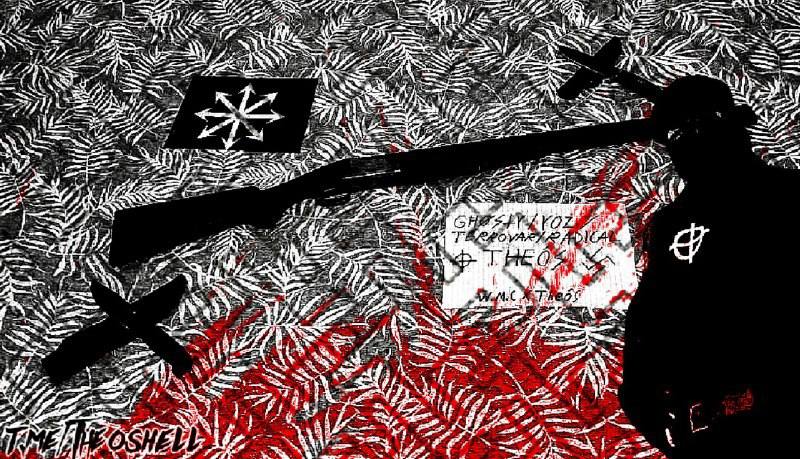
(Poster / Nihilistic Extremism) Joint Recruitment Call by THEÓS, No Lives Matter (NLM), Teufelsreich & Maniac Murder Cult (MKY/MKU)

TRACFusion_Newsletter2.png

CLICK HERE FOR PAST WEEKLY BRIEFINGS

TRAC Logo_Primary_TransparentWhite.png
Facebook          X          Instagram