Long Island Swimming Officials Association
Serving Long Island Swimmers and Divers for 64 years!
September 2021
|
|
Let's see how this goes ...
Many of us have mixed feelings about Zoom meetings but the one thing that we cannot deny is that attending one is much easier (time, travel, and convenience - wise) than going somewhere to meet.
I'm so impressed that we had almost 100% attendance at the Rules Interpretation meeting! This was purely an informational meeting and very conducive to the zoom format.
As you know, I believe that meetings should provide helpful information and useful tools for you to better do your job as an official. I feel that we accomplished that at the first meeting and will at each subsequent meeting this season. At the diving clinic, we will provide more nuts and bolts guidance on how to accurately judge high school diving. The annual workshop will provide hands-on sessions on "how to score a double and triple dual meet", "become a better relay takeoff judge", and "how to handle a situation with an angry coach". The preseason meeting will provide the details and forms that will help you perform your job easier. The December Relay Carnival will give you the opportunity to practice in different positions on the pool deck prior to the season.
While I do not expect almost 100% attendance again, I hope that you will see the value in attending these instructive opportunities provided for you.
Thank you,
George Fleckenstein
president
|
|
LONG ISLAND'S OLYMPIC MEDAL COACHES |
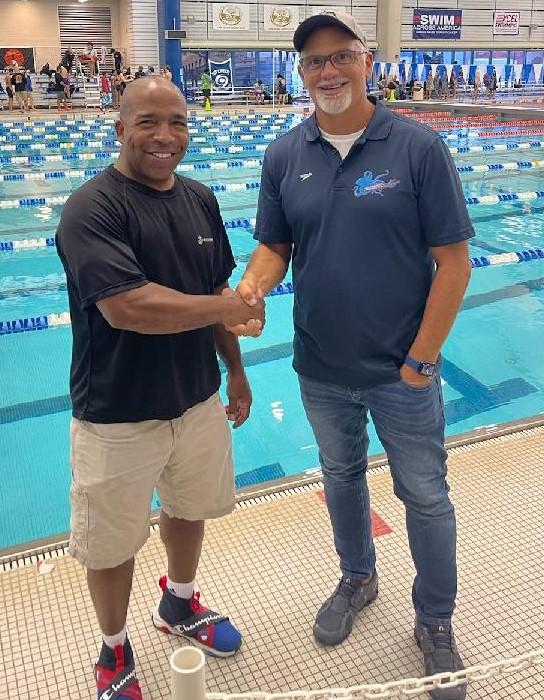
George Taylor and Marc Danin
Diving Coach George Taylor worked with Andrew Capobianco for his first 2 1/2 years of diving, when he won the Section VIII diving championships as a 7th grader and 8th grader. Andrew then moved to North Carolina and in July he won a Silver Medal in the Tokyo Olympics men's synchronized 3m springboard diving.
Marc Danin, coach at Stony Brook School and Islander Aquatics is the coach of Anastasia Pagonis, who won the Gold Medal in the Tokyo Paralympics Games in the women’s 400-meter freestyle. Anastasia is blind and set a world record in that paralympic event - Sports Class S11 -with a time of 4:54.49.
By the way, Jeff Chu was the referee and signed the USA record verification when she broke that record in the spring - I was there as the starter.
|
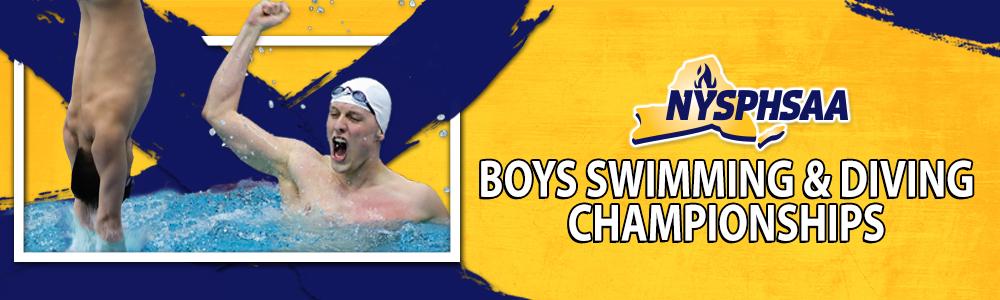
2022 NYSPHSAA Boys Swimming and Diving Championships
March 4th - 5th, 2022
Ithaca College
Applications to officiate will be out soon!
|
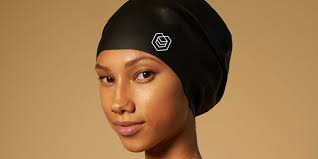
Soul Caps are extra, extra large swim caps for long and voluminous hair. They are legal in NY State High School Swimming and Diving.
|
ENTERING AVAILABILITY
If you officiate in Section XI, you can now begin entering your availability.
Section VIII will open up their availability process in the next few days.
*Please note the article below *
|
|
LISOA Calender
Diving Clinic - October 25 - 7:00 pm - 8:30 pm - Harborfields Library
Better and Consistent Workshop - November 10 - 7:00 pm - 9:00 pm - NCAC
Pre-Season Meeting - November 23 - Long Island Welcome Center - 7:30 pm - 9:00 pm
WINTER BOY'S SWIMMING AND DIVING SEASON BEGINS - November 30
Section VIII Relay Carnival - Nassau County Aquatic Center - December 1
Annual Meeting - January 19, 2022 (date change)
Recognition Dinner Meeting - March 2022
Active members are required to attend a minimum of three (3) meetings and/or clinics. As prescribed in Article I of the By-Laws, attendance at a rules interpretation meeting is required.
|
Things Every Diving Judge Should Know... |
...While there are many aspects to being a good diving judge, knowledge of the rules is paramount.
Knowing the rules regarding the five elements of all dives (starting position, approach, takeoff, flight and positions, and entry into the water) is essential to being a competent diving judge.
It is important for diving judges to review the diving guidelines and/or silhouettes frequently.
|
LISOA DIVING CLINIC
MONDAY, OCTOBER 25
HARBORFIELDS LIBRARY
GREENLAWN, NY
The one area where the majority of us need the most training and practice is judging diving. That's why we have at least one diving clinic each year.
This year, to get a different perspective, we have invited two of the top diving officials in NY State to give us their tools and training on judging diving.
Those of you that have officiated at a NYS Swimming and Diving Championships know our two presenters. Traveling from Syracuse, longtime NY State Diving Championship official and NYSCSOA past president, Jay Tucker. And Paul McClintock, current NYSCSOA president and longtime state championship diving judge, from Westchester County.
The clinic will be held at the Harborfields Library in Greenlawn, NY.
|
|
Officials must be Fully Vaccinated or have a Weekly Negative test to officiate this season. |
|
New York State officials have provided clarification that the determination does apply to interscholastic sports officials, judges, umpires, etc. who work as independent contractors in P-12 school districts.
“Teachers and Staff. This determination applies to all P-12 (public or non-
public) school district faculty or staff, including all teachers, substitute teachers, student teachers, school administrators, paraprofessional staff, and support staff, including bus drivers. This determination also applies to contractors working in a P-12 school (public or non-public) or school district setting, including contracted bus drivers.”
“Testing Requirement for teachers and staff: P-12 schools are required to ensure teachers and staff, as outlined above, have testing performed for COVID-19 at least once per week when a school is in a geographic area identified by the CDC as having low, moderate, substantial, or high transmission rates. Teachers and staff may be permitted to opt-out of mandatory weekly screening testing if they provide documentation of being fully vaccinated against COVID -19, as set forth in 10 NYCRR 2.62. Teachers and staff who work at multiple schools do not need to receive multiple tests; they may use one weekly test result to demonstrate to any number of schools where they work that they have fulfilled this requirement.”
|
|
BETTER AND CONSISTANT WORKSHOP
Wednesday November 10, 2021
7:00 p.m. – 9:00 p.m.
Breakout sessions:
DEALING WITH HOSTILE COACHES
Most of the coaches that we deal with are cooperative and a pleasure to work with. When you encounter an angry and/or combative coach. How should you react?
HOW TO SCORE A DOUBLE AND TRIPLE DUAL SWIM MEET
Every season we have meets where three teams will compete in one pool. Few of us know how to run and score a meet with three teams and three officials. What happens when you are assigned to one of these meets?
THE ART OF JUDGING A RELAY TAKEOFF
All dual meets have three events where the referee will judge three sets of relay takeoffs – by yourself. And in a championship meet, every lane judge will evaluate three sets of takeoffs. Your accuracy judging takeoffs is essential.
Nassau County Aquatic Center
|
|
The Big Difference Between ‘Hearing’ and ‘Listening’
By the Referee Editors
There are essentially five reasons why people listen: to gain information, to empathize, to anticipate responding, to make judgments and to enjoy the reception (entertainment). Those are also the reasons officials need good listening skills.
Many tactics for handling games will be told to you in person by other officials. Listening carefully to advice from veteran officials will help you acquire special knowledge about anticipating unusual game situations, dealing with controversy and working with game attendants, such as ball and bat persons, timers, scorers, line judges and chain crews. Listening to learn is one of the most important functions of absorbing data.
Listening to empathize is another important purpose for paying attention. The idea of putting yourself in someone else’s shoes means being aware of another person’s emotions and understanding what their expressions signify — words as well as facial contortions, grimaces, smiles, frowns and gestures of dismay, puzzlement, anger and resignation.
Good listening skills will help you understand why you are being challenged, helping you to empathize with those who do the challenging. Officials often say they must tune their antennae in order to pick up all the nuances of discord.
Once a coach or player explains an objection completely, the listening official must weigh the information, keeping a firm grasp of the other person’s reason for making the objection. Often the reason may appear obvious: The complainant wishes the call to be reversed. But behind some objections are other factors, such as a coach trying to protect a player, trying to save face after a strategic move goes wrong, or even seeking to obtain an edge on future calls through intimidation. Just as officials should “see the whole play,” another piece of advice could be, “hear the whole story.”
Officials can separate the possible motivations of a verbal challenge by taking in the entire context of the message, analyzing the hidden messages and trusting their instincts, as vague as those may be. The official’s response usually takes one of two forms: to deny the challenge, which takes special skills in verbal diplomacy, or to offer a solution to the perceived problem. A solution may include consulting with a crewmate or partner or explaining a rule in clear and pointed terms. The key is to hear the problem in its entirety. Trying to solve problems by slipping into the viewpoint of an antagonist is a very hard part of officiating and it doesn’t come easily.
Sometimes taking a deep breath before offering a response can help your mind process the entire context and permit you to arrive at a sensible determination. An enemy of effective listening is impulse, because impulse is often triggered by anger. Pause before talking and try adhering to the adage, “Engage brain before opening mouth.” To monitor your own listening tendencies, keep track one day of how often you interrupt the talk of others. If you do it a lot, it means you are in the habit of not waiting for the whole story.
You can console players on occasion with a kind word. You can smile in amusement if their antics are humorous without upsetting the continuity of the game. You can also empathize with their celebrations as much as you do with their disappointments. Officiating need not be an entirely impersonal role. People play games for fun or satisfaction; officials should have expectations of the same payoff.
|
|
The primary role of the official is to ensure fair competition which is conducted in a positive, safe and healthy environment and that actions of the competitors, coaches and other team personnel are in compliance with the rules. |
|
The purpose and goals of the LISOA and its members shall be to:
Officiate all meets in a competent and professional manner.
Have its members actively work to improve interscholastic swimming and diving officiating.
Provide a consistent interpretation and administration of interscholastic swimming and diving rules.
Service and collaborate with the swimming and diving community for the improvement of swimming and diving.
|
|
The official must establish the best possible competitive climate for fair competition with the attention on the athletes, rather than on the official. The conduct of each official affects the public’s attitude toward all officials. Therefore, every official must uphold the honor, integrity and dignity of the profession. |
|
President:
George Fleckenstein
Vice President:
Nelson Gonzalez
Secretary:
Christine Duong
Treasurer:
Barbara Wendt
|
|
Directors:
Doug Virkus
Larry Wachter
|
|
Rules Interpreter:
Bob Kersch
Past President:
Frank Dowd
|
|
OUR CHARTER MEMBERS (1957)
Charlie Schlegal
George Columbo
Jim McAllister
Dick Atwater
Jack Reilly
Frank Krayer
|
|
NYSCSO Distinguished Service Award Members
Laurette Tekverk (2020)
Jim McAllister (2019)
Doug Virkus (2011)
Mush Masters (2008)
Pete Moeschen (2004)
Stan Adler (1993)
Bob Kersch (1990)
|
|
|
|
|
|
|
|