|
The designation of public and private sectors as separate entities, along with the gauzy metaphor of "safety net," is not merely naïve. Our literature clings to this stale, reductionist notion, but the fallacy wastes precious time and squanders scarce human energies.
In real life, these factitiously partitioned sectors have been intertwined and interdependent for over 50 years. I’ve spent the duration in the belly of this beast. However inaccurate, the myth of separatism can unwittingly impair efforts for functional integration by keeping the worker bees in separate hives.
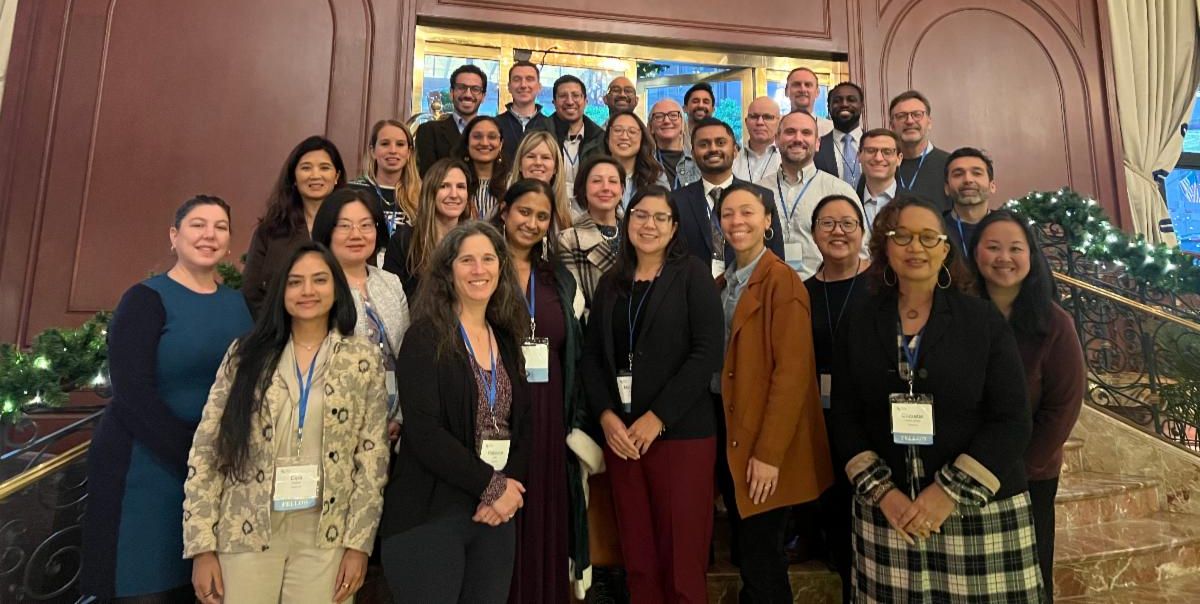
Cross-sector integration on a local scale—if only partial—is possible with the tools we have available now. Pioneering examples emerged over 20 years ago in Santa Cruz, Humboldt, and San Diego Counties, with key contributions from CHCF fellows in the nascent alumni network. (Larry deGhetaldi (C1), Alan Glaseroff (C1), Jerry Penso (C1) — wow.) There are more of us on the bus now!
The public and private sectors — and the dozens of subsectors our professors have coined this century — are more like the liver and kidneys of a living being. If one organ is unhealthy, the whole organism is sick. We could drill down to organelles, but let’s stick with just two for this short essay.
The strengths of the private sector are worthy: clinically expert, technologically innovative, financially efficient, with adequate and sometimes gaudy quality metrics. Those strengths do not often overlap with the public sector’s central strengths: leadership devoted to people enduring poverty, toxic environments, and bigotry...buoyed by genuinely earnest, socially conscious, indefatigably liberal staff.
Neither sector can realistically achieve both of those strength portfolios in isolation. Successful hybrids would be exceptional.
Both sectors also suffer serious weaknesses, of course, but again, they’re not the same ones. Some consider the private sector to be money-driven, aloof, and heartless. Ouch! The public sector can be chided as erratic in quality, plagued with turnover, clumsily funded, and frustratingly inefficient. Oof!
Those memes have some merit...along with some snark. Both sectors need help with things the other does well, but that connection eludes them if they look only inside their own dwellings. Solutions may lie right down the street.
Both sectors need money, obviously, but it flows differently. While the payment and reward schemes are different in detail...they both waste money, and they both let people down way too often. They both depend upon unreliable, illogical, and sometimes unsavory support structures. That should beg for conversation! (Harold Miller knows.)
While the scholastic training of professional staff is quite similar for both sectors, and while their humanistic motivations are similarly wholesome...people working inside one don’t often talk to their counterparts in the other. We know it’s possible...and exhilarating.
Meanwhile, the “safety net” exists putatively as the identity of the public sector. Reality check: that Reagan era term is hollow jargon unless both sectors are involved. (Think about the sources of specialty care, inpatient care, meds, vaccines, devices, & elite technology.) Because of glitchy coordination, gaps and delays persist in much of California. Holes in a catchword net do not repair themselves, but that’s fixable with intention, as some memorable CHIPs have demonstrated...and sustained. (Paul Giboney (C9), Tanya Dansky (C10) — wow.)
The challenge for leaders should not be to further differentiate and defend the insular public and private sectors, but rather to integrate strategies to:
- Harness existing, complementary strengths, and compensate for their weaknesses.
- Locate and plug the holes neither sector can repair alone.
- Sustain and improve what we build instead of tossing another fad on the heap.
- Do it sensibly but deliberately. We don’t need spectacular crashes, but we’re short on time.
- Learn, refine, and share.
The fellowship gave us models for crafting harmonized approaches. The motivational platform for broad collaboration derives not from where we work, but rather for whom we work. Who’s that? Patients in both sectors, people who share human anatomy, biology, and a host of aspirations and fears. Within those populations, we find the enchanted diversity which makes us a vibrant society, not a basket of #7 golf balls.
The current upheavals in federal funding and ideological antagonism are going to crunch many familiar structures and likely damage some revered pillars. The underlying assumptions of the two-sector scheme are not sacred...nor innately desirable. This is an opportunity.
True bridging can be accomplished through a mentality of community-wide benefit, not an insular one. It takes heart, brain, guts, and muscles. I view the early successes as an ascendant triumph of the fellowship...what Mark Smith, Al Martin, and Ed O'Neil envisioned when they created this training one generation ago.
Now we need to take it beyond the fences.
wellsshoemakermd@gmail.com
|