What You'll Find in this Newsletter | |
Advocacy:
-
Action Alert: Black-footed Ferrets and Lesser Prairie-Chickens are being threatened
- Kansas WEALTH Coalition Calls for a Data Center Moratorium
Conservation: Increasing Forest Health
Education: Following the Monarch Migration
Upcoming Events
Featured:
- 10/2-10/3: Big Kansas Road Trip
- 10/4: Lincoln County Founders Day
- 10/4: Hutton Fall Open House
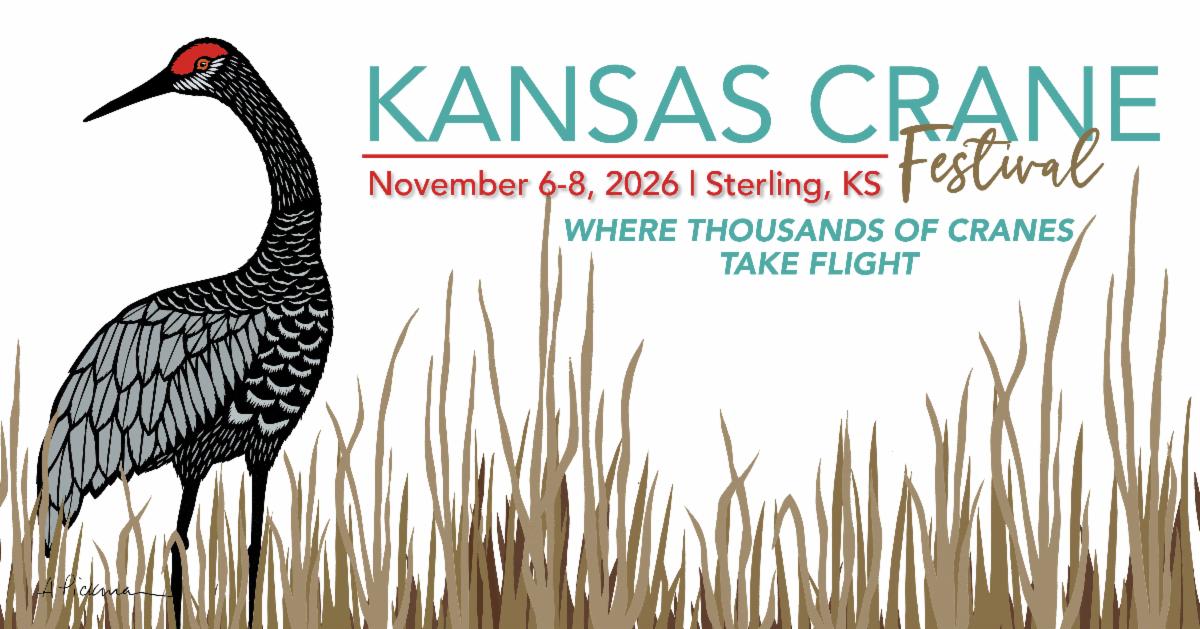
- 11/6-11/8: Kansas Crane Festival (formerly Celebration of Cranes)
Philanthropy Corner: Contribute to the AOK Advocacy Fund
Chapter Spotlight: Southeast Kansas Audubon Society
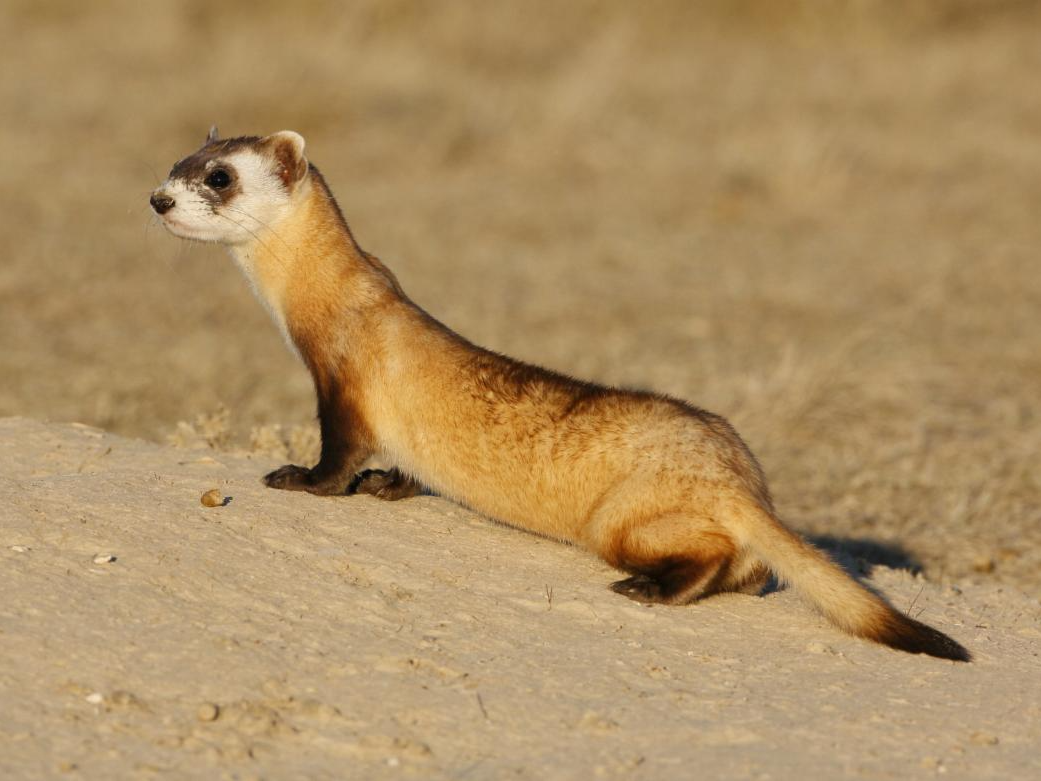
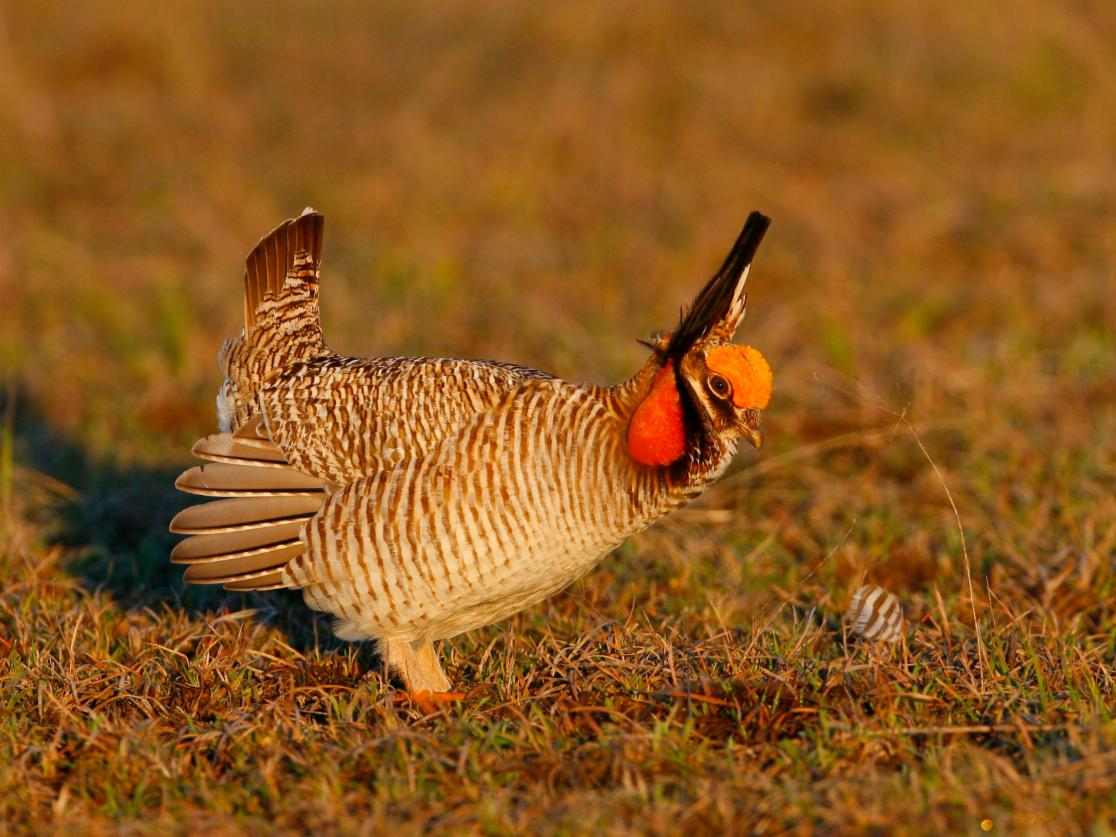
| | Black-footed Ferret (left) and Lesser Prairie-Chicken (right) by Bob Gress | |
Action Alert!
Background
Black-footed Ferrets and Lesser Prairie-Chickens are being threatened with a proposed high voltage transmission line to be installed between Holcomb, Kansas, and Sidney, Nebraska.
Black-footed Ferrets are the rarest mammal in North America. Black-footed Ferrets were reduced to 18 individuals in 1987 and have only recovered to 300-500 ferrets alive today, so this species remains critically endangered. Scientists estimate 3,000 individuals are required to move it off the endangered species list. The Kansas site is one of the most important wild populations because there is evidence of good reproductive success and no recorded outbreaks of disease. The proposed route is across the road from the Kansas site.
Populations of Lesser Prairie-Chickens number less than 30,000, with 70% of those in Kansas. Lesser Prairie-Chickens avoid power lines and roads during both the breeding and nonbreeding seasons, and cross power lines at much lower rates than expected. The proposed route will not only effectively separate populations of Lesser Prairie-Chickens, it also impacts an area where focused conservation efforts have resulted in the highest density of lesser prairie-chickens throughout their range. These hard-won conservation gains should not be reversed by the project.
Although critical habitat has not been designated for either Lesser Prairie-Chicken or Black-footed Ferrets, the abundance of both of these species relative to other areas in Kansas and the Great Plains and the continuing conservation efforts being conducted in Logan County specifically, warrants moving the proposed transmission route out of Logan County.
Action
The Kansas Corporation Commission (KCC) is considering the location of the proposed route. Public comments will be accepted through October 9, 2026. Please contact the KCC asking that the route be moved out of Logan County. Feel free to use the text above in your comment and reference Case 27-SEPE-0138-STG.
There are several ways to submit a comment:
- Go to KCC website. Click on the “Your Opinion Matters” link to submit your comment online.
- Send a letter:
Kansas Corporation Commission
Office of Public Affairs and Consumer Protection
1500 SW Arrowhead Road
Topeka, KS 66604-4027
- Call the KCC at 1-800-662-0027 or 785-271-3140.
| |
Kansas WEALTH Coalition Calls for a Data Center Moratorium
In a recent press release, the Kansas WEALTH (Water, Energy, Air, Land, Transportation, and Health) Coalition released a joint statement calling for a data center moratorium until significant guardrails are established to protect the health, safety, and welfare of Kansas communities.
The statement defines the principles under which guardrails must be developed:
-
Corporate accountability - Requires developers to be transparent and accountable
-
Transparent third-party studies - Evaluates the environmental and infrastructure impact
-
Protection of local water resources - Safeguards the long-term needs of Kansans
-
Establish reasonable buffer zones - Distance from schools, hospitals, and neighborhoods
-
Meaningful public participation - Creates opportunities for community input
-
Comprehensive review processes - Base reviews on unique impacts and local circumstances
-
New Clean Capacity and Energy - Generate or purchase their own new clean energy
-
Energy efficiency standards - Build to the highest standards to reduce further grid impacts
-
Public reporting - Ensure accountability regarding public water and energy use
-
Fair labor standards - Require prevailing wage and apprenticeship programs
The statement is posted online and is available as a sign-on letter for individuals and organizations who want to show their support for a data center moratorium and common sense guardrails that protect our Kansas communities.
| | |
“Whether it's the extreme energy consumption, water use, air pollution, land disturbance, or other problems, these hyperscale data centers have proven detrimental to the environment and to the communities that host them. Kansans deserve more protections to ensure A.I. data centers are designed sustainably, sited properly, taxed appropriately, and don’t harm our communities and environment.”
~ Zack Pistora, Kansas Director, Sierra Club
| | |
Forests? In Kansas? Far from our state’s source of recognition, woodlands in Kansas largely go unnoticed, underappreciated, or serve as a point of contention as the discussion over expanding woody encroachment rages on.
One beautiful aspect of our state is the steady gradient in the landscape from east to west. The high diversity of the eastern deciduous forest graces the banks of the Missouri River down to the bottomland hardwood forests in the southeast, gently giving way to pockets of tallgrass prairie, the rocky soils of the Flint Hills, and finally the mixed and shortgrass prairies which define the western part of the state. With European settlement, the drawing of hard property lines, and the suppression of natural disturbances, this once gentle transition has been heavily upset and fragmented. The result is an increase of woodlands, and with this increase comes a demand for responsible management.
AOK understands there is no one-size-fits-all approach to land management, especially when it comes to forested environments. Forest stand improvement is the process of intentional management practices aimed at increasing forest health and productivity. Conducted for a variety of purposes ranging from increasing timber production to reducing wildfire risk, forest stand improvement puts land managers in the driver seat (or more likely, behind the chainsaw). Much of the time, this process includes the “thinning,” or removal, of less desirable species and individuals. Thinning of a forest can improve the regeneration and growth of target species, reduce the risk of disease, enhance conditions for prescribed fire, and improve biodiversity all at once.
This fall, the AOK Protected Areas team will partner with the Kansas Forest Service and the Kansas Department of Agriculture on a targeted forest stand improvement project at Kendalls Grove at Far West Wildlife-Friendly Farm. This effort will focus on the reduction of trees in the mid and understory of a 150-year-old bur oak stand, experiencing little to no recruitment of new oak trees as the forest has grown dense in the absence of fire. This thinning will reduce competition, and improve conditions for prescribed fire, a promising prospect for the acorns spread across the forest floor. This is all in part of the larger objective of restoring a small fraction of that transitional zone between our forests and grasslands, the midwestern oak savanna, and ensuring the long-term survival of these magnificent trees and their habitat to be experienced and enjoyed by future generations.
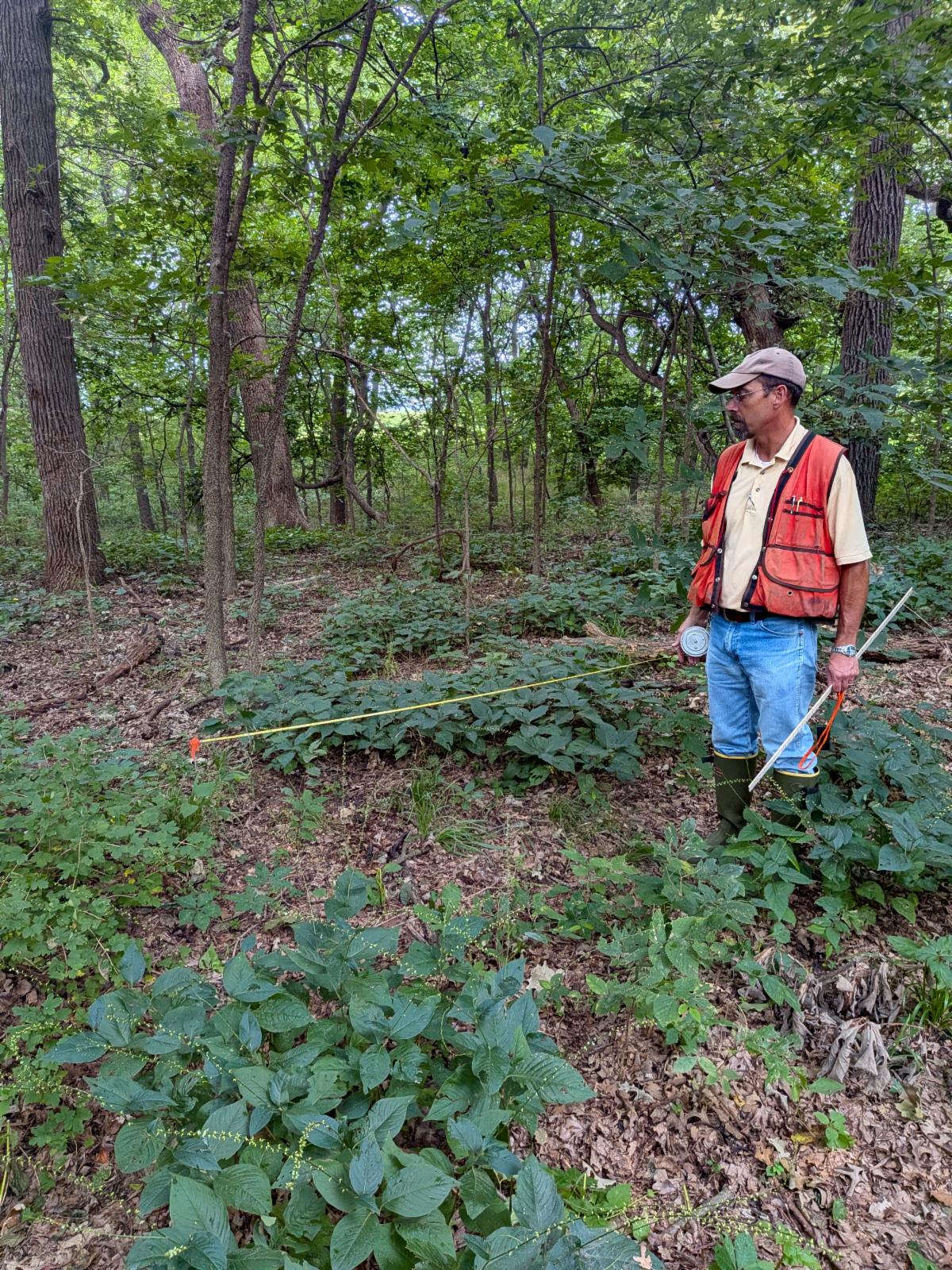
Image: Thad Rhodes, District Forester with the Kansas Forest Service, performing a forest inventory and assessment at Kendalls Grove
| | Following the Monarch Migration | | |
October is a special time to watch for monarchs as they make their remarkable fall migration through Kansas. Each year, millions of monarchs travel south from the United States and Canada toward their wintering grounds in Mexico. Unlike most butterflies, monarchs make this journey across multiple generations, with the butterflies migrating south in the fall being several generations removed from those that made the journey north in the spring.
Kansas provides important habitat and a stopping point along this incredible journey. Monarchs rely on milkweed to lay their eggs and nectar-producing plants for food, making healthy grasslands, prairies, gardens, roadsides, and other natural areas important to their migration.
For those who want to take their interest a step further, monarch tagging provides an opportunity to participate in research. During the fall migration, volunteers can place small, uniquely numbered tags on monarchs before releasing them. If a tagged monarch is later recovered, the information can help researchers learn more about migration routes, timing, and survival.
Monarch Watch, based at the University of Kansas, coordinates one of the largest monarch tagging programs in North America and provides information about tagging, monarch biology, migration, and habitat conservation. Even without tagging, observing monarchs and supporting habitat with milkweed and nectar plants can help make a difference for these remarkable travelers.
This fall, keep an eye out for monarchs passing through Kansas and take a moment to appreciate the incredible journey happening overhead.
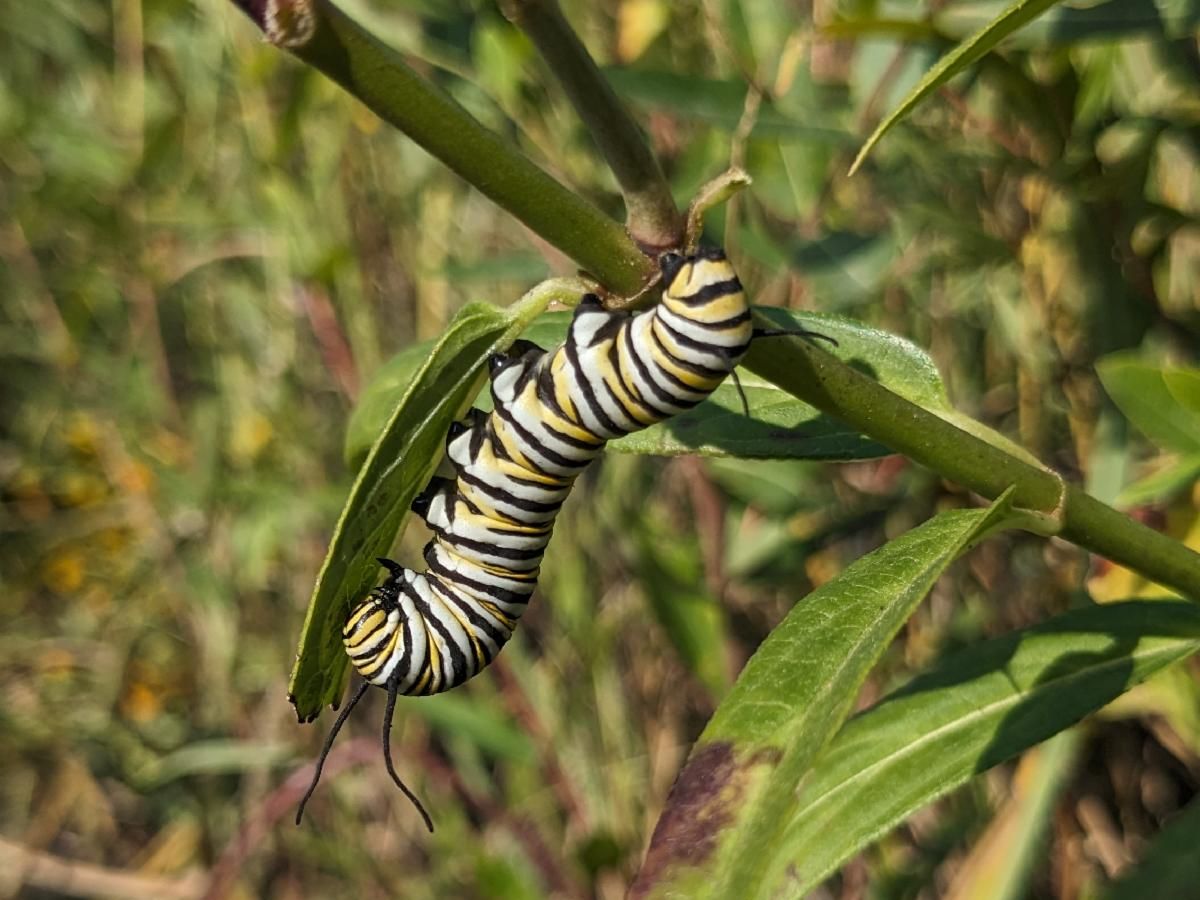
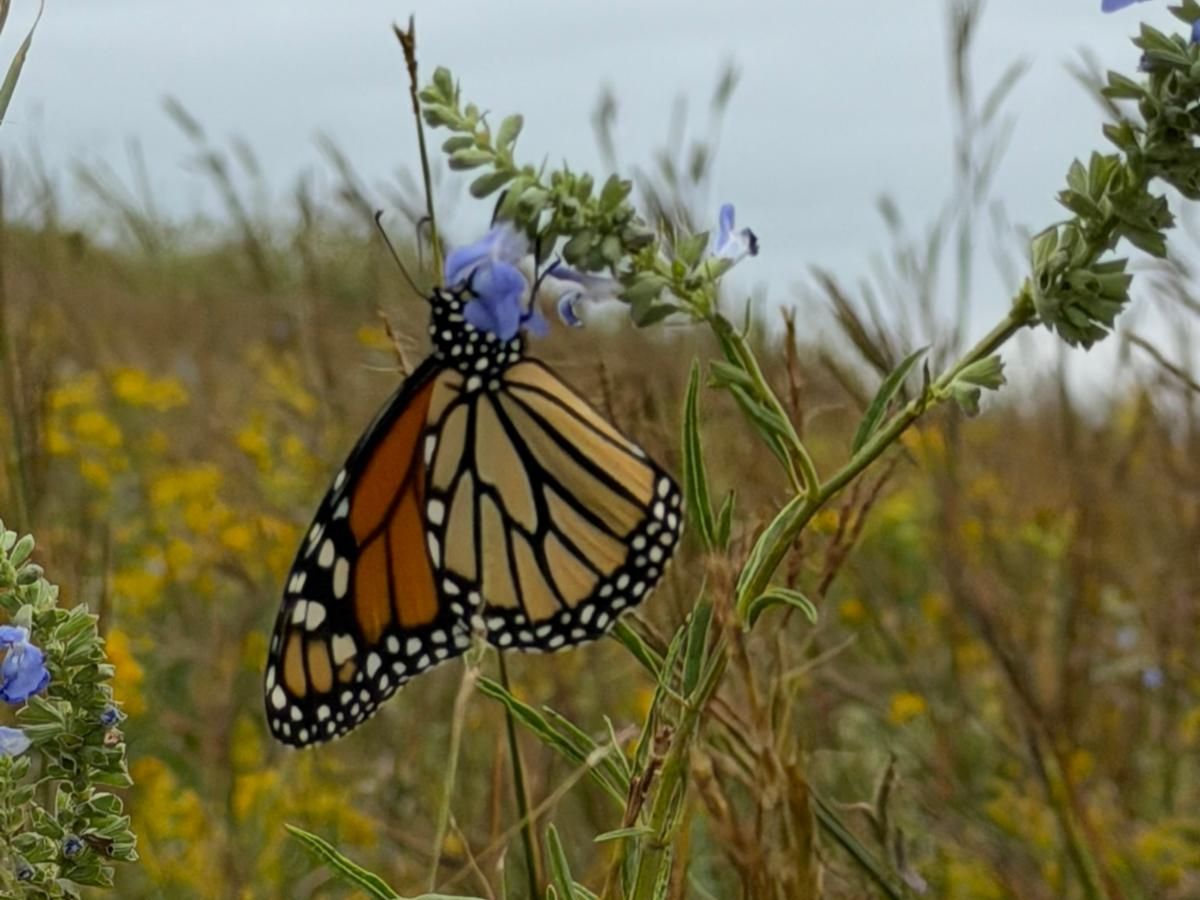
| | caterpillar spotted in Lawrence (left) and monarch spotted at Mount Mitchell Heritage Prairie Park in Wamego (right) | |
Oct 2-3 | Sunset/Sunrise Nature Walks at the Big Kansas Road Trip
Airport Park
US-81 Highway, South Edge of Town
Concordia, KS 66901
Friday: 6:30 PM | Saturday 8:30 AM
AOK is hosting two nature walks during the Big Kansas Road Trip in Concordia, Kansas. Meet at the shelter house near the dog park which was built by the National Youth Administration in 1939. These leisurely walks around the park and through the disc golf course will feature uneven terrain.
| |
Oct 4 | Bird Watching Hike in Celebration of Lincoln County Founders' Day
Meet at the Lincoln County Historical Society
216 W Lincoln Ave
Lincoln, KS 67455
8:00 AM
Join AOK for a hike at the Achterberg Wildlife-Friendly Demonstration Farm, a 240-acre Protected Area where nature and agriculture thrive together. Explore the property while learning about its deep connections to the founders of Lincoln County and the area’s history.
Participants will meet at the museum and caravan to the property for a guided hike.
See the full festival weekend schedule.
| |
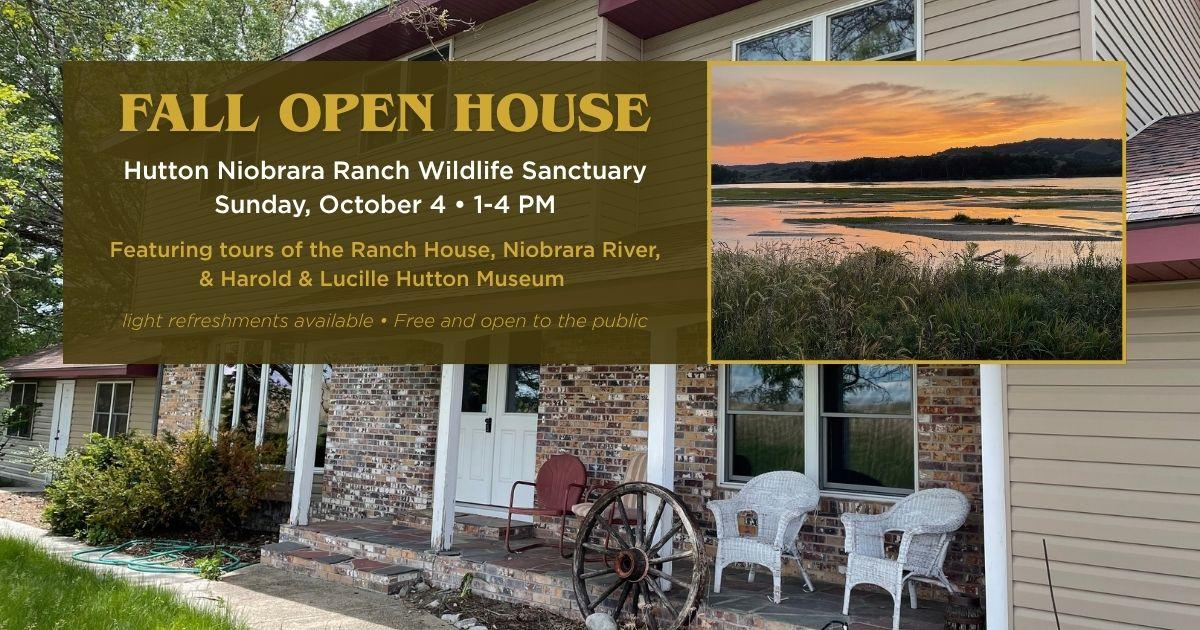
Oct 4 | Hutton Niobrara Ranch Open House
Hutton Niobrara Ranch Wildlife Sanctuary
88923 453rd Ave, Bassett, NE 68714
42.713228, -99.422205
Apple Maps Recommended
1:00-4:00 PM
Explore the Hutton Niobrara Ranch Wildlife Sanctuary during our Annual Fall Open House!
Visit the historic Hutton Ranch House and Harold & Lucille Museum, enjoy light refreshments, and learn more about the Hutton family and the history of this special place. Driving tours of the 5,000-acre sanctuary will also be available on demand, with visitors following a guide in their own vehicles.
Located along the Niobrara National Scenic River north of Bassett, the Hutton Ranch protects a diverse landscape of prairie, woodland, canyons, bluffs, and river habitat.
This event is free, come & go, and open to the public.
|
Oct 15 | Public Talk: Celebrating Cranes
hosted by Smoky Hills Audubon
Kansas Wesleyan, Peters Science Hall
100 E. Claflin Avenue
Salina, KS 67401
7:30 PM
Cranes are large charismatic species that have inspired cultures around the world. North America supports two crane species: the abundant Sandhill Crane and the rare Whooping Crane. Dr. Jackie Augustine, AOK Executive Director, will discuss crane biology and conservation with a special emphasis on cranes in Kansas.
Oct 21 | Public Talk: Water Wars for Wild Wetlands
hosted by Topeka Water Garden Society
Kansas Museum of History
6425 SW 6th Ave
Topeka, KS 66615
potluck at 6:00 PM; presentation follows at approximately 6:45 PM
Cheyenne Bottoms Wildlife Area and Quivira National Wildlife Refuge are two marshes in west-central Kansas that are designated as wetlands of international importance. They are critical stopover habitat for Whooping Cranes and abound with migrating ducks, shorebirds, and Sandhill Cranes during migration. They also host several rare and endangered species including Black Rails, Snowy Plovers, and Interior Least Terns. With drought, climate change, and over-utilization of water for agriculture adjacent to the preserves, these wetlands are losing the water they need to support wildlife. Dr. Jackie Augustine, AOK Executive Director, will discuss the ecology of these wetlands as well as how Audubon of Kansas has worked and is working to ensure that these wetlands thrive.
Oct 22 | Owl Hike: Whooooo's awake?
Kendalls Grove at Far West Wildlife-Friendly Farm
2876 West Kansas HWY 4
Herington, KS 67449
6:30 PM
Barred and Great Horned Owls are common, but seldom-seen residents of Kansas. Dr. Jackie Augustine, AOK Executive Director, will discuss owl biology and lead participants on a hike through Kendalls Grove at Far West Wildlife-Friendly Farm to listen for owls. You will learn to identify owls by their calls. As owls are wild animals, viewing owls is not guaranteed, but there is a good chance to see them. Bring sturdy shoes for walking over uneven ground at night, and anything you need for outdoors (sunscreen, bug spray, water, etc.). We will not be using flashlights while searching for owls (so we don't scare them away), but you may want one for getting back to your vehicle.
| | |
Sterling College, West Cafeteria
125 W Cooper Ave
Sterling, KS 67579
Witness one of nature’s wonders as Sandhill Cranes and critically endangered Whooping Cranes migrate through central Kansas in November. Experience the incredible beauty of this ancient migration. Learn more about how Quivira National Wildlife Refuge (Quivira or QNWR) provides a crucial inland salt marsh and stopover point for these birds.
Spaces are limited and filling up fast so register today!
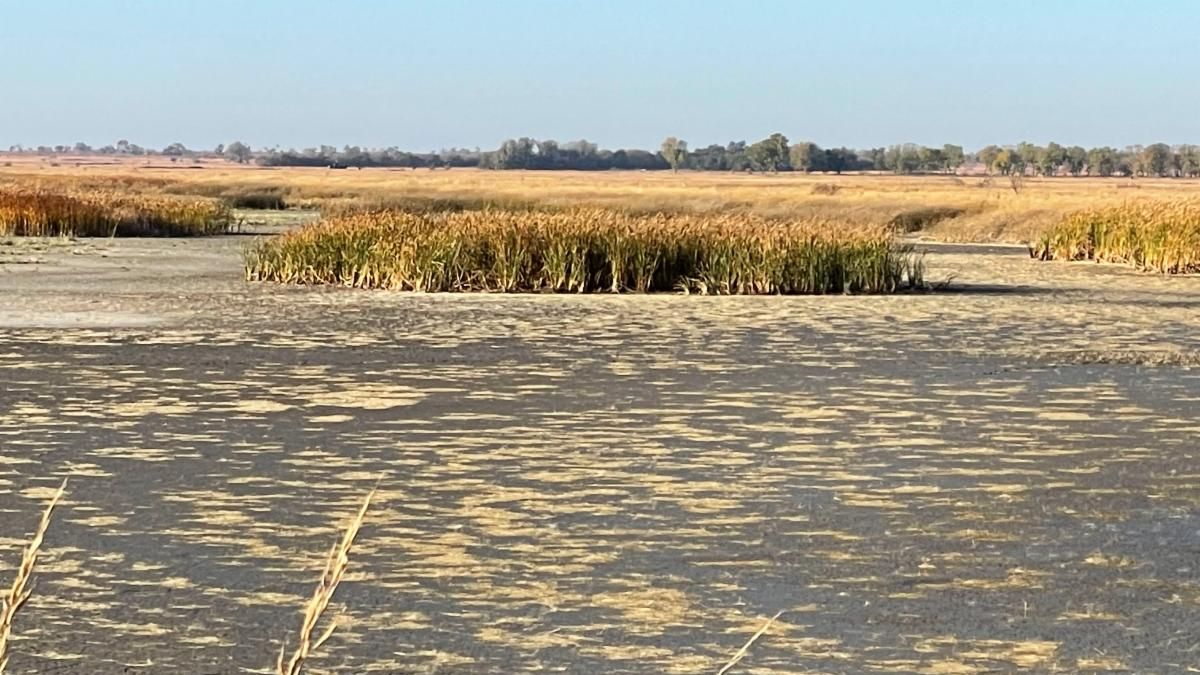
| | A dry landscape at Quivira National Wildlife Refuge | | Contribute to the AOK Advocacy Fund | | |
There are countless ways conservation efforts might manifest themselves. It can mean reviewing the science behind a proposed project, bringing an overlooked concern to the attention of decision-makers, mobilizing communities passionate about their wild spaces, or challenging a decision when the evidence shows that wildlife and habitat are at risk. It takes knowledge, relationships, persistence—and the resources to act when an opportunity or threat arises.
For more than 25 years, AOK has worked to make sure wildlife has that voice. But we cannot know what the next conservation challenge will be, or how quickly we may need to respond. Your support of the Audubon of Kansas Advocacy Fund helps us build the capacity to act before an important opportunity is lost—not after the decision has already been made.
Please consider making a gift today. Your contribution helps AOK bring the right expertise to the table, and speak up for Kansas wildlife and habitat when our voice is needed most.
| | |
The Southeast Kansas Audubon has a mission to be a voice for the conservation of the earth’s natural resources, and to promote an awareness of environmental responsibility through education and example to the people of southeast Kansas.
With monthly programs, field trips, and a newsletter, there are many ways to engage.
Upcoming Monthly Programs:
- October 6 at 7:00 p.m. | History and Wildlife of Baker Wetlands presented by Andrew Rutter, Kansas Association of Wetlands and Streams and Baker Wetlands Education Center
- November 3 at 7:00 p.m. | Duck Identification with Ryan Lies, Kansas Department of Wildlife & Parks Wildlife Area Manager
- December 1 at 6:00 p.m. | Christmas party potluck and flora/fauna trivia contest
Monthly programs take place at the Parsons Arboretum.
| | | | |