|
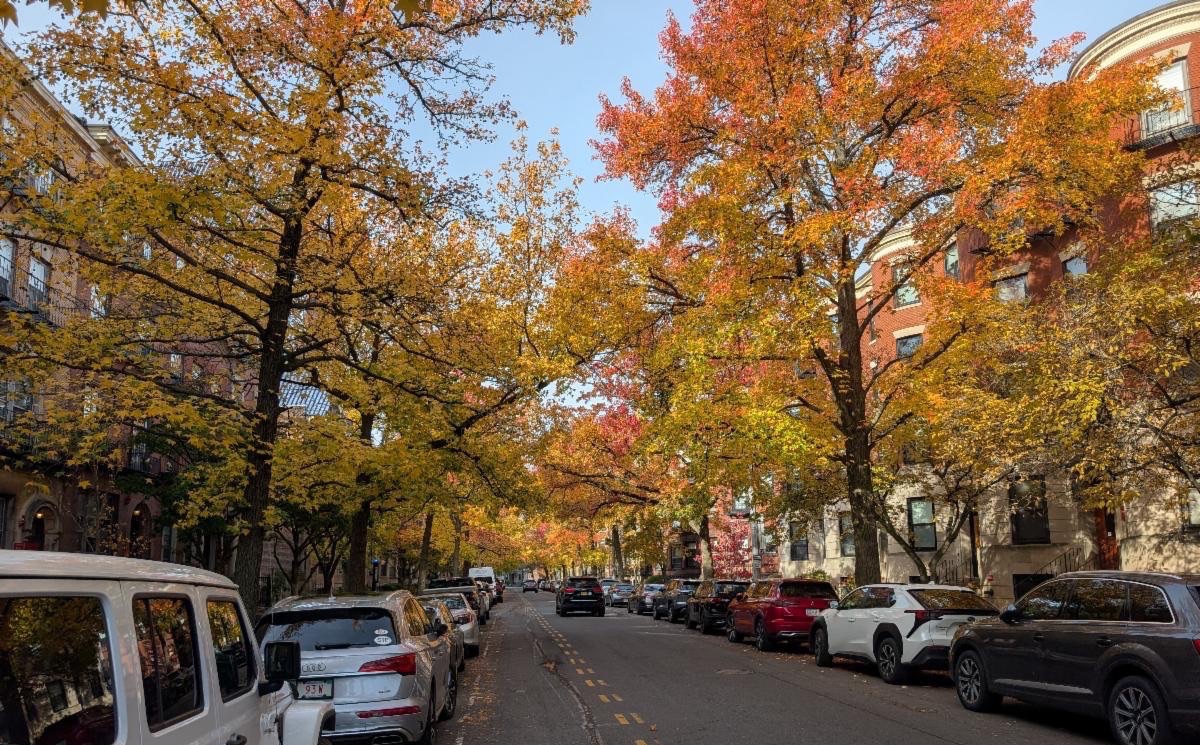
It’s that time of year when trees turn color and the greens of trees somehow magically turn deep reds, vibrant oranges, and bright yellows. Ushering in a changing season, the colorful leaves remind us that fall is a season of harvest, of transition into rest, and the cycle of life.
But how and why do leaves change color?
Many of the colors of fall foliage are hiding underneath the surface, just waiting to emerge. During the summer, leaves get their green coloring from chlorophyll, a chemical that captures sunlight and uses that energy to turn carbon dioxide into sugar. Because chlorophyll mainly uses blue and red light to drive this reaction, leaves reflect back green light, giving leaves their color.
As fall settles in, trees start to shut down and prepare for the cold winter. Trees break down chlorophyll and, in doing so, they show off their hidden colors of reds, yellows, brown, and oranges. These are made of two types of chemicals: carotenoids and anthocyanins. Carotenoids are pigments that exist in leaves all year long and take part in photosynthesis during the spring and summer. They are yellow, orange, and brown in color, so when the green color disappears they’re able to be seen.
Anthocyanins, on the other hand, are produced in the late summer. They’re the result of extra sugars that remain behind as the leaves begin to shut down. These sugars undergo a chemical reaction that changes them into anthocyanins. The anthocyanins protect the leaves from UV damage while the tree reabsorbs its nutrients for next spring. Anthocyanins are what give leaves their bright red, purple, and magenta colors.
Fall foliage is about to hit its peak in Boston. (Our website now showcases some of our favorite fall leaves!) Take a moment to enjoy the cool autumn air and bright leaf colors, knowing that next year’s spring leaves are already in place just waiting for warming weather and longer days.
|