25 Years of Proving What Works.
The Next Chapter Is Growing.
| | |
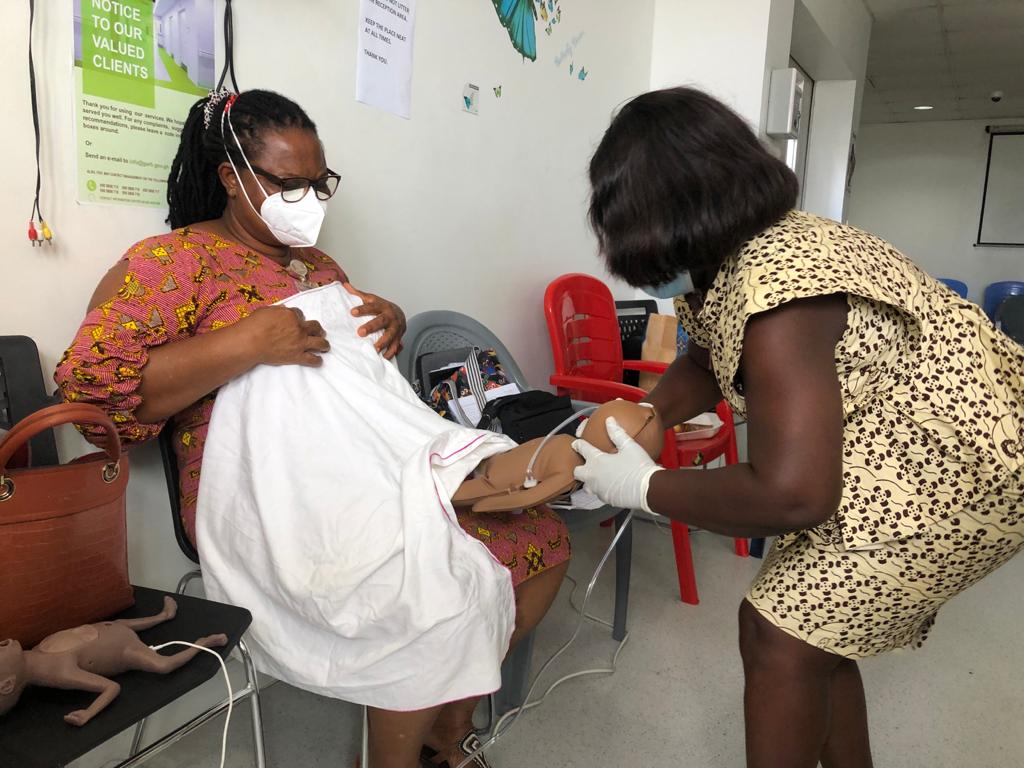
LEFT: Kybele Midwife Simulation Training Session in Ghana.
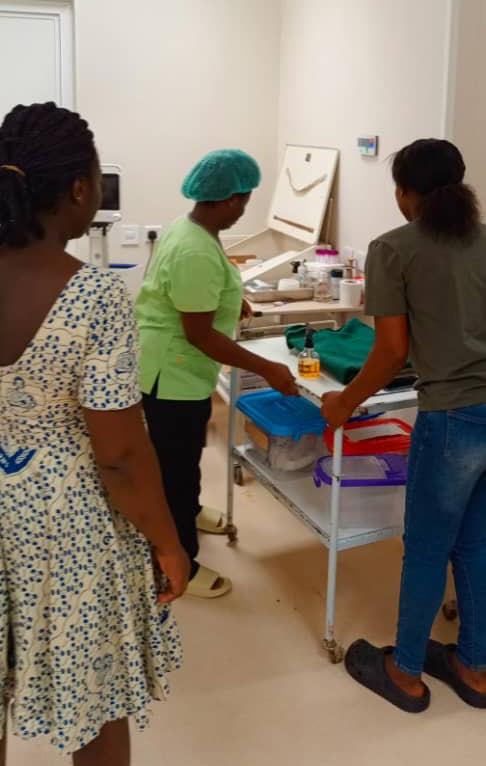
RIGHT - Setting up a triage area at Kwahu Government Hospital in Ghana.
| | |
From proven solutions in Ghana to stronger maternal and newborn care across more health systems.
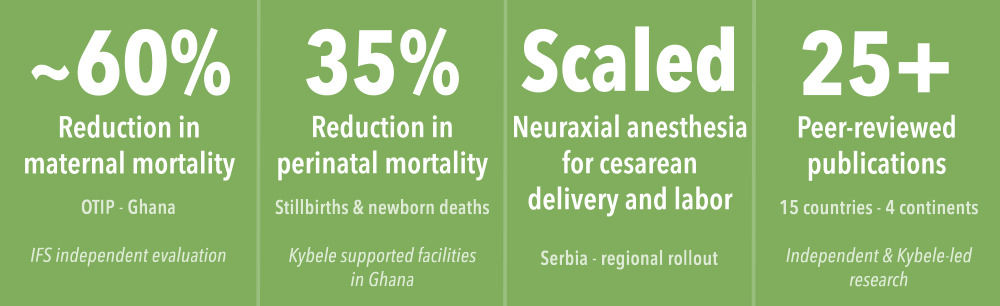
For 25 years, Kybele’s clinicians, technical experts, and local partners have worked to solve a persistent problem: too many mothers and babies die from complications that can be prevented with timely, effective care.
Today, that work is delivering results at scale—and opening new possibilities for what comes next.
In Ghana alone, Kybele-supported interventions are strengthening care for 235,175 births across 104 hospitals in 2026. Independent impact evaluations have demonstrated the life-saving potential of this work, informing projections that our interventions will avert 176 maternal deaths and save 836 babies from stillbirth or newborn death this year.
Behind these results are years of clinical expertise, rigorous evaluation, and tireless work to ensure that effective solutions become part of everyday hospital practice.
| |
The people and expertise behind the proof...
Amanua Chinbuah: Turning proven approaches into lasting change
| | |
Dr. Amanua Chinbuah
Country Director of Kybele Ghana
| |
Proving that an intervention can work is only the beginning. The harder work is making it work reliably across real-world health systems—building clinical capacity, strengthening implementation, working alongside government partners, and ensuring that improvements can be sustained.
As Country Director of Kybele Ghana, Amanua brings deep knowledge of Ghana’s health system and a sustained commitment to this work. Alongside Dr. Medge Owen, Kybele’s technical experts, Ghanaian clinicians, and the Ghana Health Service, she has helped advance the implementation of solutions designed to improve care at points of highest risk in the mother and newborn hospital journey.
Her work represents an essential part of Kybele’s approach: combining specialist clinical expertise with the local relationships, implementation experience all while being designed for government-led scale from the start.
| |
The result is more than a successful intervention. It is a stronger foundation for health systems to deliver better care and the tools to know what to do when a mother starts bleeding after delivery or a baby struggles to breathe as they are born—and for proven approaches to inform progress in other countries.
In these critical moments of highest risk, Kybele systems have provided frontline teams a structured way to provide timely, quality care and prevent poor outcomes.
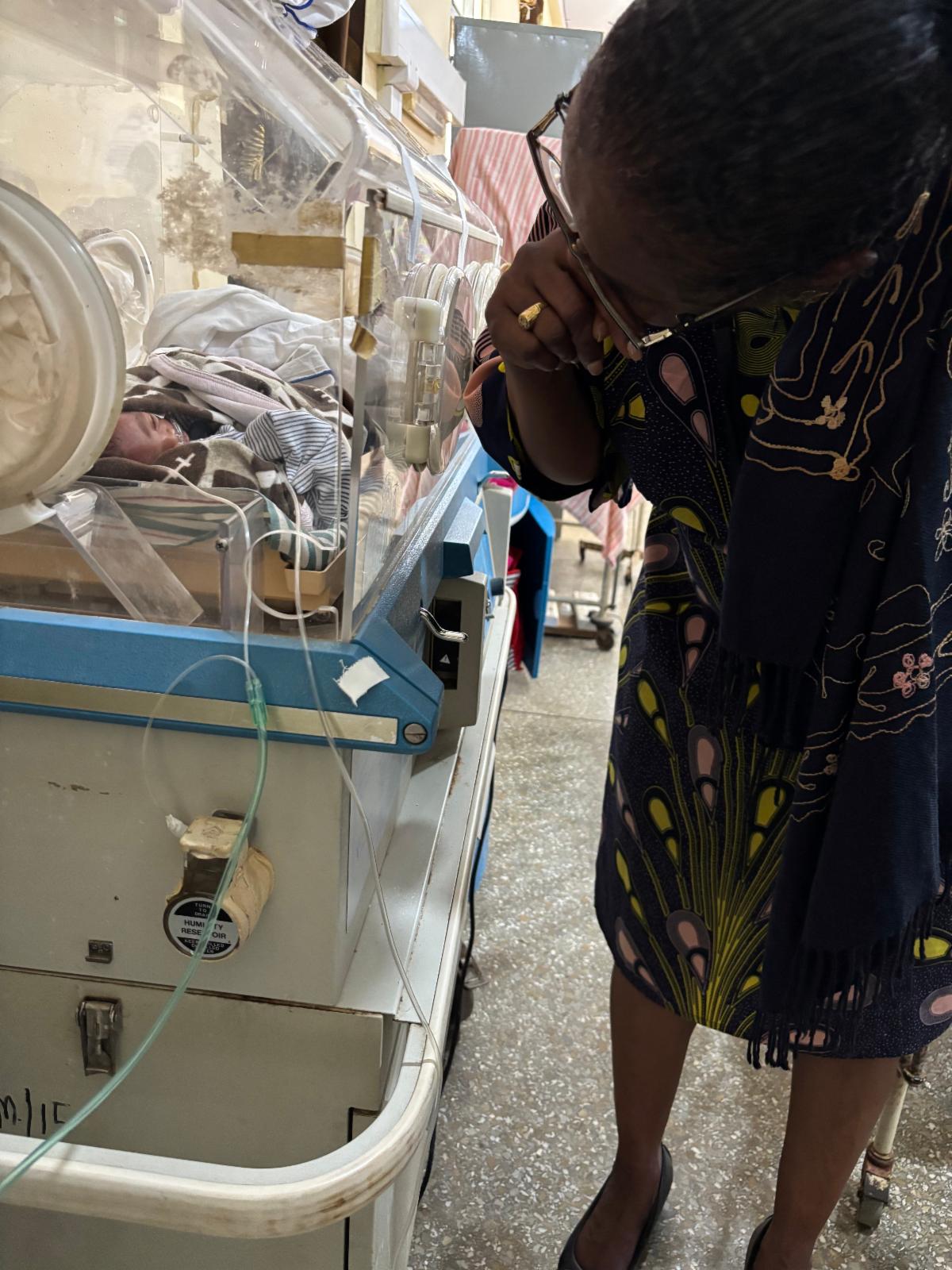
| Dr. Chinbuah inspects infant in the NICU. | | |
Two directions of growth.
One shared goal.
| | Building on 25 years of technical work and evidence, Kybele is expanding its impact in two complementary directions. | |
1. Deepening advanced care in Ghana
Early recognition of complications is vital. So is the quality of care that follows.
Kybele is expanding approaches that strengthen the safety and quality of cesarean deliveries and improve newborn assessment, resuscitation, and stabilization. These interventions focus on critical moments when timely clinical decisions and coordinated care can determine whether a mother or baby survives.
In four Ghanaian hospitals, Kybele’s advanced-care package including C/SMART and DART was associated with a 14% reduction in perinatal mortality, according to an independent evaluation by the London School of Hygiene & Tropical Medicine.
The next chapter builds on this foundation—extending effective approaches while continuing to strengthen the systems that support them.
| |
2. Expanding proven solutions into new countries
Ghana’s experience is also helping inform Kybele’s next international partnerships.
We are working with local organizations and government health systems to adapt and implement Kybele’s Obstetric Triage Implementation Package (OTIP) in Uganda and Ethiopia.
Developed with the Ghana Health Service, OTIP helps maternity teams identify women at greatest clinical risk and prioritize care according to urgency. It has become national policy in Ghana and is functioning in more than 110 hospitals, reaching over 650,000 women.
Expansion is not simply a matter of transferring a program from one country to another. It means working with local partners to adapt the approach, build implementation capacity, strengthen monitoring and learning, and create the conditions for sustained use.
Ghana’s experience provides a powerful starting point. New partnerships will help determine how proven solutions can work in different settings—and generate further evidence to guide future expansion.
| |
The opportunity ahead is to deepen what works, extend its reach, and build the partnerships needed for lasting impact.
In 2027, Kybele is on track to avert 201 maternal deaths and 1,357 stillbirths or newborn deaths.
These are projected outcomes, not a guarantee. They reflect the potential of building on proven interventions while expanding thoughtfully with local and government partners.
After 25 years, our ambition is not simply to introduce better care in more places. It is to help health systems make better care routine—so that more mothers and babies survive, wherever they are born.
| | Explore the evidence behind our impact. | | |
Thank you for being part of the community that has made this work possible. The next chapter builds on everything we have learned—and on what we can accomplish together.
With gratitude,
The Kybele Team
| | | | |