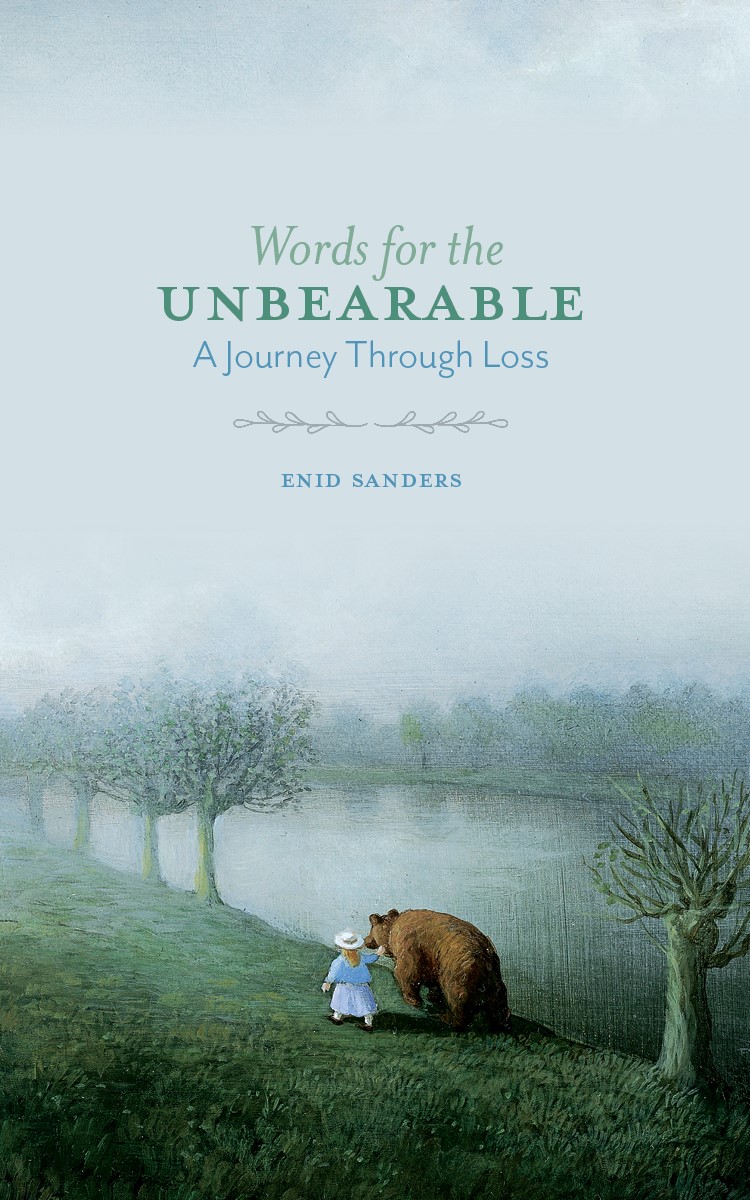
I spent the pandemic at home, alone, turning my poems about the death of my one-year-old daughter, and later my husband, into a book. I expected the process of collecting poems written in such a dark time to be nothing but painful. To my surprise, turning my poems about grief into a book has brought great joy.
The first part of the book, called Words for the Unbearable, was written fifty years ago. When my first child Keri died, I spilled out a series of poems and put them away in a drawer. After my husband died a year and a half ago, I took them back out and started writing again.
At first I wrote the poems for myself, for Andrew and to Andrew. As I rode the waves of grief, sorting through memories or sobbing in the bathtub or struggling through sleepless nights, a poem would rise up from nowhere, and I’d jump up and scribble it down, not knowing how it would end until I wrote the last word.
For me, the process was therapeutic; the poems told me what was going on inside. It often felt like my unconscious had been waving a big sign, trying to get my attention, but I couldn’t get the message until I saw the words on the page. When my therapist asked if I wrote, I started bringing my poems to her, and in that way we shared my grief journey.
I’d heard that grief could open up one’s creative juices in a helpful way. Studies by James Pennebaker, a psychology professor at University of Texas at Austin, showed that when people wrote for 15–20 minutes a day over a five-day period about a problem or trauma, they became physically healthier than a control group that wrote about unemotional topics. As the subjects wrote, a pattern emerged. Many who started out dashing off a random explosion of turbulent feelings ended up by day five weaving a narrative that found some meaning in the trauma.
In her insightful book Bouncing Forward, psychologist Michaela Haas explains why this helps. “If our suffering makes sense,” she says, “we are much more able to not only bear it, but also to grow from it.”
Of course that was the last thing on my mind when my poems first poured out. But putting my grief and loss into a book has allowed me to look at it as a whole, a process that has form and pattern and meaning. It allows me to keep my grief, and Andrew, with me at all times, while freeing me to stop living in the loss non-stop. I can begin to live again.
Essence
When the house is quiet
and my soul is still,
I can feel your essence
in the hollow of my being.
It says,
“I am here.
you can breathe me in,
you can sense my warmth,
you can be at peace.
You can hold my heart
in the palm of your hand.”