|
As the crisp air of November settles in, we find ourselves reflecting on the journey of the past month and looking forward to the stability of the holiday season. While October delivered more "tricks" than "treats" with its intense volatility, the transition into November brings a fresh perspective rooted in gratitude and proactive preparation. We remain closely monitoring the critical developments across the board, from the impending lysine decision and its potential ripple effects on trade dynamics to the ongoing implications of HPAI and the significant industrial shifts signaled by the volatile copper market. Amidst this complex economic landscape, we are committed to ensuring clarity and continuity, providing insights that allow us all to navigate the coming weeks with confidence, a sense of shared purpose, and valuable time for family.
As we move deeper into November, the challenges facing the agricultural and wildlife sectors remain significant, underscored by both persistent disease pressure and unusual environmental factors. Reports from mid-to-late November 2025 indicate that the highly pathogenic avian influenza (HPAI) continues to circulate in the Midwest. Concurrently, the unseasonably mild weather and lack of strong, consistent north winds have contributed to the waterfowl migration in portions of the Midwest and Central Flyway running behind its typical schedule, potentially prolonging the period of HPAI risk in these regions.
The recent 43-day U.S. government shutdown, which ran from October 1 to November 12, 2025, has introduced significant delays and uncertainty into the market, particularly concerning the L-lysine from China antidumping (AD) investigation. The U.S. Department of Commerce (DOC) was forced to suspend many non-emergency functions, including the AD/CV duty proceedings, pushing back the expected preliminary antidumping duty determination which was originally anticipated around November 4, 2025.
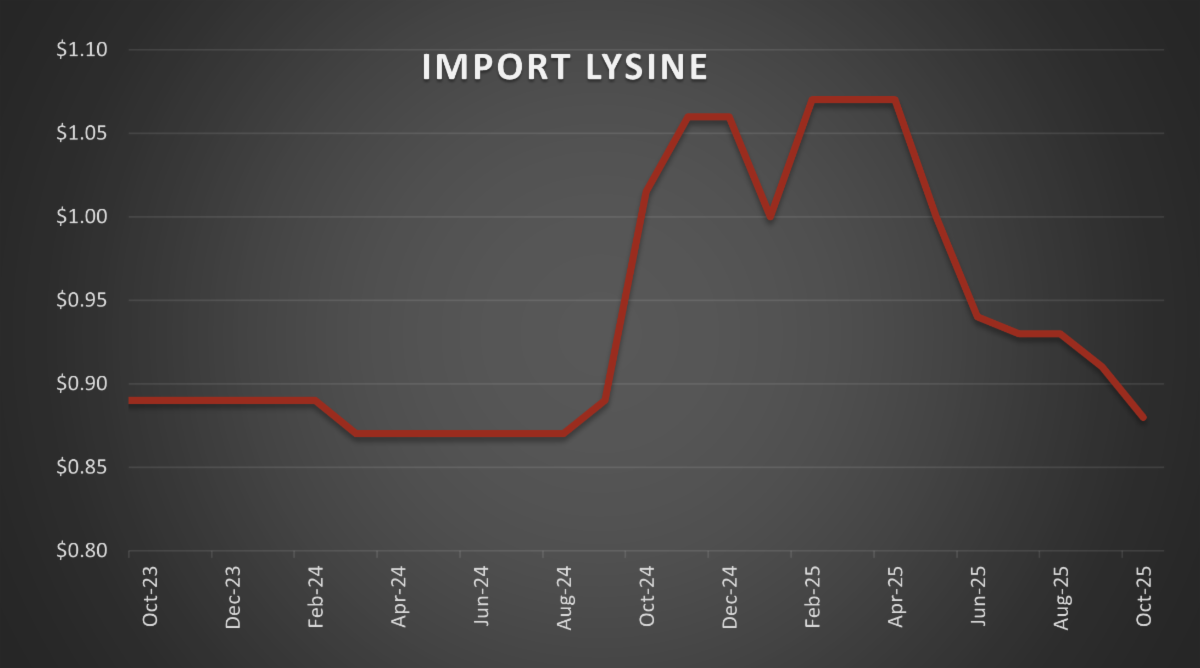
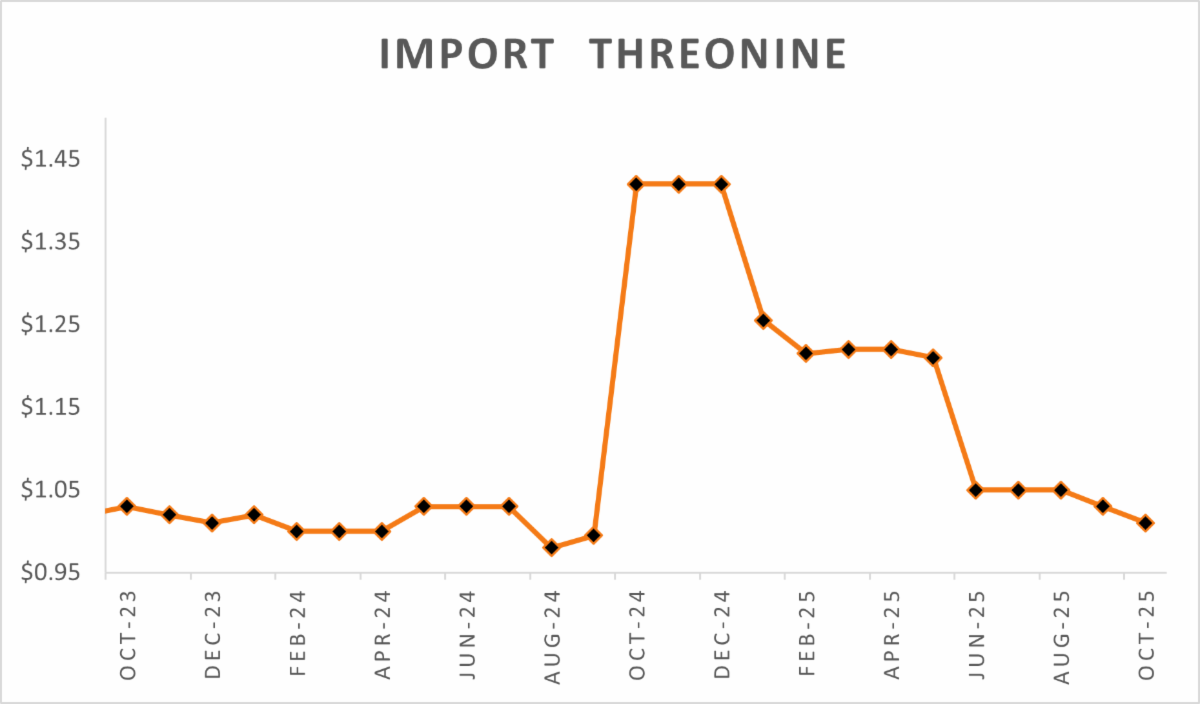
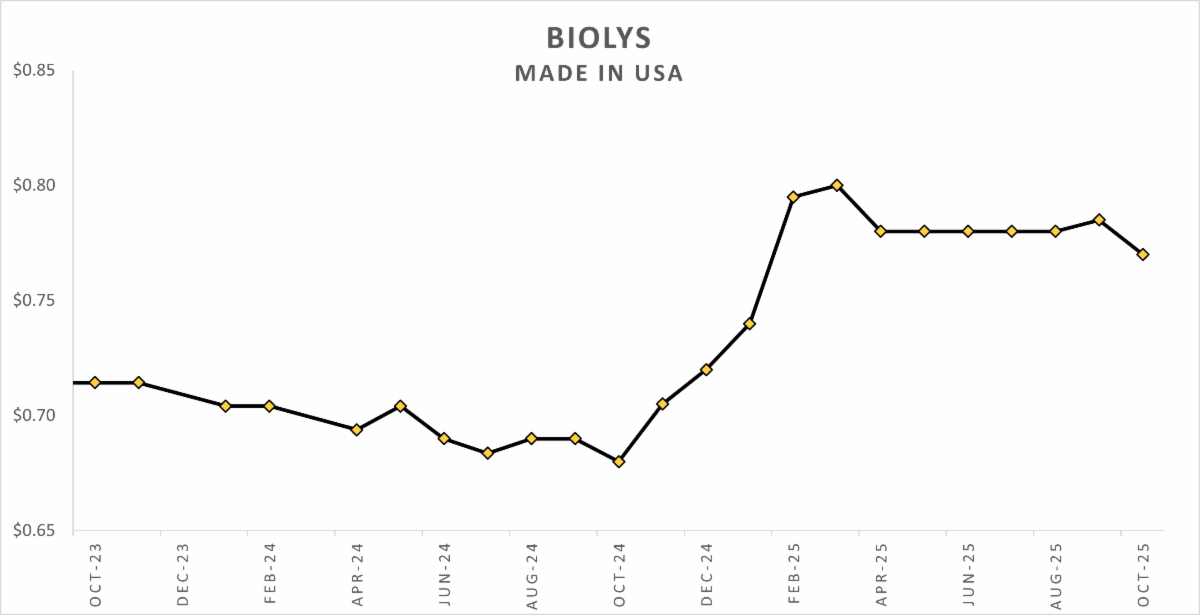
This delay has coincided with increasing lysine prices and a tightening market, fueling concern over the eventual AD/CV duty determination and potential retroactive duties. Adding to the tension are rumors circulating of a potential lysine shortage looming in Q1 due to reports that Chinese suppliers were not quoting product for a period of time.
Despite tensions, the U.S. and China reached a one-year trade truce on November 1st, which pauses China's rare earth export controls and includes U.S. tariff reductions on Chinese goods, such as halving the fentanyl-related tariff to 10%. The agreement also involves China agreeing to buy U.S. agricultural products like soybeans. This deal is good for the amino acid and feed additive markets, provided ocean freight costs don't erase the savings from the tariff reduction. The truce also includes suspending some antitrust investigations against U.S. semiconductor companies and addressing the sale of TikTok's U.S. operations.
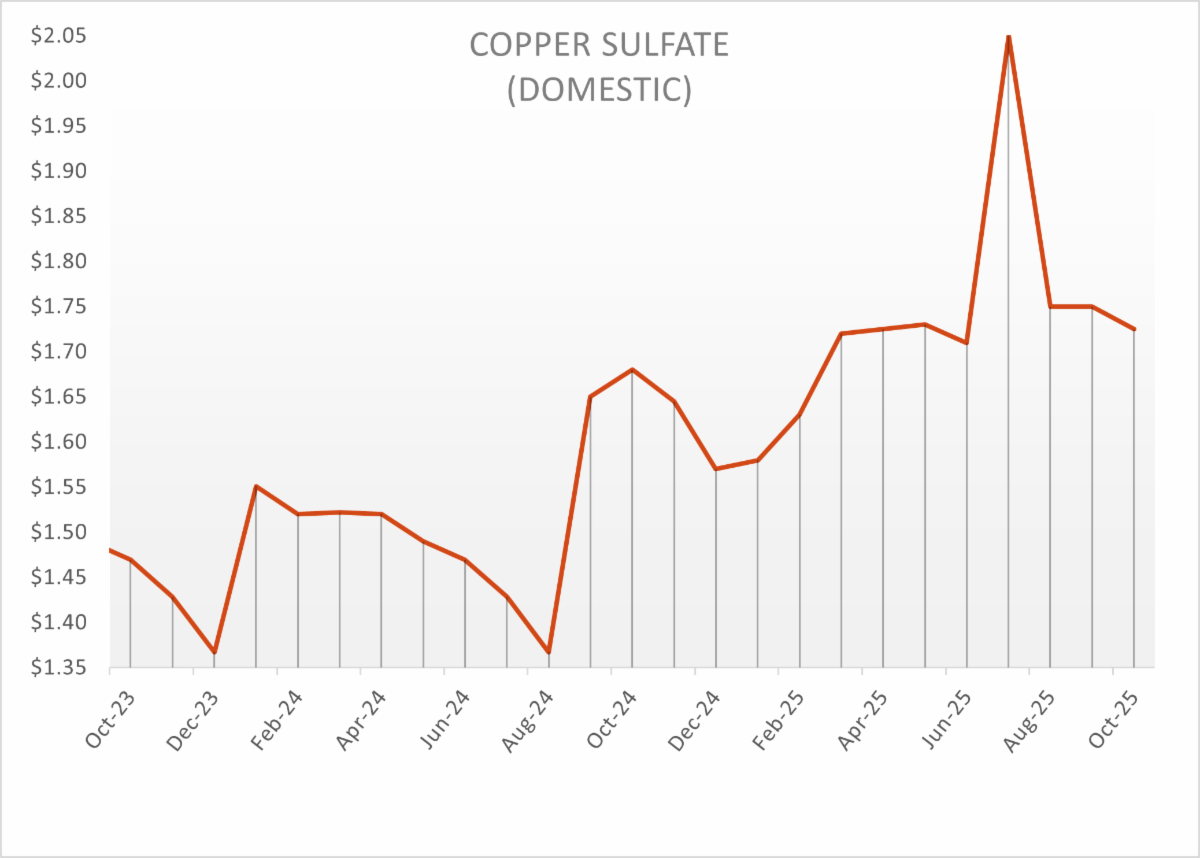
Copper steadied around $5 per pound, holding gains from the previous session as dovish comments from a senior US Federal Reserve official boosted expectations for a rate cut next month. Markets now price in about a 69% chance of a 25 basis point cut in December, up from 44% a week earlier. Prices were also supported by signs of tightening supply, with Chile’s state-owned Codelco proposing a record $330 per ton premium for metal sold to South Korea, above the $325 per ton offered to European clients. Additionally, Freeport McMoRan recently said it plans to resume production at Indonesia’s Grasberg mine by July 2026 after operations were halted in September when wet mud flooded a pit, resulting in seven fatalities.
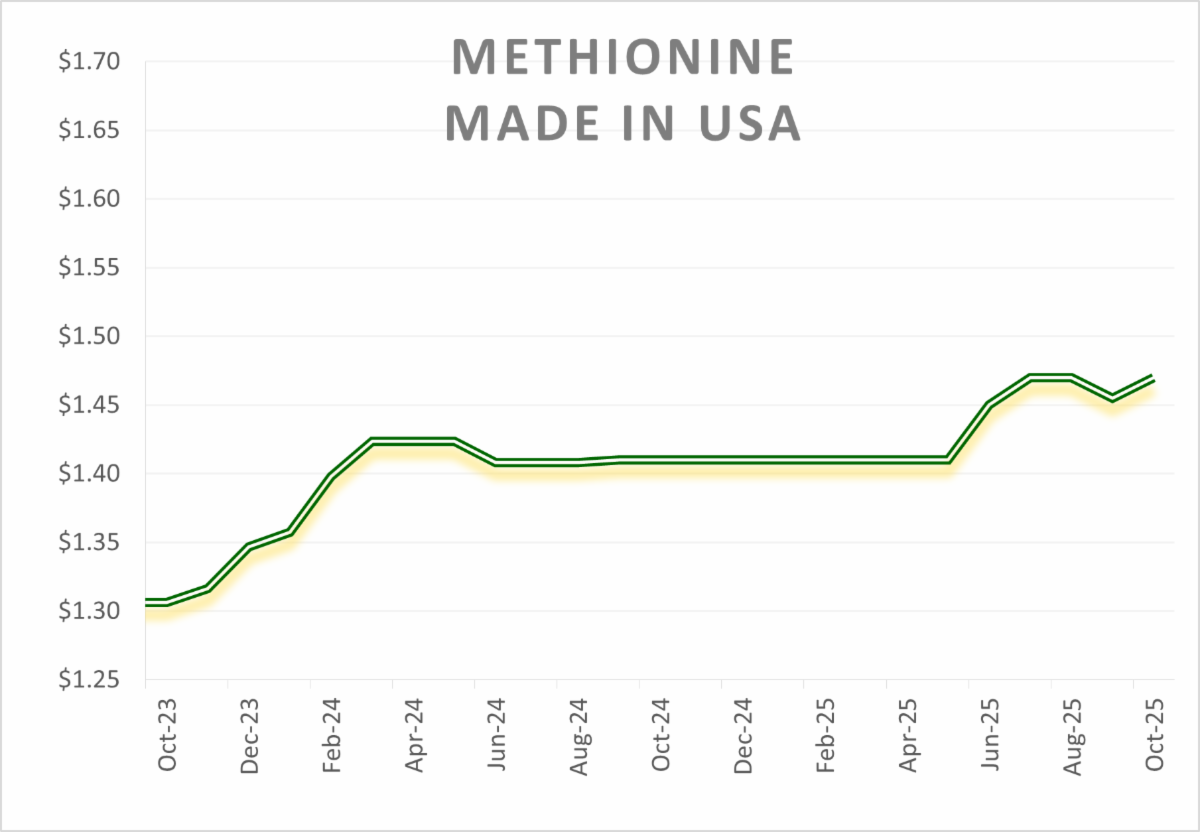
In November, the pricing for Methionine was steady, a trend expected to continue in December, despite increased market tightness resulting from mandatory plant maintenance. To cover this production downtime, Evonik imported the product from its Antwerp and Singapore facilities, though this caused longer-than-usual lead times and product unavailability for some customers. PALS, however, has maintained a good standing regarding inventory levels.
As the year draws to a close and we look toward December, the approaching season of winter holidays offers a welcome pause for rest, reflection, and valuable time with loved ones. While the complexities of global trade, agricultural health, and market volatility persist, our focus remains on providing the timely insights and analysis necessary to navigate these challenges effectively. We hope this period of stability and cheer provides a foundation for proactive planning and a smooth transition into the promising opportunities of the new year.
From all of us, we wish you a very Happy Thanksgiving!
Chelsey
|