What are the goals of your Youth Wellness Council this year? What do you hope to make an impact on and the accomplishments you hope to make this year?
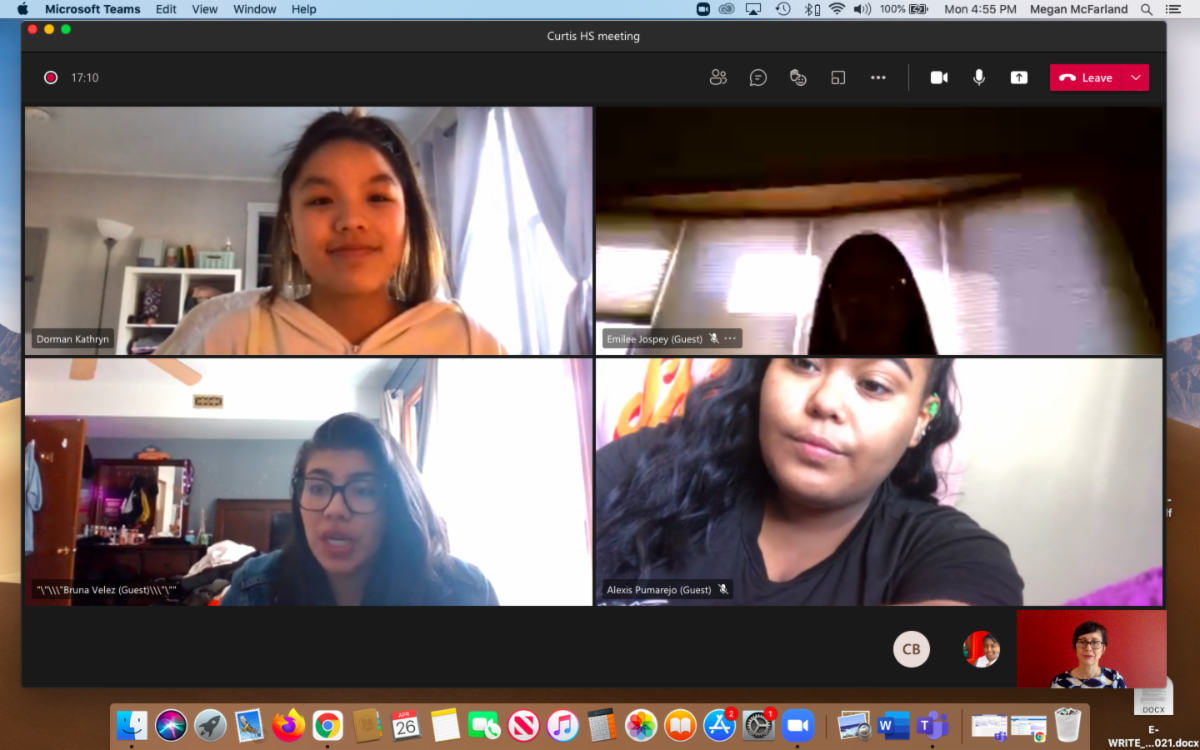
Bruna: Our Student Wellness Council is a group of peers who are trying to create and cultivate an environment that benefits not only physical, but mental wellness as well for the student body and community. We know this year with the pandemic and everything, it's been very difficult, especially for mental health. What we're trying to do right now is plan a podcast. We want it to be accessible to all. We want to be able to introduce wellness activities or practices that people can do in their own homes so we can [provide] a safe place for our peers and community. Even though we want to help as much as we can, a lot of times we understand that we're not experts at mental health. We are not professionals so we also want to make it a platform where we can interview actual experts and professionals to get real help, make it accessible, and put it all out there for our student community.
Alexis: Another goal for us is to get as many people [as possible] to join this Council before we leave. We created a social media account on Instagram and have about 160 followers. We're hopeful that we get a lot of freshmen and sophomores to join so they can continue this program.
How do you promote your activities and messages to the rest of the school? What are the most effective platforms you use?
Bruna: Because we're living in this virtual world now, Instagram has become not only a tool that our club uses, but a lot of different clubs within the school community as well. Before, having information in the announcements or having posters around the school was probably the best way to get all communication across. It reduced the barrier of some people not knowing about the Instagram account or some people not having Instagram. But by having an Instagram account now, it makes it a lot easier and faster. It's one of the beauties of social media. Along with the Curtis [High School] website, which features clubs.
What activities have you guys focused on this year to address students’ needs during the pandemic and what were some of the successes and challenges within this work?
Bruna: We planned a mental health workshop where we invited students, staff, and families. It was open to all and we received a lot of positive feedback on it. When we were talking to a lot of the student body, we realized that even though Curtis does have these mental health resources, a lot of people did not know that they existed. We saw this and decided to make this workshop to talk about what [Curtis High School] did, and we shared the actual resources as well.
We had yoga and meditation. We also ran a mindfulness activity that focused on letting go of anxieties and stressors. That was one of the biggest things that we did, and I keep hearing about people really enjoying it so I hope to do it again next year, or at least this year. Along with that, we also decided to do a focus group to pinpoint the main issues within the community so that we can come up with solutions. We focused on motivation for school and how remote learning felt.
Compared to when you first started being involved in the Youth Wellness Council, have the needs and the challenges that students are facing around health and wellness changed?
Alexis: I feel like mental health has always been a need, especially for high school students, pandemic or no pandemic. There's also other things that we struggle with. Homework for example. Mental health can be affected by problems at home and the pandemic. For the workshop, we were able to choose our topic and when we came down to it, we were between racism and mental health. We went with mental health because we didn't know how long this pandemic was going to last, and a lot of people are stressed out. I do think mental health is still a big important issue today.
Bruna: I do think that these problems still exist, but I do think that because of the pandemic they became more apparent. I'm a believer that everything happens for a reason, and even though the pandemic has caused a lot of losses and difficulties, I think it opened our eyes to a lot of the problems we're facing. Especially for young adults and teenagers who sometimes have their problems brushed aside and told it’s hormonal or told you'll get over it.
Are you thinking about how this work influenced your thoughts about what you want to do in the future?
Bruna: I've always been super invested in social justice issues and finding the best way to help people. Finding that safe space for people because everybody deserves that. I want to become a lawyer because I believe that the best way to help people is through the power of the law; it's the basis of our community. I do plan on using the experiences I had in this club, like leading workshops and having those conversations.
Alexis: I'm currently in the nursing program at Curtis and I intend to stay within that career path, so health in general. Whether it's mental, physical, or emotional, it’s very important to me and for everyone else as well. I believe that when we focus on health, we should focus on everyone by specific groups. Whether it's drugs or mental health, it all starts at a young age and stays with [young people] for a long time. I definitely think that there's this stigma nowadays around mental health. I think that this year has allowed me to see that this should be something that's promoted within schools and even just in daily life.
Emilee: Personally, I want to be a biomedical engineer—that deals with people who have prosthetic limbs. This group has made it such a great experience to maybe incorporate that somehow into my future.