News and information to help journalists serve the public and stay safe.
|
|
Dear readers,
Today marks the 50th edition of
Covering Coronavirus
. Thank you for trusting us with your time and for sharing your tips and experience with our community.
Stay well.
|
|
|
Many writers find themselves on deadline with limited time, space and attention during this unprecedented crisis. The National Press Club Journalism Institute and the
National Association of Science Writers
are partnering for a program that will offer tips for creating a writer-friendly physical space, finding your focus, and developing new tools to write in short bursts.
|
|
As governors move to restart their state economies, unions representing journalists are unified on one top goal: If journalists can work from home, that’s where they should stay.
Publishers, editors and station managers are evaluating when to reopen newsrooms and studios. Many are in no rush: Fox has extended its stay-at-home directive through June 15, the New York Times, The Washington Post, and CNN have told their journalists not to return until after Labor Day at the earliest.
“The first priority is that we continue to push people to work from home, and that, I think, needs to be key,”
NewsGuild President Jon Schleuss
(pictured) said in an interview. “Our mandate is that no one should be forced to return to an office or newsroom without safe working conditions.”
Schleuss is not the only labor leader calling for extreme caution for journalists. Communications unions representing primarily broadcast news workers recently
unveiled proposed employer guidelines
. Number one on the list was, "All work that can be done from home should be done from home if the worker so chooses, with proper tech support.”
The NewsGuild’s principles:
- Preserve employees’ ability to work from home.
- Safety first when the workplace reopens.
- Economic security must be safeguarded.
- Screening and prevention are essential.
- Personal concerns must be addressed.
Schleuss pointed out that all journalists, whether covered by a union contract or not, have the right to press their employers to keep a safe working environment. And while the guild guidelines do not apply to all news organizations, they can serve to influence industry norms.
|
|
Bill Plante Chair in Leadership & Media Integrity, Loyola University Chicago
Freedom Forum Fellow in Women’s Leadership
Friendships motivate us to do more for each other. They ease stress and add laughter. They let us be ourselves and speak candidly. They amplify our pride in a job well done; celebrations are more fun when people we care about are cheering.
Friendships happen at work. Or they used to. Here’s how:
Lynnette Clemetson
sat next to Rachel Swarns in the New York Times newsroom. “We were at similar stages in our careers and lives, had both been based internationally, both enjoyed similar kinds of reporting and storytelling. We became fast friends,” Lynette says. “Our children were born within months of one another, and now 17ish years later we still talk at least once a week. She’s more a sister than a work colleague.”
Lynne Adrine
and
Gena Fitzgerald
met in the WJLA-TV newsroom in Washington, DC, where, according to Lynne, a shared affinity for George Clinton and Funkadelic started something special.
“We worked the weekend night assignment desk together. No grownups in the room when the Iranian hostage crisis happened or Jonestown. Just us. Gena was one of my bridesmaids, and is godmother to my son. We've always had each other's backs,” she says.
Allison Watts
was working in the WHAM-TV newsroom in Rochester, New York when her mother was given only six months to live.
“It was a very hard time for me. I was single and didn’t have any family nearby. The people I worked with lifted me up and checked in on me every day. Going into the newsroom and feeling their support - and getting hugs when needed - saved me,” Allison says.
|
|
|
The National Press Club Journalism Institute is spotlighting
the next generation of journalists
, students graduating from college or Master’s programs this spring into
a challenging job market
, in hopes they’ll meet future bosses and colleagues here who will reach out and support them in building journalism’s future together.
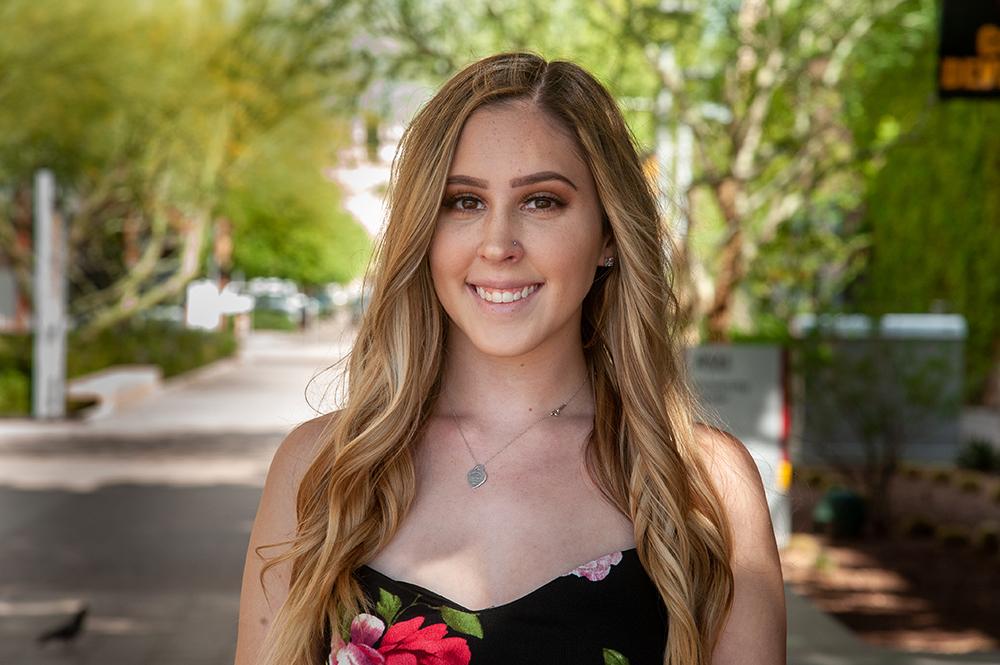
School
: Arizona State University
Location
: Phoenix, Arizona
Intern
: Arizona PBS
Quote
:
“I dreamed of attending the Cronkite School since I was a freshman in high school”
What's been your best moment in journalism?
Paynter
:
The best moment I have had in journalism is when I realized that I had gotten better at writing scripts and being on camera to front my stories.
The moment I had that aha! moment was my last two stories at Cronkite News during fall semester of 2019. I had written a script for a company called
Soldier’s Best Friend
and had not been planning to do a day turn, and got back to campus kind of late in the day and the producers really loved the story, so I had about 2 hours to write my script and edit my footage.
When my director had looked at both, she made one small change and it was just rewording part of a sentence.
With my video
, she didn’t change anything. That day I also won a Wally for the story. …
|
|
Sorry to be a buzzkill, but it might be time to change out of pajama pants.
For many journalists, the initial comfort of donning sweatpants during WFH meetings has turned from unique to uniform. Others have found their fashion version of a mullet — business from the waist up, who knows what from the waist down — can result in some precarious problems during video calls or on air.
More to consider:
- Whether we like it or not, people form snap judgments based on appearances — something to keep in mind when working with sources, colleagues and supervisors — even over video chats.
- Maintaining a routine — including getting up and ready for the day — is critical to mental health. (May, by the way, is Mental Health Awareness Month.)
- The simple act of choosing what you’ll wear is a way to control something during an uncontrollable time. It also can signal to your brain that something new is going to happen.
- You don’t have to change your look or overdo it. Clothing can help you subconsciously cue that you are still at work, just in a different location, the same way your pajama bottoms can signal it’s time to chill.
|
|
This newsletter is written & edited by the National Press Club Journalism Institute staff: Beth Francesco, Holly Butcher Grant, Jim Kuhnhenn, and Julie Moos.
Send us your questions and suggestions
for topics to cover.
|
|
|
|
|
|
|